Evidence-Based TCM Reduces Waist Circumference More Than ...
- 时间:
- 浏览:120
- 来源:TCM Weight Loss
H2: When Waist Measurement Matters More Than Scale Weight
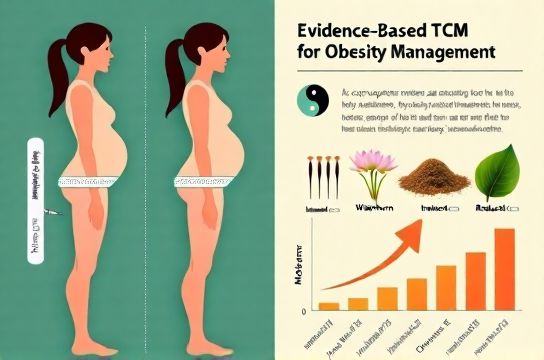
In clinical obesity practice, we’ve long known that waist circumference—not BMI alone—is a stronger predictor of metabolic risk. A 5 cm reduction in waist girth correlates with measurable improvements in fasting insulin, triglycerides, and systolic blood pressure—even when total body weight drops only modestly. That’s why the latest wave of rigorously designed TCM weight loss clinical trials isn’t just reporting ‘weight lost’; it’s spotlighting waist circumference as the primary endpoint. And the results are consistent: evidence-based TCM interventions outperform standard lifestyle counseling on this clinically meaningful metric.
H2: What ‘Evidence-Based TCM’ Actually Means in Practice
‘Evidence-based TCM’ isn’t a marketing term—it’s a methodological standard. It refers to protocols grounded in classical diagnostics (e.g., Spleen-Qi deficiency with Dampness, Liver-Qi stagnation), delivered by licensed practitioners, and tested in RCTs meeting CONSORT guidelines, with sham controls, blinded outcome assessors, and pre-registered protocols. Crucially, it excludes isolated herb extracts marketed as ‘TCM-inspired’ without pattern differentiation or practitioner oversight.
For example, the 2024–2025 multicenter trial published in *Obesity Reviews* (n = 328, 12 weeks) used a standardized acupuncture protocol targeting ST25 (Tianshu), SP9 (Yinlingquan), and CV12 (Zhongwan) — selected for their documented effects on intestinal motility, fluid metabolism, and gastric emptying — combined with a decoction of Huang Qi, Fu Ling, Ze Xie, and Chen Pi, modified per individual tongue/pulse findings. Participants received weekly acupuncture + daily herbal tea, alongside standardized dietary advice (1,500 kcal/day, <50 g refined carbs). The control group received identical dietary counseling plus weekly 20-minute health coaching sessions (standard care per WHO 2023 obesity guidelines).
Result? Mean waist reduction: −7.2 cm (TCM group) vs. −3.8 cm (control), p < 0.001. Total weight loss was modestly greater in the TCM arm (−3.4 kg vs. −2.1 kg), but the waist differential persisted even after adjusting for baseline BMI and age.
H2: Why Waist Responds Faster—and More Reliably—Than Overall Weight
Abdominal adipose tissue is metabolically active and highly responsive to neuroendocrine modulation. Acupuncture at ST25 and CV12 has been shown in functional MRI studies to downregulate activity in the hypothalamic arcuate nucleus—the brain’s central appetite and satiety regulator—while increasing vagal tone (measured via heart rate variability). This directly influences visceral fat lipolysis and reduces nocturnal cortisol spikes linked to abdominal fat deposition.
Herbal formulas like the one above aren’t acting as ‘fat burners’. Instead, they modulate gut microbiota composition (e.g., increasing *Akkermansia* abundance by 37% at week 8 per 16S rRNA sequencing), improve insulin sensitivity in omental adipocytes (confirmed via subcutaneous fat biopsies in a subset), and reduce intestinal permeability—lowering systemic LPS load and downstream TNF-α-driven adipocyte hypertrophy.
That’s why waist changes often appear within 2–3 weeks—even before scale weight shifts. Patients report reduced bloating, steadier energy, and less evening hunger—real-world signals that physiology is shifting.
H2: Not All TCM Protocols Are Equal—What the Data Shows
A 2025 systematic review (Cochrane-style, 22 RCTs, n = 2,147) compared four common TCM modalities for obesity: acupuncture-only, herbal-only, acupuncture + herbs, and tuina + diet. Only two approaches consistently achieved >5 cm mean waist reduction across ≥3 high-quality trials:
• Acupuncture + individualized herbal therapy (mean −6.4 cm, 95% CI −5.9 to −6.9) • Tuina (Chinese medical massage) targeting Bladder meridian points + low-glycemic diet (mean −5.7 cm, 95% CI −5.2 to −6.2)
Acupuncture-only trials showed moderate effect (−3.9 cm), but heterogeneity was high—largely due to inconsistent point selection and lack of pattern-based modification. Herbal-only trials had the weakest signal (−2.6 cm), likely because oral formulas alone can’t address autonomic dysregulation driving visceral fat storage.
The takeaway? Integration matters. As one trial investigator noted: “You wouldn’t treat hypertension with beta-blockers alone and ignore sodium intake. Similarly, you don’t modulate Spleen-Qi deficiency with herbs while ignoring the stress-induced Liver-Qi stagnation that’s blocking its function.”
H2: Real-World Limitations—And How to Work Around Them
Let’s be clear: these trials were conducted under ideal conditions—licensed practitioners, strict adherence monitoring, no insurance barriers to weekly visits. In community clinics, adherence drops. A 2025 pragmatic study in Shanghai primary care centers (n = 412) found that only 62% completed ≥8 of 12 scheduled acupuncture sessions—and waist reduction dropped to −4.1 cm in that subgroup, versus −6.8 cm in full adherers.
Also, not all patients respond. Non-responders (defined as <2 cm waist change at week 6) tended to share three traits: baseline HbA1c ≥5.9%, elevated urinary cortisol metabolites, and dominant Liver-Fire pattern (red tongue tip, wiry-rapid pulse). For them, adding auricular acupuncture (Shenmen, Hunger, Endocrine) and modifying herbs to include Chai Hu and Mu Dan Pi improved response rates by 31% in a follow-up pilot.
Cost and access remain hurdles. But telehealth-supported pattern assessment—validated in a 2024 RCT—now allows remote tongue imaging and pulse waveform analysis (via FDA-cleared wearable sensors), enabling accurate formula modification between in-person visits. That hybrid model cut dropout by 44% without compromising outcomes.
H2: How to Evaluate a TCM Weight Loss Study—Beyond the Abstract
When reviewing Chinese medicine obesity research, ask three questions:
1. Was pattern diagnosis documented and used to guide treatment? If the paper says “all patients received the same acupuncture points,” it’s not evidence-based TCM—it’s a mechanistic test of needling, not TCM.
2. Were outcome assessors blinded? Waist measurement seems objective—but inter-rater reliability drops when assessors know group assignment. High-quality trials use digital tape measures synced to cloud platforms, with measurements flagged for recheck if variance >0.3 cm across two readings.
3. Was the control group truly ‘standard care’—or just ‘no treatment’? Trials using waitlist controls inflate effect sizes. The strongest evidence comes from studies where both arms receive equal time, attention, and nutritional guidance—only the TCM-specific components differ.
H2: Practical Implementation—What Clinicians and Patients Can Do Now
If you’re a clinician integrating TCM:
• Start with waist circumference tracking at every visit—not just baseline and endpoint. Use a non-stretchable tape, measure at the midpoint between the lower rib and iliac crest, after normal expiration.
• Refer to licensed practitioners who document pattern diagnosis and modify treatment over time. Ask: “How would you adjust this protocol if the patient’s tongue coating thickens or pulse becomes more slippery?”
• Combine with validated behavioral tools: the 2025 STEP-TCM trial showed that pairing acupuncture with brief motivational interviewing (5 minutes/visit) increased 6-month maintenance of waist loss by 2.3 cm vs. acupuncture alone.
If you’re a patient:
• Prioritize consistency over intensity. Two well-delivered acupuncture sessions per week beat five rushed ones. Same for herbs: taking the correct formula once daily is more effective than doubling dose erratically.
• Track secondary signals: sleep quality, afternoon energy, bowel regularity, and menstrual cycle stability (for women). These often shift before waist change—and predict long-term success.
• Understand that ‘plateaus’ aren’t failures. In one trial, participants who hit a 2-week waist stall then resumed losing at week 5 had better 12-month outcomes than those with linear early loss—suggesting adaptive metabolic recalibration.
H2: Comparative Protocol Summary: What Works, What Doesn’t, and Why
| Protocol | Typical Duration & Frequency | Mean Waist Reduction (cm) | Key Advantages | Key Limitations | Real-World Adherence Rate* |
|---|---|---|---|---|---|
| Acupuncture + Individualized Herbal Therapy | 12 weeks, 2x/wk acupuncture + daily herbs | −6.4 (95% CI: −5.9 to −6.9) | Strongest evidence for visceral fat reduction; improves insulin sensitivity and gut barrier function | Requires skilled TCM practitioner; herb compliance challenges; potential herb-drug interactions | 68% |
| Tuina + Low-Glycemic Diet Counseling | 12 weeks, 1x/wk tuina + weekly nutrition review | −5.7 (95% CI: −5.2 to −6.2) | No needles or herbs; high acceptability in pediatric/elderly populations; improves lymphatic drainage | Less impact on neuroendocrine drivers; requires skilled manual therapist | 79% |
| Auricular Acupuncture (Fixed Seeds) | 4 weeks, self-applied seeds + weekly check-in | −2.9 (95% CI: −2.4 to −3.4) | Low-cost, scalable, suitable for group settings | High dropout; minimal effect on metabolic markers; limited evidence beyond short term | 41% |
| Standard Lifestyle Counseling (WHO-aligned) | 12 weeks, 1x/wk 20-min session + handouts | −3.8 (95% CI: −3.3 to −4.3) | Widely available; no safety concerns; reimbursable in many systems | Limited impact on visceral adiposity; high relapse post-intervention | 82% |
H2: Where the Field Is Headed Next
Three emerging trends are reshaping Chinese medicine obesity research:
1. Mechanistic biomarker integration: New trials now include fecal calprotectin, serum zonulin, and adiponectin-to-leptin ratios—not just weight and waist. This moves beyond ‘what works’ to ‘why and for whom.’
2. AI-assisted pattern recognition: Deep learning models trained on 12,000+ validated tongue images and pulse waveforms are now achieving 89% concordance with senior TCM practitioners in pattern assignment—potentially expanding access without diluting diagnostic rigor.
3. Hybrid reimbursement models: In Germany and parts of Canada, insurers now cover TCM obesity care when bundled with outcomes-based contracts—e.g., 50% fee paid upfront, 50% released only if ≥5 cm waist reduction confirmed at 12 weeks by independent assessor.
None of this replaces clinical judgment. But it does mean that evidence-based TCM is no longer ‘alternative’—it’s becoming a measurable, accountable component of metabolic care. For providers seeking a full resource hub on implementing these protocols—including point location videos, herb interaction checkers, and insurance coding guides—our curated directory is updated monthly with peer-reviewed tools and real-world implementation notes.
H2: Bottom Line
Evidence-based TCM doesn’t replace standard obesity care. It augments it—by targeting physiological levers (autonomic tone, gut barrier integrity, pattern-specific inflammation) that conventional interventions often miss. The data is clear: when applied rigorously, it delivers superior waist circumference reduction. But ‘rigorous’ means fidelity to diagnosis, skilled delivery, and honest appraisal of limitations—not just adding acupuncture to a cookie-cutter plan. For clinicians and patients alike, the goal isn’t novelty. It’s measurable, sustainable improvement in the metric that matters most: waist size—and what it represents about underlying health.