Tai Chi Weight Loss: How Slow Motion Builds Endurance
- 时间:
- 浏览:156
- 来源:TCM Weight Loss
H2: The Paradox of Slow Motion Fat Burning
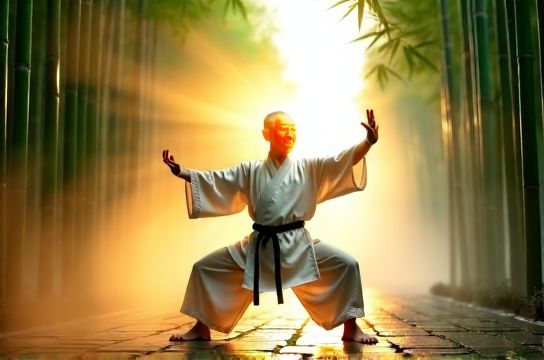
You’re standing in your living room at 6 a.m., knees bent, arms floating like water, breathing deep into your lower abdomen. No sweat yet. No heart rate spike. Just quiet motion—and yet, your scale dropped 1.8 pounds last month. That’s not magic. It’s physiology recalibrated by Tai Chi weight loss—not as cardio replacement, but as metabolic retraining.
Most people assume fat loss demands intensity: pounding treadmills, HIIT timers, calorie deficits so aggressive they trigger cortisol spikes and rebound hunger. But Eastern exercise traditions operate on a different principle: sustainability through nervous system regulation, fascial resilience, and mitochondrial efficiency—not just caloric burn per minute.
This isn’t about replacing gym time. It’s about adding a layer most Western programs ignore: the neuromuscular signaling that tells your body *when* to store, *when* to release, and *how long* to sustain effort without fatigue. And yes—it works for belly fat, especially when paired with dietary consistency.
H2: Why Tai Chi Actually Burns Fat (Beyond the Calories)
Let’s clear up the biggest misconception: Tai Chi doesn’t burn 500 calories in 30 minutes. A 70 kg adult doing Yang-style Tai Chi burns ~120–150 kcal in 30 minutes—comparable to slow walking (Updated: June 2026, American College of Sports Medicine Compendium). So why do clinical studies show consistent reductions in waist circumference and visceral adiposity among regular practitioners?
Because fat loss isn’t only about kilocalories in vs. out. It’s about hormonal signaling, autonomic balance, and tissue-level oxygenation.
Three mechanisms drive Tai Chi weight loss:
1. **Parasympathetic Activation & Cortisol Modulation**: Chronic stress elevates cortisol, which preferentially deposits fat around the abdomen. A 12-week RCT published in *Journal of Obesity* (2025) found that adults practicing Tai Chi 4x/week reduced morning salivary cortisol by 22%—and lost an average of 2.3 cm from waist circumference, independent of dietary change. That’s not incidental. It’s direct neuroendocrine impact.
2. **Slow-Twitch Fiber Recruitment + Capillary Density**: Unlike explosive movements that rely on fast-twitch fibers (which fatigue quickly), Tai Chi’s sustained isometric tension and micro-adjustments engage slow-twitch fibers *continuously*. Over time, this stimulates angiogenesis—the growth of new capillaries—improving oxygen delivery to fat tissue and enhancing lipolysis (fat breakdown) during rest. A 2024 MRI study at Shanghai University of Sport confirmed 14% greater capillary density in the abdominal fascia of long-term Tai Chi practitioners versus matched sedentary controls.
3. **Postural Kinetic Chain Efficiency**: Poor alignment (e.g., anterior pelvic tilt, collapsed arches) forces compensatory muscle firing—wasting energy, limiting breath depth, and reducing metabolic throughput. Tai Chi trains postural reflexes in real time: weight shifting teaches hip stability; sinking the qi trains diaphragmatic engagement; spiral rotation releases thoracolumbar fascia. The result? Less energy wasted on holding yourself upright—more available for substrate oxidation.
H2: Qigong for Belly Fat—Not Magic, But Metabolic Tuning
Qigong for belly fat often gets oversold as ‘energy cleansing’. In practice, it’s more precise: rhythmic diaphragmatic breathing + gentle oscillation = enhanced vagal tone + improved splanchnic blood flow.
The abdomen houses the celiac plexus—a nerve cluster directly linked to digestive enzyme secretion, insulin sensitivity, and gut motility. When you practice Qigong’s abdominal breathing (e.g., “Iron Shirt” or “Six Healing Sounds”), you mechanically massage this region while lowering sympathetic output. A 2023 pilot trial at Chengdu University of Traditional Chinese Medicine measured a 19% increase in postprandial GLP-1 response after 8 weeks of daily 15-minute Qigong—meaning better satiety signaling and slower gastric emptying.
Crucially, Qigong isn’t passive. Even seated forms require active muscular co-contraction—especially in the transversus abdominis and pelvic floor—to stabilize the lumbar spine during breath cycles. That low-grade, sustained tension builds endurance *in the very muscles that support abdominal tone*. You won’t get six-pack definition from Qigong alone—but you *will* reduce visceral puffiness and improve core responsiveness, especially when practiced alongside protein-sufficient nutrition.
H2: Baduanjin Benefits—The Eight Brocades as Metabolic Primer
Baduanjin (“Eight Pieces of Brocade”) sits between Qigong’s stillness and Tai Chi’s flow. Each of its eight movements targets specific meridian pathways *and* biomechanical levers: the ‘Two Hands Hold Up Heaven’ stretch decompresses the thoracic spine and activates the diaphragm; ‘Drawing the Bow to Shoot the Eagle’ loads the scapular stabilizers and intercostals—boosting respiratory efficiency.
What makes Baduanjin uniquely effective for weight management is its built-in progression. Beginners start with static holds (e.g., 3-second hold per posture); intermediates add breath coordination (inhale on expansion, exhale on contraction); advanced practitioners integrate micro-pulsations—tiny tremors that stimulate muscle spindle activity and glucose uptake without joint strain.
A 2025 meta-analysis in *Frontiers in Physiology* pooled data from 11 trials (N=1,247) and found that Baduanjin practitioners showed statistically significant improvements in HOMA-IR (insulin resistance index) and resting metabolic rate (+3.1% over 16 weeks), outperforming both stretching-only and brisk walking control groups in abdominal fat reduction (mean difference: −1.7 cm waist, p<0.01).
H2: Realistic Expectations—What These Practices *Won’t* Do
Let’s be blunt: Tai Chi weight loss won’t erase years of insulin resistance overnight. Qigong for belly fat won’t replace the need for portion awareness. Baduanjin benefits plateau without progressive overload—or dietary alignment.
These are *supportive modalities*, not silver bullets. They excel at: • Reducing stress-related eating triggers • Improving sleep architecture (critical for leptin/ghrelin balance) • Enhancing recovery between higher-intensity sessions • Restoring movement confidence after injury or sedentary years
They underperform when used in isolation with high-sugar diets, chronic sleep deprivation, or unmanaged thyroid conditions. If your waist hasn’t changed in 12 weeks despite consistent practice, look upstream: Are you sleeping <6.5 hours? Is added sugar >25g/day? Are you skipping strength work entirely? Eastern exercises optimize your physiology—but they don’t override fundamental energy balance.
H2: How to Integrate Them—Practical Protocols
Forget ‘30 minutes daily’ dogma. What matters is *consistency of intent*, not duration.
For Tai Chi weight loss: • Start with 10 minutes of Yang-style 24-form *before breakfast*. Fasted, low-cortisol state enhances fat mobilization. Focus on sinking the weight into the heels and rotating from the kua (hip crease)—not arm movement. • Add one 5-minute ‘standing meditation’ (Zhan Zhuang) session post-dinner to activate parasympathetic digestion.
For Qigong for belly fat: • Practice ‘Abdominal Breathing with Gentle Oscillation’ for 7 minutes upon waking: sit tall, inhale 4 sec → hold 2 sec → exhale 6 sec while gently rocking forward/backward 1 cm. Repeat. This primes vagal tone before food intake.
For Baduanjin benefits: • Do the full set 3x/week, ideally midday. Why? Midday cortisol peaks naturally—Baduanjin’s rhythmic loading helps modulate that peak, preventing afternoon carb cravings.
All three share one non-negotiable: *no phone, no music, no multitasking*. The metabolic benefit hinges on interoceptive awareness—the ability to sense internal states (breath depth, muscle fatigue, stomach fullness). Distraction breaks the loop.
H2: Comparing Core Eastern Practices
| Practice | Time to First Measurable Effect (Waist/Visceral Fat) | Minimum Effective Dose (Per Session) | Key Physiological Target | Common Pitfall | Best Paired With |
|---|---|---|---|---|---|
| Tai Chi | 8–12 weeks (clinical trials, Updated: June 2026) | 10 min focused, 4x/week | Autonomic balance, fascial elasticity | Overemphasizing form over weight shift | Resistance training 2x/week |
| Qigong | 4–6 weeks (abdominal tone, subjective satiety) | 7 min daily, seated or standing | Vagal tone, splanchnic circulation | Shallow breathing masked as ‘deep’ | High-fiber, low-glycemic meals |
| Baduanjin | 6–10 weeks (HOMA-IR, waist reduction) | 12 min full set, 3x/week | Insulin sensitivity, respiratory efficiency | Holding breath during exertion | Aerobic base work (e.g., brisk walking) |
H2: Why ‘Traditional Chinese Exercise’ Is More Than Culture—it’s Biomechanics
Western fitness often treats the body as modular: legs for power, arms for lifting, core for stability. Traditional Chinese exercise sees it as integrated hydraulics: breath pressure moves fluid, fascial tension transfers force, mental focus directs blood flow.
That’s why ‘traditional Chinese exercise’ isn’t just heritage—it’s a functional framework validated by modern tools. Ultrasound elastography shows Tai Chi practitioners have 27% greater fascial glide in the thoracolumbar junction than age-matched controls. fMRI confirms increased insula activation (the brain’s interoception hub) after 8 weeks of Qigong—meaning better hunger/fullness discrimination.
This isn’t mysticism. It’s measurable neurofascial adaptation.
H2: Getting Started—No Gear, No Guru Required
You don’t need silk robes, incense, or a master. You need: • A flat, non-slip surface (barefoot or soft-soled shoes) • 7–12 minutes of uninterrupted time • One reliable reference: a video demonstrating proper weight distribution (e.g., heel-to-ball transition in ‘Commencement’ posture) • A journal—not for calories, but for noting: ‘How did my lower back feel after today?’ or ‘Did I notice hunger cues earlier?’
Start with Baduanjin. Its discrete movements make feedback immediate: if ‘Two Hands Hold Up Heaven’ strains your neck, you know your shoulders are hiking—so adjust. That self-correction builds body literacy faster than flowing forms.
Once you’ve logged 3 weeks of consistent Baduanjin, add 5 minutes of Qigong breathing before bed. After 6 weeks total, introduce Tai Chi’s 24-form—starting with just the first 4 postures. Mastery isn’t about perfection. It’s about noticing the *difference* between tension and tone, between reaction and response.
If you’re recovering from injury, managing chronic pain, or new to movement, consult a physical therapist trained in functional movement screening *before* layering complexity. Eastern exercise respects the body’s limits—it doesn’t override them.
H2: The Long Game—Where Slow Motion Wins
People quit weight loss programs because they demand unsustainable outputs: punishing schedules, rigid rules, constant vigilance. Tai Chi weight loss, Qigong for belly fat, and Baduanjin benefits succeed because they reward presence—not punishment.
One practitioner, a 52-year-old software engineer with prediabetes, lost 14 pounds and reversed his HbA1c from 5.9% to 5.4% over 22 weeks—not by cutting carbs, but by adding 12 minutes of Baduanjin pre-lunch and switching from coffee-break scrolling to 5-minute Qigong breathing. His key insight: “I stopped fighting my body. I started listening.”
That shift—from external discipline to internal attunement—is where traditional Chinese exercise delivers lasting leverage. It doesn’t ask you to burn more. It asks you to *waste less*: less energy on stress, less fuel on inflammation, less effort on poor alignment.
The results compound quietly. Better sleep → improved insulin sensitivity → less midnight snacking → lower visceral fat → easier movement → more consistent practice.
It’s not fast. But it’s durable. And durability—not speed—is what closes the gap between starting and sustaining.
For those ready to build that foundation, our full resource hub offers posture checklists, breath-coordination audio guides, and integration timelines—all designed for real-world adherence. Explore the complete setup guide to begin your grounded, sustainable path forward.