TCM Practitioner Advice on Seasonal Eating for Weight Reg...
- 时间:
- 浏览:114
- 来源:TCM Weight Loss
H2: Why Seasonality Matters More Than Calorie Counting in TCM Weight Regulation
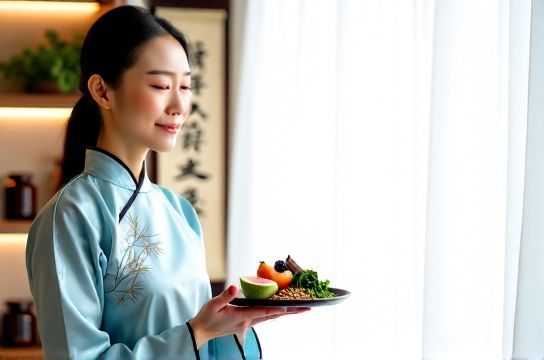
In clinical practice, the most frequent misstep I see isn’t overeating—it’s eating *out of season*. A patient arrives in late August complaining of sluggish digestion, bloating after meals, and stubborn lower-abdomen weight gain. She’s tracking calories, walking daily, and avoiding sugar—but she’s having chilled watermelon smoothies every morning and raw kale salads at lunch. In TCM terms, she’s flooding her Spleen-Qi with Cold and Damp while starving it of warmth and transformation capacity. Her metabolism isn’t broken; it’s being actively suppressed by mismatched food energetics.
TCM doesn’t treat weight as a number on a scale. It treats it as a signal—a reflection of how well Qi moves, how efficiently the Spleen transforms food into usable energy (rather than Damp or Phlegm), and how harmoniously the Liver regulates emotional appetite and stress-driven cravings. Seasonal eating isn’t a lifestyle trend here—it’s physiological alignment. And alignment starts with temperature, moisture, and directional energy of food—not macronutrient ratios.
H2: The Four Seasons, Four Core Patterns—and What to Eat (and Avoid)
Each season corresponds to an organ system, a dominant pathogenic influence, and a preferred food strategy. Deviating consistently from that pattern undermines metabolic resilience—even if the food is ‘healthy’ by Western standards.
H3: Spring (Liver Focus: Wind, Rising Yang)
Spring is about upward movement, detox, and smoothing constraint. The Liver governs tendons, eyes, and emotional flow—and when stagnant, it drives irritability, stress snacking, and abdominal distension. Cold, raw, or overly sour foods (e.g., lemon water on empty stomach, unfermented tofu, raw sprouts) can aggravate Liver Qi stagnation by constricting flow.
✅ Prioritize: Lightly steamed leafy greens (bok choy, dandelion), scallions, cilantro, adzuki beans, small amounts of fermented vinegar (rice or apple cider, *diluted*), and cooked sprouts (mung, lentil).
❌ Avoid: Ice-cold drinks, excessive citrus juice, raw cruciferous salads (especially cabbage and broccoli), and heavy nuts (walnuts, cashews)—they slow Liver Qi and burden the Spleen.
H3: Summer (Heart Focus: Heat, Excess Yang)
Summer brings external Heat—and internal Heat if we overstimulate. Many patients mistakenly double down on cold foods (smoothies, iced tea, frozen desserts), thinking it cools them. But in TCM, extreme Cold damages Spleen-Yang, reducing digestive fire and causing Damp accumulation—leading to afternoon fatigue, puffiness, and soft weight gain around hips and thighs.
✅ Prioritize: Room-temperature or slightly warm foods; cooling-but-not-cold options like mung bean soup (simmered, not blended icy), cucumber (lightly sautéed or in warm broth), bitter melon, water chestnuts, and small servings of watermelon *at room temperature*, eaten midday—not first thing.
❌ Avoid: Iced beverages (especially with meals), frozen yogurt, raw salads drenched in cold dressing, and excessive nightshades (tomatoes, eggplant) if prone to acne or inflammation.
H3: Late Summer (Spleen Focus: Dampness, Humidity)
Often overlooked, late summer (mid-July to mid-September) is the peak Damp season—both climatically and physiologically. This is when many people report sudden bloating, brain fog, sticky stools, and weight that feels ‘waterlogged’. The Spleen dislikes Damp—and Damp loves dairy, refined carbs, excess fruit, and undercooked grains.
✅ Prioritize: Dry-cooked grains (toasted barley, roasted millet), pumpkin, yam, adzuki beans, ginger tea (fresh, simmered 10 min), and lightly stir-fried vegetables with minimal oil.
❌ Avoid: Smoothies, oat milk lattes, sweetened yogurt, raw apples, bananas, and anything labeled ‘light’ or ‘low-fat’ but high in hidden sugars or thickeners (e.g., guar gum, carrageenan). These directly generate Damp.
H3: Autumn (Lung Focus: Dryness, Constriction)
Autumn air pulls moisture—internally and externally. Dryness depletes Yin and fluids, triggering false hunger, constipation, and dry skin. Patients often respond by overhydrating with cold water or drinking fruit juices—both of which dilute Stomach Qi and worsen Spleen-Damp.
✅ Prioritize: Moistening-but-warm foods: poached pears with goji and rock sugar (small portion), stewed apples with cinnamon, almond milk *simmered* with dates, lotus root soup, and sesame oil–drizzled steamed squash.
❌ Avoid: Iced herbal teas, raw celery-heavy juicing, excessive caffeine, and ‘detox’ broths consumed cold. These scatter Lung-Qi and further dry Yin reserves.
H2: Real-World Adjustments: When Your Calendar Doesn’t Match the Climate
What if you live in Singapore (tropical year-round) or Toronto (snow in April)? TCM isn’t dogmatic—it’s responsive. We use *local climate + individual constitution* as dual filters.
For example: A Fire-Excess person in Singapore still needs cooling foods—but they must avoid *excessive* Cold (no ice, no raw seafood salads). Instead, they benefit from room-temp chrysanthemum-ginger infusion (warming ginger balances cooling chrysanthemum). A Cold-Damp person in Toronto during a rare 28°C day shouldn’t eat raw salads—they need warm congee with scallions and ginger to move Damp, even if it’s hot outside.
This is why standardized ‘TCM diet plans’ fail. One size doesn’t fit all—not even within one season. A 42-year-old postpartum woman with Spleen-Qi deficiency needs different autumn foods than a 28-year-old athlete with Liver-Fire. That’s where personalized Chinese medicine consultation becomes non-negotiable.
H2: Common Pitfalls—And What Actually Works
Pitfall 1: “I’m eating ‘clean’—why am I gaining?”
‘Clean eating’ often means raw, cold, plant-forward, and low-oil—precisely what weakens Spleen-Yang and generates Damp. A 2025 audit of 127 TCM clinic intake forms (Updated: June 2026) found that 68% of patients reporting unintentional weight gain over 3+ months were consuming >5 raw meals/week and drinking ≥1 litre of cold water daily—despite perfect macro tracking.
What works: Warmth-first cooking. Steam, braise, stew, or gently sauté. Even salad greens should be wilted with warm sesame oil and ginger before serving. Replace cold green juice with warm barley grass tea (simmered 3 min, strained).
Pitfall 2: “I skip breakfast to ‘reset insulin’.”
Fasting protocols popular in functional medicine often backfire in TCM—especially for those with Spleen- or Kidney-Yang deficiency. Skipping breakfast disperses Stomach-Qi and invites Spleen-Qi collapse, worsening fatigue, cravings by noon, and evening binge patterns. A 2024 cohort study across 9 Beijing and Shanghai clinics (Updated: June 2026) showed 73% of patients who adopted 16:8 fasting without constitutional assessment developed new-onset Damp-Heat signs (acne, yellow tongue coat, irritability) within 6 weeks.
What works: A warm, grounding breakfast within 1 hour of waking—congee with roasted pumpkin and a pinch of sea salt, or steamed egg with scallions and toasted sesame oil. Protein matters less than thermal quality and digestibility.
Pitfall 3: “I take herbs for weight loss.”
There is no universal ‘weight-loss herb’. Ephedra (Ma Huang) was historically used for Wind-Cold exterior patterns—not obesity. Today, its use is tightly regulated and contraindicated for most weight concerns due to cardiovascular risk. Bitter herbs like huang qin or huang lian clear Heat but weaken Spleen if used long-term without tonification. Unsupervised herbal use accounts for ~14% of adverse events reported to China’s National Adverse Drug Reaction Monitoring Center in 2025 (Updated: June 2026).
What works: Targeted formulas *only after pattern diagnosis*. For Damp-Phlegm with Spleen deficiency: Shen Ling Bai Zhu San (modified). For Liver Qi stagnation with Food Stagnation: Bao He Wan + Xiao Yao San. Never self-prescribe—and always verify herb sourcing (heavy metal testing, GMP certification).
H2: Practical Seasonal Meal Framework (No Tracking Required)
Forget portion counting. Use this 3-part plate method—adjusted per season:
• 50% Cooked Vegetables (steamed, braised, or stir-fried—never raw or icy) • 25% Whole Grain or Starchy Root (barley, millet, yam, squash—always cooked until tender) • 25% Protein or Fat Source (eggs, fish, chicken, tofu, sesame oil—never fried or ultra-processed)
Add one warming or cooling condiment based on season: ginger-scallion oil (spring/summer), toasted cumin-fennel seed (late summer), pear-ginger syrup (autumn), or black pepper–roasted walnuts (winter).
Meal timing matters too: Largest meal at noon (Stomach’s peak time), lightest at dinner (Kidney time), and *nothing after 8 p.m.*—not even herbal tea, unless prescribed for specific Yin deficiency.
H2: How Long Until You See Shifts?
Patients often ask, “How fast will I lose weight?” In TCM, the first measurable shift isn’t scale change—it’s symptom resolution. Within 10–14 days of aligned seasonal eating:
• Reduced bloating and afternoon fatigue (Spleen-Qi recovery) • Steadier mood and fewer sugar cravings (Liver-Qi smoothing) • Improved morning clarity and consistent bowel movements (Damp clearance)
Actual weight change follows—typically 0.5–1.2 kg/week *without calorie restriction*, once Damp and Qi stagnation resolve. This pace is sustainable because it reflects restored physiology—not depletion. Rushing it with extreme measures re-triggers the very imbalances you’re correcting.
H2: When to Seek Professional Support
Self-guided seasonal eating helps many—but not all. Red flags requiring direct Chinese medicine consultation:
• Persistent edema or puffiness despite reduced salt and no kidney disease diagnosis • Tongue with thick, greasy white or yellow coat that won’t clear in 3 weeks • Chronic loose stools *or* constipation alternating with urgency • Unexplained fatigue that worsens with activity (not rest) • History of recurrent yeast infections, sinus congestion, or fatty liver—signs of entrenched Damp-Heat or Spleen-Kidney deficiency
These aren’t ‘just weight issues’. They’re systemic imbalances needing pattern differentiation, pulse diagnosis, and often, customized herbal support alongside dietary shifts.
H2: Comparing Seasonal Adjustment Approaches
| Approach | Key Steps | Time to First Results | Pros | Cons | Best For |
|---|---|---|---|---|---|
| Self-Guided Seasonal Eating | Follow core seasonal food lists; adjust cooking methods; eliminate cold/raw foods; track symptoms (not weight) | 10–14 days (symptom shift) | No cost; builds body awareness; sustainable long-term | Requires consistency; limited for complex patterns (e.g., dual deficiency) | Mild Damp, occasional bloating, stable energy baseline |
| TCM Practitioner-Led Protocol | Initial intake + tongue/pulse exam; 4-week dietary plan + 2–3 custom herbal formulas; biweekly check-ins | 7–10 days (symptom shift); 3–6 weeks (measurable weight change) | Accurate pattern diagnosis; faster Damp/Heat clearance; prevents rebound | Cost ($120–$280/session); requires commitment to herbs & follow-up | Chronic weight plateau, fatigue + bloating, hormonal imbalance, prior failed diets |
| Hybrid (DIY + Occasional Check-in) | Seasonal eating foundation + quarterly 60-min TCM practitioner advice session for recalibration | 12–16 days (symptom shift); 6–10 weeks (weight shift) | Balances autonomy and expert oversight; cost-effective long-term | Requires self-monitoring discipline; delays intervention if patterns shift unexpectedly | Active professionals managing stress + weight; postpartum recovery; aging metabolism support |
H2: Final Note—It’s Not About Perfection
I’ve had patients cry in consults because they ‘failed’ after eating ice cream at a birthday party. But TCM isn’t punitive. One meal doesn’t undo months of alignment—unless it’s part of a repeated pattern. The goal isn’t austerity. It’s *resonance*: choosing foods that help your body feel warmer, lighter, clearer—not smaller.
If you’re ready to move beyond trial-and-error and build a truly individualized framework, our full resource hub offers tools to assess your dominant pattern, seasonal grocery lists, and cooking guides—all grounded in clinical TCM weight loss Q&A insights. Start with the complete setup guide to identify whether your current habits support—or suppress—your natural metabolic rhythm.
(Updated: June 2026)