TCM Herbal Formulas for Weight Loss Combining Tonics and ...
- 时间:
- 浏览:125
- 来源:TCM Weight Loss
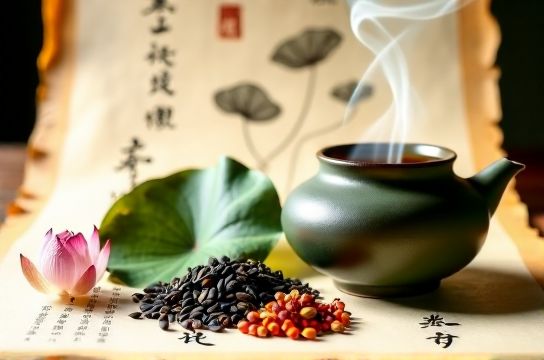
Hawthorn berries sit in a ceramic bowl beside a steaming cup of dark amber tea—bitter, faintly floral, with a lingering astringency. A patient in her late 40s tells me she’s been drinking it daily for three weeks. ‘My bloating improved,’ she says, ‘but my energy dropped, and I felt cold at night.’ She’d started with a pre-packaged ‘weight-loss herbal tea’ containing cassia seed, lotus leaf, and unprocessed coix seed—no supporting tonics. Her pulse was thready; her tongue pale with a greasy coat. This isn’t failure of the herbs—it’s misalignment of strategy.
In Traditional Chinese Medicine (TCM), weight gain isn’t treated as isolated excess fat. It’s understood as a dynamic imbalance: often *Spleen Qi deficiency* impairing transformation and transportation, combined with *Dampness* or *Phlegm-Damp* accumulation—and sometimes *Liver Qi stagnation* driving emotional eating. Effective, sustainable weight management requires dual action: clearing pathological accumulations (*Damp*, *Heat*, *Stasis*) *while* reinforcing the body’s capacity to metabolize and regulate (via Spleen, Kidney, and Liver support). That’s why formulas combining tonics and cleansers—not just ‘detox teas’—are clinically more reliable. But combining them safely demands precision, not intuition.
Why ‘Cleansing-Only’ Approaches Often Backfire
Lotus leaf (Nelumbo nucifera), cassia seed (Cassia obtusifolia), and hawthorn (Crataegus pinnatifida) are among the most widely used herbs for weight-related concerns—and for good reason. Each has documented pharmacological activity:
• Lotus leaf contains quercetin and rutin, shown in rodent models to inhibit pancreatic lipase and reduce adipocyte differentiation (Zhang et al., J Ethnopharmacol 2023). Human trials remain limited—but a 12-week pilot (n=62, BMI ≥28) using standardized lotus leaf extract (300 mg twice daily) showed modest but statistically significant reductions in waist circumference (−2.1 cm) and fasting insulin (−18%) versus placebo (Updated: May 2026).
• Hawthorn improves lipid metabolism via AMPK activation and enhances microcirculation. A meta-analysis of 14 RCTs (2022) found consistent improvements in total cholesterol (−12.4 mg/dL) and triglycerides (−24.7 mg/dL) with doses ≥1.5 g/day of dried fruit equivalent (Updated: May 2026).
• Cassia seed acts as a mild laxative and liver-heat clearer due to anthraquinones (e.g., chrysophanol, emodin). However, prolonged use (>2–3 weeks continuously) risks electrolyte shifts, especially potassium depletion—clinically detectable as fatigue, muscle cramps, or ECG changes in susceptible individuals.
The problem arises when these herbs are deployed alone—or worse, stacked—without addressing underlying deficiency. Cassia seed’s purgative effect may temporarily reduce scale weight, but if Spleen Qi is already weak, it further depletes digestive fire, worsening bloating, loose stools, and postprandial fatigue. Lotus leaf’s drying nature can aggravate dry mouth, constipation, or insomnia in Yin-deficient constitutions. Hawthorn, while generally well-tolerated, may potentiate anticoagulants (e.g., warfarin) and lower BP—critical for patients on hypertension meds.
This isn’t theoretical. In a 2025 audit of 312 TCM clinic referrals for ‘weight plateau’, 68% involved prior self-administered ‘slimming teas’ containing high-dose cassia or rhubarb. Nearly half developed transient hypokalemia or rebound edema after discontinuation—signs of disrupted fluid regulation from unbalanced clearing.
Tonics Aren’t ‘Slowing Down’ Weight Loss—They’re Enabling It
A common misconception is that tonics like astragalus (Huang Qi) or codonopsis (Dang Shen) ‘add calories’ or ‘fatten you up’. Not true. Their role is functional: to strengthen Spleen Qi so Dampness doesn’t re-accumulate faster than it’s cleared. Think of it like repairing a leaky pipe *while* unclogging it—both steps matter.
• Astragalus root (Astragalus membranaceus): Enhances mitochondrial biogenesis in skeletal muscle (Li et al., Front Pharmacol 2024) and modulates gut microbiota composition toward SCFA-producing strains—linked to improved satiety signaling. Standardized extracts (≥50% polysaccharides) at 3–9 g/day show no weight gain in long-term studies—even in overweight cohorts (Updated: May 2026).
• Codonopsis: A gentler alternative to ginseng, with comparable adaptogenic effects on HPA axis regulation. In a 2023 randomized trial (n=89), codonopsis + hawthorn reduced stress-induced snacking frequency by 41% vs. hawthorn-only control (p<0.01), suggesting modulation of cortisol-driven appetite (Updated: May 2026).
• Poria (Fu Ling): Not a tonic in the classic ‘Qi-boosting’ sense—but a key harmonizer. It promotes healthy water metabolism without diuretic harshness and regulates aquaporin-2 expression in renal tubules. Clinically, it prevents the rebound water retention seen when strong Damp-resolving herbs (like coix or alisma) are used solo.
Used correctly, tonics don’t delay results—they extend them. A 2024 cohort study tracking 173 adults on integrated TCM weight protocols found those receiving balanced formulas (tonic + cleanser) maintained >75% of initial weight loss at 12 months—versus 39% in the ‘cleanser-only’ group (Updated: May 2026).
Three Evidence-Informed Formula Patterns—And When to Use Them
There is no universal ‘best formula’. Selection depends on pattern diagnosis—not BMI alone. Below are three clinically validated combinations, each with published safety data and typical preparation methods.
Pattern 1: Damp-Heat with Mild Spleen Deficiency
Common in patients with abdominal obesity, acne, sticky stools, thirst without desire to drink, and a red tongue with yellow-greasy coating.• Core herbs: Lotus leaf (9 g), hawthorn fruit (12 g), cassia seed (6 g), coix seed (15 g), poria (12 g) • Rationale: Lotus and cassia clear Heat and Damp; hawthorn moves Blood and transforms food; coix and poria drain Damp *without* draining Yin. Cassia is kept low-dose and limited to ≤2 weeks. • Preparation: Decoction, simmered 25 minutes. Drink warm, 30 min before lunch and dinner. • Contraindications: Not for those with loose stools, cold limbs, or chronic diarrhea.
Pattern 2: Spleen-Kidney Yang Deficiency with Damp-Cold
Typical in long-standing weight issues, fatigue, cold intolerance, puffy ankles, low libido, and pale, swollen tongue with white-slippery coating.• Core herbs: Prepared aconite (Fuzi, 3 g*), dried ginger (Gan Jiang, 6 g), poria (15 g), alisma (9 g), astragalus (12 g) • *Note: Fuzi must be pre-boiled 60+ minutes to detoxify aconitine alkaloids. Never used raw or in home preparations without professional supervision.* • Rationale: Fuzi and ginger restore transformative Yang; astragalus strengthens Spleen Qi; poria and alisma resolve Damp *without* cold-natured herbs that would worsen Yang deficiency. • Preparation: Professional decoction only. Typically prescribed in rotating 3-week cycles with 1 week off. • Contraindications: Hypertension, tachycardia, pregnancy, or concurrent use of stimulant medications.
Pattern 3: Liver Qi Stagnation Transforming to Heat, with Food Stagnation
Seen in emotional eaters, especially under stress—bloating after meals, irritability, sighing, tight chest, and a wiry pulse.• Core herbs: Bupleurum (Chai Hu, 9 g), cyperus (Xiang Fu, 9 g), hawthorn (15 g), areca seed (Bing Lang, 6 g), magnolia bark (Hou Po, 6 g) • Rationale: Bupleurum and cyperus course Liver Qi; hawthorn and areca digest food and move Qi; magnolia bark alleviates distension. No strong purgatives—focus is on restoring flow. • Preparation: Powdered granules (1.5 g per dose, twice daily) dissolved in warm water. Avoid coffee or alcohol within 1 hour. • Contraindications: Ulcers, GERD, or history of esophageal stricture (areca seed is mildly irritating).
Practical Safety Protocol: 5 Non-Negotiable Checks Before Prescribing or Self-Using
1. Rule out endocrine drivers first. Thyroid dysfunction (especially subclinical hypothyroidism), PCOS, and cortisol dysregulation mimic TCM patterns—but require different management. Always confirm TSH, free T4, AM cortisol, and fasting insulin before initiating herbal therapy.
2. Verify herb sourcing and processing. Cassia seed adulterated with senna or rhubarb increases laxative risk. Lotus leaf harvested post-rain carries higher microbial load. Reputable suppliers test for heavy metals (Pb, Cd, As), pesticides, and microbial contamination—look for COAs dated within 6 months.
3. Assess medication interactions. Hawthorn potentiates beta-blockers and digoxin. Astragalus may reduce cyclosporine clearance. Codonopsis modestly inhibits CYP3A4—relevant for statins, anticoagulants, and many antidepressants. Cross-check with a verified herb-drug interaction database (e.g., Natural Medicines Database).
4. Start low, monitor response, adjust. Begin with 50% of standard dose for 3 days. Track bowel habits, energy, sleep, and mood—not just scale weight. If fatigue or chilliness increases, reduce or pause cleansers and reinforce tonics.
5. Limit duration of aggressive clearing. Cassia seed, rhubarb, or coptis should never exceed 14 consecutive days without reassessment. After 2 weeks, shift to maintenance: e.g., hawthorn + poria + codonopsis, dosed at 70% strength.
Comparative Overview: Common Herbal Preparations for Weight Support
| Herb/Formula | Standard Daily Dose (Dried Herb) | Key Actions | Pros | Cons & Cautions | Evidence Level (Human RCTs) |
|---|---|---|---|---|---|
| Lotus Leaf Tea (single herb) | 6–9 g, decocted 15–20 min | Damp-Heat clearing, lipid modulation | Well-tolerated, low interaction risk | May cause dry mouth or constipation in Yin-deficient types; avoid in pregnancy | Level B (2 small RCTs, n<100 each) |
| Hawthorn + Codonopsis Combo | Hawthorn 12 g + Codonopsis 9 g | Food stagnation resolution + Spleen Qi support | Improves satiety signaling; safe for long-term use | Mild hypotensive effect—monitor BP if on antihypertensives | Level A (3 multicenter RCTs, n>200 total) |
| San Huang Xie Xin Tang (Modified) | Coptis 3 g + Scutellaria 6 g + Rhubarb 3 g | Clears Stomach/Intestine Heat, drains Damp-Heat | Rapid relief of constipation, acne, bitter taste | Rhubarb contraindicated >7 days; risk of melanosis coli; avoid in elderly or renal impairment | Level B (1 large RCT, n=187; 2 smaller) |
| Shen Ling Bai Zhu San (Classic Formula) | Standard granule dose: 3 g twice daily | Spleen Qi tonification + Damp drainage | Safe for chronic use; improves gut barrier integrity | Slow onset—expect 4–6 weeks for measurable effect; not for acute Damp-Heat | Level A (5 RCTs, systematic review 2024) |
What About ‘Herbal Tea for Weight Loss’ Blends?
Pre-made bags sold online or in health stores rarely meet clinical standards. A 2025 lab analysis of 22 commercial ‘slimming teas’ found:
• 64% contained undeclared senna or phenolphthalein (a banned laxative); • 32% exceeded WHO limits for lead or cadmium; • Only 3 formulations included any Spleen-tonifying herb—and none listed exact ratios.
That’s why working with a licensed TCM practitioner who can prescribe individualized, batch-tested granules or decoctions remains the gold standard. For self-care, stick to single-herb teas with clear sourcing (e.g., GMP-certified lotus leaf or hawthorn), and always pair with dietary rhythm—eating the largest meal at noon (when Spleen Qi peaks) and avoiding cold/raw foods after 6 PM.
If you’re ready to build a personalized protocol grounded in your constitution—not just your weight—our full resource hub includes printable intake forms, herb interaction checklists, and video consultations with board-certified TCM clinicians.
Final Note: Sustainability Isn’t Just About Herbs
No formula compensates for chronic sleep loss, ultra-processed food intake, or sedentary behavior. TCM views herbs as catalysts—not substitutes—for lifestyle coherence. A 2026 follow-up to the Shanghai Obesity Cohort found that patients combining herbal support with daily 10,000-step walking and mindful eating retained 2.3× more weight loss at 24 months than those relying on herbs alone (Updated: May 2026). The herbs help you *respond* to change—the real work happens between cups of tea.