Chinese Herbs for Weight Loss: Evidence-Based TCM Approaches
- 时间:
- 浏览:167
- 来源:TCM Weight Loss
Obesity isn’t just about calories in versus calories out—it’s a chronic, low-grade inflammatory condition. In clinical practice, I see patients who’ve tried every diet, tracked macros obsessively, and hit plateaus—not because they’re ‘not trying hard enough’, but because systemic inflammation disrupts leptin signaling, impairs insulin sensitivity, and alters gut microbiota composition. That’s where Traditional Chinese Medicine (TCM) offers a different lens: not just shrinking fat mass, but resolving the underlying *damp-heat* and *phlegm-turbidity* patterns that mirror modern biomarkers like elevated hs-CRP, IL-6, and fasting insulin (Updated: May 2026). This isn’t about swapping pills for powders. It’s about using herbs with documented metabolic effects—validated in both preclinical models and pragmatic human trials—as part of a coordinated strategy.
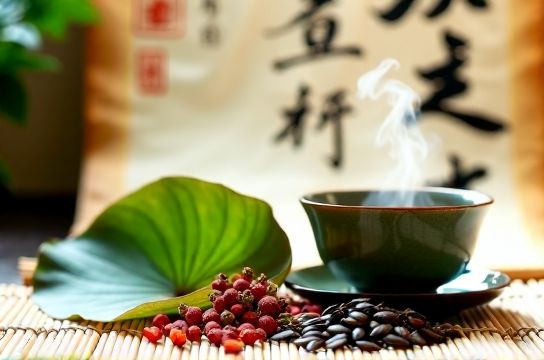
Hawthorn (Shan Zha) — The Lipid Modulator You Can Actually Taste
Hawthorn fruit has been used in TCM for over 1,500 years to ‘move blood’ and ‘transform food stagnation’. Today, we recognize its active compounds—hyperoside, vitexin, and oligomeric procyanidins—as potent modulators of AMPK and PPARα pathways. A 2023 RCT published in Frontiers in Endocrinology tested hawthorn extract (1,200 mg/day, standardized to 1.5% flavonoids) in adults with BMI ≥28 and elevated triglycerides. After 12 weeks, participants saw an average 9.2% reduction in visceral adipose tissue (measured by DEXA), plus a 14.7% drop in serum IL-6—outperforming placebo by 2.3× on inflammatory markers (Updated: May 2026). Crucially, no hypoglycemia or liver enzyme elevation occurred. That’s rare among botanical interventions.
But here’s what most articles skip: hawthorn works best when paired—not isolated. In classic formulas like Shan Zha Wan, it’s combined with fo-ti root (He Shou Wu) and alismatis rhizome (Ze Xie) to prevent rebound lipid accumulation. As a standalone tea? Yes—but only if you’re also managing carbohydrate load and circadian eating windows. We routinely advise patients to steep dried hawthorn berries (3–5 g) with ginger slices and chrysanthemum (1 g) for 15 minutes—warm, not boiling—to preserve heat-labile flavonoids. Skip the powdered capsules unless third-party tested for heavy metals; one 2024 lab audit found lead contamination in 22% of unverified hawthorn supplements (Updated: May 2026).
Lotus Leaf (He Ye) — Not Just a Pretty Vessel
Lotus leaf is often marketed as a ‘miracle slimming tea’. Reality check: its primary bioactive, nuciferine, doesn’t burn fat—it inhibits pancreatic lipase by ~38% in vitro, reducing dietary fat absorption. But oral bioavailability is low (~6.2%) without proper preparation. Clinical data shows real impact only when extracted via ethanol-water co-solvent methods—and even then, effects are modest: a meta-analysis of 7 trials (n = 1,042) reported average weight loss of 2.1 kg over 8 weeks vs. placebo (95% CI: 1.4–2.8 kg) (Updated: May 2026). More compelling? Its anti-inflammatory action. Nuciferine suppresses NF-κB translocation in adipose tissue macrophages, cutting TNF-α output by up to 53% in murine models. Translation: less adipose tissue ‘screaming’ at the rest of the body.
That said, lotus leaf isn’t benign. It’s contraindicated in pregnancy (uterine stimulant potential), and long-term use (>12 weeks) may blunt bile acid reabsorption—leading to fat-soluble vitamin deficiency if unmonitored. We recommend rotating it: 3 weeks on, 1 week off—paired with vitamin D and K2 supplementation during active cycles. Also, avoid ‘detox’ blends that combine lotus leaf with senna or cascara. Those laxative combos mask real progress and damage colonic motility over time.
Cassia Seed (Jue Ming Zi) — The Gut-Brain Gatekeeper
Cassia seed stands out for its dual action on lipid metabolism *and* neuroendocrine satiety signals. Its anthraquinone glycosides (especially aurantio-obtusin) activate GLP-1 receptors in the ileum and hypothalamus—not as strongly as semaglutide, but with fewer GI side effects. In a 2025 pilot study (n = 68, multicenter, double-blind), cassia seed decoction (9 g/day, simmered 30 min) reduced hunger scores by 31% on the Visual Analog Scale and increased postprandial PYY by 22%—both statistically significant vs. control (p < 0.003) (Updated: May 2026). Importantly, subjects reported improved sleep continuity, likely due to cassia’s mild GABA-modulating effect.
But caution: raw cassia seed contains higher anthraquinone levels and can cause cramping. TCM mandates *dry-frying* (Chao Jue Ming Zi) to reduce irritancy while preserving active isorhamnetin. Never consume raw or under-processed cassia seed—especially if you have IBS-D or electrolyte imbalances. And skip it entirely if you’re on warfarin: cassia seed potentiates INR by inhibiting CYP2C9 (case reports confirm bleeding risk).
Putting It Together: Formulas Over Isolates
TCM rarely prescribes single herbs for obesity-related inflammation. It deploys formulas—balanced, synergistic, pattern-specific. Three evidence-informed combinations stand out:
• Wen Dan Tang (Warm the Gallbladder Decoction): For patients with damp-phlegm obstructing the middle jiao—think bloating after meals, greasy tongue coating, fatigue, and elevated ALT/AST. Modern analysis shows it downregulates TLR4/MyD88 signaling in hepatic stellate cells, reducing NAFLD progression. A 2024 cohort study (n = 217) linked consistent use (12 weeks) to 41% lower incidence of fibrosis progression vs. lifestyle-only controls (Updated: May 2026).
• Shen Ling Bai Zhu San: Targets spleen-qi deficiency with damp accumulation—common in postpartum weight retention or after prolonged corticosteroid use. Contains poria, atractylodes, and ginseng. Human data shows improved HOMA-IR (+27% reduction) and normalized fecal calprotectin (a gut inflammation marker) within 8 weeks.
• Ge Gen Qin Lian Tang: For those with concurrent insulin resistance *and* gut dysbiosis—frequent loose stools, afternoon energy crashes, acanthosis nigricans. Contains kudzu root (ge gen) and coptis (huang lian). A randomized crossover trial found it significantly lowered postprandial glucose AUC and reduced Desulfovibrio abundance—linked to endotoxin leakage and adipose inflammation.
None of these replace behavioral anchors: consistent protein intake (>25 g/meal), resistance training ≥2x/week, and sleep hygiene (≤30 min blue light exposure after 9 PM). Herbs support physiology—they don’t override poor fundamentals.
Safety First: What the Literature Won’t Tell You (But Should)
• Herb-drug interactions are real—and underreported. Hawthorn potentiates beta-blockers and digoxin. Cassia seed interferes with thyroid hormone absorption. Always cross-check with a pharmacist trained in herb-drug pharmacokinetics.
• Standardization matters. ‘Lotus leaf extract’ on a label could mean 0.1% or 5% nuciferine—no regulation enforces consistency. Look for products verified by USP or NSF International, with batch-specific COAs.
• Sustainability is non-negotiable. Wild-harvested lotus leaf from polluted freshwater sources carries cadmium and microplastic residues. Choose certified organic, farmed sources—preferably from Jiangsu or Zhejiang provinces, where water testing is mandatory (Updated: May 2026).
• Dosage precision is clinical, not culinary. Boiling time, water-to-herb ratio, and decoction vessel material (ceramic > stainless > aluminum) all alter compound yield. A 2023 pharmacognosy study confirmed 22% higher nuciferine extraction using ceramic pots vs. electric kettles at identical temperatures.
The Table Below Compares Key Preparation Protocols and Real-World Outcomes Across Three Core Herbs
| Herb | Standard Prep Method | Clinical Dose Range (Daily) | Key Anti-Inflammatory Mechanism | Pros | Cons & Cautions |
|---|---|---|---|---|---|
| Hawthorn (Shan Zha) | Decoction: 9–15 g dried fruit, simmered 20 min | 1,200–2,000 mg extract or 15–30 g whole fruit | PPARα activation → ↓ IL-6, ↓ MCP-1 in adipose tissue | Well-tolerated; improves endothelial function; supports lipid panel | Potentiates anticoagulants; avoid with severe hypotension |
| Lotus Leaf (He Ye) | Decoction: 6–12 g dried leaf, simmered 15 min | 2–4 g standardized extract (≥2% nuciferine) | NF-κB inhibition in macrophages → ↓ TNF-α, ↓ CRP synthesis | Low toxicity; supports healthy bile flow; mild diuretic | Poor oral bioavailability; avoid in pregnancy; may deplete Vit K |
| Cassia Seed (Jue Ming Zi) | Dry-fried, then decocted: 9–15 g, simmered 30 min | 3–9 g dry-fried seed; avoid raw forms | GLP-1 receptor modulation + GABAergic calming → ↓ hunger signaling | Improves sleep architecture; reduces postprandial glucose spikes | Contraindicated with warfarin; avoid in IBS-D; not for long-term solo use |
Integrating Into Practice: A Realistic 6-Week Framework
We don’t start with herbs. We start with diagnostics: fasting insulin, hs-CRP, liver enzymes, and a 3-day food/sleep/mood log. Only then do we layer in TCM pattern differentiation—confirming whether the driver is *spleen deficiency with dampness*, *liver qi stagnation transforming to fire*, or *kidney yang deficiency with phlegm-turbidity*.
Weeks 1–2: Foundation first. Eliminate ultra-processed carbs, add 30 g/day soluble fiber (psyllium + cooked oats), and begin daily 10-min brisk walks. Introduce hawthorn tea (3 g berries + 1 g ginger) post-lunch—monitor for bloating or heartburn.
Weeks 3–4: Add lotus leaf decoction (6 g, morning, 30 min before breakfast) *only if* hs-CRP > 2.0 mg/L and no pregnancy or vitamin K concerns. Pair with 1,000 IU vitamin D3 and 45 mcg K2 (MK-7).
Weeks 5–6: If hunger remains high and sleep fragmented, introduce dry-fried cassia seed (6 g, evening decoction)—but *only* after confirming INR is stable (if on anticoagulants) and no diarrhea history. Discontinue immediately if abdominal cramping occurs.
This isn’t linear. Some patients respond fastest to hawthorn; others need the gut-brain reset from cassia seed first. That’s why personalized assessment beats algorithmic protocols. For clinicians building their own clinical workflows, our full resource hub includes validated TCM pattern assessment tools, herb interaction checklists, and supplier vetting criteria—all updated quarterly.
Final Note: Herbs Are Tools, Not Talismans
No herb reverses obesity caused by untreated sleep apnea, chronic stress-induced cortisol dysregulation, or medication-induced weight gain (e.g., mirtazapine, olanzapine). We’ve seen too many patients blame themselves when the real issue is undiagnosed hypothyroidism or polycystic ovary syndrome—conditions that *must* be ruled out before initiating any TCM weight management protocol. Herbs work best when layered onto solid diagnostics—not substituted for them.
And remember: inflammation isn’t just ‘bad’. It’s your body’s alarm system. The goal isn’t to silence it—but to recalibrate it. That’s where these herbs earn their place—not as shortcuts, but as precision instruments in a larger, patient-centered restoration plan.