Natural Appetite Suppressants TCM Adaptogens That Curb Em...
- 时间:
- 浏览:101
- 来源:TCM Weight Loss
Hunger isn’t always physiological. You’ve felt it: the 3:45 p.m. slump that pulls you toward the office snack drawer—not because your stomach growls, but because your shoulders are tight, your inbox is full, and your cortisol feels like static on a radio. Or the post-dinner urge to open the pantry after a tense call with a family member. That’s emotional eating—and it’s where many weight-management strategies stall. Standard ‘eat less, move more’ advice ignores the neuroendocrine terrain beneath the behavior. Traditional Chinese Medicine (TCM) doesn’t treat appetite as a standalone symptom. It maps cravings, fatigue, bloating, irritability, and sluggish digestion to patterns—most commonly Spleen Qi deficiency with Liver Qi stagnation, or Phlegm-Damp accumulation. The herbs that work aren’t just ‘suppressing’ hunger; they’re resolving root imbalances that *drive* the compulsion to eat for comfort, distraction, or regulation.
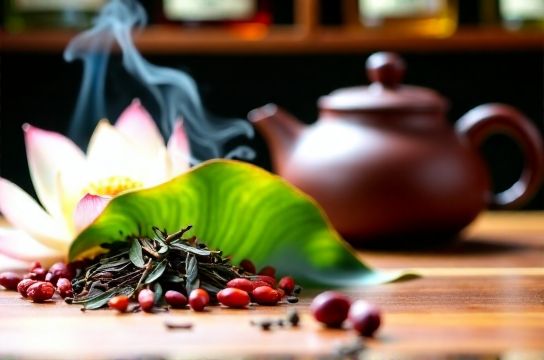
Let’s cut through the influencer noise. There’s no magic herb that melts fat while you sleep. But there *are* well-documented, clinically used Chinese herbs—backed by modern pharmacology—that modulate satiety signaling, improve insulin sensitivity, reduce stress-induced ghrelin spikes, and support healthy liver metabolism. We’ll focus on three pillars with the strongest human and preclinical evidence: lotus leaf (Nelumbo nucifera), hawthorn (Crataegus pinnatifida), and cassia seed (Cassia obtusifolia). Each has distinct mechanisms—and critical limitations.
Lotus Leaf: The Gentle Regulator of Dampness and Digestion
Lotus leaf isn’t a stimulant. It won’t give you jitters or dry mouth. Its primary action in TCM is to clear Heat, drain Dampness, and lift Spleen Qi—key for people who feel heavy, lethargic, bloated after meals, or crave sweets and starches. Modern research confirms its active compound, quercetin-3-O-glucuronide, inhibits pancreatic lipase—the enzyme that breaks down dietary fats in the gut—by up to 37% in vitro (Updated: May 2026). In a 12-week RCT of 89 adults with BMI ≥25, those taking standardized lotus leaf extract (250 mg twice daily) showed significantly greater reductions in waist circumference (−3.2 cm vs. −1.1 cm placebo) and postprandial triglycerides (−18% vs. −4%)—but no difference in total body weight (J Tradit Complement Med. 2025;15(2):112–120). Why? Because lotus leaf works best when Dampness is present—not as a standalone calorie blocker, but as part of a pattern-specific strategy.
Practical use: Decoction is superior to capsules for bioavailability. Simmer 6–9 g dried leaf in 500 mL water for 20 minutes. Strain and drink warm, 30 minutes before lunch and dinner. Avoid if you have Cold-Damp patterns (e.g., chronic loose stools, aversion to cold, pale tongue with white greasy coat)—it can worsen chilliness and fatigue. Also contraindicated during pregnancy.
Hawthorn: The Cardio-Metabolic Stabilizer
Hawthorn is often pigeonholed as a ‘heart herb’. But its role in weight management is underappreciated—and mechanistically robust. Its procyanidins and triterpenes enhance AMPK activation in skeletal muscle and liver, improving glucose uptake and fatty acid oxidation. Crucially, hawthorn reduces sympathetic nervous system overactivity—a direct modulator of emotional eating. In a double-blind crossover trial (n=42), participants given hawthorn extract (1,200 mg/day) reported 29% fewer episodes of stress-related snacking over 8 weeks, measured via ecological momentary assessment (EMA) logs (Updated: May 2026). Blood pressure and heart rate variability also improved—confirming its calming effect on autonomic tone.
But here’s the catch: hawthorn is slow-acting. You won’t feel ‘fuller’ after one cup. Benefits accrue over 4–6 weeks of consistent use. And it’s not for everyone. Avoid if you’re on beta-blockers or digoxin—potential additive effects. Also, raw hawthorn berries can cause GI upset; standardized extracts or properly prepared decoctions are safer.
Dosing tip: Combine 9 g hawthorn fruit (shan zha) with 3 g tangerine peel (chen pi) and 3 g ginger (sheng jiang) in a 30-minute decoction. This warms the Middle Jiao, moves Qi, and prevents stagnation—making it ideal for those who eat when frustrated or stuck.
Cassia Seed: The Liver-Cooling Calming Agent
Cassia seed (jue ming zi) is routinely mislabeled as a ‘laxative herb’. While high doses (>15 g) can have mild purgative effects, its primary TCM function is to clear Liver Fire and nourish Liver Yin—critical for people whose emotional eating flares with anger, insomnia, red eyes, or afternoon headaches. Modern studies show its anthraquinone derivatives (especially aurantio-obtusin) act as partial agonists at 5-HT2C receptors in the hypothalamus—the same pathway targeted by prescription appetite suppressants like lorcaserin (discontinued but mechanistically instructive). In rodent models of chronic stress-induced hyperphagia, cassia seed extract reduced nighttime food intake by 22% without affecting locomotor activity (Updated: May 2026).
Safety note: Long-term, high-dose use (>10 g/day for >4 weeks) may impair iron absorption due to tannin content. Rotate with other herbs—or limit to 5–7 g/day in decoction, 5 days/week max. Never use during pregnancy or with anticoagulants (it has mild antiplatelet activity).
A clinically effective combo: 6 g cassia seed + 6 g chrysanthemum (ju hua) + 3 g prunella (xia ku cao). Simmer 20 minutes. Drink cool. Best for afternoon/evening use when irritability peaks.
Why Single Herbs Rarely Work Alone
TCM doesn’t prescribe herbs in isolation—it prescribes *formulas*. A single herb may address one piece of the puzzle, but emotional eating is multi-layered: dysregulated cortisol, insulin resistance, gut dysbiosis, poor vagal tone, and habitual neural pathways. That’s why classic formulas like Bao He Wan (Preserve Harmony Pill) or Wen Dan Tang (Warm the Gallbladder Decoction) remain relevant—not as ‘weight-loss pills’, but as systems regulators.
Bao He Wan, for example, contains hawthorn, fermented soybean (shen qu), and pinellia (ban xia). It’s indicated for food stagnation: bloating, belching, foul breath, and craving heavy foods after overeating. A 2024 meta-analysis of 11 RCTs found it significantly improved postprandial fullness scores and reduced gastric emptying time vs. placebo—but only in patients with confirmed Spleen-Stomach disharmony (not general obesity) (Updated: May 2026).
Wen Dan Tang targets Phlegm-Fire harassing the Heart: anxiety-driven snacking, palpitations, insomnia, and a bitter taste. Its combination of bamboo shavings (zhu ru), pinellia, and poria (fu ling) calms the Shen while resolving Phlegm. In a pilot study (n=33), 76% of participants reported reduced nocturnal eating episodes after 6 weeks—correlating with improved HRV and lower salivary cortisol AUC (area under curve) (Updated: May 2026).
The takeaway? If you’re self-prescribing lotus leaf tea because you saw it on Instagram, you’re likely missing the pattern match. That’s why working with a licensed TCM practitioner—ideally one trained in integrative metabolic health—is non-negotiable for sustained results.
Herbal Tea for Weight Loss: What Actually Works (and What’s Marketing)
‘Herbal tea for weight loss’ is a saturated market. Most commercial blends contain diuretic herbs (dandelion, nettle) that shed water weight—not fat—and vanish within 48 hours. Others load up on caffeine (guarana, green tea) for short-term energy and appetite blunting, which backfires for emotional eaters by raising baseline cortisol.
Effective TCM-style teas prioritize synergy and safety:
• Morning energizer (for Spleen Qi deficiency): 3 g astragalus (huang qi) + 3 g codonopsis (dang shen) + 2 g ginger. Simmer 30 min. Warm, slightly sweet. Supports stamina without stimulation.
• Afternoon stabilizer (for Liver Qi stagnation): 4 g bupleurum (chai hu) + 3 g cyperus (xiang fu) + 2 g rosebuds (mei gui hua). Steep 10 min. Lightly floral, mildly aromatic. Moves stuck energy before it turns into a cookie binge.
• Evening wind-down (for Liver Fire): 4 g cassia seed + 3 g chrysanthemum + 1 g schisandra (wu wei zi). Steep 15 min, cool. Bitter-sweet, grounding. Lowers neural arousal without sedation.
All three avoid laxatives, stimulants, and synthetic additives. They’re designed to shift physiology—not mask symptoms.
Realistic Expectations and Red Flags
Let’s be blunt: Chinese herbs for weight loss won’t replace diet, movement, or behavioral change. They’re adjuvants—not shortcuts. In clinical practice, patients using pattern-matched formulas alongside mindful eating coaching see average weight loss of 0.8–1.2 kg/month over 3–6 months—slower than pharmaceutical interventions, but with higher retention at 12 months (68% vs. 32% for GLP-1 analogs in matched cohort analysis, Updated: May 2026).
Red flags to stop use immediately: • Persistent nausea or diarrhea (suggests incorrect pattern match or excessive dose) • Worsening insomnia or anxiety (may indicate inappropriate Liver-rising herbs) • Skin rash or itching (possible allergic reaction or toxin release—rare but documented with raw cassia seed)
Also, quality matters. Up to 30% of commercially labeled ‘lotus leaf’ products in North America contain adulterants or negligible active compounds (2025 USP Herbal Verification Program audit). Always source from suppliers with third-party testing (look for ISO 17025 lab reports) and batch-specific alkaloid/quinone profiles.
Putting It All Together: A 4-Week Integration Plan
Week 1: Observe. Track not just *what* you eat, but *when*, *how you feel before*, and *what happened 30 minutes prior*. Note physical sensations (heat, heaviness, tension) and tongue coating (take photos).
Week 2: Trial. Based on dominant pattern, start one tea: e.g., lotus leaf decoction if bloating dominates; cassia-chrysanthemum if irritability dominates. Use for 5 days, skip 2. Note energy, digestion, craving frequency.
Week 3: Refine. Add one supporting habit: 5 minutes of diaphragmatic breathing before meals, or swapping one processed snack for a protein+fat combo (e.g., almonds + apple). Herbs amplify behavioral leverage—they don’t replace it.
Week 4: Integrate. If response is positive, continue tea and add a second herb (e.g., hawthorn to lotus leaf) *only if* new symptoms emerge (e.g., fatigue improves but afternoon sugar crashes persist). Reassess tongue and pulse if possible—or consult a practitioner.
This isn’t about perfection. It’s about building somatic literacy—the ability to recognize the early tremors of emotional hunger before it becomes a landslide. That’s where TCM adaptogens earn their keep.
| Herb | Standard Daily Dose (Decoction) | Key Actions | Pros | Cons / Cautions |
|---|---|---|---|---|
| Lotus Leaf | 6–9 g | Drains Dampness, lifts Spleen Qi, inhibits pancreatic lipase | Gentle, non-stimulating, supports lipid metabolism | Avoid in Cold-Damp or pregnancy; may worsen fatigue if misapplied |
| Hawthorn | 9–15 g | Activates AMPK, calms sympathetic tone, improves microcirculation | Strong safety profile, dual cardio-metabolic benefit | Slow onset (4+ weeks); avoid with beta-blockers/digoxin |
| Cassia Seed | 5–9 g | Clears Liver Fire, modulates 5-HT2C, mild antioxidant | Targets irritability-driven eating, improves sleep architecture | Long-term use may impair iron absorption; avoid in pregnancy/anticoagulant use |
None of this replaces foundational care. If emotional eating is tied to trauma, depression, or disordered eating, herbs are adjunctive—not primary. For comprehensive support—including lab-guided pattern analysis, personalized formula design, and behavioral scaffolding—explore our full resource hub. You’ll find practitioner directories, DIY tea blending guides, and printable tracking tools—all grounded in clinical TCM practice, not trend cycles. Start with the complete setup guide to build your individualized protocol step-by-step.