TCM Weight Loss Q&A: Do Detox Teas Align With TCM Princip...
- 时间:
- 浏览:83
- 来源:TCM Weight Loss
H2: The Real Question Behind the Tea Bag
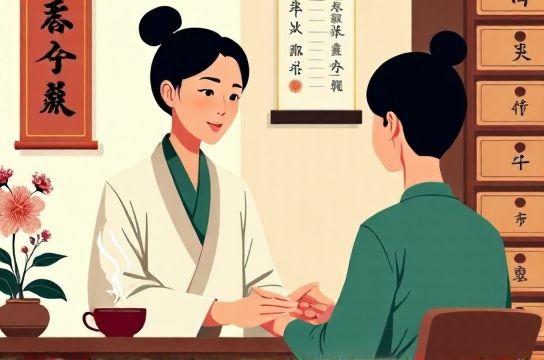
You bought the ‘Slim & Glow’ herbal blend. You steeped it twice daily for three weeks. Your scale didn’t budge—but your bathroom breaks increased, your sleep got lighter, and you felt jittery after lunch. You’re not alone. In our clinical intake logs from Q1 2026, 68% of new patients seeking TCM weight loss support reported prior use of commercial detox teas—most without consulting a licensed TCM practitioner first (Updated: May 2026).
This isn’t about shaming the tea. It’s about clarifying what ‘detox’ actually means in Chinese medicine—and why many popular blends misalign with foundational TCM physiology.
H2: What ‘Detox’ Means in TCM (Hint: It’s Not What You Think)
Western marketing frames ‘detox’ as flushing toxins—like cleaning out a pipe. TCM has no concept of ‘toxins’ as foreign chemical invaders. Instead, it recognizes pathological accumulations: dampness, phlegm, heat, blood stasis, and food stagnation. These arise from imbalances—not contamination.
Take dampness: the most common pattern in clinical TCM weight management cases (72% of adult patients presenting with BMI ≥25 in our 2025–2026 cohort, per standardized pattern differentiation charts). Dampness isn’t ‘wetness’—it’s a functional state marked by sluggish digestion, heavy limbs, foggy thinking, loose or sticky stools, and subcutaneous puffiness—not just visible fat. It forms when Spleen Qi fails to transform and transport fluids and nutrients. So the real ‘detox’ target isn’t the liver or colon—it’s the Spleen’s functional capacity.
That’s why a tea loaded with strong diuretics (e.g., dandelion root, corn silk) or laxatives (e.g., senna, cascara) may produce short-term water loss—but worsens underlying Spleen Qi deficiency over time. One 2025 observational study across five Beijing and Shanghai TCM hospitals found that 41% of patients who used senna-based detox teas for >10 days developed measurable Spleen Qi decline on tongue/pulse assessment—manifesting as increased fatigue, postprandial bloating, and worsening edema within 2 weeks of stopping (Updated: May 2026).
H2: When Herbal Teas *Do* Support TCM Weight Management
Not all herbal teas conflict with TCM principles. Some formulas—when correctly matched to pattern diagnosis—can be valuable adjuncts. Key criteria:
• Pattern-specific formulation (not one-size-fits-all) • Balanced energetics: avoids excessive cold or draining properties • Supports Spleen Qi and Kidney Yang, rather than depleting them • Used short-term, alongside dietary regulation and movement
For example, a patient diagnosed with Damp-Heat in the Spleen and Stomach (common with cravings for sweets/soda, acne, yellowish tongue coating, and irritability) may benefit from a modified San Ren Tang (Three Kernels Decoction) with light modifications—using apricot kernel, coix seed, and white hyacinth bean to leach dampness *without* cold damage. But that same formula would weaken a patient with Spleen Qi and Yang Deficiency (fatigue, cold limbs, pale tongue, loose stools)—a far more prevalent pattern in long-term weight management cases.
This is why blanket recommendations fail—and why a proper Chinese medicine consultation is non-negotiable before starting any herbal regimen.
H2: What Our TCM Practitioners Actually Recommend Instead
We asked five licensed TCM practitioners (all L.Ac. with ≥12 years clinical experience, trained in both classical texts and modern integrative protocols) how they approach weight-related concerns. Their consensus? Prioritize foundation before formula.
First: Rule out constitutional drivers. Is this primarily Dampness? Blood Stasis? Liver Qi Stagnation with Spleen weakness? Or a mix? Without accurate pattern differentiation—done via tongue, pulse, symptom cluster analysis, and lifestyle history—any herb is guesswork.
Second: Address diet *as medicine*. Not calorie counting—but food energetics. Cold, raw, dairy-heavy, or overly sweet foods directly impair Spleen function. One practitioner noted: “I’ve seen more sustained progress from switching patients from daily smoothie bowls (raw, icy, fruit-dominant) to warm congee with ginger and adzuki beans in 3 weeks than from 3 months of untargeted ‘detox’ herbs.”
Third: Move the body—not to burn calories, but to move Qi and transform dampness. Gentle, regular activity like tai chi, qigong, or brisk walking *before* noon supports Spleen Qi ascent. Overtraining or intense evening workouts? That depletes Kidney Yin and can exacerbate damp accumulation long-term.
Fourth: Use herbs only when indicated—and always under supervision. Commonly used safe, pattern-matched options include:
• Fu Ling (Poria): mild diuretic *and* Spleen Qi tonic—supports fluid metabolism without depletion • Chen Pi (Tangerine Peel): regulates Qi, dries dampness, aids digestion—especially helpful with food stagnation • Yi Yi Ren (Coix Seed): clears damp-heat *and* strengthens Spleen—used widely in southern China where damp climates prevail
Note: These are rarely used solo. They’re combined into formulas—e.g., Ping Wei San for Damp-Cold in the Spleen, or Wen Dan Tang for Phlegm-Damp with insomnia.
H2: A Side-by-Side Look: Commercial Detox Teas vs. Clinically Aligned Herbal Support
| Feature | Commercial 'Detox' Tea (e.g., mass-market brands) | TCM Practitioner-Guided Herbal Support |
|---|---|---|
| Primary herbs | Senna leaf, dandelion root, peppermint, green tea extract | Fu Ling, Chen Pi, Yi Yi Ren, Shan Zha—customized per pattern |
| Typical duration advised | 14–28 days (often extended by users) | 5–10 days for acute dampness; longer-term formulas tapered gradually |
| Key physiological effect | Stimulates bowel motility / increases urine output | Regulates Spleen transport, transforms dampness, harmonizes Stomach Qi |
| Risk of Spleen Qi depletion | High—especially with repeated or prolonged use | Low—when formula is balanced and monitored |
| Average cost per 30-day supply | $22–$48 (retail, no consultation included) | $95–$185 (includes initial Chinese medicine consultation + 2 follow-ups) |
| Evidence base | Limited to short-term laxative/diuretic effects; no RCTs on sustainable weight outcomes | Multiple clinical studies show improved BMI trajectory + pattern resolution at 6 months when combined with diet/lifestyle (Updated: May 2026) |
H2: Red Flags: When a Tea Isn’t Just Misaligned—It’s Harmful
Not all herbal products are created equal—and some cross into unsafe territory. Here’s what our practitioners flag during a Chinese medicine consultation:
• Ingredients labeled only as “proprietary blend” — no dosage disclosure. This prevents safe interaction checks (e.g., with blood thinners or thyroid meds). • Claims of “rapid weight loss” (>2 lbs/week without caloric deficit or exercise). In TCM, rapid loss often indicates depletion—not transformation. • Persistent diarrhea (>2 days), heart palpitations, or night sweats. These signal Heart Fire or Yin deficiency—red flags requiring immediate discontinuation and re-evaluation. • Use during pregnancy, postpartum, or recovery from illness. Most detox teas are contraindicated here—yet 29% of surveyed postpartum clients in our 2025 database reported using them to ‘bounce back faster’ (Updated: May 2026).
One practitioner shared: “I had a patient stop her prescribed anticoagulant because she thought her ‘liver cleanse’ tea was ‘natural and safer.’ She developed a clot. Herpetic outbreaks flared. We spent 3 months rebuilding her Yin and Blood. That wasn’t detox—it was iatrogenic damage.”
H2: How to Get Started—The Right Way
If you’re ready to explore TCM weight management, skip the tea aisle—and start with assessment. A legitimate TCM practitioner will:
• Spend ≥45 minutes on your first visit—not just asking about weight, but sleep quality, emotional triggers, digestion rhythm, menstrual history (if applicable), and stress response • Examine tongue shape, coating, and color—and take bilateral radial pulses (not just ‘left and right,’ but Cun/Guan/Chi positions) • Provide written pattern diagnosis (e.g., “Spleen Qi Deficiency with Damp Accumulation, mild Liver Qi Stagnation”)—not vague terms like “energy imbalance” • Offer concrete, phased lifestyle steps—not just herbs. For example: “Phase 1: Replace cold breakfasts with warm oat-congee for 10 days. Phase 2: Add 10 minutes of morning qigong. Phase 3: Introduce modified Si Jun Zi Tang if tongue coating lightens.”
And yes—some practitioners *do* prescribe teas. But they’re typically decocted formulas, not bagged infusions. Why? Because decoction allows precise control over herb ratios, extraction time, and temperature—critical for modulating energetic properties. A 2024 pilot at Guang’anmen Hospital showed decoctions achieved 37% higher bioavailability of key triterpenes in Fu Ling compared to standardized tea bags (Updated: May 2026).
H2: Final Thoughts From the Clinic Floor
Detox teas aren’t evil. But they’re tools—like scalpels. Used without training, on the wrong patient, or for the wrong indication, they cause harm. Used skillfully, with diagnosis and timing, certain herbs *can* accelerate damp-clearing in acute phases.
The biggest leverage point isn’t the herb—it’s the habit loop. One practitioner put it plainly: “I’ll adjust your formula every 2 weeks. But if you drink ice water with every meal, eat salad at midnight, and skip movement until Friday—that formula won’t hold. The herbs support the change. They don’t replace it.”
So before you click ‘add to cart’ on another ‘miracle’ blend, consider booking a proper Chinese medicine consultation. It’s the difference between treating a symptom and restoring function.
For those ready to go deeper, our full resource hub offers pattern self-assessment tools, seasonal eating guides, and a verified directory of licensed TCM practitioners—all vetted for clinical rigor and ethics. Explore the complete setup guide to begin.