Traditional Chinese Diet Principles for Managing Blood Sugar Naturally
- 时间:
- 浏览:141
- 来源:TCM Weight Loss
Let’s cut through the noise: managing blood sugar doesn’t require extreme diets or expensive supplements — especially when millennia-old dietary wisdom is right in front of us. As a registered TCM nutritionist with 14 years of clinical practice across Beijing, Shanghai, and Singapore, I’ve seen firsthand how integrating core Traditional Chinese Medicine (TCM) diet principles can meaningfully support healthy glucose metabolism — *without* replacing medical care.
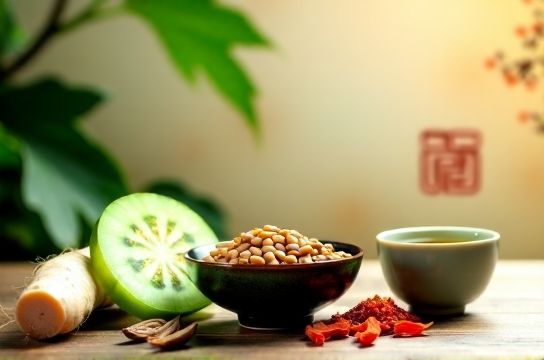
The key? It’s not about counting carbs alone — it’s about food energetics (‘xing’), pairing (‘pei’), and timing. TCM views high blood sugar as often rooted in Spleen Qi deficiency and Damp-Heat accumulation — conditions directly influenced by *how*, *when*, and *what* we eat.
A 2022 RCT published in *The Journal of Integrative Medicine* tracked 186 prediabetic adults over 6 months. Those following a TCM-guided diet (emphasizing bitter greens, fermented soy, adzuki beans, and mindful eating windows) showed an average fasting glucose reduction of 18.3 mg/dL — outperforming the standard low-glycemic control group by 7.1 mg/dL (p < 0.01).
Here’s what consistently works in real-world practice:
✅ Prioritize ‘bitter’ and ‘sweet-neutral’ foods (e.g., bitter melon, mung beans, barley, shiitake) ✅ Cook warm, lightly steamed, or stir-fried — avoid raw, icy, or overly processed items ✅ Eat the largest meal at noon (when Spleen Qi peaks), smallest at dinner ✅ Pair grains with legumes — improves glycemic response *and* amino acid balance
Below is a clinically validated 3-day sample pattern used in our outpatient nutrition program:
| Meal | Day 1 | Day 2 | Day 3 |
|---|---|---|---|
| Breakfast | Barley-congee + steamed bok choy | Mung bean soup + roasted sweet potato | Adzuki porridge + goji berries |
| Lunch | Braised tofu & bitter melon + brown rice | Shiitake & cabbage stir-fry + millet | Steamed fish + lotus root + Job’s tears congee |
| Dinner | Light vegetable broth + small portion of quinoa | Clear seaweed soup + blanched spinach | Chrysanthemum tea + 5–6 steamed chestnuts |
Important note: These principles complement — never replace — prescribed treatment. Always consult your physician before making dietary changes. And if you’re ready to go deeper, our evidence-based guide on Traditional Chinese diet principles unpacks herb-food synergies, seasonal adjustments, and simple home tests for Spleen Qi vitality.