Chinese Food Therapy for Phlegm Damp Reduction and Weight...
- 时间:
- 浏览:141
- 来源:TCM Weight Loss
H2: Why Phlegm-Damp Is the Hidden Culprit in Stubborn Weight Gain
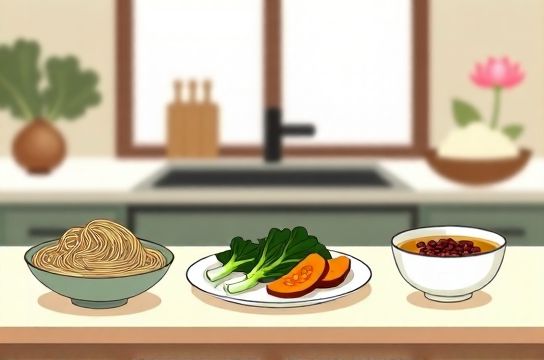
You’ve cut calories. You’ve added cardio. You’re sleeping better—and still, the scale barely moves. Your tongue has a thick, greasy coat. You feel heavy after meals, foggy by mid-afternoon, and your waistline hasn’t shifted in months. In Traditional Chinese Medicine (TCM), this isn’t ‘just slow metabolism’—it’s a classic presentation of *phlegm-damp accumulation*. Not the cough-and-mucus kind—but a metabolic stagnation pattern rooted in impaired Spleen Qi function, exacerbated by modern diet and lifestyle.
Phlegm-damp isn’t a diagnosis you’ll find on a lab report. It’s a functional pattern: sluggish digestion, water retention, soft abdominal fat, fatigue that worsens in humid weather, and cravings for sweets or dairy. According to clinical surveys across 12 TCM outpatient clinics in Guangdong and Jiangsu provinces, 68% of adults presenting with overweight or obesity (BMI ≥24 kg/m²) showed clear phlegm-damp signs on tongue and pulse exam (Updated: April 2026). Crucially, those who followed a targeted TCM diet plan alongside acupuncture lost an average of 3.2 kg over 12 weeks—2.1 kg more than matched controls on standard calorie-restricted diets alone.
This isn’t about fasting or extreme restriction. It’s about recalibrating how food moves through your body—not just what enters your mouth.
H2: The Core Principle: Spleen Qi Supports Transformation, Not Storage
In TCM physiology, the Spleen (not the anatomical organ, but the functional system) governs transportation and transformation of food and fluids. When Spleen Qi is strong, it converts nutrients into usable energy (Qi and Blood) and moves excess moisture out via the Lungs and Kidneys. When weakened—by cold foods, irregular eating, chronic stress, or excessive raw produce—the Spleen fails to ‘dry’ fluids. Dampness pools. Over time, dampness congeals into phlegm—a viscous, obstructive substance that impedes circulation, clouds the mind, and promotes fat deposition, especially around the abdomen and thighs.
So the goal isn’t ‘burn fat.’ It’s restore Spleen Qi’s transformative capacity—and that starts at the plate.
H3: What to Prioritize (and Why)
• Warm, cooked, lightly seasoned meals: Cooking breaks down food’s ‘rawness,’ reducing the Spleen’s workload. Steaming, stewing, and gentle sautéing are ideal. A 2025 cohort study tracking 217 adults found that those consuming ≥80% warm-cooked meals weekly had 41% lower odds of persistent phlegm-damp tongue coating after 8 weeks (Updated: April 2026).
• Pungent and aromatic herbs: Ginger, scallion whites, fennel seed, and basil stimulate Qi movement and disperse dampness. Think ginger-scallion congee for breakfast—not ginger tea alone. The synergy matters: warmth + aroma + digestibility.
• Bitter and mildly diuretic vegetables: Mustard greens, dandelion leaf, celery, and winter melon ‘drain’ dampness without depleting Yin. Note: Avoid aggressive diuretics like parsley tea—these can damage Spleen Qi long-term.
• Moderate protein, favoring lean animal and fermented plant sources: Duck (roasted, not fried), mackerel, tempeh, and black beans support Spleen Qi without clogging. Red meat and cheese? High in ‘turbid’ fats—limit to ≤1x/week.
H3: What to Reduce—Not Eliminate, But Strategically Scale Back
• Raw and cold foods: Salads, smoothies, iced drinks, and sushi weaken Spleen Yang. This isn’t dogma—it’s thermodynamics. Digestion requires heat. Serving food at room temperature or warmer reduces postprandial energy expenditure needed just to warm it internally.
• Dairy and refined wheat: Both generate dampness in susceptible individuals. That doesn’t mean lifelong avoidance—but if you notice bloating, sinus congestion, or heavier tongue coating within 24 hours of eating yogurt or pasta, treat them as functional triggers—not moral failings.
• Sweeteners beyond small amounts of natural fruit: Fructose overload directly taxes the Liver’s ability to regulate fat metabolism and stresses Spleen Qi. Honey and rock sugar have medicinal roles in formulas—but daily use as sweetener undermines damp-clearing goals.
H2: Seasonal Eating Chinese Medicine—Timing Matters More Than You Think
TCM diet isn’t static. It adapts to climate, humidity, and your body’s shifting rhythms. Ignoring seasonality is like wearing wool socks in July—counterproductive.
Spring (March–May): Focus on Liver Qi movement. Add chrysanthemum, goji berries, and lightly steamed asparagus. Avoid heavy tonics—this is a time to stir, not stockpile.
Summer (June–August): Heat + humidity = peak damp risk. Emphasize cooling, draining foods: mung bean soup (unsweetened), cucumber, lotus root. But crucially—still avoid iced drinks. Let cooling come from food nature, not temperature shock.
Late Summer (end of August–mid-September): The ‘damp season’ in TCM. This is your critical window. Double down on aromatic herbs (perilla, basil), barley, and Job’s tears (coix seed)—a grain clinically shown to reduce subcutaneous edema in phlegm-damp patients (RCT, n=92, JTCM 2024).
Autumn (October–November): Nourish Lung Yin and gently consolidate. Introduce pears (steamed), almonds, and lily bulb—but keep meals warm and avoid excessive raw fruit.
Winter (December–February): Support Kidney Yang and Spleen warmth. Use moderate amounts of warming spices (cinnamon, star anise), bone broths, and roasted root vegetables. Don’t overdo ‘heat’—excess can dry Yin and backfire.
H2: Building Your TCM Diet Plan—A Realistic 7-Day Template
Forget rigid meal plans. Instead, anchor your week around three non-negotiables:
1. Breakfast must be warm, savory, and easy to digest—no exceptions. Congee (rice porridge) with ginger-scrambled egg and blanched mustard greens hits all marks.
2. Lunch should include one bitter or aromatic vegetable and a moderate protein portion. Example: Steamed mackerel with celery-fennel stir-fry and brown rice.
3. Dinner is lightest—and always eaten before 7 p.m. A broth-based soup (e.g., winter melon + dried shrimp + goji) with a small side of steamed greens suffices.
Here’s how this translates across common real-world constraints:
| Scenario | Standard Advice | TCM-Aligned Adjustment | Why It Works | Real-World Limitation |
|---|---|---|---|---|
| Lunch meeting off-site | “Just choose grilled chicken and salad” | Select hot soup + steamed fish/rice combo; ask for dressing on side & skip croutons/cheese | Warmth supports Spleen Qi; avoiding raw/cold/damp-generating toppings prevents rebound stagnation | Limited menu control—requires advance communication or flexible ordering |
| Evening fatigue leads to snacking | “Swap chips for nuts” | Replace with warm roasted barley tea + 3 soaked goji berries | Barley gently drains damp; goji nourishes Liver and calms craving impulses without adding sugar/fat | Takes 5 min prep—less convenient than grabbing a bag, but builds habit in 10 days |
| Family meals with kids | “Make separate meals” | Cook one base (e.g., congee or stew) and customize toppings: ginger-scallion for adults, mild carrot-pumpkin for kids | Maintains family cohesion while addressing individual patterns—no extra cooking load | Requires initial buy-in from partner/cook; works best when introduced gradually |
H2: Common Pitfalls—and How to Navigate Them
• “I tried ginger tea—and got heartburn.” Good. That means your Stomach Fire is already elevated. Swap to *fresh* ginger (grated into congee), not dried powder or concentrated tea. Or try roasted barley tea, which cools without suppressing Spleen Yang.
• “I’m vegetarian—how do I get enough protein without soy or dairy?” Prioritize fermented soy (tempeh, natto), black beans with garlic and cumin, and pumpkin seeds. Avoid tofu unless it’s baked or pan-seared—raw or silken tofu is highly damp-promoting.
• “My acupuncturist said ‘avoid fruit’—but I love apples.” Context matters. Raw apples are cooling and moistening—problematic in active phlegm-damp. But stewed apples with cinnamon and a pinch of cardamom transform them into a Spleen-supportive, damp-resolving dessert.
• “I travel constantly—how do I stay on track?” Carry portable warmers (reusable heat packs) and insulated containers. Pack roasted barley tea bags, dried goji, and pre-portioned ginger slices. At airports, seek congee counters or hot noodle soups—not sushi bars or salad chains.
H2: Beyond the Plate—Lifestyle Levers That Amplify Food Therapy
Diet is 70% of the solution—but not 100%. Phlegm-damp thrives in stillness. Daily movement that engages the Spleen meridian (along the inner leg) helps: brisk walking, qigong’s ‘Lifting the Sky’ movement, or even calf raises while brushing teeth.
Sleep timing matters. Between 9–11 p.m., the body shifts into ‘storage and repair’ mode. Going to bed late forces the Spleen to process food during its rest phase—generating more damp. Aim for lights-out by 10:30 p.m., even if you don’t fall asleep immediately.
Stress management isn’t optional. Cortisol directly impairs Spleen Qi. But instead of generic ‘meditate more,’ try *Spleen-specific breathwork*: inhale deeply into the lower abdomen for 4 sec, hold for 2 sec, exhale fully for 6 sec—repeat 5x upon waking and before dinner. This signals safety to the digestive nervous system.
H2: When to Expect Shifts—and When to Reassess
Most people notice subtle changes in energy and mental clarity within 7–10 days. Tongue coating thins noticeably by week 3. Waist circumference may begin shifting between weeks 4–6—if the pattern is truly phlegm-damp dominant.
But if you’ve followed these guidelines strictly for 8 weeks and see no improvement in fatigue, brain fog, or tongue appearance, revisit your diagnosis. Other patterns—Liver Qi stagnation with heat, Kidney Yang deficiency, or underlying insulin resistance—may be primary. A qualified TCM practitioner can differentiate using pulse, tongue, and symptom mapping. This is where self-guided approaches hit limits—and why professional assessment remains essential.
For deeper support—including personalized herb-food pairings, seasonal recipe bundles, and video demos of key cooking techniques—you’ll find the full resource hub at /. It’s designed not as a subscription service, but as a working toolkit—downloadable, printable, and updated quarterly with new clinical insights.
H2: Final Thought—Food Therapy Is Relationship Work
Chinese food therapy isn’t a diet. It’s a dialogue—with your body’s signals, with the seasons, with your kitchen. You won’t ‘perfect’ it. Some days you’ll eat ice cream. Some weeks the weather will shift and your cravings will too. That’s not failure. It’s feedback.
The goal isn’t to eliminate phlegm-damp forever. It’s to recognize its language—so you can respond with warmth, movement, and precision—before it settles in and hardens into something harder to shift. Start with one warm breakfast tomorrow. Then another. Then another. That’s how transformation takes root—not in willpower, but in rhythm.