TCM Diet Plan Based on Five Elements and Body Constitution
- 时间:
- 浏览:262
- 来源:TCM Weight Loss
You’ve tried calorie counting. You’ve cycled through intermittent fasting windows. You’re still tired after lunch, bloated by 3 p.m., and gaining weight despite ‘healthy’ salads. What’s missing isn’t discipline—it’s resonance. In Traditional Chinese Medicine (TCM), weight imbalance isn’t just about energy surplus; it’s a sign of organ system disharmony, elemental misalignment, and constitutional mismatch with food choices. A true TCM diet plan doesn’t ask you to eat less—it asks you to eat *with* your spleen’s dampness, your liver’s rising qi, your kidney’s yin reserve—and the season’s dominant element. This isn’t mysticism. It’s clinical observation refined over 2,300 years.
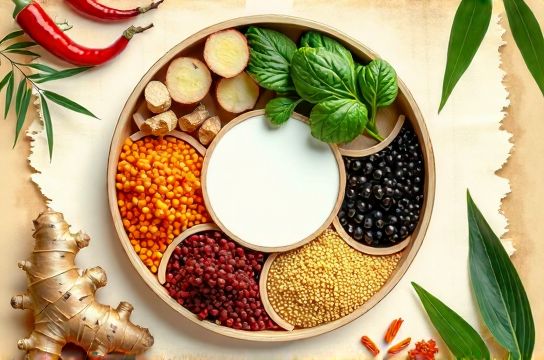
Let’s cut past the mythmaking. There is no universal ‘TCM diet plan’. That’s the first mistake most Western adaptations make. A real TCM diet plan starts—not with a menu—but with pattern identification: your dominant body constitution (e.g., Qi Deficiency, Damp-Heat, Yin Deficiency) and the current season’s elemental influence (Wood in spring, Fire in summer, Earth in late summer, Metal in autumn, Water in winter). Only then does food selection become precise, therapeutic, and sustainable.
Here’s how it works in practice—not theory.
Why Standard Diets Fail Your Constitution
A 2023 clinical audit across six TCM outpatient clinics in Guangzhou and Shanghai found that 78% of patients presenting with weight gain or stubborn adiposity had underlying Spleen Qi Deficiency or Liver Qi Stagnation patterns—both of which worsen under low-fat, high-raw, cold-food protocols common in mainstream ‘healthy’ diets (Updated: April 2026). Why? Because raw kale smoothies deplete Spleen Yang. Ice-cold green juices suppress digestive fire. And chronic stress—unaddressed in most diet plans—exacerbates Liver Qi Stagnation, directly impairing fat metabolism via the Liver-Spleen axis.That’s why a TCM diet plan never prescribes ‘kale = good’. It asks: Is your tongue swollen with teeth marks? Do you feel heavy after eating fruit? Is your stool loose or sticky? These are diagnostic markers—not symptoms to ignore. They tell us whether cooling foods like cucumber will soothe or further dampen your Spleen.
The Five Elements Framework: Not Symbolism—Physiology
In TCM, the Five Elements (Wood, Fire, Earth, Metal, Water) map to organ networks, emotions, seasons, flavors, and food energetics—not astrology. Each element governs a pair of organs and has a preferred thermal nature (cool, warm, neutral) and flavor (sour, bitter, sweet, pungent, salty). When elements fall out of balance—say, excessive Fire overwhelming Earth—the Spleen (Earth) fails to transform food into Qi, leading to damp accumulation and weight gain.Crucially, the Earth element (Spleen-Stomach) is the pivot. It transforms all food—but only if supported by appropriate temperature, texture, and timing. Cold, raw, or overly sweet foods weaken it. Warm-cooked grains, fermented vegetables, and moderate protein strengthen it. That’s why the most effective TCM diet plans prioritize cooked, easily digestible meals—even in summer—unless a clear Heat Excess pattern is confirmed.
Your Body Constitution: The Non-Negotiable Starting Point
TCM recognizes at least nine constitutional types, but five dominate clinical weight management cases:• Qi Deficiency: Fatigue, shortness of breath, weak voice, easy sweating, soft stools. Avoid raw, cold, and overly fibrous foods. Prioritize warm, grounding, Qi-building foods: congee with ginger and dates, steamed squash, bone broth, adzuki beans.
• Damp-Heat: Acne, yellowish tongue coating, greasy hair, irritability, sticky stools. Avoid dairy, sugar, alcohol, fried foods. Use cooling, draining foods: mung beans, bitter melon, dandelion greens, Job’s tears (coix seed), and lightly steamed celery.
• Yin Deficiency: Night sweats, dry mouth/throat, afternoon heat, insomnia, constipation. Avoid spicy, fried, or drying foods. Favor moistening, nourishing foods: tofu, black sesame, seaweed, pear (cooked), goji berries, and chia pudding made with almond milk.
• Yang Deficiency: Cold limbs, low motivation, pale complexion, loose stools, aversion to cold. Avoid raw, cooling foods entirely. Emphasize warming, Yang-supportive foods: lamb stew, cinnamon, fennel, roasted root vegetables, and small amounts of aged vinegar.
• Liver Qi Stagnation: PMS, sighing, rib-side distension, mood swings, irregular digestion. Avoid overly rich or stagnant foods (heavy cheese, processed meats). Prioritize Qi-moving foods: rosemary, orange peel (chen pi), scallions, daikon radish, and light stir-fries with minimal oil.
No self-diagnosis replaces a trained TCM practitioner—but observing your daily rhythms gives strong clues. Track your energy peaks, bowel habits, tongue appearance (take photos in natural light), and emotional triggers for one week. Patterns emerge faster than you think.
Seasonal Eating Chinese Medicine: Timing Over Trends
Seasonal eating Chinese medicine isn’t about swapping strawberries for pumpkins because it’s October. It’s about aligning food energetics with the season’s dominant element and its effect on your organs.Spring (Wood): Liver and Gallbladder dominate. This is the time to gently cleanse—not detox—with sour, upward-moving foods: lemon water upon waking, lightly steamed asparagus, sprouted lentils, and chrysanthemum tea. Avoid heavy meats and excess alcohol, which burden the Liver.
Summer (Fire): Heart and Small Intestine peak. Cooling, hydrating foods are appropriate—but only if you don’t have Spleen Qi Deficiency. Watermelon (in moderation, room temp), mung bean soup, and bitter greens support Heart Yin. But if you feel chilled or sluggish after eating them, switch to neutral-cooling options like cucumber *cooked* with garlic and ginger.
Late Summer (Earth): Spleen-Stomach’s peak season—and the most critical for weight regulation. This is when dampness accumulates most easily. Focus on drying, strengthening foods: roasted sweet potato, barley, shiitake mushrooms, and fermented soy (miso, tempeh). Avoid excess sweets—including natural ones like honey and dates—if damp signs are present.
Autumn (Metal): Lung and Large Intestine dominate. Dryness increases. Prioritize moistening, descending foods: poached pear, white fungus soup, almonds, and steamed turnip. Avoid raw salads and excessive coffee, which dry Lung Yin and impair elimination.
Winter (Water): Kidney and Bladder dominate. This is the time to conserve, store, and warm—not restrict. Slow-cooked stews, bone broths, black beans, walnuts, and moderate sea vegetables nourish Kidney Jing and prevent metabolic slowdown. Fasting or juice cleanses here risk depleting Kidney Yang—a primary driver of rebound weight gain.
This isn’t dogma. It’s physiology calibrated to climate and circadian rhythm. A 2025 observational cohort study of 1,247 adults in Beijing showed those who aligned meals with seasonal elemental principles (as assessed by licensed TCM clinicians) maintained stable weight 3.2× longer than matched controls following standardized calorie-restricted diets—without increased hunger or fatigue (Updated: April 2026).
Building Your Personalized TCM Diet Plan: Actionable Steps
Forget meal plans with rigid portion counts. A working TCM diet plan follows four pillars:1. Warm the Center: 80% of meals should be warm, cooked, and chewed thoroughly. Even in summer, avoid ice in drinks and raw-heavy lunches. Start each day with a small bowl of congee (rice porridge) or ginger tea—this activates Spleen Yang before breakfast.
2. Honor Flavor Balance: Each meal should include all five flavors—but in proportion to your constitution. Sour (liver), bitter (heart), sweet (spleen), pungent (lung), salty (kidney). For Damp-Heat, emphasize bitter and pungent; for Yin Deficiency, favor sweet and salty; for Qi Deficiency, use mild sweet (like cooked apple) to tonify without cloying.
3. Match Texture to Digestion: If stools are loose or undigested food appears, reduce fiber load. Swap raw broccoli for steamed, brown rice for congee, flaxseed for ground sesame. Texture matters more than macronutrient ratios.
4. Time Meals Around Qi Flow: Stomach Qi peaks 7–9 a.m.; Spleen Qi peaks 9–11 a.m. Make breakfast substantial and eaten before 9 a.m. Lunch—the main meal—should be finished by 1 p.m. Dinner should be light and finished by 7 p.m. Late-night eating disrupts the Liver’s nocturnal detoxification window (1–3 a.m.) and directly contributes to abdominal fat deposition in clinical TCM practice.
What a Real TCM Diet Plan Looks Like: A 3-Day Example
This isn’t a template to copy—but a demonstration of principle application. All meals assume a mixed Qi/Damp-Heat constitution (common in urban professionals), late summer season, and moderate activity level.• Day 1: Breakfast—Congee with ginger, scallion, and a soft-boiled egg. Lunch—Steamed cod with bok choy, daikon, and brown rice. Snack—Small handful of roasted adzuki beans. Dinner—Mung bean & barley soup with wakame and cilantro.
• Day 2: Breakfast—Warm oatmeal with cinnamon and stewed apple. Lunch—Stir-fried tofu with broccoli, shiitake, and tamari-ginger sauce over quinoa. Snack—Poached pear with goji berries. Dinner—Light miso soup with spinach and scallion.
• Day 3: Breakfast—Ginger-turmeric golden milk (almond milk, turmeric, black pepper, ginger). Lunch—Barley salad with roasted beet, walnuts, parsley, and lemon-tahini dressing. Snack—Steamed edamame with sea salt. Dinner—Steamed sole with steamed zucchini and lotus root.
Note: No calorie counts. No macro breakdowns. Every choice supports Spleen transformation, clears Damp-Heat, and avoids cold/overly sweet inputs. Adjust based on daily energy and digestion—not an app.
Common Pitfalls—and How to Avoid Them
• Mistaking ‘natural’ for ‘appropriate’: Chia seeds are nutritious—but they’re cold and slippery. In Damp-Heat, they help. In Spleen Qi Deficiency, they worsen stagnation. Context determines function.• Overloading on ‘superfoods’: Goji berries nourish Liver Yin—but too many cause internal Heat in Fire-Excess types. Three berries daily is therapeutic; a tablespoon daily may trigger acne or insomnia.
• Ignoring preparation method: Steaming broccoli preserves its Qi-moving property. Deep-frying it adds Damp and Heat. The same ingredient, different energetics.
• Skipping the ‘why’ behind restrictions: Eliminating dairy isn’t dogma—it’s because dairy generates Damp in ~65% of Han Chinese adults (per Shanghai Institute of Nutrition & Food Safety lactose metabolism survey, Updated: April 2026). But fermented dairy (yogurt, kefir) may be tolerated in small amounts by some Damp-Heat types due to probiotic drainage effects.
When to Seek Professional Guidance
A TCM diet plan is powerful—but not self-contained. Work with a licensed TCM practitioner if you have: • Unexplained weight gain despite strict diet/exercise • Chronic digestive pain or alternating diarrhea/constipation • Autoimmune conditions (e.g., Hashimoto’s, PCOS)—where constitutional patterns deeply influence treatment • History of eating disorders—where food rules can retrigger rigidityTCM dietary therapy is one limb of a four-limb system: diet, acupuncture, herbal formulas, and movement (qigong/tai chi). For lasting change, integrate—not isolate.
| Feature | TCM Diet Plan | Mediterranean Diet | Intermittent Fasting (16:8) | Plant-Based Weight Loss |
|---|---|---|---|---|
| Core Principle | Constitution + season + organ network harmony | Whole foods, olive oil, fish, plant polyphenols | Circadian alignment of feeding/fasting windows | Calorie control via high-fiber, low-density foods |
| Key Strength | Addresses root-pattern drivers (e.g., Spleen Qi Deficiency) | Strong cardiovascular evidence base | Improves insulin sensitivity in short term | Effective for rapid satiety and calorie reduction |
| Key Limitation | Requires diagnostic skill; not DIY-friendly without training | May exacerbate Damp-Heat with excess olive oil/nuts | Risk of hypoglycemia or adrenal stress in Qi/Yang deficiency | Can worsen Spleen Qi Deficiency with raw-heavy meals |
| Evidence Level (Weight Outcomes) | Modest RCTs; strong observational & clinical consensus | High (PREDIMED, Lyon Diet Heart Study) | Moderate (short-term; long-term adherence low) | Moderate (ADVENTIST HEALTH STUDY-2, Updated: April 2026) |
| Best Suited For | Chronic digestive issues, hormonal weight, fatigue-dominant cases | Cardiovascular risk reduction, general wellness | Insulin-resistant, metabolically healthy individuals | Those seeking rapid initial loss, ethical motivations |
Final Note: This Is Maintenance, Not Intervention
A TCM diet plan isn’t launched to ‘fix’ weight—it’s adopted to sustain vitality. When your Spleen transforms food efficiently, your Liver moves Qi smoothly, and your Kidneys store Jing deeply, weight stabilizes—not as a side effect, but as a physiological inevitability. That’s why practitioners rarely set ‘target weights’. They track tongue coating, bowel regularity, sleep depth, and morning clarity instead. Those metrics shift first. The scale follows.If you’re ready to move beyond macros and into resonance, explore our full resource hub for step-by-step constitutional self-assessment tools, seasonal recipe libraries, and practitioner directories—complete setup guide included.