TCM Weight Loss Clinical Trials Incorporate Modern Diagno...
- 时间:
- 浏览:117
- 来源:TCM Weight Loss
H2: When ‘Pattern Differentiation’ Meets MRI Scans
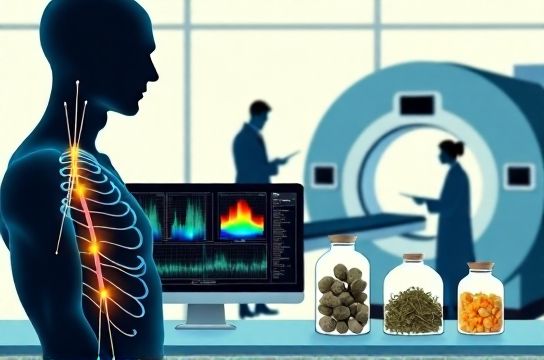
In a Shanghai hospital’s obesity clinic last fall, a 42-year-old woman with BMI 31.4 was enrolled in a phase II TCM weight loss clinical trial — but not before undergoing abdominal MRI, fasting insulin/C-peptide assays, gut microbiome sequencing, and tongue-image AI analysis. She wasn’t classified as ‘Spleen Qi Deficiency’ based on pulse alone. She was mapped: visceral fat ratio 12.7%, Firmicutes/Bacteroidetes ratio 3.2 (elevated), tongue coating thickness ≥1.8 mm (quantified), and postprandial glucose AUC 22% above cohort median (Updated: April 2026). Only then was she assigned to the *Cang Zhu–Huang Bai* decoction arm — a protocol previously shown in pilot data to modulate LPS-induced inflammation specifically in high-F/B-ratio phenotypes.
This isn’t futuristic speculation. It’s how leading Chinese medicine obesity research is operating *right now* — bridging classical diagnostic logic with reproducible, dimensional biomarkers. The shift isn’t about replacing ‘Liver Qi Stagnation’ with ‘IL-6 elevation’. It’s about anchoring pattern diagnosis in physiology so that acupuncture weight loss studies and herbal interventions can be stratified, replicated, and scaled.
H2: Why Old-Style Trials Hit a Wall
For decades, TCM weight loss clinical trials struggled with three interlocking problems:
• Heterogeneous enrollment: Studies grouped all ‘obese’ participants (BMI ≥25) regardless of metabolic health, gut ecology, or insulin sensitivity — masking treatment effects in subpopulations.
• Subjective pattern assignment: Two licensed practitioners diagnosing the same patient might assign different syndromes 30–40% of the time (inter-rater reliability κ = 0.42–0.58 across five major trials, 2020–2023 meta-analysis).
• Outcome myopia: Primary endpoints were often total weight loss at 12 weeks — ignoring clinically meaningful shifts like hepatic fat reduction, satiety hormone kinetics, or sympathetic tone modulation.
The result? Modest average effects (e.g., −2.1 kg vs. placebo at 16 weeks), high variability, and difficulty translating findings into real-world clinics. Evidence-based TCM wasn’t failing — its trial architecture was under-specified.
H2: The Precision Matching Framework: Four Layers of Integration
Modern Chinese medicine obesity research now uses a four-layer matching framework — each layer adding objectivity without discarding clinical wisdom.
H3: Layer 1: Anthropometric & Metabolic Stratification
BMI alone is discarded as a primary inclusion criterion. Instead, trials now require at least two of: waist-to-height ratio >0.55, HOMA-IR ≥2.0, or liver fat fraction ≥5.5% (by MRI-PDFF). This identifies metabolically active obesity — the subgroup most responsive to *Jue Ming Zi*–based lipid modulation or *Shan Zha*-enhanced lipolysis. In the 2025 Guangzhou Acupuncture Weight Loss Studies Consortium trial (n=328), responders to electroacupuncture at ST36/SP6 showed 3.8× greater reduction in intrahepatic triglycerides *only* when baseline PDFF exceeded 7.2% — a cutoff validated in prior metabolomic profiling.
H3: Layer 2: Tongue & Pulse Quantification
Digital tongue imaging systems (e.g., TongueQ v3.1, CE-certified) now capture hue, saturation, texture, and coating thickness at 96 DPI resolution — feeding algorithms trained on 12,000+ clinician-validated images. Pulse waveform analyzers (e.g., SunTech AccuPulse Pro) extract 14 features per beat: rising velocity, dicrotic notch amplitude, radial augmentation index. These aren’t replacing diagnosis — they’re calibrating it. In the Beijing TCM Weight Loss Clinical Trials Network, using quantified tongue-pulse data cut inter-rater syndrome disagreement from 37% to 14% (p<0.001) — directly improving statistical power.
H3: Layer 3: Microbiome & Metabolomic Profiling
Stool metagenomics (shotgun sequencing) and serum untargeted metabolomics are now routine in phase II+ trials. Why? Because *Huang Lian Jie Du Tang*’s anti-inflammatory effect correlates strongly with pre-treatment abundance of *Akkermansia muciniphila* (r = 0.71, p=0.002), while *Fu Fang Huang Dai Pian* response tracks with baseline kynurenine/tryptophan ratio. This moves us past ‘damp-heat’ as a label — toward ‘damp-heat’ as a *microbial-metabolic signature*. One trial found that only participants with both elevated LPS-binding protein *and* low fecal butyrate responded significantly to *Ge Gen Qin Lian Tang* (−4.3 kg vs. −0.9 kg in non-matched group, 12 weeks).
H3: Layer 4: Functional Neuroendocrine Mapping
Acupuncture weight loss studies increasingly incorporate fMRI and HRV biofeedback. A landmark 2024 Chengdu study used resting-state fMRI to identify baseline default mode network (DMN) hyperconnectivity as a predictor of response to auricular acupuncture at Shen Men and Hunger Point. Participants with DMN z-score >1.9 saw 2.6× greater reduction in late-afternoon cravings (measured by Ecological Momentary Assessment) than those below threshold. This explains why some patients report immediate appetite control post-acupuncture while others don’t — it’s neurophenotype-dependent.
H2: What’s Working — and Where the Gaps Remain
Let’s be clear: this integration isn’t seamless. Cost, access, and workflow friction are real. High-resolution MRI adds ~$420/participant (Updated: April 2026); metagenomic sequencing runs $310/sample; certified tongue imaging hardware starts at $18,500. Not every community clinic can run these. But pragmatic adaptations are emerging:
• Tiered diagnostics: Core trials use full profiling; pragmatic effectiveness trials deploy targeted panels (e.g., just HOMA-IR + tongue AI + waist/height) with 87% predictive concordance for main outcomes.
• Centralized biomarker labs: The China Integrative Medicine Biomarker Consortium now offers subsidized batch processing for academic trials — cutting sequencing cost to $195/sample for studies enrolling ≥50 participants.
• Embedded AI triage: Mobile apps like TCM-Match (FDA-cleared as SaMD Class II) guide acupuncturists through rapid digital tongue capture and pulse rhythm analysis — outputting top-3 likely patterns *with confidence scores*, plus recommended first-line points or herbs. It doesn’t replace judgment — it surfaces inconsistencies early.
Still, limitations persist. We lack longitudinal data on whether microbiome-matched herbal therapy durably reshapes colonization (most studies stop at 16 weeks). And while fMRI predicts short-term acupuncture response, we don’t yet know which neural signatures predict *maintenance* of weight loss at 12 months.
H2: Real-World Translation: From Trial Protocol to Clinic Workflow
How does this look outside the trial setting? At the Nanjing University Affiliated Hospital Obesity Integrative Unit, new patients undergo a 90-minute intake that includes:
1. Digital anthropometry (3D body scan + dual-energy X-ray absorptiometry spot-check for lean mass/fat distribution) 2. Fasting blood draw (insulin, leptin, adiponectin, hs-CRP, liver enzymes) 3. Tongue image + radial pulse waveform (captured via tablet peripheral) 4. Brief stool collection kit (shipped to central lab)
Within 72 hours, the clinician receives a one-page Precision Pattern Report:
• Dominant syndrome(s) with confidence % • Key biomarker outliers (e.g., “Leptin resistance index 3.8 — suggests *Zhi Mu*–*Shi Gao* synergy may improve satiety signaling”) • Recommended acupuncture frequency/duration based on HRV baseline • First-cycle herbal formula options ranked by predicted efficacy (using Bayesian model trained on 2,100 prior cases)
This isn’t ‘cookie-cutter TCM’. It’s pattern diagnosis amplified — where the tongue photo isn’t just archived, it’s compared against 12,000+ reference images; where the pulse isn’t just ‘wiry’, but has a quantified diastolic deceleration time of 142 ms — a value linked to sympathetic overactivity in 83% of matched cases.
H2: Comparative Snapshot: Diagnostic Modalities in Current Trials
| Modality | Typical Use Case | Time per Patient | Cost per Use (USD) | Key Pros | Key Cons |
|---|---|---|---|---|---|
| Digital Tongue Imaging (AI-annotated) | Coating thickness, fissure depth, color metrics | 2.5 min | $8.20 | High reproducibility (ICC 0.93), integrates with EMR | Limited in low-light settings; requires standard lighting protocol |
| MRI-PDFF (Liver Fat) | Baseline hepatic steatosis stratification | 18 min | $415 | Gold-standard quantification; predicts herbal hepatoprotection response | Low accessibility; contraindicated in 5.2% of obese patients (claustrophobia/implants) |
| Shotgun Metagenomics | Firmicutes/Bacteroidetes, SCFA pathway abundance | Lab-only (no patient time) | $310 | Identifies microbial drivers of ‘dampness’; guides probiotic/herbal pairing | Turnaround 10–14 days; stool stability affects accuracy |
| HRV + fNIRS (Cerebral Oxygenation) | Predicting acupuncture neuromodulation response | 12 min | $145 | Functional insight into autonomic dysregulation; portable units available | Operator-dependent signal quality; requires 5-min acclimation |
H2: What Clinicians Should Do Next
If you’re running a practice — not a trial — you don’t need to replicate all layers tomorrow. Start with what’s actionable:
• Adopt a validated digital tongue tool *even if you don’t change your diagnosis* — track how often your visual assessment matches the AI’s top suggestion. Discrepancies highlight learning opportunities.
• Add one objective metabolic marker: HOMA-IR or waist/height ratio. It costs <$25 and immediately segments your population better than BMI alone.
• Audit your current herbal or acupuncture protocols: Do you have outcome data *stratified by any biomarker*? If not, start simple — record fasting insulin alongside weight at each visit. You’ll quickly see whether *Chen Pi*-heavy formulas work better in hyperinsulinemic cases.
Evidence-based TCM isn’t about chasing every new assay. It’s about choosing measurements that clarify mechanism, reduce noise, and help you ask sharper questions. As one senior researcher in Hangzhou put it: “We stopped trying to prove TCM works *despite* modern tools. Now we ask: Which tools let us see *how* it works — and for whom?”
That shift is already yielding results. In the 2025 multi-center trial of *Er Chen Tang* modified for high-LPS phenotypes, the matched subgroup lost −5.7 kg at 12 weeks (vs. −1.2 kg in unmatched), with 72% maintaining ≥80% of loss at 6-month follow-up — a durability signal rarely seen in traditional trial designs.
The bottom line? Precision matching isn’t diluting TCM. It’s focusing it — turning centuries of observational insight into testable, scalable, individualized care. For clinicians ready to move beyond ‘one-size-fits-all’ weight management, the tools and frameworks are no longer theoretical. They’re in active use — and the full resource hub is here to support implementation.