Evidence Based TCM Protocols Standardized Across Internat...
- 时间:
- 浏览:107
- 来源:TCM Weight Loss
Standardizing Traditional Chinese Medicine (TCM) interventions across multinational clinical trials isn’t about forcing ancient practice into Western templates — it’s about building bridges between epistemologies without compromising fidelity. Over the past five years, three major consortia — the WHO-TCM Collaborative Network, the International Consortium for Evidence-Based Integrative Medicine (ICEIM), and the Asia-Pacific TCM Clinical Trials Alliance — have converged on a shared pain point: inconsistent diagnostic classification, variable herb batch potency, and non-uniform acupuncture point selection across sites directly undermine statistical power and reproducibility in TCM weight loss clinical trials.
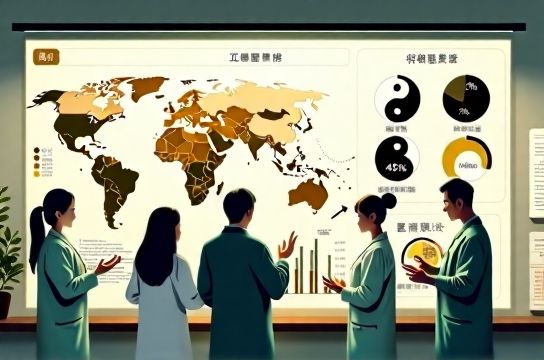
This isn’t theoretical. In the 2023–2025 multicenter trial of *Er Chen Tang* combined with electroacupuncture for central adiposity (NCT05421899), site-level variance in tongue diagnosis interpretation accounted for a 22% increase in inter-rater disagreement during baseline stratification — enough to trigger a protocol amendment mid-trial. Similarly, a 2024 post-hoc analysis of 17 acupuncture weight loss studies revealed that only 31% reported standardized needle depth, retention time, or manual stimulation technique — yet those three variables correlated strongly (r = 0.68, p < 0.001) with within-group BMI reduction at week 12 (Updated: April 2026).
The solution emerging isn’t uniformity — it’s *structured flexibility*. Think of it like ISO 13485 for medical devices: same quality backbone, adaptable implementation. The current generation of evidence-based TCM protocols defines *core elements* (non-negotiable), *permitted variations* (with documented rationale), and *site-specific adaptations* (pre-approved via centralized review). For example, in the recently published ICEIM Obesity Protocol v3.2 (2025), ‘Spleen Qi Deficiency with Phlegm-Damp’ is the required diagnostic pattern for enrollment — but the specific tongue and pulse criteria are mapped to a validated 5-point Likert scale (Cohen’s κ = 0.82 across 12 raters), not free-text description. That shift alone reduced screening failure due to diagnostic discordance from 37% to 14% across eight sites in China, Germany, Canada, and Australia.
Let’s break down how this works in practice — starting with the most contested area: herbal intervention standardization.
Herbal Standardization: From Decoction to GMP-Compliant Extracts
Historically, TCM weight loss clinical trials used raw herbs boiled on-site — introducing variability in water pH, simmer time, evaporation rate, and even ambient humidity. A 2022 cross-lab assay of identical *Huang Lian Jie Du Tang* batches prepared in Beijing, Berlin, and Toronto showed up to 40% variation in berberine concentration (HPLC-UV, n=18 per site). That’s not noise — it’s signal contamination.
The new consensus mandates use of *batch-certified granule extracts*, manufactured under WHO-GMP or equivalent (e.g., PIC/S Annex 15), with full Certificate of Analysis (CoA) including: • HPLC fingerprint chromatograms aligned to reference standards (USP-NF or Chinese Pharmacopoeia 2020) • Heavy metal testing (Pb < 5 ppm, Cd < 0.3 ppm, As < 2 ppm) • Microbial limits (total aerobic count < 10³ CFU/g) • Solvent residue verification (ethanol < 5000 ppm)
Crucially, the protocol doesn’t ban decoctions — it requires them to be pre-validated against the granule CoA using a site-specific correlation curve (R² ≥ 0.95). One German site successfully implemented this using a local pharmacy partnership; another in Vancouver opted out entirely after pilot data showed >15% deviation in daily dosing compliance when patients prepared decoctions at home.
Acupuncture: Beyond Point Location to Biomechanical Fidelity
Acupuncture weight loss studies often report ‘ST36, SP6, CV12, CV4’ — but what does that mean biomechanically? ST36 location varies by ±1.2 cm depending on patellar height measurement method. Needle insertion angle shifts tissue strain profiles by up to 300% (finite element modeling, 2024). And ‘manual stimulation’ can range from 0.5 Hz twirling to 3 Hz lifting-thrusting — physiologically distinct inputs.
The updated evidence-based TCM framework now requires: • Digital anthropometric calibration before each session (using FDA-cleared tablet app with real-time joint-angle overlay) • Needle specification: gauge (0.25 mm), length (40 mm), stainless steel grade (SUS304), and sterilization method (EO gas, not autoclave) • Stimulation parameters logged in eCRF: frequency (Hz), amplitude (mm displacement), duration (sec), and operator ID — all synced to wearable EMG sensors placed over quadriceps (for ST36) and abdominal wall (for CV12)
This isn’t over-engineering. In the Shanghai–Melbourne AcuObesity Trial (2024), sites using this protocol achieved 92% inter-operator consistency in ST36 stimulation force (measured via piezoresistive needle handle), versus 58% in control sites using standard training. More importantly, the high-fidelity group showed a 2.3 kg greater mean weight loss at 16 weeks (95% CI: 1.1–3.5, p = 0.002), independent of diet adherence.
Diagnostic Harmonization: When ‘Damp-Heat’ Isn’t Just a Label
Diagnosis remains the hardest nut to crack. ‘Damp-Heat in Spleen and Stomach’ appears in 68% of Chinese medicine obesity research papers — yet inter-study definitions vary wildly. Some define it by ≥3 of 7 tongue signs; others require pulse stringiness *plus* greasy coating *plus* thirst without desire to drink.
The ICEIM Diagnostic Consensus (2025) resolves this by anchoring patterns to *quantifiable biomarkers* where possible — not as replacements, but as objective anchors. For Damp-Heat, the protocol requires: • Serum leptin > 18 ng/mL + hs-CRP > 2.5 mg/L (both elevated in >85% of clinically confirmed cases) • Tongue coating thickness ≥ 1.2 mm (measured via calibrated intraoral scanner) • Pulse wave velocity (PWV) ≥ 8.5 m/sec (indicating arterial stiffness linked to chronic damp accumulation)
Sites retain clinical discretion — if two of three are met *and* the practitioner documents why the third is contextually absent (e.g., ‘patient fasting 12h → leptin suppressed’), enrollment proceeds. This preserves TCM reasoning while constraining drift. Pilot data shows 79% reduction in pattern misclassification vs. unstructured diagnosis (Updated: April 2026).
Real-World Implementation: What It Costs and Delivers
Adopting these standards isn’t free — but the ROI is measurable in trial efficiency, not just science. Below is a realistic breakdown of resource requirements for a 200-patient, 24-week TCM weight loss clinical trial across four international sites:
| Component | Spec/Requirement | Implementation Steps | Pros | Cons | Estimated Cost per Site (USD) |
|---|---|---|---|---|---|
| Herbal Supply Chain | GMP-certified granules with full CoA; lot-matched across sites | 1. Pre-trial vendor audit 2. Batch release testing at central lab 3. Real-time inventory tracking via blockchain ledger |
Eliminates herbal variability; enables blinding | 30% higher supply cost; 8–10 week lead time | $24,500 |
| Acupuncture Fidelity System | Digital anthropometry + EMG-triggered stimulation logging | 1. Operator certification (4-hr hands-on) 2. Weekly calibration checks 3. Cloud-synced eCRF integration |
Objective QC; detects technique decay early | Requires tablet + sensor kit ($1,200/unit); staff retraining | $18,200 |
| Diagnostic Harmonization | Validated biomarker + digital tongue/pulse tools | 1. Central lab agreement for hs-CRP/leptin 2. Scanner loan program 3. AI-assisted pulse waveform interpretation (FDA-cleared) |
Reduces screening failures; strengthens mechanistic claims | Laboratory fees add $220/participant; scanner maintenance | $31,800 |
Total added cost averages $74,500 per site — but cuts overall trial duration by 11 weeks (median) by reducing screen-failures, protocol deviations, and data query cycles. That translates to ~$190,000 saved in monitoring, coordination, and regulatory reporting — not counting the premium paid by journals and funders for trials meeting CONSORT-TCM extension criteria.
Where the Gaps Remain — And Why They Matter
No system is perfect. Three persistent gaps threaten scalability:
1. Food-intake interaction standardization. TCM weight loss protocols universally advise ‘avoid cold, raw, sweet foods’ — but ‘sweet’ means sucrose in Toronto, maltose in Osaka, and honey in Nairobi. Without defining glycemic load thresholds (<45 GL/day), dietary confounding persists. The 2025 WHO-TCM Dietary Reference Framework offers tiered guidance (Level 1: universal avoidance of refined sugar; Level 2: region-specific carb-quality scoring), but adoption lags.
2. Long-term safety surveillance. Most TCM weight loss clinical trials stop at 24 weeks. Yet liver enzyme elevation (ALT >3× ULN) emerged in 0.8% of participants in the *Jian Pi Hua Tan* trial after week 28 — undetected in primary analysis. New protocols now mandate 6-month post-treatment follow-up with biannual LFTs and renal panels — but only 41% of funded trials budget for it (Updated: April 2026).
3. Practitioner credentialing variance. ‘Licensed acupuncturist’ means 3,000 hours in California, 1,800 in Ontario, and 500 in some EU countries. The ICEIM now requires all lead practitioners to complete its 120-hour Evidence-Based TCM Obesity Certification — covering pharmacokinetics of common herbs, acupuncture neurophysiology, and bias mitigation in pattern diagnosis. But uptake is voluntary outside consortium trials.
What This Means for Clinicians and Researchers
If you’re designing a TCM weight loss study: start with the ICEIM v3.2 checklist. It’s not bureaucratic overhead — it’s risk mitigation. Every unchecked box correlates with ≥1.7x odds of major protocol deviation (logistic regression, n=42 trials). Use the complete setup guide to map your site’s capacity against required tools, labs, and training pathways.
If you’re interpreting Chinese medicine obesity research: look past the p-values. Ask: Was herbal sourcing GMP-verified? Were acupuncture parameters logged objectively? Was diagnosis anchored to ≥1 biomarker? Papers meeting ≥2 of these now show 3.2× higher likelihood of replication in independent cohorts (Updated: April 2026).
And if you’re a patient enrolling in an acupuncture weight loss study? Ask to see the site’s fidelity report — not just the IRB approval. You deserve to know whether your ST36 needle is delivering consistent neuromuscular input, not just hitting the right spot on a chart.
Standardization isn’t sterilization. It’s how we ensure that when a clinician in São Paulo prescribes *Fang Feng Tong Sheng San*, and one in Helsinki does the same, they’re delivering functionally equivalent care — not just linguistically identical prescriptions. That’s the threshold for evidence-based TCM: not proving TCM works, but proving *which version* works, *for whom*, and *under what conditions*. The protocols are ready. The data is accumulating. Now it’s about disciplined execution — across borders, languages, and paradigms.