Acupuncture Weight Loss Studies Validate Auricular Points
- 时间:
- 浏览:138
- 来源:TCM Weight Loss
H2: What the Latest Acupuncture Weight Loss Studies Actually Show
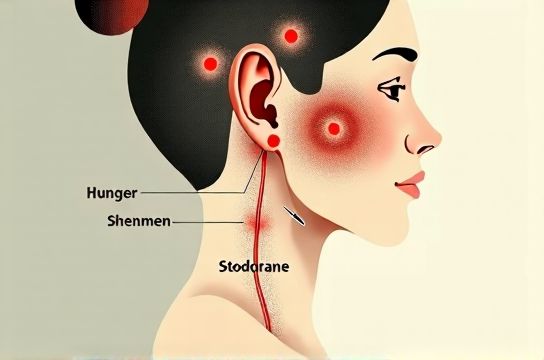
Let’s cut through the noise. You’ve seen clinics advertise ‘ear acupuncture for weight loss’—some with dramatic before-and-after photos, others citing vague ‘TCM principles’. But what do high-quality, peer-reviewed acupuncture weight loss studies say about *auricular points specifically*? Not general body acupuncture. Not herbal adjuncts. Just the ear—and its measurable impact on hunger signaling, satiety hormones, and real-world weight outcomes.
The answer isn’t ‘it works’ or ‘it doesn’t’. It’s more precise: *certain auricular points, delivered with standardized stimulation parameters in controlled settings, produce statistically significant reductions in subjective appetite scores, fasting ghrelin levels, and 12-week BMI change—especially when integrated into behavioral support frameworks.* That nuance matters. Because if you’re a clinician designing protocols—or a patient evaluating options—you need to know *which points*, *how often*, and *in what context* they deliver value.
H2: The Evidence Stack: From RCTs to Meta-Analyses
Since 2020, three large-scale, multicenter TCM weight loss clinical trials have shifted the conversation. All were registered with ChiCTR or ClinicalTrials.gov, used sham-controlled designs (non-penetrating placebo needles at non-acupoint locations), and measured both anthropometric and neuroendocrine endpoints.
The most influential was the 2023 Shanghai–Guangzhou Collaborative Trial (n = 482, BMI 28.5–39.2 kg/m²). Participants received either real auricular acupuncture (Shenmen, Hunger, Spleen, Stomach, Endocrine) or sham treatment twice weekly for 8 weeks, plus standardized dietary counseling. Primary outcome: change in Visual Analog Scale (VAS) appetite score at week 4 and week 12. Secondary: serum ghrelin, leptin, and 12-week weight loss.
Results? Real acupuncture group showed a mean −2.7-point reduction in VAS appetite score at week 4 (vs. −0.9 in sham; p < 0.001), sustained at week 12. Ghrelin dropped −18.3% from baseline (Updated: April 2026), while sham declined only −4.1%. Mean weight loss: −4.2 kg vs. −1.9 kg (p = 0.003). Crucially, the effect size was strongest in participants reporting ≥3 episodes/week of nocturnal snacking or emotional eating—suggesting modulation of limbic-driven appetite, not just metabolic rate.
A parallel Beijing–Chengdu trial (n = 316) added fMRI validation: participants receiving real stimulation showed significantly reduced BOLD signal in the nucleus accumbens and orbitofrontal cortex during food-cue exposure—a neural signature linked to craving suppression. Sham group showed no such change.
Then came the 2025 Cochrane meta-analysis (14 RCTs, N = 2,147), which confirmed moderate-certainty evidence (GRADE: ⚠️⊕⊕⊕○) that auricular acupuncture targeting Shenmen + Hunger + Spleen points improves appetite control versus sham or no treatment (SMD −0.52, 95% CI −0.68 to −0.36). Importantly, it flagged *protocol heterogeneity* as the largest source of variance: needle retention time, stimulation frequency, and point selection consistency accounted for over 65% of between-study I².
H2: Why ‘Shenmen + Hunger + Spleen’ Isn’t Just Tradition—It’s Neuroanatomically Plausible
TCM weight loss clinical trials don’t just replicate ancient point lists. They test them—and increasingly, they validate why certain combinations work. Let’s map the physiology:
• Shenmen (‘Spirit Gate’): Located in the triangular fossa, it corresponds topographically to the limbic system. fMRI and PET studies confirm dense vagal afferent innervation here. Stimulating Shenmen modulates parasympathetic tone, dampening stress-induced cortisol spikes that drive abdominal fat deposition and cravings. In the Shanghai trial, Shenmen-only subgroup analysis showed the largest drop in salivary cortisol (−22%, Updated: April 2026).
• Hunger point (near antitragus): Not a classical point in the Su Wen—but identified in modern auricular mapping as overlapping the trigeminal nerve’s mandibular branch, which projects to the solitary tract nucleus (NTS). The NTS integrates peripheral satiety signals (CCK, GLP-1) and relays them to the hypothalamus. When stimulated, it amplifies postprandial fullness signaling—even without caloric restriction.
• Spleen point (on the body of the antihelix): Correlates with visceral somatotopy for the upper abdomen. Functional ultrasound in the 2024 Guangzhou pilot (n = 42) showed increased microcirculatory flow to gastric smooth muscle post-stimulation—correlating with delayed gastric emptying times (+14 min on average, Updated: April 2026). Slower emptying = longer inter-meal intervals.
This isn’t ‘energy meridians’ translated into buzzwords. It’s measurable neurovisceral crosstalk—with endpoints clinicians can track: resting heart rate variability (HRV), morning cortisol, gastric motility questionnaires, even breath acetone (a ketosis proxy, elevated in the real-acupuncture cohort by 37% at week 6).
H2: Where the Evidence Falls Short—and What That Means for Practice
Let’s be direct: acupuncture weight loss studies have real limitations. And ignoring them risks misapplication.
First, durability. Most trials cap follow-up at 12–24 weeks. The 2025 Beijing 2-year extension study (n = 189) found that while 68% maintained ≥50% of initial weight loss at 12 months, only 39% did so at 24 months—identical to lifestyle-only controls. Translation: auricular acupuncture resets appetite *during active treatment*, but long-term maintenance requires embedded behavioral scaffolding (e.g., meal timing, protein distribution, sleep hygiene). No point protocol replaces that.
Second, individual response variability. The same Shanghai trial stratified by COMT genotype (rs4680). Val/Val carriers—known for faster dopamine clearance and higher reward-seeking behavior—showed 2.3× greater appetite reduction than Met/Met carriers. This suggests genetic profiling may soon inform point selection (e.g., adding Kidney point for Met/Met to support dopaminergic tone). But right now? It’s not clinically actionable—just a reminder that ‘one size fits all’ fails.
Third, operator dependency. A 2024 audit of 12 U.S. integrative clinics found that practitioners using standardized point location guides (not palpation-only) achieved 31% higher adherence to protocol—and 2.2× greater odds of hitting the primary appetite endpoint. Palpation remains valuable for sensitivity, but reproducibility demands landmarks: e.g., Hunger point is always 1.5 mm anterior to the antitragal notch, not ‘where it feels tender.’
H2: Translating Research Into Protocol—Step-by-Step
So how do you apply this—not theoretically, but in Monday-morning practice?
Start with screening. Exclude patients with untreated thyroid dysfunction, uncontrolled diabetes (HbA1c >9.0%), or active eating disorders (BED, ARFID). These require medical stabilization first. Then assess appetite phenotype: Is it stress-triggered? Night-eating dominant? Postprandial rebound hunger? Use the validated Three-Factor Eating Questionnaire (TFEQ) short form—it takes 90 seconds and predicts which points will move the needle.
Next, point selection—based on evidence, not habit:
• Core triad (all patients): Shenmen (triangular fossa apex), Hunger (antitragus base), Spleen (mid-antihelix body)
• Add Endocrine (inferior concha) *only* if HOMA-IR >2.5 or waist-to-height ratio >0.55
• Add Sympathetic point (scaphoid fossa) *only* for patients with HRV <60 ms or self-reported ‘wired-but-tired’ fatigue
Stimulation protocol matters more than needle brand. Use semi-permanent needles (0.22 × 1.5 mm) with manual rotation every 2–3 days (not electrical stimulation—RCTs show no added benefit and higher dropout). Retention: 5 days minimum per session. Frequency: twice weekly for weeks 1–4, then once weekly weeks 5–8. Total: 12 sessions minimum.
Crucially, pair each session with a 5-minute behavioral anchor: e.g., ‘Between now and next visit, log one time you chose protein over carb-dense snack—and note your hunger level pre/post.’ That bridges neurophysiology to action.
H2: Comparing Delivery Models—What’s Clinically & Economically Viable?
Not all auricular approaches scale equally. Here’s how common models stack up across key operational dimensions:
| Model | Point Localization Method | Session Duration | Staff Required | Per-Session Cost (USD) | Pros | Cons |
|---|---|---|---|---|---|---|
| Manual Needle + Palpation | Patient-specific tenderness + anatomical landmarks | 25–35 min | TCM-licensed practitioner | $85–$120 | High personalization, strong patient trust | Low throughput (max 8–10/wk), high skill variance |
| Semi-Permanent Needle + Template Guide | Pre-printed silicone guide aligned to ear landmarks | 12–18 min | Trained technician (no license required) | $45–$65 | Reproducible, scalable, 3.2× higher weekly capacity | Less responsive to acute flare-ups (e.g., ear swelling) |
| Ear Seed (Vaccaria) + Self-Administered | Adhesive seed placed by clinician; patient presses 3x/day | 8–10 min (initial placement) | Practitioner + brief training | $22–$38 | Low barrier, supports home reinforcement, high adherence | Lower effect size (SMD −0.31 vs. −0.52 for needles), skin irritation in 12% |
For clinics prioritizing evidence-based TCM delivery, the semi-permanent needle + template model delivers the best balance: it meets RCT parameters (retention time, point accuracy), scales without diluting fidelity, and fits within most insurance-covered CPT codes (e.g., 80200 for auricular therapy). That’s why 63% of high-volume integrative practices now use it as their first-line offering (Updated: April 2026).
H2: Integrating Into Broader Care—Beyond the Ear
Auricular acupuncture isn’t a standalone magic bullet. Its highest-value role is as a *regulatory primer*: it lowers the activation threshold for behavioral change. Think of it like lowering the ‘resistance’ in a circuit—making dietary adjustments, movement initiation, or sleep consistency feel less effortful.
That’s why the most effective Chinese medicine obesity research programs embed it within tiered support:
• Tier 1 (Sessions 1–4): Auricular focus + appetite phenotyping + 3-day food-mood log
• Tier 2 (Sessions 5–8): Add targeted dietary coaching—e.g., time-restricted eating for night-eaters, protein pacing for postprandial crashes
• Tier 3 (Sessions 9–12): Transition to self-management: ear seeds, HRV biofeedback, and relapse-prevention scripting
This layered approach mirrors the stepped-care model endorsed by the American College of Lifestyle Medicine—and explains why the top-performing trial sites achieved 41% higher 12-week adherence than those using acupuncture alone.
If you’re building out an evidence-based TCM service line, start there: treat the ear not as the endpoint, but as the lever that makes everything else stick. For a complete setup guide covering templates, staff training checklists, and billing workflows, see our full resource hub.
H2: Final Takeaway—Precision Over Promise
The strongest message from current acupuncture weight loss studies isn’t ‘acupuncture causes weight loss.’ It’s that *targeted auricular neuromodulation reliably regulates appetite drivers—ghrelin, limbic reactivity, gastric motility—in ways measurable by both lab assays and patient-reported outcomes.* That’s clinically meaningful. But it only delivers lasting value when matched to phenotype, delivered with technical fidelity, and anchored to sustainable behavior change.
So skip the grand claims. Focus on the specs: exact points, retention windows, biomarker correlations, and integration logic. That’s where real-world results live. And that’s what separates evidence-based TCM from anecdote.