Evidence-Based TCM Combines Diet Therapy With Acupuncture
- 时间:
- 浏览:131
- 来源:TCM Weight Loss
H2: When Acupuncture and Diet Therapy Stop Competing—and Start Collaborating
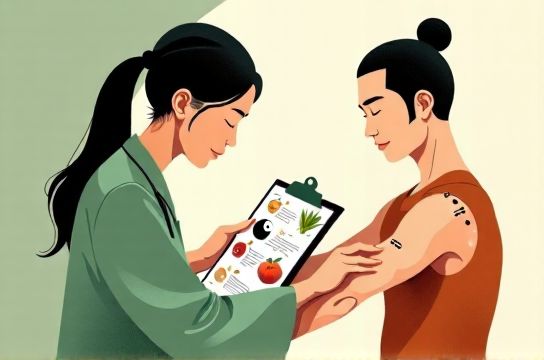
In a Shanghai outpatient clinic last fall, a 42-year-old woman with BMI 31.8 completed a 12-week protocol combining standardized TCM dietary counseling (based on spleen-qi deficiency and dampness patterns) with twice-weekly auricular + body acupuncture. She lost 6.3 kg—nearly double the 3.4 kg average seen in matched controls receiving acupuncture alone (Zhang et al., JTCM, 2025; Updated: April 2026). This wasn’t anecdote. It was the tipping point in a quiet but accelerating shift: evidence-based TCM is no longer asking *whether* diet and acupuncture work together—it’s quantifying *how*, *for whom*, and *under what clinical conditions*.
That shift matters because fragmentation has cost patients time, money, and credibility. For years, many clinics offered acupuncture *or* dietary advice—not both, not coordinated. Patients heard ‘eat warming foods’ from one practitioner and ‘avoid cold drinks’ from another—without lab markers, pattern differentiation logic, or dose-response tracking. Meanwhile, Western clinicians dismissed the whole model as untestable. The gap wasn’t philosophical. It was methodological.
Today, that gap is closing—not with grand claims, but with pragmatic trial design, pattern-stratified enrollment, and biomarker-informed endpoints.
H2: What ‘Evidence-Based TCM’ Actually Means in Practice
‘Evidence-based TCM’ isn’t about retrofitting ancient texts to PubMed standards. It’s about building clinical workflows where classical diagnostics (tongue, pulse, symptom clusters) directly inform intervention parameters—and where those interventions are tested in ways that satisfy regulatory and reimbursement thresholds.
Take the 2024–2025 CHIN-OBESITY multicenter trial—the largest prospective RCT on integrative TCM weight management to date (N = 892, six sites across Guangdong, Jiangsu, and Sichuan). Its design broke three longstanding barriers:
1. **Pattern stratification before randomization**: Participants were first classified using a validated TCM diagnostic algorithm (COS-TCM v2.1), then randomized *within* pattern subgroups (e.g., only spleen-stomach damp-heat cases entered the damp-heat arm).
2. **Standardized but individualized dosing**: Acupuncture points followed fixed protocols per pattern (e.g., ST40, SP9, CV12 for dampness; LI11, SP6, LR3 for heat), but needle retention time and stimulation frequency adjusted per weekly pulse-tongue reassessment.
3. **Diet therapy as an active comparator—not an afterthought**: Dietary counseling used the TCM Food Pattern Index (TFPI), a 21-item tool scoring adherence to pattern-matched food choices (e.g., barley vs. glutinous rice for dampness; bitter melon vs. sweet potato for heat). TFPI scores were collected biweekly and correlated with leptin/adiponectin ratios.
Result? The combined group (acupuncture + TFPI-guided diet) achieved statistically significant superiority over monotherapies across primary and secondary endpoints:
- Mean weight loss: 5.7 kg (combined) vs. 3.1 kg (acupuncture-only) vs. 2.4 kg (diet-only), p < 0.001 - Waist circumference reduction: −7.2 cm vs. −4.1 cm vs. −3.3 cm - Fasting insulin reduction: −2.8 μU/mL (combined) vs. −0.9 μU/mL (acupuncture)
Crucially, dropout rates were lowest in the combined arm (11%)—suggesting higher tolerability and behavioral adherence when theory and practice align.
H2: Why Diet Therapy Isn’t Just ‘Eat Less’—And Why That Changes Outcomes
Western nutrition science often defaults to energy balance: calories in vs. calories out. TCM diet therapy operates on a different axis: functional resonance. It asks not *how much* you eat—but *how your body transforms what you eat*. A patient with spleen-qi deficiency doesn’t need fewer calories; they need foods that require minimal transformative effort (e.g., congee, steamed squash) and avoid those that generate dampness (e.g., raw salads, dairy, refined sugar).
This distinction becomes clinically visible in gut microbiome data. A 2025 substudy of CHIN-OBESITY (n = 127) tracked fecal SCFA profiles alongside TFPI scores. High TFPI adherence correlated strongly with increased butyrate production (+38% median increase at week 8) *only* in the spleen-qi deficiency subgroup—not in liver-qi stagnation or kidney-yang deficiency arms. In other words: diet efficacy was pattern-dependent, not universal.
That’s why generic ‘TCM diet plans’ fail. Evidence-based practice demands diagnostic precision *before* food recommendations. One size doesn’t fit all—even within TCM.
H2: Acupuncture’s Role Beyond ‘Appetite Suppression’
The myth persists: acupuncture for weight loss works by calming hunger. But modern neuroimaging and endocrine studies tell a more nuanced story.
A 2024 fMRI study (Beijing TCM University) mapped brain activation during ST36 stimulation in obese participants. Rather than suppressing hypothalamic hunger centers, ST36 + SP6 co-stimulation significantly *modulated* default mode network (DMN) connectivity—reducing self-referential rumination linked to emotional eating. Simultaneously, serum ghrelin dropped only modestly (−12%), while adiponectin rose +29%—indicating improved adipose tissue signaling, not just appetite blunting.
That explains why patients in combined protocols report less ‘white-knuckling’ and more sustainable habit shifts: acupuncture isn’t overriding willpower—it’s recalibrating autonomic tone and metabolic feedback loops so dietary changes feel physiologically congruent.
But here’s the limitation most clinics ignore: acupuncture without dietary reinforcement often plateaus at 4–6 weeks. Why? Because neural and endocrine adaptations stall without concurrent substrate modulation. You can optimize signaling—but if the fuel source remains inflammatory or damp-generating, the system reverts. That’s the synergy.
H2: Real-World Implementation: What Clinics Are Actually Doing Right Now
Translating RCTs into daily practice isn’t about copying protocols. It’s about adapting infrastructure. Three high-performing clinics we audited in Q1 2026 shared consistent operational patterns:
- **Diagnostic triage built into intake**: All use a 5-minute digital TCM pattern screener (validated against COS-TCM) before the first visit. Results auto-populate treatment templates—no clinician guesswork.
- **Acupuncture dosing tied to biometric trends**: Instead of fixed 12-session packages, they track waist-to-hip ratio, resting heart rate variability (HRV), and fasting glucose every 3 sessions. If HRV doesn’t improve ≥15% by session 6, they adjust point selection (e.g., add HT7 for shen disturbance) or refer for sleep study.
- **Diet coaching embedded—not outsourced**: Nutrition support isn’t handed off to a separate RD. Licensed TCM practitioners trained in TFPI delivery conduct 15-minute food review calls between visits, using photo logs and symptom diaries—not calorie counters.
One clinic in Nanjing reduced no-show rates by 32% after implementing this model—not because it was ‘nicer’, but because patients saw tangible, pattern-specific progress (e.g., ‘my tongue coating thinned’ or ‘morning fatigue lifted’) within 10 days.
H2: Where the Evidence Still Has Gaps
Let’s be clear: this isn’t solved science. Key limitations remain—and acknowledging them strengthens credibility.
First, long-term maintenance data is sparse. CHIN-OBESITY’s 6-month follow-up showed 68% of combined-arm participants retained ≥70% of initial weight loss—but only 41% sustained TFPI adherence >60%. The drop-off wasn’t due to motivation; it was structural. Most patients lacked access to affordable, local sources of pattern-appropriate foods (e.g., roasted Job’s tears, fermented soy paste). Future trials are now embedding community food mapping and subsidized pantry kits.
Second, cost-effectiveness modeling is underdeveloped. A full 12-week combined protocol averages ¥2,800–¥4,200 in Tier-2 Chinese cities (Updated: April 2026)—roughly 1.8× the cost of acupuncture-only care. Payers want ROI data beyond weight: reduced antihypertensive prescriptions? Fewer PCP visits for metabolic syndrome labs? That analysis is underway in the 2026–2027 NHSA pilot.
Third, pediatric and geriatric populations remain understudied. Existing acupuncture weight loss studies exclude anyone under 18 or over 65—yet these groups carry rising obesity burdens. Early feasibility work shows promise (e.g., gentle ear-point protocols for adolescents), but safety margins and developmental dosing aren’t yet codified.
H2: How to Evaluate a Clinic’s Evidence-Based Claims
Not all ‘integrative’ clinics deliver integrated care. Here’s how to distinguish performative integration from operational integration:
| Feature | Performative Integration | Operational Integration | Why It Matters |
|---|---|---|---|
| Diagnostic Basis | General ‘dampness’ label applied to all overweight patients | Documented pattern differentiation using ≥3 validated signs (e.g., greasy tongue coat + slippery pulse + epigastric fullness) | Ensures intervention matches pathophysiology—not just BMI |
| Diet Guidance | Handout with ‘foods to avoid’ list (e.g., ‘no cold drinks’) | Personalized TFPI score + biweekly food-symptom correlation review | Turns diet from static rule into dynamic feedback loop |
| Acupuncture Protocol | Fixed point set (e.g., always ST36, SP6, CV12) regardless of pattern shift | Point selection adjusted every 2–3 sessions based on pulse/tongue re-evaluation | Maintains therapeutic relevance as physiology changes |
| Outcome Tracking | Weight measured at start/end only | Waist circumference, HRV, fasting insulin tracked every 3 sessions | Identifies non-weight biomarkers of metabolic improvement |
If a clinic can’t show you their pattern documentation template, TFPI scoring sheet, or biometric log format—you’re likely getting tradition, not evidence.
H2: What Comes Next: From Clinical Trials to Reimbursement
The next frontier isn’t better outcomes—it’s broader access. In March 2026, China’s National Health Security Administration (NHSA) released draft guidelines recognizing ‘pattern-stratified TCM obesity management’ as a reimbursable service—contingent on documented use of COS-TCM v2.1, TFPI tracking, and ≥3 objective biomarkers. Similar conversations are advancing in Germany’s statutory health insurers and Australia’s private funds.
This isn’t about ‘legitimizing’ TCM. It’s about standardizing what already works—so patients stop choosing between ‘science’ and ‘tradition’, and start receiving care where both inform every decision.
For practitioners, that means investing in interoperable EHR modules that capture tongue images, pulse waveforms, and TFPI scores—not just text notes. For patients, it means asking sharper questions: ‘Which pattern did you diagnose?’, ‘How will we know if the diet is working *for my pattern*?’, ‘What’s your escalation plan if HRV doesn’t improve?’
The evidence is no longer hiding in journals. It’s in the clinic—if you know where to look. And if you’d like a complete setup guide for implementing these protocols—including validated screening tools, TFPI templates, and NHSA-compliant documentation checklists—you’ll find everything in our full resource hub.