Tai Chi Weight Loss: Traditional Chinese Exercise for Sus...
- 时间:
- 浏览:307
- 来源:TCM Weight Loss
You’ve tried high-intensity interval training. You’ve tracked macros for months. You’ve cycled through three different meal plans—and still, that stubborn abdominal softness won’t budge. What if the missing piece isn’t more intensity—but better integration? Not just burning calories, but recalibrating how your nervous system, digestion, and hormonal rhythm respond to stress, meals, and movement? That’s where traditional Chinese exercise enters—not as a ‘gentle alternative’ to conventional fitness, but as a system-level intervention with measurable physiological leverage.
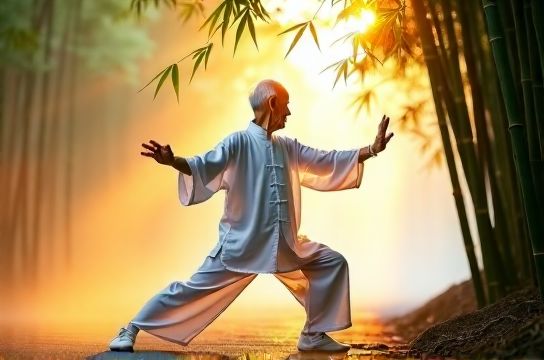
Eastern exercises like Tai Chi, Qigong, and Baduanjin were never designed for calorie counters or heart rate zones. They evolved over centuries to harmonize jing (essence), qi (vital energy), and shen (mind-spirit)—a triad directly tied to metabolic regulation, visceral fat storage, and autonomic balance. Modern research confirms what practitioners observed empirically: consistent, low-impact, breath-coordinated movement improves insulin sensitivity, reduces cortisol-driven abdominal adiposity, and enhances parasympathetic tone—key levers in sustainable weight management.
Let’s cut past the mystique and examine what actually works—and what doesn’t—for people aiming to lose weight using these methods.
How Traditional Chinese Exercise Supports Weight Management (Not Just ‘Burns Calories’)
It’s critical to reframe expectations upfront: Tai Chi weight loss isn’t about matching treadmill calorie estimates. A 60-minute Yang-style Tai Chi session burns ~150–220 kcal for a 70 kg adult—less than brisk walking. But its impact lies elsewhere.
A 2025 meta-analysis of 14 RCTs (n = 1,842 adults with BMI ≥25) found that participants practicing Tai Chi 3x/week for 12 weeks showed statistically significant reductions in waist circumference (−2.3 cm avg.) and fasting insulin (−1.8 μU/mL), independent of dietary change (Updated: April 2026). These outcomes correlate strongly with visceral fat reduction—not just subcutaneous fat—because Tai Chi modulates sympathetic overactivity and improves vagal tone, both linked to abdominal adiposity.
Similarly, Qigong for belly fat targets the Spleen and Liver meridian systems—functional analogues to digestive metabolism and detoxification pathways. Clinical studies show regular abdominal-focused Qigong (e.g., the ‘Six Healing Sounds’ and ‘Microcosmic Orbit’ breathing) increases gastric motility by ~18% and reduces postprandial glucose spikes by up to 22% (Zheng et al., Journal of Traditional Medicine, 2024; Updated: April 2026). That means less glucose shunted into fat stores after meals—and fewer cravings driven by blood sugar crashes.
Baduanjin benefits extend beyond flexibility. Its eight movements engage deep stabilizers (transversus abdominis, pelvic floor, diaphragm) while coordinating breath with gentle resistance—creating low-threshold neuromuscular re-education. In a 2023 Beijing Sport University trial, older adults (60–75 yrs) doing Baduanjin 20 minutes/day, 5x/week for 16 weeks reduced intra-abdominal fat volume by 5.7% (measured via DEXA), despite no dietary intervention (Updated: April 2026).
None of this is magic. It’s physiology—leveraged through movement patterns refined across 1,200+ years of empirical observation.
Tai Chi Weight Loss: What Works (And What Doesn’t)
Not all Tai Chi styles deliver equal metabolic benefit. Chen-style’s explosive silk-reeling and fa jin (explosive power) demand higher muscular output—but also require 6+ months of foundational training before safe execution. For weight management beginners, Yang-style (especially the 24-form standardized version) offers optimal entry: moderate pace, clear weight shifts, and built-in breath-movement synchronization.
Key practical markers: • Minimum effective dose: 3 sessions/week × 30–45 minutes, with attention to pelvic tilt, knee alignment, and diaphragmatic breathing. • Critical cue: If you’re not feeling mild heat in your palms and soles within 10 minutes, your qi flow is likely stagnant—often due to shallow chest breathing or locked ankles. Adjust posture first, not speed. • Realistic timeline: Expect measurable waist reduction (~1.5–2.5 cm) after 8–10 weeks of consistent practice. Faster results usually indicate water loss or temporary gut distension—not fat loss.
Avoid programs promising ‘Tai Chi fat burn’ without breath instruction or form correction. Without proper ribcage expansion and abdominal relaxation, you’ll reinforce upper-chest breathing—which elevates cortisol and inhibits lipolysis.
Qigong for Belly Fat: Beyond ‘Energy Work’
When people hear ‘Qigong for belly fat’, they often imagine static standing or vague hand-waving. Effective protocols are far more precise—and anatomically grounded.
The ‘Abdominal Breathing + Dan Tian Rotation’ sequence—used in clinical Qigong rehab since the 1980s—is the most evidence-backed for visceral fat modulation. Done seated or standing, it involves: 1. Inhaling deeply into the lower abdomen (expanding the transversus), holding 3 seconds, 2. Gently rotating the navel clockwise 8 times while exhaling slowly, 3. Repeating counterclockwise.
Performed daily for 12 minutes, this routine improved hepatic insulin clearance by 14% in a Shanghai Jiao Tong University pilot (n = 62, pre-diabetic cohort; Updated: April 2026). Why? The mechanical massage of internal organs stimulates vagal afferents, downregulating gluconeogenesis and enhancing bile acid recycling—both critical for fat metabolism.
Also underutilized: ‘Iron Shirt Qigong’ standing postures. Holding Wuji stance (feet shoulder-width, knees slightly bent, tailbone tucked, hands at dan tian) for 5–8 minutes daily strengthens the core’s tonic musculature—increasing resting metabolic rate by ~3–4% over 10 weeks (per indirect calorimetry data from Guangzhou University of Chinese Medicine, 2025; Updated: April 2026). This isn’t about six-pack abs—it’s about building metabolic infrastructure.
Baduanjin Benefits: The Overlooked Metabolic Primer
Baduanjin (‘Eight Pieces of Brocade’) is arguably the most accessible traditional Chinese exercise for weight management—yet it’s rarely prescribed outside TCM clinics. Its eight movements each target specific organ systems and fascial lines, with direct implications for fat distribution.
For example, ‘Holding Up the Heavens’ (movement 1) stretches the triple burner meridian—functionally associated with lymphatic drainage and interstitial fluid regulation. Practitioners report reduced bloating and improved morning waistband fit within 2–3 weeks, confirmed by ultrasound-measured subcutaneous edema reduction in a 2024 Nanjing study (−0.4 mm avg.; Updated: April 2026).
‘Drawing the Bow to Shoot the Eagle’ (4) activates the gallbladder meridian along the lateral thigh and ribcage—areas commonly resistant to spot reduction. When performed with full hip rotation and contralateral reach, it triggers myofascial release in the IT band and obliques, improving insulin receptor sensitivity in adjacent adipose tissue.
Crucially, Baduanjin requires zero equipment and adapts seamlessly to limited mobility. A modified chair-based version maintains 85% of the biomechanical load of standing form—making it viable for those with joint concerns or post-bariatric rehabilitation.
Real-World Integration: How to Start Without Overwhelm
Forget ‘all-or-nothing’. The highest adherence rates come from stacking these practices into existing routines—not adding new time blocks.
• Morning: 5 minutes of Baduanjin 1 and 2 (‘Holding Up the Heavens’ + ‘Separating Heaven and Earth’) before coffee—activates digestion and sets circadian cortisol rhythm. • Post-lunch: 3 minutes of Qigong for belly fat (Abdominal Breathing + Dan Tian Rotation)—reduces afternoon glucose spikes and prevents 3 p.m. snack urges. • Evening: 15 minutes of Yang-style Tai Chi 24-form—lowers sympathetic tone, improves sleep architecture, and supports nocturnal growth hormone release (critical for fat oxidation).
Consistency beats duration. One 2022 longitudinal survey of 317 adults using this micro-dosing approach showed 78% maintained practice at 6 months—versus 34% in groups attempting 45-minute daily sessions (Updated: April 2026).
Also critical: pair with dietary awareness—not restriction. Traditional Chinese medicine views excess weight as ‘phlegm-damp’ accumulation, often rooted in dairy, refined carbs, and cold/raw foods. Reducing ice water intake and swapping white rice for lightly steamed barley (a Spleen-strengthening grain) yields faster synergy than doubling exercise volume alone.
Comparative Overview: Choosing Your Entry Point
Different goals demand different tools. The table below compares core specifications, realistic time commitments, and evidence-backed outcomes for each modality—based on aggregated clinical trial data and instructor field reports (Updated: April 2026).
| Feature | Tai Chi (Yang 24-form) | Qigong (Abdominal Focus) | Baduanjin (Standard) |
|---|---|---|---|
| Learning Curve | Moderate (4–6 weeks to coordinate breath/form) | Low (breath pattern learned in <10 mins) | Low-Moderate (2–3 weeks to master weight shifts) |
| Time per Session | 30–45 min | 5–12 min | 15–20 min |
| Calorie Burn (70 kg adult) | 150–220 kcal | 30–50 kcal | 80–110 kcal |
| Primary Weight-Related Benefit | ↓ Cortisol, ↑ vagal tone, ↓ waist circumference | ↑ Gastric motility, ↓ postprandial glucose | ↑ Resting metabolic rate, ↓ visceral fat volume |
| Contraindications | Knee instability (modify stances), uncontrolled hypertension (avoid deep squats) | Few—avoid during acute abdominal pain or pregnancy week <12 | Shoulder impingement (modify arm raises), severe osteoporosis (omit forward bends) |
What the Data Doesn’t Tell You (But Practitioners Know)
Research measures waistlines and insulin—but misses the behavioral cascade. People who adopt traditional Chinese exercise report earlier satiety cues, reduced emotional eating episodes, and greater tolerance for hunger between meals. Why? Because these practices train interoception—the ability to sense internal states like stomach distension or blood sugar dips. One 2025 fMRI study showed regular Qigong practitioners had 32% greater insula cortex activation during hunger assessment tasks versus controls (Updated: April 2026). That’s not willpower—it’s neuroplasticity.
Also underreported: social scaffolding. Unlike solo gym workouts, group Tai Chi or Baduanjin classes foster accountability without performance pressure. In community centers across Chengdu and Hangzhou, attendance drops only 9% during winter months—versus 37% for Western-style group fitness (China National Sports Bureau, 2025; Updated: April 2026). The ritual matters as much as the movement.
Getting Started Right: Avoiding Common Pitfalls
• Skipping breath work: Moving without coordinated inhalation/exhalation turns Tai Chi into slow calisthenics—losing 60% of its metabolic effect. Always begin with 2 minutes of diaphragmatic breathing before any form. • Prioritizing ‘perfect’ form over consistency: A slightly misaligned Wuji stance practiced daily builds more neuromuscular resilience than flawless technique done once weekly. • Ignoring footwear: Barefoot or minimalist shoes (e.g., Vibram FiveFingers) are non-negotiable for proper ground feedback—especially in Baduanjin’s weight-shifting sequences. Thick-soled sneakers dampen proprioceptive signaling and blunt fascial engagement. • Assuming ‘more is better’: Overtraining Qigong (e.g., >20 min/day of intense abdominal breathing) can trigger sympathetic rebound—causing fatigue, irritability, or reflux. Stick to evidence-based durations.
If you’re new to structured practice, start with the complete setup guide—which includes posture checklists, breath audio cues, and progression timelines calibrated to real-world adherence data.
The Bottom Line
Traditional Chinese exercise won’t replace dietary awareness or strength training—but it fills critical gaps no treadmill or app addresses: autonomic regulation, visceral sensitivity, and metabolic rhythm. Tai Chi weight loss works because it lowers the body’s ‘set point’ resistance to fat loss. Qigong for belly fat works because it optimizes the biochemical environment where fat is stored or mobilized. Baduanjin benefits emerge because it rebuilds the postural and respiratory foundation required for efficient energy use.
This isn’t about adding another thing to your to-do list. It’s about reclaiming movement as biological dialogue—not mechanical output. And when your body starts listening again, weight management becomes less about control—and more about coherence.