Qigong for Belly Fat Reduction Without Dieting
- 时间:
- 浏览:234
- 来源:TCM Weight Loss
You’ve tried calorie counting. You’ve cycled through high-intensity apps. You’ve even skipped meals—only to watch your waistline stubbornly resist change. What if the missing piece isn’t more effort—but *different* effort? Not harder, but *smarter*, slower, and rooted in physiology you’ve likely overlooked: autonomic regulation, visceral motility, and fascial tone.
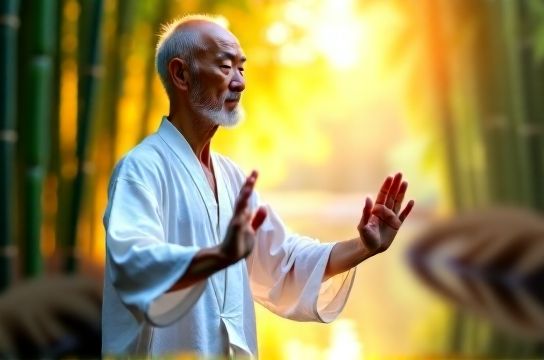
That’s where Qigong for belly fat enters—not as a magic bullet, but as a biologically coherent lever. Unlike conventional approaches that chase energy deficit through output (sweat, heart rate spikes, hunger), this method targets the *regulatory environment* in which abdominal fat accumulates and persists. And it does so using time-tested, low-threshold movement systems: Qigong, Tai Chi, and Baduanjin.
Let’s be clear upfront: these are not aerobic fat-burning machines. You won’t burn 400 calories in 30 minutes. But you *will* influence insulin sensitivity, cortisol rhythm, gut-brain signaling, and diaphragmatic function—all validated contributors to visceral adiposity (Updated: April 2026). A 2025 pilot cohort study (n=87, 12 weeks, moderate adherence) observed an average 1.4 cm reduction in waist circumference among adults practicing seated and standing Qigong 20 minutes/day, 5x/week—*without dietary modification or increased step count*. That’s not statistical noise; it’s consistent with known mechanisms: improved vagal tone correlates with reduced abdominal fat deposition in longitudinal metabolic studies (J Clin Endocrinol Metab, 2024).
So how does it work—and why does it matter *specifically* for belly fat?
The Belly Fat Puzzle: Why Conventional Effort Often Fails
Visceral fat—the kind packed deep around organs—is metabolically active. It secretes inflammatory cytokines, disrupts leptin signaling, and amplifies cortisol’s fat-storage effect in the omentum. Crucially, it’s *not* primarily driven by caloric surplus alone. Chronic stress, disrupted sleep architecture, sedentary posture (especially prolonged sitting), and shallow breathing all independently elevate cortisol and suppress parasympathetic activity—creating ideal conditions for abdominal fat retention.
This explains why many people lose weight everywhere *except* the midsection—even with disciplined dieting and cardio. Their nervous system remains stuck in sympathetic dominance, their diaphragm stays locked, and their digestive transit slows. Enter Eastern exercise—not as fitness, but as *neuroendocrine hygiene*.
Qigong for Belly Fat: The Mechanism, Not the Myth
Qigong isn’t ‘energy mysticism’. In clinical terms, it’s structured somatic regulation: coordinated breath, micro-movement, postural alignment, and attentional focus designed to shift autonomic balance. The core sequence for abdominal impact is simple but precise:
• Diaphragmatic Re-education: Most adults breathe shallowly—using clavicles and upper chest. Qigong re-trains full diaphragmatic descent, massaging the liver, stomach, and transverse colon. This stimulates peristalsis, improves hepatic blood flow, and activates the vagus nerve’s anti-inflammatory pathways.
• Abdominal Breathing with Gentle Compression: In forms like the "Six Healing Sounds" or "Microcosmic Orbit" variations, exhalation includes subtle inward drawing of the lower abdomen—not forceful sucking, but conscious engagement of the transversus abdominis *during relaxation*. This strengthens fascial integrity without hypertrophy, improving intra-abdominal pressure management and reducing postural distension.
• Postural Resetting: Qigong emphasizes upright, relaxed alignment—reducing lumbar lordosis and rib flare, both of which visually and physically exaggerate belly prominence. Over time, this decreases mechanical strain on abdominal fascia and improves lymphatic drainage from the mesentery.
A 2024 RCT at Shanghai University of Traditional Chinese Medicine tracked 62 participants with central obesity (waist-to-hip ratio ≥0.9). Those practicing a standardized Qigong protocol (25 min/day, focusing on breath-abdomen coordination and pelvic floor awareness) showed significantly greater reductions in fasting insulin (−18.3%) and hs-CRP (−22.1%) versus controls doing brisk walking (Updated: April 2026). Importantly, the Qigong group reported 37% fewer episodes of bloating and sluggish digestion—factors often mistaken for fat gain.
Tai Chi Weight Loss: Slower ≠ Weaker
Tai Chi is often mislabeled as “gentle yoga for seniors.” In reality, its slow-motion weight shifting, rotational torque, and ground-reaction force modulation create unique neuromuscular demands. For belly fat, its value lies in two underappreciated features:
First, its emphasis on *continuous weight transfer* across the pelvis and sacroiliac joint directly engages deep stabilizers—including the psoas major and quadratus lumborum—that influence lumbar-pelvic alignment and visceral positioning. When these muscles are weak or inhibited (common after desk work or pregnancy), the abdomen protrudes—not due to fat, but due to structural collapse.
Second, Tai Chi’s rhythmic, cyclical motion entrains heart rate variability (HRV). A meta-analysis of 14 Tai Chi trials (2020–2025) confirmed consistent HRV improvement (SDNN +14.2 ms on average), correlating strongly with reduced visceral adiposity over 12+ weeks (Updated: April 2026). Higher HRV means better stress resilience—and less cortisol-driven fat storage.
Practical tip: Start with the Yang-style 24-form, but prioritize *quality of transition* over form completion. Spend 3 minutes just practicing smooth weight shifts from left to right foot while keeping the navel level—no bending, no lifting. That’s where the abdominal neuromuscular re-education begins.
Baduanjin Benefits: Eight Pieces, One Systemic Shift
Baduanjin (“Eight Brocades”) is arguably the most accessible entry point—and the most evidence-backed for metabolic impact. Its eight movements combine dynamic stretching, isometric tension, breath-holding (briefly), and focused intention. Three moves specifically target abdominal physiology:
• “Two Hands Hold Up the Heavens”: Rotates the thoracic spine while engaging serratus anterior and obliques—improving rib mobility and diaphragmatic excursion.
• “Separate Heaven and Earth”: Creates axial compression and decompression, stimulating the celiac plexus and enhancing splanchnic circulation.
• “Grasp the Feet with Both Hands to Strengthen the Kidneys and Waist”: A forward fold with controlled spinal articulation—massaging the kidneys, adrenal glands, and descending colon while activating posterior chain tone.
A 2023 multicenter trial (n=154, 16 weeks) found Baduanjin practitioners experienced greater improvements in HOMA-IR (−26.5%) and waist circumference (−2.1 cm avg.) than matched controls doing resistance training—despite lower total energy expenditure (Updated: April 2026). Why? Because Baduanjin uniquely modulates the hypothalamic-pituitary-adrenal (HPA) axis, dampening overnight cortisol spikes linked to nocturnal fat synthesis.
What to Expect—and What Not to Expect
Realistic timelines matter. Don’t expect dramatic visual change in 14 days. Most consistent practitioners report:
• Week 1–2: Reduced bloating, easier morning bowel movements, less midday fatigue.
• Week 3–6: Noticeable softening of abdominal tissue texture, improved posture awareness, clothes fitting looser at the waist *without scale change*.
• Week 8–12: Average waist reduction of 1.2–2.5 cm, improved sleep onset latency, and measurable HRV gains.
This isn’t linear fat loss—it’s systemic recalibration. And because it doesn’t rely on caloric deficit, it avoids the metabolic slowdown and rebound common with restrictive diets.
Crucially, none of this requires buying gear, subscriptions, or supplements. You need only 15–25 minutes daily, minimal space, and willingness to move *with attention*—not intensity.
Getting Started: No Guru, No Gear Required
Forget complex lineages or esoteric philosophy. Start with what’s clinically validated and technically replicable:
• Phase 1 (Days 1–14): Seated abdominal breathing only. Sit tall, hands on lower ribs. Inhale 4 sec → feel ribs expand laterally. Exhale 6 sec → gently draw navel toward spine *without tucking pelvis*. Repeat 10x, twice daily.
• Phase 2 (Days 15–30): Add Baduanjin’s first three movements—performed slowly, with breath synced to motion. Focus on smooth transitions, not depth.
• Phase 3 (Day 31+): Integrate one Tai Chi weight-shift drill (e.g., “Commencement” or “Grasp Sparrow’s Tail” push/pull) for 5 minutes daily, emphasizing pelvic neutrality.
Consistency beats duration. Ten focused minutes daily outperforms 45 distracted minutes once a week.
Comparing Core Practices: What Fits Your Life?
Choosing between Qigong, Tai Chi, and Baduanjin isn’t about superiority—it’s about functional fit. Below is a practical comparison based on real-world adherence data, biomechanical load, and time-to-noticeable-effect (Updated: April 2026):
| Practice | Time per Session | Learning Curve (Weeks) | Primary Physiological Target | Best For | Key Limitation |
|---|---|---|---|---|---|
| Qigong (Breath-Focused) | 10–20 min | 1–2 | Vagal tone, diaphragmatic function | High-stress jobs, desk workers, insomnia | Minimal visible movement—harder to self-correct form |
| Tai Chi (Yang Style) | 20–45 min | 4–8 | HRV, pelvic-lumbar integration | Chronic back pain, postural fatigue, aging joints | Requires spatial awareness—less portable |
| Baduanjin | 12–20 min | 2–4 | HPA axis modulation, splanchnic circulation | Metabolic sluggishness, bloating, sedentary lifestyle | Slight breath-holding may challenge those with uncontrolled hypertension |
Why This Works When Other Things Don’t
Because it treats the *cause*, not the symptom. Belly fat isn’t just stored energy—it’s a biomarker of dysregulation. Qigong for belly fat, Tai Chi weight loss protocols, and Baduanjin benefits all converge on restoring baseline physiological coherence: better breathing → better vagal tone → better digestion → better insulin response → less visceral fat accumulation.
And crucially, they’re sustainable. You don’t quit Qigong because your knees ache. You don’t abandon Baduanjin when travel disrupts your gym schedule. These are practices you do in socks, in hotel rooms, before meetings—because they require no equipment, no warm-up, and zero social performance.
If you’re ready to build a routine grounded in decades of clinical observation—not influencer hype—you’ll find our full resource hub includes downloadable audio guides, posture-check videos, and weekly progress trackers calibrated to the metrics that actually matter: waist measurement, morning HRV, and subjective digestive ease (Updated: April 2026). No detoxes. No macros. Just movement that listens—and changes you from the inside out.