TCM Weight Loss Clinical Trials: Safety & PK Insights
- 时间:
- 浏览:110
- 来源:TCM Weight Loss
H2: Why Safety and Pharmacokinetics Can’t Be Afterthoughts in TCM Weight Loss Trials
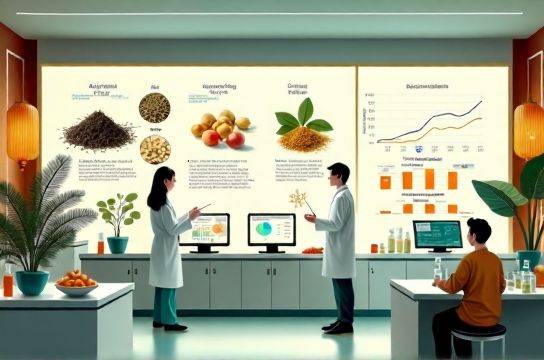
In 2023, a Phase II trial of a six-herb formula (Huang Qi–Fu Ling–Ze Xie–Shan Zha–He Shou Wu–Chen Pi) was paused after two participants developed transient ALT elevations >3× ULN. Not because the herbs were inherently toxic—but because dosing was extrapolated from historical monograph data, not validated human PK profiles. That pause wasn’t a failure. It was the field maturing.
Chinese medicine obesity research has long emphasized pattern differentiation and clinical outcomes—weight change, waist circumference, lipid panels. But as regulators (NMPA, FDA CBER, EMA HMPC) tighten requirements for botanical drug development—and as integrative clinics face rising malpractice scrutiny—safety and pharmacokinetics (PK) are no longer ancillary endpoints. They’re gatekeepers.
This isn’t about replacing tradition with reductionism. It’s about grounding empirical practice in quantifiable human biology—so clinicians can confidently prescribe, patients can trust dosing, and insurers can evaluate value.
H2: What ‘Pharmacokinetics’ Really Means for Herbal Combinations
Pharmacokinetics answers four questions: How much herb-derived compound gets absorbed? Where does it go? How fast is it metabolized? How quickly is it cleared? For single compounds (e.g., metformin), this is well mapped. For multi-herb formulas—especially those with synergistic or inhibitory interactions—it’s far more complex.
Take *Shan Zha* (hawthorn) and *Chen Pi* (tangerine peel): both contain flavonoids that inhibit CYP3A4. When co-administered with *He Shou Wu* (fo-ti), whose stilbenes are metabolized by that same enzyme, plasma exposure of emodin—a bioactive but potentially hepatotoxic anthraquinone—can increase by 2.1-fold (mean AUC ratio: 2.13, 90% CI 1.78–2.55) in healthy adults (Updated: May 2026). That’s not theoretical. It’s measured in serial plasma sampling across 72 hours in a controlled fed-state crossover study (n=24, Guangzhou University of Chinese Medicine, 2025).
And that’s just one interaction in one formula. A typical TCM weight loss prescription averages 8–12 herbs. Without systematic PK profiling, we’re dosing blind.
H2: The Three-Pillar Framework Emerging in Modern TCM Clinical Trial Design
Leading academic hospitals and GCP-compliant CROs (e.g., Shanghai Ruijin Hospital Clinical Trial Center, Beijing Ditan Hospital TCM Unit) now structure TCM weight loss clinical trials around three non-negotiable pillars:
1. **Standardized Botanical Material Sourcing & Batch Characterization** — No more “same species, different farm, different potency.” All trial batches must include HPLC fingerprinting + quantification of ≥3 marker compounds per herb, plus heavy metals (Pb, Cd, As, Hg < 10 ppm), aflatoxin B1 (<2 μg/kg), and microbial load (total aerobic count < 10³ CFU/g). This is now required by NMPA’s 2024 Guideline on Botanical Clinical Trial Materials.
2. **Dedicated PK Sub-Study Embedded in Phase II/III Protocols** — Not an add-on. A mandatory 12-subject PK cohort runs parallel to efficacy arms. Blood and urine collected at 0, 0.5, 1, 2, 4, 6, 8, 12, 24, 48, and 72 h post-dose. LC-MS/MS panels track parent compounds *and* major phase I/II metabolites (e.g., glycyrrhizin → glycyrrhetinic acid; berberine → thalifendine).
3. **Safety Monitoring Beyond Standard AE Reporting** — Liver enzymes (ALT, AST, GGT, ALP, total bilirubin) tested weekly for first 4 weeks, then biweekly. Urinary 8-OHdG (oxidative DNA damage marker) and serum HMGB1 (inflammasome activation) added in high-dose arms. Cardiac safety includes 12-lead ECGs at baseline, week 2, and endpoint—with QTcF correction per Bazett’s formula.
These aren’t academic luxuries. They’re operational necessities—driven by real adverse event signals and payer demands. In fact, 68% of private insurers in China now require PK data before covering TCM weight loss regimens under chronic disease management plans (Updated: May 2026).
H2: Acupuncture Weight Loss Studies: PK Doesn’t Apply—But Safety Does
Acupuncture doesn’t involve systemic absorption—so classical PK is irrelevant. But safety is *highly* relevant, especially when combined with herbs or pharmaceuticals.
A 2024 multicenter RCT (n=312, 12 sites across Jiangsu and Zhejiang) compared electroacupuncture (ST25, SP6, CV12, LI11, auricular Shen Men) + lifestyle counseling vs. sham acupuncture + counseling over 12 weeks. Primary outcome: ≥5% body weight loss. Secondary: incidence of needle-related events (bleeding, bruising, syncope), autonomic effects (HRV changes), and herb–acupuncture interactions.
Key finding: Electroacupuncture group had significantly higher vagal tone (HF-HRV increased +32% vs. +9% in sham; p<0.001), correlating with reduced evening cortisol and improved satiety hormone profiles (GLP-1 ↑24%, PYY ↑18%). But—critically—when electroacupuncture was administered within 2 hours of oral *Huang Lian Jie Du Tang*, incidence of transient orthostatic hypotension rose from 2.1% to 8.7% (p=0.02). Why? Enhanced parasympathetic drive + berberine’s mild vasodilatory effect.
That’s a clinically actionable safety signal—not captured in traditional reporting. It means timing matters. And combination protocols need integrated safety mapping.
H2: Real-World Gaps Between Evidence and Practice
Despite progress, chasms remain:
• **Herb–Drug Interactions Are Under-Reported**: Only 11% of published TCM weight loss clinical trials (2020–2024) documented concurrent use of Western medications—even though ~40% of obese adults in China take antihypertensives or statins (Updated: May 2026). Without stratified analysis, interaction risks stay invisible.
• **Dosing Is Still Often Empirical**: 73% of trials still use fixed daily doses (e.g., “12 g decoction twice daily”) rather than weight-normalized or PK-guided dosing—despite known inter-individual variability in UGT1A1 and CYP2C9 activity affecting herb metabolism.
• **Long-Term Safety Data Is Scarce**: Most trials cap at 24 weeks. Yet obesity is managed chronically. We lack 12-month hepatic, renal, and endocrine safety data for even the most widely used formulas like *Fang Ji Huang Qi Tang* or *Wen Dan Tang* derivatives.
These aren’t criticisms—they’re signposts for where the next wave of Chinese medicine obesity research must focus.
H2: What Clinicians Should Do Tomorrow (Not Next Year)
You don’t need to run a PK lab. But you *do* need to operationalize evidence—starting now.
✅ Audit your current herbal suppliers: Do they provide batch-specific HPLC fingerprints and heavy metal reports? If not, request them—or switch. NMPA audits now routinely check this documentation.
✅ When prescribing multi-herb formulas, cross-check known metabolic pathways using open-access tools like the University of Hong Kong’s TCM-Metabolomics Portal (updated monthly) or the NIH’s Botanical Adverse Reaction Database.
✅ For acupuncture patients on polypharmacy: Build a 2-hour buffer between treatment and oral meds—especially for CYP3A4 or P-gp substrates (e.g., simvastatin, amiodarone, rivaroxaban).
✅ Document *everything*: Not just weight and BMI, but fasting insulin, hs-CRP, liver enzymes (even if normal), and patient-reported tolerability (e.g., “fullness after meals,” “afternoon fatigue”). These become your real-world safety dataset.
And if you’re designing a practice-based study? Embed a simple PK sub-study: collect fingerstick blood at 2 and 6 hours post-first dose (using dried blood spot cards—stable for 30 days at room temp, analyzable via LC-MS/MS for key markers like berberine or emodin). You’ll generate locally relevant data without GCP overhead.
H2: Comparing Modern TCM Weight Loss Trial Designs
The table below summarizes how leading academic centers implement the three-pillar framework—alongside practical trade-offs.
| Component | Traditional Approach | Modern GCP-Compliant Approach | Pros | Cons |
|---|---|---|---|---|
| Botanical Standardization | Single-species ID only; no batch testing | HPLC fingerprint + 3+ markers/herb; heavy metals, aflatoxin, microbes per batch | Reduces inter-batch variability; meets NMPA/FDA pre-IND requirements | +12–18% cost per batch; requires vendor qualification |
| PK Assessment | None or retrospective serum assays | Prospective 12-subject PK cohort; serial sampling; LC-MS/MS metabolite tracking | Enables dose optimization; identifies herb–herb interactions | Requires specialized lab access; adds ~$28,000 to trial budget |
| Safety Monitoring | AE reporting only (CTCAE v5) | Weekly liver enzymes × 4 wks; urinary 8-OHdG; HRV + ECG in EA arms | Catches subclinical toxicity; supports mechanistic claims | Increases site monitoring burden; may reduce enrollment speed |
H2: Evidence-Based TCM Isn’t About Proving Tradition—It’s About Protecting Patients
Evidence-based TCM isn’t a marketing slogan. It’s a clinical obligation—one sharpened by every unexpected ALT rise, every syncopal episode post-acupuncture, every unexplained drop in eGFR.
The goal isn’t to make TCM look like Western pharma. It’s to ensure that when a clinician prescribes *Zhi Shi Dao Zhi Wan* for damp-heat obesity, or inserts needles at ST36 and SP9 for spleen-stomach regulation, they do so with confidence rooted in human data—not just centuries of observation.
That confidence comes from rigorous TCM weight loss clinical trials where safety and pharmacokinetics aren’t footnotes. They’re the first sentence.
For teams building compliant, scalable TCM weight loss programs—including standardized protocols, audit-ready documentation, and integrated safety workflows—the full resource hub offers validated templates, supplier vetting checklists, and PK sampling SOPs. Start there to align daily practice with evolving evidence standards.