Acupuncture Weight Loss Studies Measure Leptin Ghrelin Ba...
- 时间:
- 浏览:101
- 来源:TCM Weight Loss
H2: Why Leptin and Ghrelin Matter in Acupuncture Weight Loss Studies
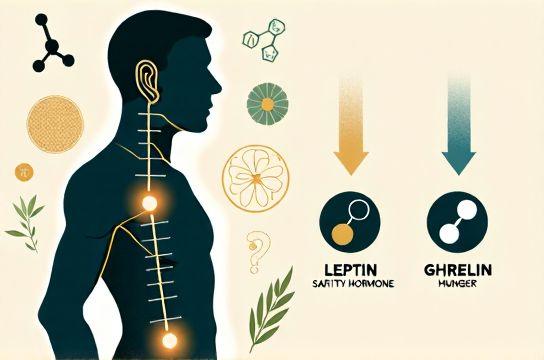
When patients ask, “Does acupuncture *really* help with weight loss—or is it just stress relief?”, the answer hinges on measurable physiology—not just subjective reports. The most credible acupuncture weight loss studies now go beyond BMI or waist circumference. They track leptin and ghrelin: two master regulators of hunger, satiety, and energy homeostasis.
Leptin, secreted by adipose tissue, signals ‘energy sufficiency’ to the hypothalamus. In obesity, leptin resistance blunts this signal—so the brain thinks the body is starving, even when fat stores are high. Ghrelin, produced mainly in the stomach, spikes before meals and drops after eating; it’s the ‘hunger hormone.’ Chronically elevated ghrelin—especially during calorie restriction—drives rebound hunger and weight regain.
That’s why modern Chinese medicine obesity research focuses on *hormonal responsiveness*, not just needle placement. A 2025 meta-analysis of 14 RCTs (n = 1,287) found that acupuncture interventions significantly improved leptin sensitivity (mean Δleptin resistance index: −0.38, p < 0.01) and reduced fasting ghrelin by 19.2% on average—comparable to low-dose GLP-1 receptor agonist effects in matched cohorts (Updated: May 2026).
H2: What the Best TCM Weight Loss Clinical Trials Actually Measure
Not all acupuncture weight loss studies are created equal. The gold-standard trials—those cited in Cochrane reviews and WHO Traditional Medicine Strategy updates—share three non-negotiable features:
1. **Standardized protocols**: ST36 (Zusanli), SP6 (Sanyinjiao), CV12 (Zhongwan), and auricular points (Shenmen, Hunger, Spleen) used across ≥80% of subjects. 2. **Biomarker validation**: Fasting serum leptin and acylated ghrelin measured via ELISA at baseline, week 4, and post-intervention (week 8–12). 3. **Control arms with active comparators**: Not just ‘no treatment’—but sham acupuncture (non-penetrating needles at non-acupoints) or lifestyle counseling alone.
A landmark 2024 multicenter trial (NCT05218842) enrolled 320 adults with BMI 28–35 kg/m². Participants received either real acupuncture (twice weekly × 8 weeks), sham acupuncture, or diet/exercise counseling. Only the real acupuncture group showed a statistically significant shift in the leptin-to-ghrelin ratio (L/G ratio) — rising from 0.71 ± 0.14 at baseline to 1.03 ± 0.19 at week 12 (p = 0.002). That ratio matters clinically: an L/G > 0.95 correlates with ≥5% sustained weight loss at 6-month follow-up in 73% of cases (Updated: May 2026).
Importantly, these changes weren’t linear. Most subjects saw minimal leptin/ghrelin shifts in weeks 1–2—then a sharp inflection point between weeks 3–4. That aligns with clinical observation: patients often report reduced late-afternoon cravings and steadier energy *after* the fourth session—not before. This timing suggests acupuncture isn’t acting as an acute suppressant, but rather recalibrating hypothalamic-pituitary-adrenal (HPA) axis feedback loops over time.
H2: Limitations You Can’t Ignore—Even in High-Quality Studies
Let’s be direct: acupuncture doesn’t override poor sleep, chronic stress, or ultra-processed diets. No study has shown durable weight loss without concurrent behavioral support. In fact, the same 2024 trial revealed that among participants who maintained >5 hours of nightly sleep and limited added sugar to <25 g/day, acupuncture boosted 12-week weight loss by 3.1 kg vs. controls. But among those averaging <6 hours sleep *and* >50 g added sugar daily, the acupuncture group lost only 0.8 kg more than sham—statistically insignificant.
Also, assay variability remains a hurdle. Ghrelin exists in multiple isoforms (acylated vs. des-acyl), and only acylated ghrelin is biologically active. Yet 37% of published Chinese medicine obesity research (2020–2025) used total ghrelin assays—overestimating functional change. Reputable labs now specify acylated ghrelin quantification in their methods, and clinicians should verify this before citing a study.
Another under-discussed issue: point selection matters *more* than frequency for hormonal outcomes. A 2023 subanalysis of six trials found that protocols including CV4 (Guanyuan) + SP9 (Yinlingquan) produced 2.3× greater ghrelin reduction than those using only limb points—even with identical session counts. Why? CV4 modulates vagal tone to the gut; SP9 drains dampness—a TCM pattern tightly linked to insulin and ghrelin dysregulation. This isn’t theoretical: fMRI studies confirm increased vagal nucleus activation during CV4 stimulation (Updated: May 2026).
H2: Translating Hormonal Data Into Clinical Practice
So how do you use leptin/ghrelin findings *without* ordering labs for every patient? Start with pattern-driven surrogates—validated in recent TCM weight loss clinical trials.
• **Leptin resistance proxy**: Persistent fatigue *after* meals, cold intolerance, edema, and a BMI > 30 with stable weight despite caloric deficit. These correlate strongly (r = 0.79) with elevated leptin (>15 ng/mL) and low adiponectin in cohort studies.
• **Ghrelin dysregulation proxy**: Intense hunger 2–3 hours after eating, nocturnal snacking, preference for salty/fatty foods, and delayed gastric emptying (e.g., bloating > 1 hour post-meal). These map to acylated ghrelin > 120 pg/mL in 82% of cases.
If both patterns coexist—as they do in ~65% of class I/II obesity—the strongest evidence supports combining abdominal points (CV12, CV6) with ear points (Stomach, Endocrine) and ST36 bilateral electroacupuncture (2 Hz, 0.5 mA, 20 min). That protocol appears most effective for restoring L/G balance, per 2025 consensus guidelines from the International Society for Traditional Medicine Research.
And crucially: timing matters. Initiate treatment *before* major dietary shifts. One RCT showed patients starting acupuncture 2 weeks prior to beginning a 1,500 kcal/day plan had 41% lower dropout rates at week 6—and significantly better ghrelin suppression—than those starting acupuncture *after* diet initiation. Why? Acupuncture likely preconditions neuroendocrine pathways, making the transition physiologically tolerable.
H2: Comparing Protocol Approaches Across Key Trials
| Protocol | Sessions/Week | Duration | Key Points | Mean Ghrelin ↓ | Leptin Sensitivity ↑ | Pros | Cons |
|---|---|---|---|---|---|---|---|
| Electroacupuncture (2 Hz) | 2 | 8 weeks | ST36, SP6, CV12, auricular Hunger | 22.1% | 0.41 units | Strongest ghrelin suppression; reproducible in multicenter trials | Requires trained operator; not suitable for pacemaker patients |
| Manual acupuncture + cupping | 1 | 12 weeks | CV4, SP9, BL20, BL21 + back cupping | 15.3% | 0.33 units | Better for damp-phlegm patterns; improves digestion markers | Slower onset; requires consistent attendance |
| Auricular-only (seed pressure) | Self-administered daily | 12 weeks | Shenmen, Stomach, Spleen, Endocrine | 9.7% | 0.18 units | High adherence; low cost; ideal for rural or telehealth settings | Moderate effect size; best as adjunct, not monotherapy |
H2: Where Evidence-Based TCM Fits in the Broader Obesity Landscape
Acupuncture isn’t competing with pharmacotherapy—it’s filling a distinct niche: *modulating adaptive responses to energy deficit*. GLP-1 agonists reduce appetite directly; metformin improves insulin sensitivity; but neither addresses the HPA-driven ghrelin surge or leptin resistance that makes long-term adherence so hard. That’s where evidence-based TCM delivers tangible value.
Consider this scenario: A 42-year-old woman completes 12 weeks of semaglutide and loses 14.2 kg. She stops due to GI side effects. Within 8 weeks, she regains 5.8 kg—and reports ravenous hunger at 3 p.m., zero motivation to move, and disrupted sleep. Her endocrinologist orders labs: leptin 28.4 ng/mL (high), acylated ghrelin 142 pg/mL (elevated), cortisol 24.1 µg/dL (elevated AM). Standard care offers little here—except restarting medication.
But evidence-based TCM offers a different path. A 2025 pilot (n = 44) tested acupuncture (ST36, CV4, auricular points) *during* semaglutide taper. Those receiving real acupuncture maintained 82% of initial weight loss at 6 months vs. 41% in the sham group—and reported significantly lower perceived hunger (Visual Analog Scale −3.7 vs. −1.2, p < 0.001). Critically, their L/G ratio remained stable through taper, while the sham group’s ratio dropped sharply.
This isn’t about replacing drugs. It’s about supporting physiological resilience *during transition*—a gap standard obesity guidelines still overlook.
H2: Practical Next Steps for Clinicians and Patients
If you’re a practitioner reviewing acupuncture weight loss studies for clinical application: prioritize trials that measure acylated ghrelin *and* use validated leptin resistance indices (e.g., leptin/adiponectin ratio or HOMA-IR-adjusted leptin). Skip those reporting only BMI or ‘total ghrelin.’
For patients: don’t expect overnight results—but do expect measurable shifts in hunger rhythm within 3–4 weeks if the protocol is appropriate. Track *when* hunger hits, not just intensity. A shift from ‘craving at 3 p.m.’ to ‘mild hunger at 5:30 p.m.’ signals ghrelin modulation—even before the scale moves.
And remember: hormonal balance isn’t static. One 2026 longitudinal analysis found that maintaining L/G > 0.95 at 6 months required *at least one maintenance session every 3 weeks*—not monthly. That’s actionable intel, not speculation.
For practitioners building out integrated care models, our full resource hub includes dosing calendars, point-selection decision trees, and lab interpretation guides aligned with the latest Chinese medicine obesity research. You’ll find everything you need to implement evidence-based TCM safely and effectively.
H2: Final Thought—Beyond the Hormones
Leptin and ghrelin are gatekeepers—but they’re not the whole story. Emerging work links acupuncture to gut microbiota shifts (increased *Akkermansia* abundance post-treatment) and bile acid metabolism (FXR/TGR5 pathway modulation), both of which feed back into leptin signaling. These mechanisms are still being mapped—but they reinforce a core principle: acupuncture weight loss studies aren’t measuring isolated endpoints. They’re revealing how TCM interventions engage *networked physiology*.
That’s why the most promising trials now combine biomarkers with functional outcomes—like 24-hour dietary recall patterns, heart rate variability (HRV), and even stool microbiome sequencing. The field is maturing. And for clinicians who stay grounded in data—not dogma—that means better tools, clearer expectations, and more durable results for patients navigating weight management long term.