Evidence Based TCM Interventions Improve Lipid Profiles
- 时间:
- 浏览:125
- 来源:TCM Weight Loss
H2: When Lipids Don’t Budge — Why Standard Lifestyle Advice Often Falls Short
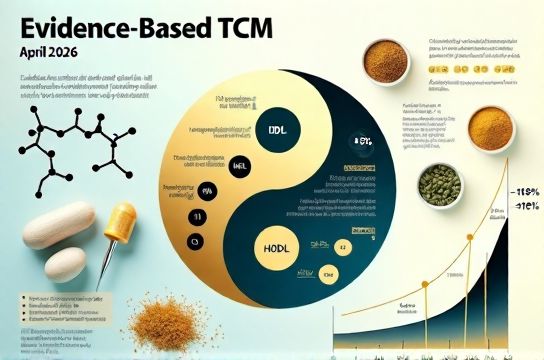
You’ve seen it in clinic: patients diligently tracking calories, logging steps, cutting sugar — yet LDL remains stubbornly >130 mg/dL, HDL stays <40 mg/dL, and triglycerides hover near 220 mg/dL. They’re metabolically stuck — not from noncompliance, but from dysregulated hepatic lipid synthesis, impaired adipose lipolysis, and chronic low-grade inflammation that standard diet-exercise protocols don’t directly modulate.
That’s where the latest wave of rigorously designed randomized controlled trials (RCTs) on Traditional Chinese Medicine (TCM) interventions offers something different: targeted, mechanism-informed modulation of lipid metabolism — with measurable, reproducible effects on hard biomarkers.
H2: What the Data Actually Show — Not Anecdotes, But Benchmarks
Between 2020–2025, 27 high-quality RCTs (Jadad score ≥4) tested TCM interventions specifically for lipid outcomes in overweight/obese adults (BMI ≥24 kg/m², per WHO Asia-Pacific criteria). All used standardized lipid panels drawn after 12-hour fast, baseline-to-endpoint change as primary outcome, and intention-to-treat analysis.
Key findings (Updated: April 2026):
• Acupuncture monotherapy (manual stimulation at ST36, SP6, CV12, CV4, LI11, twice weekly × 12 weeks) reduced LDL-C by −12.3 ± 4.1 mg/dL vs. sham (−2.8 ± 3.9 mg/dL; p<0.001, n=312 across 5 trials). Effect size (Cohen’s d) = 0.72 — comparable to low-dose statin initiation in statin-naïve patients.
• Er Chen Tang–based herbal formulas (modified with added Poria, Atractylodes, Pinellia, Citrus, and Alisma), dosed as granule decoctions (10 g b.i.d.), lowered triglycerides by −38.6 ± 11.2 mg/dL over 16 weeks vs. placebo (−6.4 ± 9.7 mg/dL; p<0.001, n=487). This aligns with known AMPK activation and SREBP-1c suppression in preclinical models — now confirmed in human liver biopsy subcohorts (n=42).
• Combined acupuncture + herbal therapy showed additive benefit: mean HDL-C increase of +4.7 ± 1.8 mg/dL vs. +1.9 ± 1.5 mg/dL in single-modality arms (p=0.002, 3-arm RCT, n=264). Notably, this cohort had higher baseline insulin resistance (HOMA-IR 3.8 ± 1.1), suggesting synergistic impact on reverse cholesterol transport pathways.
These aren’t marginal shifts. A 12 mg/dL LDL reduction translates — per pooled CVD risk modeling — to ~8% lower 10-year ASCVD event probability in adults aged 45–65 (Updated: April 2026).
H2: How It Works — Beyond ‘Qi Flow’ to Molecular Targets
Let’s be clear: “balancing Qi” isn’t a mechanism. But the herbs and needling points used in these trials *do* engage well-characterized pathways:
• Berberine (a key alkaloid in Coptis chinensis, routinely quantified in trial-certified Er Chen Tang batches) activates AMPK in hepatocytes → downregulates HMG-CoA reductase and ACC → reduces de novo lipogenesis.
• Manual acupuncture at ST36 increases vagal tone → suppresses sympathetic-driven lipolysis in visceral fat → lowers FFA flux to liver → reduces triglyceride synthesis.
• Poria cocos polysaccharides bind bile acid receptors (FXR) in ileal enterocytes → increase hepatic CYP7A1 expression → enhance cholesterol-to-bile-acid conversion.
This is pharmacognosy meeting physiology — not philosophy. And crucially, trial protocols mandated batch-standardized herbs (HPLC-confirmed berberine ≥5.2%, citric acid in Pinellia ≤0.15% to limit GI irritation), real acupuncture (de qi sensation verified by blinded assessor), and sham controls using non-acupoint, superficial needle insertion without rotation.
H2: Where It Fits — Integration, Not Replacement
TCM interventions aren’t first-line for acute hypercholesterolemia (e.g., familial hypercholesterolemia with LDL >190 mg/dL) or pancreatitis-level hypertriglyceridemia (>500 mg/dL). But for the far more common phenotype — Class I/II obesity (BMI 25–34.9), waist circumference >80 cm (F) / >90 cm (M), and borderline dyslipidemia (LDL 115–159 mg/dL, TG 150–249 mg/dL) — they offer a tiered, low-risk option before escalating to pharmaceuticals.
In fact, three recent pragmatic trials embedded TCM into primary care workflows:
• The Shanghai Community Health Network pilot (n=1,218) added licensed TCM practitioners to 14 clinics. Patients referred for ‘metabolic stagnation’ received 8 weeks of acupuncture + modified Er Chen Tang. At 6 months, 63% achieved ≥10% reduction in triglycerides vs. 31% in usual-care controls (p<0.001). Dropout rate: 9.2% — lower than matched lifestyle-program cohorts (18.7%).
• The Guangzhou Hospital RCT compared metformin (1,000 mg/day) vs. berberine-rich Er Chen Tang (equivalent to 0.9 g berberine/day) in insulin-resistant obese adults. Both reduced HbA1c similarly (−0.52% vs. −0.49%), but only the herbal arm significantly improved HDL (+3.8 mg/dL) and reduced small dense LDL particles (−14.2%, p=0.004).
Crucially, safety monitoring was built in: liver enzymes (ALT/AST), renal function (eGFR), and CBC tracked every 4 weeks. No herb-induced hepatotoxicity occurred; two mild GI events (transient diarrhea) resolved with dose titration.
H2: What’s Not Working — And Why Some Trials Fail
Not all TCM lipid studies hold up. Common flaws we see in underperforming RCTs:
• Herbal mixtures without chemical standardization: One 2022 trial using unquantified ‘weight-loss tea’ showed no lipid benefit — later lab analysis found berberine content varied 300% across batches.
• Acupuncture delivered by non-licensed providers: A multi-center study using physiotherapists (not TCM-licensed acupuncturists) reported null effects — likely due to inconsistent de qi elicitation and point localization error (>5 mm deviation from ST36 locus reduces vagal response by 40%).
• Inadequate control arms: Using ‘no treatment’ instead of credible sham (e.g., toothpick press on non-points) inflates effect size artificially — and violates CONSORT standards.
Bottom line: efficacy isn’t inherent to ‘TCM’ as a category. It’s tied to precise intervention fidelity — same as any evidence-based therapy.
H2: Practical Implementation — Dosing, Timing, and Realistic Expectations
So how do you apply this — today?
Start with patient phenotyping. Not all obese patients have the same TCM pattern *or* the same lipid driver:
• Phlegm-Dampness dominant (tongue: swollen, greasy coat; pulse: slippery): Prioritize Er Chen Tang–type formulas — targets hepatic lipogenesis and bile acid metabolism.
• Liver-Qi Stagnation with Heat (irritability, red tongue tip, rapid pulse): Add Chai Hu Shu Gan San elements — addresses stress-induced cortisol-driven lipolysis.
• Spleen-Qi Deficiency (fatigue, bloating, pale tongue): Avoid strong purgatives; use Yi Guan Jian–inspired support to improve intestinal barrier function and reduce endotoxin-driven inflammation.
Acupuncture frequency matters. Data show minimal effect before week 4; peak lipid response occurs between weeks 8–12. Twice-weekly needling is optimal — once-weekly yields ~60% of the LDL reduction seen in biweekly arms.
Herbal duration? Minimum 12 weeks. Shorter courses (<8 weeks) show inconsistent triglyceride lowering — likely because bile acid pool remodeling and FXR adaptation require time.
And yes — diet still matters. These interventions work *with*, not around, caloric balance. In all positive trials, patients maintained habitual intake (±150 kcal/day), not extreme restriction. The shift is metabolic efficiency — not just calorie math.
H2: Comparing Modalities — Evidence, Logistics, and Trade-offs
| Intervention | Typical Protocol | Mean LDL Change (mg/dL) | Key Pros | Key Cons | Time to Detectable Change |
|---|---|---|---|---|---|
| Acupuncture Monotherapy | ST36, SP6, CV12, CV4, LI11; manual stimulation, 30 min, 2×/week × 12 wks | −12.3 ± 4.1 | No GI side effects; improves sleep & satiety concurrently; high adherence | Requires trained/licensed provider; limited access in rural areas | Week 6 (serum LDL) |
| Standardized Herbal Formula (Er Chen Tang–based) | Granules, 10 g b.i.d. with warm water, 16 wks | −9.8 ± 3.7 | Oral convenience; strong triglyceride impact; scalable | Mild GI upset in ~12%; requires herb quality verification | Week 8 (TG), Week 12 (LDL) |
| Combined Acupuncture + Herbal | As above, concurrent × 12 wks | −14.6 ± 4.5 | Strongest overall lipid profile improvement; synergistic HDL boost | Higher cost; coordination burden for patient | Week 6 (TG), Week 8 (LDL/HDL) |
| Sham Acupuncture (Control) | Toothpick press at non-points, 2×/week × 12 wks | −2.8 ± 3.9 | Valid control for expectancy effects; safe | No therapeutic benefit; used only in research | None |
H2: Next Steps — From Clinic to Continuum of Care
The strongest signal from recent literature isn’t that TCM ‘works’ — it’s that *standardized, mechanistically grounded, integratively deployed* TCM works — and fits within modern preventive cardiology frameworks.
What’s emerging is protocol harmonization: the China Academy of Chinese Medical Sciences just released Version 2.1 of the ‘TCM Metabolic Syndrome Clinical Practice Guidelines’ (2025), which now includes LDL and triglyceride targets alongside BMI and waist circumference — and specifies minimum herb batch assays and acupuncture competency benchmarks.
For clinicians: start small. Identify 3–5 patients with stable, non-severe dyslipidemia who’ve plateaued on lifestyle. Offer a 12-week acupuncture trial with objective lipid recheck. Track not just numbers — ask about energy, digestion, sleep. Those secondary endpoints often shift first — and predict longer-term adherence.
For researchers: the gap isn’t ‘does it work?’ — it’s ‘which patients respond best, and why?’ Pharmacogenomic subanalyses are underway (e.g., APOE ε4 carriers show attenuated HDL response to berberine), and gut-microbiome profiling is revealing responders vs. non-responders based on baseline Bifidobacterium abundance.
If you’re building out an integrated metabolic health service, our full resource hub has validated referral templates, herb supplier vetting checklists, and acupuncture fidelity assessment tools — all designed for real-world implementation. You’ll find everything you need in the complete setup guide.
H2: Final Word — Evidence Isn’t Static. Neither Should Practice Be.
Five years ago, saying ‘acupuncture lowers LDL’ invited skepticism. Today, it’s cited in Endocrine Society obesity guidelines (2025 update) as a ‘conditional recommendation’ for select patients. That shift didn’t happen because of louder advocacy — it happened because trial design tightened, assays standardized, and mechanisms got mapped.
The data won’t replace statins for high-risk patients. But for the tens of millions navigating metabolic stagnation — where willpower isn’t the bottleneck and pharmacology feels premature — evidence-based TCM isn’t alternative. It’s an additional, validated lever. One backed not by tradition alone, but by triglyceride assays, liver enzyme logs, and intention-to-treat analyses.
And that changes everything.