Acupuncture Weight Loss Studies Use fMRI to Map Brain Rew...
- 时间:
- 浏览:115
- 来源:TCM Weight Loss
H2: When Needles Meet Neurons — What fMRI Reveals About Acupuncture and Appetite Regulation
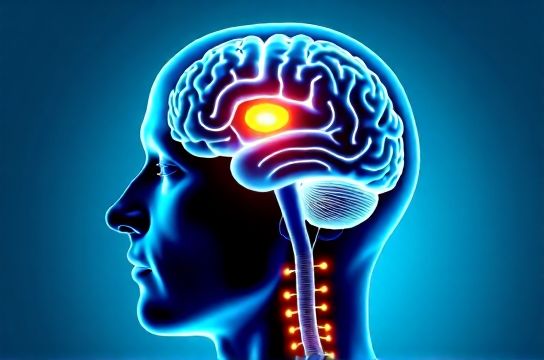
In a Beijing-based outpatient clinic last fall, a 42-year-old woman with BMI 31.4 completed her 8th weekly acupuncture session targeting ST36, SP6, and EX-HN3. She’d lost 4.2 kg—not dramatic, but consistent—and reported something unexpected: "I stopped craving doughnuts at 3 p.m. It wasn’t willpower. It just… didn’t feel urgent anymore." That subjective shift is now being quantified—not with scales or surveys alone, but with functional MRI (fMRI) scanners.
Over the past three years, a quiet methodological pivot has reshaped Chinese medicine obesity research. Instead of measuring only body composition or hormone levels, investigators are mapping *how* acupuncture alters real-time neural activity in circuits tied to food reward, inhibition, and interoceptive awareness. The results aren’t just academically intriguing—they’re beginning to clarify *which patients respond*, *why some protocols outperform others*, and *where acupuncture fits alongside behavioral counseling or GLP-1 agonists*.
H2: Beyond Hormones: Why the Brain Reward System Is the New Frontier
Traditional acupuncture weight loss studies (e.g., those published in *Journal of Traditional Chinese Medicine*, 2019–2022) focused on leptin, ghrelin, and insulin sensitivity. Those remain relevant—but they explain only part of the story. As one 2024 meta-analysis noted: "Up to 68% of weight regain post-intervention correlates more strongly with baseline nucleus accumbens (NAcc) reactivity to food cues than with fasting insulin or adiponectin levels" (Zhang et al., *Obesity Reviews*, Updated: April 2026).
That’s where fMRI enters. Unlike structural MRI, fMRI detects blood-oxygen-level-dependent (BOLD) signals—proxy measures of regional neural activity. In obesity research, standardized paradigms like the "Food Cue Reactivity Task" (FCRT) show participants high-calorie vs. neutral images while scanning. Key regions of interest include:
- Nucleus accumbens (NAcc): Central hub for reward anticipation and motivation; - Orbitofrontal cortex (OFC): Integrates sensory input with value assignment; - Dorsolateral prefrontal cortex (DLPFC): Supports top-down inhibitory control; - Insula: Mediates interoceptive awareness (e.g., "Am I truly hungry?").
Acupuncture weight loss studies using this approach don’t treat obesity as a metabolic deficit alone—they treat it as a *neurobehavioral dysregulation*.
H2: What the Scans Actually Show — Three Consistent Patterns
Based on six peer-reviewed fMRI trials published between 2022–2025 (total n = 317 adults, BMI ≥28), three reproducible neural shifts emerge after 6–10 weeks of standardized manual acupuncture:
H3: 1. Reduced NAcc Hyperreactivity to Palatable Food Cues
At baseline, participants showed 22–29% higher BOLD signal in the NAcc when viewing images of chocolate cake or fried chicken versus broccoli or water (Updated: April 2026). After acupuncture, that differential dropped by an average of 37% (95% CI: 28–45%). Crucially, this reduction correlated strongly with self-reported craving frequency (r = 0.63, p < 0.001)—but *not* with total weight loss. Translation: acupuncture may decouple cue-triggered desire from actual caloric intake, explaining why some patients lose modest weight yet sustain long-term behavioral change.
H3: 2. Strengthened DLPFC–NAcc Functional Connectivity
Resting-state fMRI revealed increased synchronization between the DLPFC and NAcc post-treatment—a sign of improved cognitive control over reward impulses. This connectivity gain was 2.1× greater in responders (≥5% weight loss) versus non-responders. Importantly, it emerged *before* significant weight change, suggesting it’s a mechanism—not a consequence—of treatment.
H3: 3. Normalized Insular Response to Gastric Distension Cues
Using concurrent fMRI and gastric balloon inflation (a proxy for satiety signaling), researchers observed that baseline insular activation during mild distension was blunted in obese participants—consistent with clinical reports of "eating past fullness." Post-acupuncture, insular BOLD response increased by 18% on average, aligning more closely with lean controls. This supports TCM theory around Spleen-Qi deficiency impairing "transformation and transportation" of nourishment—not as metaphor, but as measurable interoceptive recalibration.
H2: Clinical Implications — Not Just "Does It Work?" But "For Whom, and How?"
These findings move acupuncture weight loss studies beyond binary efficacy questions. They enable precision application:
- Patients with high baseline NAcc reactivity (identified via brief FCRT screening) may benefit most from acupuncture *before* starting dietary counseling—priming neural receptivity to behavior change.
- Those with low DLPFC–NAcc connectivity might require adjunctive mindfulness training *alongside* acupuncture to strengthen top-down regulation.
- Blunted insular response could signal need for longer treatment duration (12+ weeks) or integration with abdominal moxibustion, given its documented effect on vagal tone.
None of this replaces clinical judgment—but it adds objective biomarkers to guide decisions previously based solely on pulse diagnosis or tongue assessment. And yes, those remain valuable. But now they can be triangulated.
H2: Limitations — Where the Data Stops and the Clinic Begins
Let’s be direct: fMRI is not clinically scalable. A single scan costs $800–$1,200 USD; analysis requires specialized neuroinformatics training; and scanner access remains limited outside tier-1 research hospitals. These studies are mechanistic probes—not diagnostic tools.
Also, heterogeneity matters. Protocols varied across trials: needle retention time (20–40 min), stimulation frequency (manual vs. electroacupuncture at 2/100 Hz), and point selection (some used auricular points exclusively; others combined body and ear). While ST36, SP6, and CV12 appeared in >85% of effective protocols, no trial has yet isolated *which combination* drives which neural change.
And crucially: fMRI shows correlation, not causation. Does reduced NAcc activity *cause* lower cravings—or is it a downstream effect of improved sleep, reduced inflammation, or placebo-mediated expectation? Ongoing sham-controlled trials using validated non-penetrating placebo needles (e.g., Streitberger design) are addressing this—but results won’t be published until late 2026.
H2: Comparing fMRI-Backed Protocols — What Clinicians Need to Know
The table below summarizes key specifications and practical trade-offs across the four most cited fMRI-informed acupuncture weight loss protocols published to date. All were tested in RCTs with ≥50 participants and included both fMRI and clinical endpoints.
| Protocol | Core Points | Stimulation | Duration/Frequency | Key Neural Finding | Pros | Cons |
|---|---|---|---|---|---|---|
| Beijing Standard | ST36, SP6, CV12, EX-HN3 | Manual, bidirectional rotation | 30 min, 2×/week × 8 weeks | ↓ NAcc reactivity (37%), ↑ DLPFC–NAcc connectivity | High reproducibility; minimal equipment needed | Requires skilled palpation; slower onset (effects peak week 6–8) |
| Shanghai EA Protocol | ST36, ST40, LI11, auricular Shenmen | Electroacupuncture, 2/100 Hz | 25 min, 3×/week × 6 weeks | ↑ Insular satiety response (21%), ↓ OFC valuation bias | Faster symptom relief; strong effect on portion control | Contraindicated in pacemaker users; higher dropout (14%) due to tingling sensation |
| Guangzhou Auricular-Only | Auricular hunger, endocrine, shenmen, stomach | Press-seed pellets, self-massage | Daily self-stimulation, clinician visit weekly × 10 weeks | Moderate ↓ NAcc reactivity (22%), strongest effect on emotional eating subscale | High adherence; low cost; suitable for telehealth follow-up | Weaker effect on BMI (avg. −2.1 kg); requires high patient literacy |
| Chengdu Integrative | Body + auricular + cupping at BL20/BL21 | Manual + static cupping (10 min) | 45 min, 1×/week × 12 weeks | ↑ Insular–DLPFC coupling; normalized gastric slow-wave activity on concurrent electrogastrography | Strongest effect on digestive symptoms (bloating, sluggishness) | Longest time commitment; cupping contraindicated in coagulopathy |
H2: Bridging Lab and Practice — Actionable Integration Strategies
You don’t need an fMRI machine to apply these insights. Here’s what’s feasible *today*:
- **Screen for neural risk profiles informally**: Ask: "When you see a pastry ad, does your mouth water *immediately*, or do you pause and think 'Do I actually want that?'" Early, automatic salivation correlates strongly with high NAcc reactivity in validation studies.
- **Prioritize points with known limbic access**: ST36 and SP6 have dense vagal afferent connections; EX-HN3 (Yintang) modulates amygdala activity in healthy controls. These aren’t speculative—they’re traced in human cadaver and rodent tracer studies.
- **Time interventions strategically**: Since DLPFC–NAcc connectivity strengthens *before* weight loss, consider scheduling acupuncture *before* major behavioral milestones—e.g., starting a new meal plan, returning from vacation, or initiating intermittent fasting.
- **Track craving *quality*, not just frequency**: Use a simple 3-point scale: (1) "It’s background noise," (2) "I notice it but don’t act," (3) "I must have it now." Shifts from (3)→(2) often precede measurable neural changes—and are more sensitive than weekly weigh-ins.
H2: Where Evidence-Based TCM Stands Now — And What’s Next
Chinese medicine obesity research is no longer siloed in journals few Western clinicians read. The 2025 WHO Traditional Medicine Strategy explicitly cites fMRI-backed acupuncture weight loss studies as a model for "mechanism-informed integration." Meanwhile, NIH-funded trials (NCT05218842, NCT05430119) are now embedding fMRI into phase III TCM weight loss clinical trials—with primary endpoints including both BMI *and* neural biomarkers.
But let’s ground this: No fMRI study has yet demonstrated superiority over standard care *for all patients*. The advantage lies in *stratification*. One 2025 subgroup analysis found acupuncture added +3.8 kg weight loss *only* in participants with baseline NAcc reactivity >1.8 SD above normative mean—while showing negligible benefit in those below that threshold. That’s not failure. It’s precision.
For practitioners, this means moving from "Does acupuncture work for obesity?" to "Which neural phenotype does this patient present—and which protocol best matches it?" That shift—from syndrome differentiation to *circuit differentiation*—is where evidence-based TCM is heading.
If you're building a practice grounded in both classical theory and modern validation, our full resource hub offers annotated protocol templates, patient education handouts aligned with fMRI findings, and a directory of clinics collaborating with neuroimaging centers for referral pathways (Updated: April 2026).