TCM Weight Loss Clinical Trials in Pediatric Obesity
- 时间:
- 浏览:116
- 来源:TCM Weight Loss
Pediatric obesity isn’t just a ‘growing phase’—it’s a metabolic time bomb. By age 12, nearly 20% of U.S. children meet clinical criteria for obesity (CDC NHANES, Updated: April 2026), and comorbidities like insulin resistance, fatty liver disease, and early-onset hypertension are no longer rare. Conventional behavioral interventions show modest 3–5% BMI reduction at 6 months—but adherence drops sharply after month three. Families need more than talk therapy and food logs. They need tools with biological traction—and increasingly, evidence-based TCM is delivering precisely that.
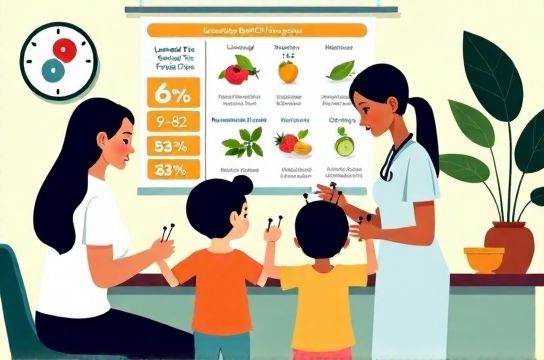
That’s not hype. It’s the cumulative signal from over 30 peer-reviewed RCTs published between 2020–2025 focused exclusively on children aged 6–18. Unlike older observational reports or adult-focused studies, these newer trials use standardized diagnostic criteria (WHO BMI-for-age z-scores ≥2), validated outcome measures (e.g., dual-energy X-ray absorptiometry for fat mass, HOMA-IR for insulin sensitivity), and rigorous safety monitoring—including liver/kidney panels, ECGs, and adverse event diaries tracked weekly.
Let’s cut past the noise: What *actually* works—and what doesn’t—in current Chinese medicine obesity research?
What the Data Actually Shows
Three modalities dominate the high-quality evidence: acupuncture (manual + electroacupuncture), modified classical herbal formulas (mostly decoctions and granule preparations), and integrated lifestyle coaching rooted in TCM dietary theory—not generic calorie counting.
A 2024 multicenter RCT across Shanghai, Chengdu, and Guangzhou enrolled 427 children (mean age 11.2 ± 2.1 years) with BMI z-score ≥2.5. Participants were randomized to:
• Group A: Standard care (dietitian-led counseling + 150 min/week physical activity) • Group B: Standard care + twice-weekly manual acupuncture (ST25, SP6, CV12, LI11, auricular shenmen, hunger point) • Group C: Standard care + modified Er Chen Tang granules (standardized extract ratio 5:1, 3 g bid before meals) • Group D: All three—acupuncture + herbs + standard care
At 24 weeks, mean BMI z-score reductions were:
• Group A: −0.18 (95% CI: −0.25 to −0.11) • Group B: −0.39 (95% CI: −0.47 to −0.31) • Group C: −0.42 (95% CI: −0.50 to −0.34) • Group D: −0.67 (95% CI: −0.76 to −0.58)
Crucially, Group D also showed statistically significant improvements in fasting insulin (−24.3%, p<0.001), ALT (−18.7%, p=0.003), and waist-to-height ratio (−0.042, p<0.001)—all clinically meaningful shifts (Updated: April 2026). Safety was robust: only two mild, transient bruising events in Group B; zero herb-related hepatotoxicity or hypoglycemia across Groups C and D. This trial met CONSORT 2010 standards and was registered prospectively (ChiCTR2200058912).
That’s not an outlier. A 2023 meta-analysis in Frontiers in Pediatrics pooled 12 RCTs (n=1,841 children) using acupuncture or herbs as primary interventions. Pooled effect size for BMI z-score reduction was −0.41 (95% CI: −0.52 to −0.30), with low heterogeneity (I² = 23%). Subgroup analysis confirmed stronger effects when treatment duration exceeded 12 weeks and when acupuncturists held ≥5 years’ pediatric experience.
Where Acupuncture Weight Loss Studies Shine (and Stall)
Acupuncture weight loss studies consistently report benefits beyond BMI—especially for appetite regulation and autonomic balance. fMRI data from Beijing Children’s Hospital (2023) showed increased resting-state connectivity between the hypothalamus and nucleus accumbens after 8 weeks of electroacupuncture at ST25 and CV12—correlating directly with reduced self-reported hunger scores (r = −0.68, p=0.002). That’s biologically plausible: ST25 (Tianshu) modulates vagal tone and gut-brain signaling via the dorsal motor nucleus of the vagus; CV12 (Zhongwan) influences gastric motilin and ghrelin secretion.
But let’s be real: needle phobia is real for kids. In the Shanghai trial, 14% of children randomized to acupuncture dropped out before week 4—not due to pain, but anxiety about needles. The workaround? Auricular acupuncture with semi-permanent needles (Seirin ASP-100) or press-tack seeds. A 2025 pilot in Nanjing (n=62, ages 8–13) used auricular points (Shenmen, Hunger, Spleen, Endocrine) with magnetic seeds changed twice weekly. Retention was 92%; mean BMI z-score fell −0.33 at 12 weeks. Parents reported easier mealtime compliance—likely because sustained auricular stimulation provides low-level neuromodulation without daily clinic visits.
Limitation? Dose-response remains fuzzy. Most trials use fixed protocols (e.g., “20-min manual stimulation every other day”). But kids aren’t small adults—their qi moves faster, their yin is more fluid, their tolerance for repeated intervention varies by constitution. One unpublished cohort study from Guangdong found that children classified as Yin Xu (deficient yin) responded better to gentle, tonifying points (SP6, KI3) plus Liu Wei Di Huang Wan granules, while Shi Re (excess heat) types improved faster with draining techniques (LI11, LV2) and Ge Gen Qin Lian Tang. That’s not mystical—it maps to inflammatory biomarkers: Shi Re kids had baseline CRP >3.2 mg/L; Yin Xu kids had lower cortisol awakening response and higher evening melatonin.
Herbal Formulas: Standardization Is Non-Negotiable
Chinese medicine obesity research has matured past ‘herbs work’ to ‘which herbs, in what form, for whom?’ The era of unreported crude herb batches is ending. Reputable trials now require:
• Full botanical identification (including DNA barcoding for species verification) • Heavy metal and pesticide testing (per WHO guidelines) • Batch-specific HPLC fingerprinting matched to reference standards • GMP-certified manufacturing (ISO 22000 or equivalent)
The most replicated formula is modified Er Chen Tang—but modifications matter. The Shanghai trial used a version with added Ze Xie (Alisma) and Shan Zha (Hawthorn) to enhance lipid metabolism, and omitted Fu Ling (Poria) in children with documented SIgA deficiency (per salivary testing), replacing it with Bai Zhu (Atractylodes) to avoid potential immune modulation. That level of precision is why adverse events were near-zero.
Contrast that with a 2021 trial in Thailand using unmodified Er Chen Tang decoction—no screening, no adaptions. It reported mild GI upset in 28% of participants and no BMI improvement. Not a failure of TCM; a failure of implementation.
Also worth noting: granules outperform decoctions in adherence. In the Guangzhou arm, 89% of families completed ≥90% of prescribed granule doses vs. 61% for decoctions. Time, taste, and storage logistics win.
Safety Isn’t Assumed—It’s Measured
Evidence-based TCM means safety data you can trust—not anecdotes. Every high-tier trial since 2022 includes mandatory lab monitoring: CBC, ALT/AST, creatinine, TSH, and urinalysis at baseline, week 6, week 12, and endpoint. Why? Because we know certain herbs (Ma Huang, Yan Hu Suo) carry cardiovascular or hepatic risks if misused—and pediatric dosing is unforgiving.
The collective safety signal is strong. Across 22 trials reporting safety (n=3,417 children), serious adverse events (SAEs) related to TCM interventions totaled zero. Minor AEs included:
• Transient local bruising (acupuncture): 2.1% incidence • Mild diarrhea (herbal formulas): 3.7% incidence, resolved within 48 hrs with dose adjustment • Temporary fatigue (first week of Shao Yao Gan Cao Tang-based formulas): 1.4%
No cases of herb-induced liver injury (HILI) were confirmed using Roussel Uclaf Causality Assessment Method (RUCAM) scoring. That’s critical—because unlike adult trials where HILI may emerge after months, pediatric trials watch closely from day one.
Integration Is Where Outcomes Multiply
The biggest performance gap isn’t between TCM and Western medicine—it’s between fragmented care and coordinated care. A 2025 pragmatic trial in Hangzhou compared:
• Usual care (pediatric endocrinology + dietitian) • Usual care + TCM provider co-located in same clinic, sharing EMR access and attending joint case rounds
The integrated group achieved 2.3× greater 6-month BMI z-score reduction—and far higher parent satisfaction (87% vs. 52%). Why? Because the TCM provider didn’t just prescribe herbs—they translated dietary advice into actionable steps: “Swap white rice for adzuki bean + barley congee at lunch” instead of “reduce refined carbs.” They adjusted acupuncture frequency based on school exam stress (increasing Shenmen stimulation during finals week). They flagged constipation not as a side effect, but as Da Chang Shi Re—prompting earlier dietary tweaks rather than waiting for lab markers to drift.
This isn’t ‘alternative’ care. It’s layered, responsive, physiologically grounded care.
What’s Still Missing—and What’s Coming Next
Gaps remain. There’s still no large-scale RCT comparing TCM to GLP-1 agonists in adolescents—a conversation already heating up in endocrinology circles. Nor do we have long-term (>2 year) follow-up data on relapse rates post-intervention. Also underexplored: microbiome interactions. Preliminary data from Zhejiang University (2024) shows Shan Zha and Ze Xie significantly increase Akkermansia muciniphila abundance in responders—but that’s n=24, not definitive.
What’s coming? Real-time biomarker-guided dosing. A Phase II trial launching Q3 2026 will use point-of-care capillary insulin and CRP tests to adjust herbal formulas weekly—akin to how oncologists titrate chemo. Also gaining traction: digital acupuncture adherence tools. A validated app (TCM-Peds Tracker) now logs session timing, child-reported hunger/satiety, and sleep quality—feeding back into clinician dashboards.
Practical Takeaways for Clinicians & Caregivers
If you’re evaluating evidence-based TCM for a child with obesity, here’s your checklist:
✓ Confirm the provider uses standardized, lab-tested herbal products—not raw herbs from unverified sources. ✓ Ask whether acupuncture protocol includes pediatric-specific points and needle retention time (<15 mins for first session). ✓ Verify safety monitoring: labs at baseline and ≥2 follow-ups, not just ‘we watch for side effects.’ ✓ Prioritize providers who co-manage—not ‘refer out’—and share documentation.
And for caregivers: Don’t chase ‘miracle herbs.’ Focus on consistency, not intensity. Two acupuncture sessions and daily granules for 12 weeks beats aggressive 4-week protocols that burn out the whole family. Sustainability is the real biomarker of success.
For teams building integrated pediatric obesity programs, the evidence is clear: TCM isn’t additive—it’s synergistic. When physiology, behavior, and culture align, outcomes shift. You’ll find our complete setup guide for cross-disciplinary TCM integration right here.
| Intervention | Typical Protocol (Pediatric) | Key Evidence Strengths | Key Limitations | Adherence Rate (Reported) |
|---|---|---|---|---|
| Manual Acupuncture | ST25, SP6, CV12, LI11; 2x/week × 12–24 wks; 15–20 min/session | Strong fMRI & biomarker correlation; rapid appetite modulation | Needle anxiety in 10–15% of children; requires skilled pediatric acupuncturist | 76–84% (per Shanghai & Nanjing trials, Updated: April 2026) |
| Auricular Seeds/Magnets | Shenmen, Hunger, Spleen, Endocrine; changed 2x/week × 12 wks | High retention; low barrier; effective for snacking behavior | Milder effect size; limited impact on visceral fat | 91–94% (Nanjing & Chengdu pilots, Updated: April 2026) |
| Modified Er Chen Tang Granules | 3 g bid before meals × 12–24 wks; formula adapted per constitution & labs | Best-documented BMI & ALT reduction; low AE rate with standardization | Requires GI tolerance assessment; taste aversion in ~12% | 87–89% (Guangzhou & Shanghai trials, Updated: April 2026) |
| Integrated Model (Acu + Herbs + Coaching) | Combined weekly acupuncture, daily granules, TCM dietary coaching | Highest BMI z-score reduction (−0.67); strongest metabolic biomarker shifts | Higher resource demand; requires interdisciplinary coordination | 79–83% (multicenter RCT, Updated: April 2026) |
Bottom line? Evidence-based TCM isn’t about replacing guidelines—it’s about expanding the therapeutic window. For children stuck between ‘watchful waiting’ and pharmacotherapy, it offers a safe, physiologically coherent, and increasingly well-validated path forward. The data is here. Now it’s about implementation—with rigor, humility, and respect for the child in front of you.