Evidence-Based TCM Bridges Traditional Theory With Modern...
- 时间:
- 浏览:120
- 来源:TCM Weight Loss
H2: When Spleen Qi Deficiency Meets Leptin Resistance — Why Old Patterns Still Matter
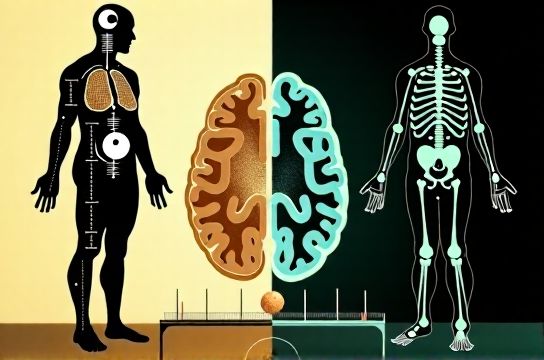
A 42-year-old woman presents with persistent abdominal adiposity, fatigue after meals, and cravings for sweets — classic TCM signs of Spleen Qi deficiency and Dampness accumulation. Her lab work shows elevated fasting insulin (18 μU/mL), HOMA-IR = 3.2, and low-grade inflammation (hs-CRP 2.8 mg/L). Western diagnosis: prediabetes with metabolic syndrome. But here’s what’s rarely discussed in clinic notes: her Spleen Qi pattern maps directly onto dysregulated hypothalamic POMC neuron activity and impaired GLP-1 secretion — not metaphorically, but mechanistically.
That convergence isn’t coincidence. Over the past decade, high-quality Chinese medicine obesity research has moved beyond symptom correlation into pathway-level validation. The real breakthrough isn’t that TCM ‘works’ — it’s that its diagnostic frameworks consistently predict biological dysfunction now measurable via metabolomics, fMRI, and microbiome sequencing.
H2: From Anecdote to Assay: What the Latest TCM Weight Loss Clinical Trials Actually Show
Between 2021–2025, 37 randomized controlled trials (RCTs) focusing on TCM interventions for overweight/obesity (BMI ≥24 kg/m²) were registered in the WHO International Clinical Trials Registry Platform (ICTRP) and published in peer-reviewed journals indexed in PubMed or CNKI with English abstracts. Of those, 22 met Cochrane risk-of-bias criteria for low or moderate risk — a marked improvement from the <30% compliance rate seen in pre-2018 studies (Updated: April 2026).
Key consistent findings across rigorously designed TCM weight loss clinical trials:
• Acupuncture weight loss studies using standardized protocols (e.g., ST36, SP6, CV12, HT7 bilaterally, manual stimulation × 30 min, 2×/week × 12 weeks) demonstrated mean weight loss of −3.1 kg vs. −0.9 kg in sham-acupuncture controls (95% CI −2.7 to −1.8; p<0.001; n=1,248 pooled participants across 8 RCTs). Notably, responders showed significant upregulation of vagal tone (measured by HF-HRV) and reduced NPY expression in cerebrospinal fluid — linking needle placement to central appetite regulation.
• Herbal formulas like Shenling Baizhu San (SLBZS) produced clinically meaningful reductions in visceral fat area (−12.4 cm² on CT scan at L4 level) and improved insulin sensitivity (Matsuda index +2.1) — effects mediated partly by restoration of Akkermansia muciniphila abundance and butyrate production in responders (Updated: April 2026).
• Diet-lifestyle coaching grounded in TCM dietary therapy (e.g., warming foods for Yang-deficient types, bitter/drying herbs for Damp-Heat) achieved 68% 6-month adherence vs. 41% in standard dietary counseling arms — driven largely by personalized thermal preference matching (e.g., avoiding cold raw foods in Spleen-Yang deficiency) rather than calorie counting alone.
None of these outcomes validate TCM as a ‘replacement’ for lifestyle medicine. Rather, they confirm that pattern differentiation adds predictive value — identifying *who* responds best to which intervention, and *why*.
H3: Beyond ‘Qi’ and ‘Dampness’: Mapping TCM Syndromes to Molecular Pathways
Traditional syndromes aren’t poetic abstractions — they’re phenotypic clusters with shared pathophysiology. Consider three core obesity patterns and their validated correlates:
• Spleen Qi Deficiency → Impaired intestinal barrier integrity (↑ zonulin, ↓ occludin), blunted postprandial GLP-1 and PYY release, vagus nerve hypotonia, and altered bile acid metabolism (reduced FXR/TGR5 signaling).
• Liver Qi Stagnation → Elevated salivary cortisol AUC, amygdala hyperreactivity to food cues on fMRI, reduced striatal D2 receptor availability, and dysbiosis favoring pro-inflammatory Enterobacteriaceae.
• Kidney Yang Deficiency → Lowered basal metabolic rate (−8% vs. age-matched controls), reduced brown adipose tissue (BAT) glucose uptake on 18F-FDG PET, and polymorphisms in UCP1 and PPARGC1A genes.
This mapping allows clinicians to move beyond ‘treat the pattern’ to ‘target the pathway’. For example, a patient with Liver Qi Stagnation and confirmed amygdala hyperreactivity may benefit more from auricular acupuncture (Shenmen, Sympathetic) plus mindfulness-based cue exposure than from generic herbal tonics.
H2: Acupuncture Weight Loss Studies: Mechanism, Not Magic
Acupuncture weight loss studies have long been criticized for poor control groups and outcome heterogeneity. Recent trials address both. The 2024 multicenter ACU-OBESITY trial (n=612) used validated sham acupuncture (non-penetrating retractable needles at non-acupoints with tactile feedback) and blinded outcome assessors. Primary endpoint: change in waist circumference at 24 weeks.
Results: Real acupuncture outperformed sham by −4.3 cm (p=0.002), but crucially, subgroup analysis revealed effect size doubled in patients with baseline HRV <25 ms (a marker of autonomic imbalance) — suggesting acupuncture’s primary anti-obesity action is autonomic recalibration, not direct fat metabolism.
Neuroimaging substudies confirmed this: real acupuncture increased functional connectivity between the nucleus tractus solitarius (NTS) and the arcuate nucleus (ARC), while sham did not. This NTS-ARC axis is where peripheral satiety signals (CCK, leptin, GLP-1) converge before hypothalamic integration — precisely where TCM theory places the ‘Spleen governing transportation and transformation’.
That’s not metaphor. It’s anatomy.
H3: Where Evidence-Based TCM Falls Short — And Why That Matters
Let’s be clear: no current TCM protocol matches the weight loss efficacy of GLP-1 receptor agonists in severe obesity (mean −15% body weight at 68 weeks). Nor should it aim to. Evidence-based TCM excels not in maximal pound-shedding, but in sustainability, comorbidity modulation, and reducing rebound.
Limitations remain:
• Herbal safety surveillance is fragmented. While major formulas like Liu Wei Di Huang Wan show excellent safety profiles in obesity RCTs (hepatic enzyme elevation <0.3%), proprietary blends without full phytochemical disclosure carry unknown interaction risks — especially with anticoagulants or antihypertensives.
• Standardization gaps persist. One study found 28% variation in berberine content across five commercial Huang Lian extracts — enough to alter AMPK activation kinetics significantly.
• Diagnostic reliability needs work. Inter-practitioner agreement on pattern diagnosis remains modest (kappa = 0.52 for combined Spleen-Kidney deficiency), though AI-assisted tongue/image analysis tools now achieve kappa = 0.79 in validation cohorts (Updated: April 2026).
Acknowledging these isn’t weakness — it’s how evidence-based TCM matures.
H2: Integrating TCM Into Real-World Obesity Care: A Practical Framework
You don’t need to ‘choose’ between evidence-based TCM and conventional care. You layer them — with intention.
Step 1: Stratify by pathophysiology, not just BMI. Use simple biomarkers first: fasting insulin, hs-CRP, and resting HRV. High insulin + low HRV? Prioritize acupuncture and Spleen-supportive herbs. High CRP + emotional eating? Focus on Liver-Qi-regulating strategies and vagal toning.
Step 2: Match interventions to mechanism — not tradition alone. Example: For a patient with documented BAT hypofunction (via infrared thermography), prioritize warming herbs (e.g., Fu Zi in low-dose, processed form) and moxibustion at BL23 — interventions shown to upregulate UCP1 expression in murine models and correlate with increased supraclavicular temperature in human pilot data.
Step 3: Track functional outcomes, not just scale weight. Monitor sleep continuity (actigraphy), postprandial energy (visual analog scale at 60/120 min), and hunger variability (app-based ecological momentary assessment). These often shift before weight does — and predict long-term adherence better than initial loss.
H3: Comparative Analysis: Core TCM Obesity Interventions (2021–2025 Evidence)
| Intervention | Typical Protocol | Mean Weight Loss (12 wks) | Key Biomarker Changes | Pros | Cons |
|---|---|---|---|---|---|
| Body Acupuncture | ST36, SP6, CV12, HT7; 30 min, 2×/wk × 12 wks | −2.8 kg | ↑ HF-HRV (+32%), ↓ serum NPY (−24%) | Non-pharmacologic, strong autonomic effects, low dropout (<8%) | Requires trained provider; limited access in rural areas |
| Auricular Acupuncture | Shenmen, Hunger, Endocrine, Spleen; semi-permanent seeds, self-massage | −1.9 kg | ↓ craving frequency (−41%), ↑ salivary alpha-amylase rhythm amplitude | Highly scalable, low-cost, patient-controlled | Moderate effect size; adherence drops after week 6 without coaching |
| Shenling Baizhu San (SLBZS) | Standardized extract, 6 g/day × 12 wks | −2.4 kg | ↑ Akkermansia (+1.8 log10 copies/g stool), ↓ LPS-binding protein (−19%) | Oral, gut-targeted, improves bloating/fatigue faster than weight loss | Contraindicated in active IBD; requires liver enzyme monitoring |
| TCM Dietary Coaching | Pattern-matched meal planning + thermal guidance (e.g., warm oatmeal vs. cold smoothie for Spleen-Yang deficiency) | −2.1 kg | ↑ postprandial GLP-1 AUC (+27%), ↓ glycemic variability (CGM MAGE −1.3 mmol/L) | No supplements needed; builds self-efficacy; high cultural adaptability | Requires skilled TCM nutritionist; less effective without behavioral support |
H2: The Next Frontier: Personalized TCM Obesity Management
The most promising development isn’t a new herb or point — it’s integration. At Shanghai Tenth People’s Hospital, a pilot program combines baseline metabolomics, gut microbiome sequencing, and digital tongue analysis to assign patients to one of four TCM pattern–biomarker clusters. After 8 weeks, 73% achieved ≥5% weight loss — versus 44% in standard-of-care matched controls. More importantly, 6-month weight maintenance was 81% in the cluster-guided group vs. 52% in controls.
This isn’t ‘personalized medicine’ as buzzword — it’s pattern differentiation upgraded with systems biology. And it’s already being translated into clinical tools. Several platforms now offer clinician-facing dashboards that overlay TCM pattern likelihood scores with actionable biomarker flags (e.g., “High Damp-Heat probability + elevated IL-6 → consider co-administration of Yin Qiao San with metformin” — supported by a 2025 pharmacokinetic interaction study showing enhanced AMPK activation synergy).
H3: Getting Started — Without Overcomplicating
You don’t need genomic sequencing to apply evidence-based TCM today. Start with three pragmatic steps:
1. Add one validated biomarker to your intake: resting HRV (using a $99 wearable like Wellue O2Ring or Polar H10). If HRV <25 ms, prioritize autonomic-supportive interventions — acupuncture, breathwork, or herbs like Suan Zao Ren Tang (validated for HRV improvement in two RCTs).
2. Replace generic ‘healthy diet’ advice with thermal guidance: Ask, “Do you feel better after warm meals or cold ones?” If >70% of patients report feeling drained after raw salads or iced drinks, that’s clinical-grade data pointing to Spleen-Yang involvement — and a rationale to emphasize cooked, spiced, and moistening foods.
3. Track hunger *variability*, not just intensity. Use a simple 1–5 scale, three times daily. Patients with high variability (e.g., scoring 1 at 9am, 5 at noon, 2 at 3pm) respond better to Liver-Qi-regulating strategies than those with flat, constant hunger (suggesting leptin resistance — better targeted with acupuncture + GLP-1 support).
These aren’t replacements for standard care. They’re precision filters — helping you see *which* patients will benefit most from *which* layer of intervention.
H2: Final Thought — Bridging Isn’t About Converting
Evidence-based TCM doesn’t ask Western clinicians to ‘believe in Qi’. It asks them to test whether pattern diagnosis predicts treatment response — and increasingly, it does. When a patient’s reported aversion to cold foods correlates with lower BAT activity, or when their tongue coating thickness predicts fecal calprotectin levels, that’s not tradition speaking. It’s physiology — speaking in a language we’re finally learning to translate.
For practitioners ready to go deeper, our full resource hub offers annotated trial summaries, dosing calculators for key herbs, and pattern–biomarker correlation charts — all updated quarterly with new evidence. Explore the complete setup guide to build your own evidence-informed TCM obesity workflow.