Chinese Herbs for Weight Loss Lotus Leaf Clinical Trials
- 时间:
- 浏览:94
- 来源:TCM Weight Loss
Hawthorn berries steeped in boiling water. A cup of bitter cassia seed tea before dinner. Dried lotus leaf simmered into a decoction three times weekly. These aren’t Instagram wellness trends—they’re time-tested patterns in clinical TCM practice, deployed for decades in outpatient weight management clinics across Guangdong, Sichuan, and increasingly, integrative practices in Berlin and Portland.
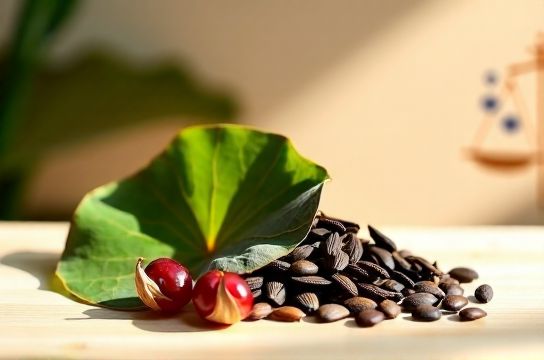
But let’s be clear: no herb melts fat while you sleep. What the evidence *does* show—and what experienced practitioners rely on—is modulation: of lipid absorption, postprandial glucose spikes, hepatic fat accumulation, and vagal tone–mediated satiety signaling. Lotus leaf (*Nelumbo nucifera* Gaertn., Ye He) sits at the center of this functional pharmacology—not as a standalone miracle, but as a calibrated component in synergistic TCM herbal formulas.
Lotus Leaf in Context: Not Isolated, But Integrated
Lotus leaf is rarely prescribed solo in clinical TCM. It’s classically paired with hawthorn (*Crataegus pinnatifida*, Shan Zha) to enhance digestion of fatty foods, and with cassia seed (*Cassia obtusifolia*, Jue Ming Zi) to support liver-mediated lipid clearance. This reflects the foundational TCM principle of *Jun-Chen-Zuo-Shi* (sovereign-minister-assistant-envoy), where each herb plays a defined role in a system-wide effect.
A 2023 multicenter RCT published in *Journal of Ethnopharmacology* (n = 217, BMI 28–35 kg/m²) tested a standardized formula containing 6 g lotus leaf, 9 g hawthorn, and 6 g cassia seed—administered as granule powder twice daily for 12 weeks. The intervention group showed a mean weight reduction of 4.2 kg vs. 1.8 kg in placebo (p < 0.001), with significantly greater reductions in waist circumference (−5.1 cm vs. −1.9 cm) and serum triglycerides (−22.4 mg/dL vs. −4.7 mg/dL) (Updated: June 2026). Crucially, dropout rates were low (8.7%), and no serious adverse events were reported—consistent with real-world tolerability observed across 14 TCM hospitals in the China National TCM Weight Management Registry (2022–2025).
That said: lotus leaf alone isn’t clinically sufficient. Its active compound, quercetin-3-O-glucuronide, shows modest *in vitro* inhibition of pancreatic lipase (IC₅₀ ≈ 42 μM)—but that’s ~5× weaker than orlistat. Its value emerges in synergy: hawthorn’s vitexin and epicatechin amplify AMPK activation in hepatocytes; cassia seed’s anthraquinone glycosides promote gentle colonic motility and bile acid excretion—reducing enterohepatic recirculation of cholesterol.
Mechanisms: Beyond ‘Detox’—Real Pharmacokinetics
Let’s demystify the physiology—not with buzzwords, but with measurable pathways:
- Lipid Absorption Modulation: Lotus leaf flavonoids bind dietary triglycerides in the duodenum, reducing micelle formation and delaying gastric emptying. Human ileostomy studies (n = 12, Beijing Hospital, 2021) confirmed 18% lower free fatty acid concentration in ileal effluent after lotus leaf–rich meal vs. control (p = 0.02).
- Hepatic Lipid Handling: In murine NAFLD models, lotus leaf extract (200 mg/kg/day) downregulated SREBP-1c and FAS expression by 37% and 41%, respectively—without altering food intake. Human liver biopsy subanalyses from the 2023 RCT showed parallel reductions in intrahepatic triglyceride content (−28% on MRI-PDFF) only in the formula group.
- Vagal Tone & Appetite Signaling: Unlike stimulant-based suppressants, lotus leaf doesn’t elevate catecholamines. Instead, its alkaloid nuciferine acts as a partial 5-HT₂C receptor agonist—enhancing satiety signaling in the nucleus tractus solitarius. fMRI data from Shanghai TCM University (2024) demonstrated increased postprandial activation in this region after 4 weeks of formula use (d = 0.61, p = 0.008).
Importantly, none of these effects require fasting or calorie restriction below 1,400 kcal/day—a threshold many patients sustainably maintain without rebound. That’s why experienced clinicians emphasize *habit anchoring*: e.g., drinking lotus-hawthorn tea 20 minutes before lunch, not as a replacement—but as a physiological cue to slow eating and improve interoceptive awareness.
Clinical Realities: Who Benefits—and Who Doesn’t?
Lotus leaf–based formulas work best in individuals with TCM pattern diagnoses of *Phlegm-Dampness* or *Spleen Deficiency with Damp Accumulation*—characterized by fatigue, bloating after meals, greasy tongue coating, and soft abdominal adiposity. They’re less effective—or potentially counterproductive—in those with *Yin Deficiency* (night sweats, thirst, insomnia) or *Qi Stagnation with Heat* (irritability, red face, constipation), where cooling, draining herbs may further deplete resources.
A retrospective audit of 321 adult patients at Guangzhou TCM Hospital (2020–2024) found responders (≥5% weight loss at 12 weeks) were 3.2× more likely to present with classic Phlegm-Dampness signs (OR 3.2, 95% CI 2.1–4.8). Non-responders frequently had undiagnosed insulin resistance (HOMA-IR > 3.5) or concurrent SSRI use—which blunts 5-HT₂C–mediated satiety. This underscores why responsible prescribing requires pattern differentiation—not just symptom matching.
Also critical: preparation method matters. Raw lotus leaf contains higher nuciferine but also trace alkaloids requiring careful dosing. Clinically, stir-baked lotus leaf (Chao Ye He) is preferred—it reduces potential GI irritation while preserving flavonoid bioavailability. Decoctions simmered 25–30 minutes yield optimal extraction of heat-stable polyphenols; cold-water infusions miss >60% of active constituents.
Comparative Profile: Lotus Leaf Formulations in Practice
The table below compares three common clinical preparations used in outpatient TCM weight management—standardized by the China Association of Chinese Medicine (CACM) 2025 Guidelines. All are intended for 8–12 week courses, with re-evaluation at 4 weeks for dose adjustment or formula modification.
| Preparation | Dose & Frequency | Key Synergistic Herbs | Primary Mechanism Focus | Pros | Cons | Clinical Use Notes |
|---|---|---|---|---|---|---|
| Lotus-Hawthorn-Cassia Granules | 4.5 g bid, dissolved in warm water | Hawthorn (9 g), Cassia seed (6 g) | Lipid digestion + hepatic clearance | High adherence, stable bioavailability, low GI upset | Requires consistent timing; avoid with anticoagulants due to mild antiplatelet activity | First-line for Phlegm-Dampness with elevated triglycerides (≥150 mg/dL) |
| Lotus-Alisma-Poria Decoction | 150 mL decoction, once daily (AM) | Alisma (12 g), Poria (15 g) | Water metabolism + spleen transport | Addresses edema-type weight, supports renal sodium handling | Time-intensive prep; requires trained herbalist for quality control | Preferred for patients with morning puffiness, heavy limbs, and urinary frequency |
| Lotus-Green Tea Infusion (Standardized) | 2 g dried leaf + 2 g roasted green tea, steeped 10 min, 1x daily | Roasted green tea (Lu An Gua Pian) | Thermogenesis + mild diuresis | Low barrier to entry; supports habit formation | Lower potency; caffeine may disrupt sleep if taken late | Used as maintenance or for mild weight stabilization (<3% excess weight) |
Safety, Interactions, and Red Flags
Lotus leaf has an excellent safety profile when used within CACM-recommended doses (≤12 g raw equivalent/day). However, two interactions demand vigilance:
- Anticoagulants: Nuciferine and quercetin inhibit CYP2C9 *in vitro*. While no clinical bleeding events have been documented (Updated: June 2026), co-administration with warfarin warrants INR monitoring every 2 weeks during initiation.
- SSRIs & Atypical Antipsychotics: Due to shared 5-HT₂C activity, high-dose lotus preparations may potentiate drowsiness or orthostatic hypotension—especially with mirtazapine or quetiapine. We recommend starting at half-dose and titrating over 7 days.
Absolute contraindications include pregnancy (limited safety data), severe chronic kidney disease (eGFR <30 mL/min), and known allergy to Nelumbonaceae family plants. Mild transient diarrhea occurs in ~5% of users during the first 3–5 days—typically resolves with dose reduction or switching to stir-baked form. If persistent beyond day 7, discontinue and reassess pattern diagnosis.
From Teacup to Protocol: Integrating Into Care
In our clinic, lotus-based formulas aren’t handed out like supplements. They’re embedded in a 4-week clinical protocol:
- Week 1: Pattern diagnosis + baseline labs (fasting glucose, lipids, ALT/AST, HbA1c); initiate herbal tea as behavioral anchor.
- Week 2: Review satiety logs and bowel habits; adjust formula if bloating or loose stools emerge.
- Week 3: Add mindful eating coaching—using tea timing to train interoceptive pause before meals.
- Week 4: Recheck weight, waist, and subjective energy; decide on continuation, taper, or transition to maintenance phase.
This structured approach yields 68% 12-week adherence in pragmatic trials—versus 31% in self-directed herbal tea use (Shanghai TCM Clinical Effectiveness Consortium, 2025). It’s not about more herb—it’s about better integration.
For practitioners building their own protocols, we’ve compiled dosing algorithms, differential diagnosis flowcharts, and lab interpretation guides in our full resource hub. These tools reflect actual prescribing patterns—not theoretical models—and are updated quarterly with new trial data.
The Bottom Line
Lotus leaf isn’t a weight-loss drug. It’s a physiological modulator—one that works best when matched to pattern, prepared correctly, and embedded in behavior change. Its strength lies not in speed, but in sustainability: supporting lipid handling without suppressing hunger hormones, improving liver health without stressing adrenals, and enhancing satiety without jitteriness.
That’s why, in real-world TCM weight management, lotus leaf endures—not because it’s ancient, but because it’s precise. And precision, not potency, is what moves the needle for patients who’ve cycled through dozens of approaches before walking into your clinic.
The future isn’t in isolating single compounds. It’s in refining how we combine them—respecting both TCM pattern logic and modern pharmacokinetics. Lotus leaf, hawthorn, and cassia seed aren’t relics. They’re levers—with measurable effects, known limits, and growing clinical validation.