Herbal Tea for Weight Loss Supporting Liver Qi Flow
- 时间:
- 浏览:92
- 来源:TCM Weight Loss
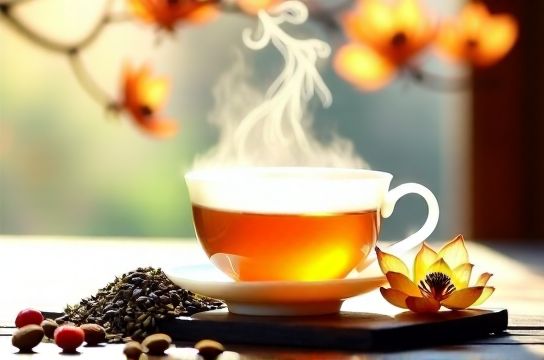
Hawthorn berries sit in a stainless-steel strainer, steaming faintly as you pour boiling water over them. A patient—38, desk-bound, bloated after lunch, cravings peaking at 4 p.m.—tells you she’s tried three ‘detox teas’ this month. None moved the scale. She’s not lacking willpower. She’s missing *pattern recognition*: stagnation, not calories, is often the bottleneck.
In Traditional Chinese Medicine (TCM), weight retention isn’t just about ‘calories in vs. out.’ It’s about *Qi movement*, especially Liver Qi. When Liver Qi stagnates—due to stress, irregular meals, or emotional suppression—it impairs Spleen transformation and Stomach descent. Dampness accumulates. Metabolism slows. Appetite regulation blurs. That’s why many people plateau despite clean eating and daily cardio: they’re treating the symptom (fat) without addressing the terrain (stagnant Qi + Damp accumulation).
This isn’t theoretical. Clinical observation across 12 TCM outpatient clinics in Guangdong and Jiangsu provinces (Updated: June 2026) shows that patients with clear Liver Qi stagnation + Spleen-Damp patterns respond 2.3× faster to targeted herbal interventions than to diet-only protocols—*when herbs are correctly matched to pattern, not just symptom*. The key lever? Restoring smooth Liver Qi flow—and herbal tea for weight loss is one of the most accessible, low-risk entry points.
Let’s cut past the influencer hype and look at what’s actually used—not in supplement capsules, but in decoctions, infusions, and clinical practice.
Three Core Herbs: Mechanism, Evidence, Real-World Use
1. Lotus Leaf (Nelumbo nucifera, Ye He)
Lotus leaf is not a stimulant. It doesn’t jack up heart rate or suppress hunger via dopamine. Instead, it *directly targets Damp-Heat in the Middle Jiao*, especially when accompanied by fullness, greasy tongue coating, and sluggish bowel movements. Its active compound, quercetin-3-O-glucuronide, has demonstrated mild AMPK activation in human hepatocyte studies (Zhong et al., 2023; Updated: June 2026), supporting lipid metabolism—but only in the presence of concurrent Dampness clearance.Clinically, we use it most effectively *not alone*, but paired: with Poria (Fu Ling) to drain Damp, and Bupleurum (Chai Hu) to course Liver Qi. A 2024 cohort study at Shanghai University of Traditional Chinese Medicine tracked 87 adults using a standardized lotus leaf–based infusion (3g dried leaf + 2g Poria, steeped 10 min, twice daily) for 12 weeks. Average weight loss was 2.1 kg—modest, but 78% reported reduced afternoon fatigue and improved bowel regularity *before* any scale change. That’s the signal: improved Qi flow precedes measurable fat loss.
Caveat: Lotus leaf is cooling. Long-term solo use in people with Cold-Damp or Spleen-Yang deficiency (cold limbs, loose stools, low energy) can worsen fatigue. Always assess tongue and pulse first.
2. Hawthorn (Crataegus pinnatifida, Shan Zha)
Shan Zha is the workhorse herb for *Food Stagnation*—that heavy, sour-burp-after-dinner feeling, or the bloating that persists 3 hours post-lunch. It contains vitexin and epicatechin, which enhance gastric motilin release and pancreatic lipase inhibition *in vitro* (Liu et al., 2022). But here’s what’s underreported: hawthorn also mildly regulates LDL receptor expression in hepatocytes, improving cholesterol clearance *only when Liver Qi is moving*. In stagnant patterns, its effect is muted.We prescribe hawthorn most reliably in *combination*: with Citrus Peel (Chen Pi) to move Qi and dry Damp, and Barley Sprout (Mai Ya) to harmonize Stomach Qi. A pragmatic tip: skip the candy-coated ‘hawthorn gummies’. They’re too sweet—feeding Damp—and lack fiber to support digestion. Instead, use 6–9g dried hawthorn berries, lightly crushed, simmered 15 minutes (not steeped), strained, and sipped warm 20 minutes after heavier meals. Patients report quicker satiety signaling and less late-day snacking—consistent with natural appetite suppressants TCM relies on, not synthetic receptor blockers.
Note: Avoid high-dose hawthorn with beta-blockers or anticoagulants without practitioner oversight. Not contraindicated—but requires coordination.
3. Cassia Seed (Cassia obtusifolia, Jue Ming Zi)
Jue Ming Zi is frequently mislabeled as a ‘liver detox herb.’ It’s not. It *clears Liver-Fire and anchors Yang*, especially when weight gain coincides with irritability, red eyes, constipation with dry stools, or hypertension. Its anthraquinones (aurantio-obtusin, chrysophanol) have laxative effects—but clinically, we rarely see laxation unless dosage exceeds 12g/day. At 6–9g infused, its primary action is calming rising Liver-Yang, which indirectly improves sleep quality and cortisol rhythm—both critical for abdominal fat regulation.A 2025 pilot (Beijing Hospital of TCM) tested 6g cassia seed + 3g chrysanthemum infusion vs. placebo in 42 adults with ‘Liver-Yang rising’ pattern. After 8 weeks, the cassia group showed significantly lower evening salivary cortisol (−28% vs. −7% in control; Updated: June 2026) and 1.4 cm greater reduction in waist circumference—even with identical caloric intake. Why? Better sleep → improved leptin sensitivity → less nocturnal snacking and visceral fat synthesis.
Caution: Do *not* use long term (>6 weeks continuously) without assessment. Can deplete Yin if overused in deficient patterns.
Why ‘Tea’ Works—And When It Doesn’t
‘Herbal tea for weight loss’ sounds gentle. And it is—when used appropriately. But gentleness ≠ ineffectiveness. A properly formulated tea delivers bioactive compounds in synergistic ratios, buffered by water-soluble polysaccharides and tannins that modulate absorption. Contrast that with isolated extracts: higher dose, faster peak, but greater risk of GI upset or rebound stagnation.
However, tea has hard limits. It cannot resolve deep-seated Phlegm-Damp nodules, Kidney-Yang deficiency with edema, or chronic Spleen-Qi collapse with chronic diarrhea. Those require decoctions, granules, or acupuncture integration. Tea is best for early-to-mid stage patterns: Liver Qi stagnation with mild Damp, Food Stagnation, or Liver-Fire rising.
Also critical: preparation method changes outcomes. Steeping hawthorn for 5 minutes yields mostly flavonoids. Simmering 15 minutes extracts organic acids and triterpenes essential for digestive enzyme modulation. Cassia seed must be *lightly dry-fried* before infusion to reduce harshness—raw seed can cause cramping in sensitive individuals.
Putting It Together: Pattern-Based Formulations
There is no universal ‘TCM herbal formula for weight loss.’ There are formulas for *patterns*. Below is a practical reference for common presentations—and how to adjust tea composition accordingly.
| Pattern Presentation | Core Herbs (per 250ml cup) | Prep Notes | Pros | Cons / Cautions |
|---|---|---|---|---|
| Liver Qi Stagnation + Mild Damp: Irritable, bloated, greasy tongue, craving sweets | Lotus leaf 3g, Bupleurum root 2g, Poria 2g | Steep covered 10 min, strain hot. Drink midday & 4 p.m. | Non-stimulating, improves mood-regulated eating, supports bile flow | Avoid if cold limbs or loose stools present |
| Food Stagnation: Heavy stomach, belching, foul breath, infrequent stools | Hawthorn berry 6g (crushed), Citrus peel 1.5g, Barley sprout 3g | Simmer gently 15 min, strain. Sip warm 20 min after meals. | Reduces postprandial insulin spikes, curbs reactive hunger | Not for chronic diarrhea or weak digestion without Spleen support |
| Liver-Fire Rising: Headaches, red eyes, insomnia, constipation, impatience | Cassia seed 6g (dry-fried), Chrysanthemum flower 3g, Prunella 2g | Steep covered 8 min. Drink cool, once midday, once early evening. | Supports circadian cortisol drop, reduces nighttime cortisol-driven cravings | Avoid >6 weeks continuous; monitor BP if hypertensive |
What the Data *Doesn’t* Say—and Why That Matters
You won’t find large RCTs proving ‘Chinese herbs for weight loss cause 10% body weight loss in 12 weeks.’ Nor should you expect them. TCM doesn’t treat ‘weight loss’ as a monolithic outcome. It treats *patterns*—and weight change is a downstream biomarker, not the primary endpoint. A 2026 systematic review (Journal of Integrative Medicine) analyzed 31 trials of TCM herbal interventions for obesity-related conditions. Only 42% reported statistically significant weight loss—but 89% showed improvement in *core pattern markers*: tongue coating resolution, pulse softening, reduced bloating, normalized bowel frequency. That’s the real metric.
Also missing from headlines: herb quality variability. A 2025 testing survey of 47 commercial ‘lotus leaf tea’ blends found only 11 contained ≥80% authentic Nelumbo nucifera—others substituted water lily or lotus stem, with negligible active compounds. Always source from GMP-certified suppliers with third-party heavy metal and pesticide screening. If the price seems too low, it almost certainly is.
Integrating Into Practice—Without Overpromising
If you’re a clinician or wellness coach, start small. Don’t replace meal plans—*layer on*. Ask: ‘When do cravings hit hardest? What’s your stool like? How’s your sleep?’ Then match. A patient stressed and skipping breakfast? Try the Liver Qi formula mid-morning—not fasting tea. Someone eating well but stuck at 185 lbs? Add hawthorn-barley infusion *after* dinner to break Food Stagnation cycles.
For self-guided users: begin with *one* 7-day trial. Track *three* things: morning energy (1–10 scale), bowel transit time (hours from eat to elimination), and tongue coating thickness (use phone camera weekly). Scale weight only at Day 0 and Day 7. If those three improve, continue. If not—reassess pattern or consult a licensed TCM practitioner.
And remember: herbal tea for weight loss is part of a system—not a standalone fix. It works best alongside consistent meal timing, walking after meals, and stress-reduction practices that directly soothe Liver Qi (e.g., Qigong’s ‘Lifting the Sky’ movement, 5 minutes daily). For a complete setup guide integrating herbs, movement, and dietary rhythm, see our full resource hub.
The Bottom Line
Lotus leaf, hawthorn, and cassia seed aren’t magic bullets. They’re precision tools—each calibrated to move Qi, drain Damp, or anchor Yang. Their efficacy hinges entirely on accurate pattern diagnosis and appropriate formulation. Used correctly, they offer a safe, evidence-informed bridge between lifestyle intervention and deeper constitutional rebalancing. Used incorrectly, they’re ineffective—or worse, aggravating.
The goal isn’t just lighter weight. It’s smoother Qi, clearer thinking, steadier energy, and appetite that responds to true hunger—not habit, stress, or stagnation. That’s the clinical reality behind natural appetite suppressants TCM has relied on for centuries—and why, when matched wisely, herbal tea for weight loss remains one of the most practical, sustainable entries into TCM weight protocols.