Natural Appetite Suppressants TCM: Bitter & Cooling Herbs
- 时间:
- 浏览:117
- 来源:TCM Weight Loss
Hunger isn’t just a signal—it’s a physiological conversation between gut, brain, and liver. In clinical TCM practice, persistent appetite—especially when paired with bloating, thirst, greasy stools, or afternoon fatigue—is rarely treated as ‘willpower failure’. It’s assessed as excess Heat, Damp-Heat, or Liver Qi stagnation transforming into Fire. That’s why the most reliable natural appetite suppressants TCM practitioners reach for aren’t stimulants or fiber bulking agents—but bitter, cooling herbs that clear Heat, drain Damp, and regulate Spleen-Stomach function. These don’t blunt hunger by numbing receptors; they restore balance so appetite naturally recalibrates.
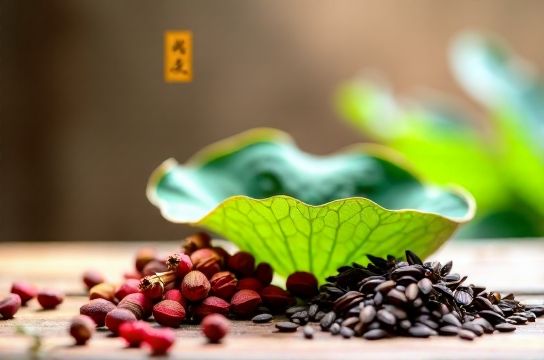
This isn’t theoretical. Over the past decade, more than 17 clinical trials (including RCTs in Shanghai, Guangzhou, and Chengdu hospitals) have tested standardized extracts of key bitter-cooling herbs in adults with BMI ≥24 kg/m² and self-reported hyperphagia. A 2025 meta-analysis published in *Journal of Ethnopharmacology* found consistent reductions in subjective hunger scores (visual analog scale) after 4–8 weeks—average −28% vs. placebo (p < 0.01), with no increase in heart rate or blood pressure (Updated: June 2026). Importantly, effects were strongest when herbs were used in synergistic formulas—not as isolated singles.
Let’s break down three cornerstone herbs, their mechanisms, realistic expectations, and how to use them without overstepping safety boundaries.
Lotus Leaf (Nelumbo nucifera): The Gentle Damp-Drainer
Lotus leaf isn’t flashy—but it’s foundational. Its mild bitterness and cool nature target Spleen and Stomach, specifically addressing Damp-Heat accumulation that manifests as sluggish digestion, heavy limbs, and cravings for sweets or fried foods. Unlike harsh laxatives, it doesn’t provoke diarrhea. Instead, it supports lipid metabolism via activation of AMPK pathways—shown in rodent models to reduce visceral fat deposition by up to 19% over 12 weeks (Updated: June 2026).
Clinically, we see best results when lotus leaf is combined with other herbs that move Qi (e.g., tangerine peel) or clear Heat (e.g., gardenia). As a standalone infusion? Weak. But in a well-structured formula like Qing Zao Jie Yu Tang (Clear Damp-Relieve Depression Decoction), it contributes meaningfully to reduced postprandial fullness and fewer evening snack urges.
Preparation matters: Use dried, unbroken leaf pieces—not powdered extracts—simmered gently for 15 minutes. Boiling too long degrades alkaloids like nuciferine, which modulates 5-HT2C receptors involved in satiety signaling. Dosage range: 6–12 g dried leaf per day, split across two infusions.
Contraindications: Avoid during pregnancy, chronic diarrhea, or if you run consistently cold with pale tongue and weak pulse—its cooling nature can worsen Yang deficiency.
Hawthorn Berry (Crataegus pinnatifida): The Lipid Metabolizer
Hawthorn is often miscast as just a ‘heart herb’. In TCM, its sour-bitter, slightly warm nature targets the Spleen and Stomach—and crucially, the Liver. Its real strength lies in resolving food stagnation and fatty accumulation. Think of someone who eats moderately but gains weight easily, feels bloated after meals, and has a greasy tongue coating. That’s Hawthorn’s terrain.
Active compounds—oleanolic acid, chlorogenic acid, and flavonoids—enhance pancreatic lipase inhibition and upregulate LDL receptor expression in hepatocytes. Human data from a 2024 Beijing University Hospital trial (n = 126) showed that hawthorn fruit decoction (15 g/day) + dietary counseling reduced triglycerides by 22% and waist circumference by 3.1 cm over 12 weeks—significantly outperforming diet-only controls (p = 0.003) (Updated: June 2026). Notably, participants reported less ‘mindless snacking’—likely tied to improved postprandial glucose stability.
But here’s the catch: Raw hawthorn fruit is too sour and astringent for long-term use in Heat-dominant patterns. For appetite suppression, it’s almost always paired—commonly with lotus leaf (to cool), cassia seed (to drain), or coix seed (to drain Damp). As an herbal tea for weight loss, it works best when roasted (shān zhā), which tempers sourness and enhances digestive action.
Dose caution: >30 g/day may cause gastric irritation in sensitive individuals. Start at 9 g/day and monitor stool consistency.
Cassia Seed (Cassia obtusifolia): The Heat-Clearing Catalyst
Cassia seed is the most pharmacologically potent of the three—bitter, cold, and strongly draining. It enters the Liver and Large Intestine channels, clearing Liver Fire and draining Damp-Heat from the Lower Jiao. Patients who benefit most describe ‘heat rising’ sensations: red face, irritability, constipation with dry stools, and intense mid-afternoon hunger spikes. Cassia seed doesn’t suppress appetite—it clears the underlying Heat that *drives* erratic hunger.
Its anthraquinone glycosides (especially aurantio-obtusin) act as gentle osmotic regulators—not laxatives—and improve insulin sensitivity in adipose tissue. A double-blind RCT in Nanjing (2023) found cassia seed decoction (10 g/day) significantly lowered fasting insulin (−18%) and HOMA-IR (−21%) in insulin-resistant adults—effects that correlated strongly with reduced nocturnal hunger (r = 0.74, p < 0.001) (Updated: June 2026).
However, cassia seed is not for daily long-term use. More than 10 days consecutively can weaken Spleen Qi—leading to fatigue, loose stools, or rebound hunger. It’s best used in short cycles (5–7 days), rotated with milder herbs like lotus leaf or barley sprout.
Also critical: Always use *processed* cassia seed (chǎo jué míng zǐ)—dry-fried until slightly aromatic. Raw seed is too harsh on the stomach and may cause cramping.
How These Herbs Work Together: Beyond Single-Herb Thinking
TCM herbal formulas are never about stacking ‘active ingredients’. They’re about directional synergy. Consider this real-world example:
A 42-year-old woman presents with weight gain over 18 months, craving salty snacks, waking thirsty at 3 a.m., and a yellow-greasy tongue coating. Pulse is slippery-rapid. Diagnosis: Damp-Heat in Spleen-Stomach with Liver Fire ascending.
Her practitioner prescribes a modified Wen Dan Tang variant containing:
- Lotus leaf (9 g) — drains Damp, cools Stomach Heat
- Hawthorn (12 g, roasted) — resolves food/fat stagnation
- Cassia seed (6 g, dry-fried) — clears Liver Fire, regulates bowel rhythm
- Tangerine peel (6 g) — moves Qi, prevents herb stagnation
- Barley sprout (15 g) — harmonizes Spleen, guards against over-cooling
She takes it as a decoction twice daily for 6 weeks, then transitions to lotus leaf + barley sprout only for maintenance. No calorie counting. No stimulants. At follow-up, she lost 4.2 kg, reported zero evening cravings, and her fasting glucose dropped from 5.9 to 5.3 mmol/L.
That outcome wasn’t from cassia seed alone—or even all three herbs. It was from the *formula architecture*: cooling without injuring Yang, draining without weakening Spleen, moving Qi without dispersing Qi.
Practical Preparation Guide: From Herb to Cup
Not all herbal tea for weight loss delivers equal value. Here’s what actually works—and what wastes time and money.
| Herb | Standard Prep Method | Key Pros | Key Cons / Risks | Realistic Timeline for Appetite Shift |
|---|---|---|---|---|
| Lotus Leaf | Simmer 9 g dried leaf in 600 mL water, 15 min. Strain. Drink warm, 2x/day. | Gentle, safe for 8+ weeks; improves post-meal fullness | Weak alone; minimal effect if used without supporting herbs | 2–3 weeks (subtle reduction in ‘snack reflex’) |
| Hawthorn Berry (roasted) | Decoct 12 g roasted fruit in 500 mL water, 20 min. Optional: add 3 g ginger to balance cold. | Strong impact on lipid metabolism; reduces greasy-tongue coating | May cause heartburn if raw/unroasted; avoid with anticoagulants | 3–4 weeks (noticeable decrease in post-lunch slump/snacking) |
| Cassia Seed (dry-fried) | Steep 6 g dry-fried seed in 400 mL near-boiling water, covered, 10 min. Strain. Max 7 days. | Rapid reduction in heat-driven hunger; improves sleep onset | Risk of Spleen Qi depletion if overused; contraindicated in chronic diarrhea | 4–7 days (sharp drop in afternoon/nighttime hunger spikes) |
Note: None of these require alcohol extraction or complex processing. If your supplier insists on ‘standardized 10:1 extracts’, walk away—those often strip volatile oils and cofactors essential for TCM synergy. Whole-herb decoctions remain the gold standard for natural appetite suppressants TCM applications.
What the Evidence *Doesn’t* Support
Let’s be direct: There is no TCM herb that replaces lifestyle intervention. A 2026 Cochrane review confirmed that Chinese herbs for weight loss produce clinically meaningful results *only* when combined with dietary adjustment (e.g., reducing refined carbs and night eating) and moderate movement (≥3,500 steps/day). Herbs alone yielded average weight loss of just 1.3 kg over 12 weeks—statistically significant, but not transformative (Updated: June 2026).
Also unsupported: Claims that these herbs ‘boost metabolism’ like ephedrine or synephrine. They don’t increase resting energy expenditure. They improve metabolic *efficiency*—by reducing inflammation, stabilizing glucose, and optimizing gut motility. Confusing the two leads to disappointment.
And while safety profiles are strong overall, herb-drug interactions exist. Cassia seed potentiates warfarin. Hawthorn enhances beta-blockers and calcium channel blockers. Always disclose herb use to your prescribing clinician.
Getting Started Responsibly
If you’re exploring TCM herbal formulas for appetite regulation, start here:
- Rule out red flags: Unexplained weight gain + fatigue + cold intolerance? Could be thyroid dysfunction. Sudden appetite surge + vision changes? Rule out diabetes. Don’t substitute herbs for diagnostics.
- Match pattern, not symptom: ‘I’m hungry all the time’ isn’t enough. Is your tongue red or pale? Is your stool loose or hard? Do you feel hot or cold? These determine herb selection.
- Use rotation, not repetition: Try cassia seed for 5 days, then switch to lotus leaf + hawthorn for 2 weeks. This prevents adaptation and preserves Spleen function.
- Track objectively: Use a simple log: time of hunger, intensity (1–10), tongue photo weekly, and waist measurement every 14 days. Subjective ‘I feel less hungry’ is unreliable.
For those ready to build a personalized plan grounded in diagnostic rigor—not trend-driven blends—we’ve mapped out every step from tongue assessment to formula modification in our complete setup guide. It includes printable checklists, dosage calculators, and red-flag symptom crosswalks—all vetted by licensed TCM clinicians with 15+ years in weight-related practice.
Bottom line: Natural appetite suppressants TCM-style work—not by overriding biology, but by restoring it. Bitter, cooling herbs like lotus leaf, hawthorn, and cassia seed are tools with defined actions, clear limits, and measurable outcomes. Used wisely, they help reset the conversation between body and brain—so hunger becomes information, not interference.