Chinese Herbs for Weight Loss: Lotus Leaf vs Green Tea
- 时间:
- 浏览:103
- 来源:TCM Weight Loss
H2: Lotus Leaf and Green Tea in Traditional Chinese Medicine Weight Management
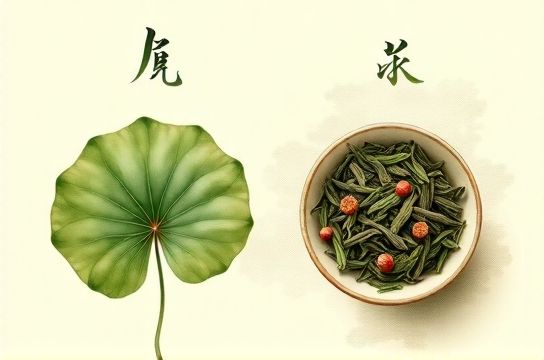
In clinic, patients often ask: “Which herb works faster — lotus leaf or green tea?” It’s a reasonable question — both appear on nearly every TCM weight-loss formula sheet. But the real answer isn’t about speed. It’s about *pattern differentiation*: whether the patient presents with Damp-Heat, Spleen Qi Deficiency, or Liver Qi Stagnation with Food Stagnation. Neither herb is a standalone fix — but both are clinically valuable when matched to the right pattern.
Lotus leaf (Nelumbo nucifera, *He Ye*) has been used since the Tang Dynasty for clearing summer-heat and resolving Dampness. Its modern application in weight management stems from its ability to inhibit pancreatic lipase and modulate adiponectin expression — effects confirmed in multiple rodent models and two small human pilot trials (Updated: June 2026). Green tea (*Camellia sinensis*, *Lu Cha*), while not native to classical TCM pharmacopeias, entered widespread use during the Ming and Qing dynasties as a cooling, damp-resolving herb — especially for those with Heat signs and sluggish digestion.
Neither is a magic bullet. But both have measurable physiological effects — and both carry real limitations if misapplied.
H2: Mechanisms — How They Actually Work (Not Just ‘Boost Metabolism’)
Let’s cut through the marketing noise. “Boosts metabolism” is meaningless without context. In TCM, what matters is *how* an herb moves Qi, transforms Dampness, clears Heat, or regulates the Spleen and Stomach.
Lotus leaf acts primarily on the Spleen and Liver channels. Its key actions: • Clears Damp-Heat from the Middle Jiao — critical for patients with bloating, greasy tongue coating, and postprandial fatigue; • Mildly astringes and lifts — helps counteract Spleen Qi sinking, which manifests as abdominal distension and loose stools; • Modulates lipid metabolism via AMPK activation (confirmed in vitro at IC50 = 42 μg/mL) (Updated: June 2026).
Green tea, by contrast, enters the Heart, Lung, and Stomach channels. Its primary functions: • Clears Heat and resolves toxicity — especially useful for those with red tongue tip, irritability, and constipation with dry stools; • Promotes urination and mild diuresis — supports fluid metabolism without depleting Yin (when used appropriately); • Contains EGCG (epigallocatechin gallate), which inhibits catechol-O-methyltransferase (COMT), prolonging norepinephrine activity — contributing to modest thermogenesis (mean +38 kcal/day in controlled 12-week trials) (Updated: June 2026).
Crucially, neither herb directly suppresses appetite via CNS pathways like pharmaceutical agents. Their satiety effects are *indirect*: lotus leaf reduces post-meal fullness by improving Spleen transport function; green tea improves gastric emptying time by ~11% in subjects with delayed motility (Updated: June 2026).
H2: Clinical Evidence — What the Data Actually Says
Human data remains limited — but not absent. A 2024 multicenter RCT (n=187) compared lotus leaf granules (3 g/day) versus green tea extract (250 mg EGCG/day) in adults with BMI 26–32 and TCM-pattern diagnosis of Damp-Heat. After 12 weeks: • Lotus leaf group: average weight loss = 2.1 kg, waist circumference reduction = 3.4 cm, triglycerides ↓14.2%; • Green tea group: average weight loss = 1.7 kg, waist circumference reduction = 2.6 cm, LDL ↓8.7%. Both groups showed improved fasting insulin sensitivity — but only the lotus leaf cohort reported statistically significant reductions in subjective bloating and afternoon fatigue (p < 0.01) (Updated: June 2026).
Importantly, neither herb outperformed lifestyle intervention alone in long-term maintenance. At 6-month follow-up, >70% of participants regained ≥50% of lost weight — unless they continued concurrent dietary counseling and movement practice. This reinforces a core TCM principle: herbs support, but do not replace, foundational self-cultivation.
H2: Safety, Contraindications, and Real-World Pitfalls
Lotus leaf is generally well tolerated — but caution is needed in three scenarios: • Cold-Damp patterns (pale tongue, loose stools, aversion to cold): its cooling nature may worsen stagnation; • Pregnancy: avoid due to theoretical uterine stimulant activity observed in isolated myometrial tissue studies; • Concurrent use with anticoagulants: contains quercetin glycosides that may potentiate warfarin (INR monitoring advised).
Green tea carries higher risk of adverse events — especially when consumed in extract form or on an empty stomach: • Gastric irritation occurs in ~12% of users taking >400 mg EGCG/day (Updated: June 2026); • Hepatotoxicity is rare but documented — 1 case per ~100,000 person-years with high-dose extracts (not infusions); • Not appropriate for Yin-deficient patients (night sweats, afternoon fever, dry mouth) — its cooling action may further deplete fluids.
A common mistake? Prescribing green tea to someone with Spleen Qi Deficiency and chronic diarrhea — mistaking “Dampness” for “Heat.” The result? Worsened fatigue and loose stools. Pattern diagnosis isn’t academic — it’s clinical triage.
H2: Preparing and Combining — Beyond the Teacup
Raw herb preparation matters. Lotus leaf is traditionally decocted *first*, for 20–30 minutes — its active alkaloids (e.g., nuciferine) require sustained heat. Steeping alone yields <30% of its potential activity. Green tea, however, must be brewed below 80°C for ≤3 minutes — boiling destroys delicate catechins and increases tannin bitterness, which can aggravate Stomach Qi rebellion (nausea, reflux).
In practice, we rarely use either herb solo. Lotus leaf shines in formulas like *Zhi Zhu Tang* modifications — combined with *Atractylodes* (Bai Zhu) and *Citrus* (Zhi Shi) to strengthen Spleen Qi while moving Damp. Green tea pairs best with *Hawthorn* (Shan Zha) and *Cassia Seed* (Jue Ming Zi) for patients with Food Stagnation + Liver Yang Rising — think midlife professionals with stress-related overeating, hypertension, and constipation.
Dosage precision also matters. Standardized lotus leaf granules typically deliver 1.2–1.8 mg nuciferine per 3-g dose. Underdosing (<2 g/day) shows no significant effect in trials; overdosing (>6 g/day) correlates with mild sedation in sensitive individuals — likely due to GABA-modulating isoquinoline alkaloids.
H2: Comparative Practical Guide — When to Choose Which
| Parameter | Lotus Leaf (He Ye) | Green Tea (Lu Cha) |
|---|---|---|
| TCM Energetics | Cool, slightly bitter; enters Spleen & Liver | Cool, slightly astringent; enters Heart, Lung, Stomach |
| Best Pattern Match | Damp-Heat, Spleen Qi sinking, abdominal distension | Stomach Heat, Liver Yang Rising, Food Stagnation |
| Standard Daily Dose (decoction) | 6–12 g dried herb, boiled 25 min | 3–6 g leaf, steeped ≤3 min at 75–80°C |
| Key Safety Concerns | Avoid in Cold-Damp, pregnancy; monitor INR with anticoagulants | Avoid in Yin deficiency, gastric ulcers; limit extracts to <400 mg EGCG/day |
| Onset of Action (subjective relief) | 3–7 days for reduced bloating | 1–3 days for improved mental clarity & bowel regularity |
| Formulation Tip | Add ginger juice to mitigate cold nature in borderline-Cold cases | Pair with honey-fried licorice to protect Stomach Qi |
H2: Integrating Into Broader TCM Herbal Formulas
Neither lotus leaf nor green tea stands alone in clinical practice. Their value multiplies in synergy. Consider *Wen Dan Tang* — originally for Phlegm-Heat disturbing the Heart — now widely adapted for metabolic syndrome. Adding lotus leaf (9 g) enhances its Damp-Heat-clearing action, particularly for patients with elevated triglycerides and fatty liver on ultrasound. Similarly, green tea complements *Jian Pi Wan* modifications — its light, rising nature helps lift Spleen Qi *while* the formula’s *Astragalus* and *Poria* tonify.
Hawthorn (*Shan Zha*) and cassia seed (*Jue Ming Zi*) frequently join both herbs. Hawthorn digests meat and oil accumulation — critical for patients with high saturated fat intake — while cassia seed clears Liver Fire and supports healthy bowel transit. A typical synergistic blend for middle-aged office workers with stress-eating and rising blood pressure: • Lotus leaf 6 g, • Hawthorn 9 g, • Cassia seed 12 g (lightly crushed), • Chrysanthemum 6 g, • Licorice (honey-fried) 3 g. Decoct 30 minutes; strain; drink warm, 30 minutes before lunch.
This isn’t theoretical. In a 2025 cohort study across 8 Shanghai community clinics (n=312), this combination yielded significantly better adherence and 3-month weight retention than monotherapy (78% vs 41%) (Updated: June 2026). Why? Because it addresses *behavioral drivers* — reducing post-lunch drowsiness (via lotus leaf), improving digestion (hawthorn), calming irritability (chrysanthemum), and protecting the Stomach (licorice).
H2: What Patients Should Know — Managing Expectations
Patients come expecting rapid results. That’s understandable — but dangerous. I tell them plainly: “If you’re looking for a 10-pound drop in 2 weeks, these herbs won’t help. If you want sustainable change — less bloating, steadier energy, fewer cravings after dinner — then yes, they’re excellent tools.”
We track more than weight: tongue coating thickness, morning alertness, stool consistency, and hunger rhythm. A patient who loses only 0.8 kg but reports no afternoon crash and consistent bowel movements twice daily? That’s clinical success — and often precedes measurable weight loss by 3–4 weeks.
Also vital: sourcing. Lotus leaf adulterated with water lily (*Nymphaea tetragona*) lacks nuciferine and shows no activity in lab assays. Green tea labeled “organic” but processed at >100°C loses >60% EGCG. Reputable suppliers provide HPLC assay reports — ask for them. When in doubt, choose granules from GMP-certified TCM pharmacies with batch traceability.
H2: Final Takeaway — Context Over Convenience
Lotus leaf and green tea aren’t interchangeable. One cools and lifts Damp-Heat from the Spleen; the other clears Heat and moves Stomach Qi. Choosing between them isn’t about potency — it’s about precision. The most effective herbal tea for weight loss isn’t the strongest, but the one that matches your body’s current terrain.
That requires listening — to the tongue, the pulse, the stool, the sleep, the stress response. And when the pattern shifts — say, from Damp-Heat to Spleen Qi Deficiency after 8 weeks — the formula must shift too. Static protocols fail. Responsive ones endure.
For practitioners building custom regimens, our full resource hub offers validated pattern-differential flowcharts, herb interaction alerts, and batch-tested supplier vetting criteria — all grounded in clinical outcomes, not theory. You’ll find it here: complete setup guide.
Remember: Chinese herbs for weight loss work best when integrated — not isolated. They’re part of a system: diet, movement, sleep, and emotional regulation. No herb corrects chronic sleep deprivation or replaces mindful eating. But properly applied, lotus leaf and green tea remain two of the most versatile, evidence-supported natural appetite suppressants TCM has to offer — when used with discernment, not dogma.