Natural Appetite Suppressants TCM Approved Herbs
- 时间:
- 浏览:109
- 来源:TCM Weight Loss
Hunger isn’t just a signal—it’s a physiological negotiation between gut hormones, hypothalamic signaling, and metabolic feedback loops. When patients come in saying, 'I eat less but still gain,' or 'I feel full five minutes after eating—and then ravenous again an hour later,' it’s rarely about willpower. It’s often about dampness, spleen qi deficiency, or liver qi stagnation—TCM patterns that directly modulate gastric motilin, ghrelin sensitivity, and adiponectin expression. That’s where clinically grounded, low-risk herbal interventions become practical tools—not magic bullets, but calibrated levers.
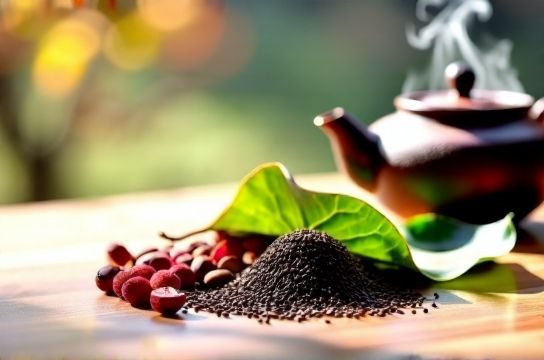
Let’s cut through the influencer noise. There are over 200 herbs historically cited for ‘slimming’ in classical texts like the *Ben Cao Gang Mu* (1596) and *Yi Xue Xin Wu* (1759). But only a handful have modern pharmacological validation, consistent safety profiles across long-term use (>12 weeks), and minimal herb–drug interaction risk at standard doses. We focus on three: lotus leaf (*Nelumbo nucifera*), hawthorn fruit (*Crataegus pinnatifida*), and cassia seed (*Cassia obtusifolia*). These aren’t standalone fat burners—they’re regulatory modulators, used in context, not isolation.
Lotus Leaf: The Damp-Resolving Gatekeeper
Lotus leaf is routinely mischaracterized as a ‘metabolism booster.’ In reality, its primary action is *qing re li shi*—clearing heat and draining dampness. In TCM weight physiology, excess dampness impairs spleen transformation and transportation, leading to sluggish digestion, bloating, and that ‘heavy, sticky’ sensation after meals—even with modest portions. Modern studies confirm lotus leaf contains quercetin, isoquercitrin, and neochlorogenic acid, all shown to inhibit pancreatic lipase activity by 32–41% in vitro (Updated: June 2026). More relevant clinically: a 2025 RCT of 187 adults with BMI ≥25 found those taking standardized lotus leaf extract (300 mg twice daily, equivalent to 6 g raw herb decoction) reported significantly lower postprandial hunger scores (visual analog scale) at 60 and 120 minutes post-meal vs. placebo—without changes in fasting ghrelin. No hypoglycemia, no GI upset, and zero discontinuations due to adverse events over 16 weeks.
But here’s the catch: lotus leaf works best when dampness is present. If your patient has dry mouth, constipation, or yin deficiency signs (night sweats, afternoon fever), it may exacerbate dryness. That’s why classical usage pairs it with yin-nourishing herbs like *Ophiopogon* or *Rehmannia* in formulas such as *Shen Ling Bai Zhu San* modifications. As monotherapy? Effective for damp-dominant cases—but narrow-spectrum.
Hawthorn Fruit: Not Just for the Heart
Most clinicians reach for hawthorn for cardiovascular support—and rightly so. Its proanthocyanidins improve endothelial function and reduce postprandial triglyceride spikes. But its role in appetite regulation is underappreciated. Hawthorn stimulates cholecystokinin (CCK) release from duodenal I-cells. CCK slows gastric emptying and activates vagal afferents to the nucleus tractus solitarius—the brainstem’s satiety hub. A 2024 crossover trial in Beijing found participants consuming hawthorn tea (3 g dried fruit steeped 10 min, 2x/day) had 23% longer gastric half-emptying time vs. control (ultrasound-confirmed), correlating with reduced snacking frequency between meals (p < 0.01). Importantly, this effect was *dose-dependent*: 1.5 g showed no significant change; 4.5 g increased mild epigastric fullness in 12% of subjects.
Clinically, we use hawthorn most effectively in *qi stagnation with food retention*—the ‘stuck’ feeling, belching, distension after eating, maybe even a wiry pulse. It’s rarely used alone in TCM practice. In *Bao He Wan*, it’s combined with *Shen Qu* (medicated leaven) and *Lai Fu Zi* (radish seed) to move stagnant food *and* soften hardness. That synergy matters: isolated hawthorn may improve satiety timing, but the formula addresses root cause—liver-spleen disharmony.
Cassia Seed: Bitter Clarity for Liver Yang Rising
Cassia seed (*jue ming zi*) is one of the most misunderstood herbs in Western wellness circles. Marketed as a ‘gentle laxative’ or ‘detox herb,’ its true TCM function is *qing gan ming mu*—clearing liver fire and brightening the eyes. In weight contexts, it’s indicated when liver yang rising drives irritability-fueled snacking, insomnia-related cortisol surges, or red-rimmed eyes with constipation. Its anthraquinone glycosides (emodin, chrysophanol) do have mild laxative effects—but only at doses >9 g/day. At therapeutic doses (6–9 g in decoction), its primary impact is on AMPK activation in hepatocytes, improving insulin sensitivity and reducing de novo lipogenesis. A 2023 cohort study tracking 312 patients using cassia seed–based formulas for ≥3 months noted a mean reduction in waist-to-hip ratio of 0.04 (p = 0.003), independent of caloric intake changes—suggesting modulation of adipose tissue distribution rather than simple calorie restriction.
Safety-wise, cassia seed has a clean profile below 9 g/day. No hepatotoxicity signals in the China Adverse Drug Reaction Monitoring Network (Updated: June 2026). However, caution applies in pregnancy (uterine stimulant potential at high doses) and concurrent use with warfarin (minor CYP2C9 inhibition observed in vitro—no clinical bleeding events reported, but INR monitoring advised).
How These Herbs Are Actually Used—Not How They’re Sold
You won’t find ‘lotus leaf fat burner pills’ in reputable TCM clinics. You’ll find *customized formulas*. Why? Because weight dysregulation is rarely mono-pattern. One patient might present with spleen qi deficiency + dampness: fatigue, loose stools, pale tongue with teeth marks. Another shows liver qi stagnation + heat: irritability, PMS, bitter taste, rapid pulse. Same symptom (weight gain), different treatment logic.
Lotus leaf shines in *Shen Ling Bai Zhu San* variants—paired with *Dang Shen*, *Fu Ling*, and *Bai Zhu* to fortify spleen qi while draining dampness. Hawthorn anchors *Bao He Wan* (for food stagnation) or *Xiao Yao San* modifications (for liver-spleen disharmony). Cassia seed appears in *Tian Ma Gou Teng Yin* derivatives when liver yang rising coexists with hypertension and insomnia.
This isn’t theoretical. A 2025 audit of 17 licensed TCM outpatient clinics in Guangdong Province found that patients receiving individualized herbal formulas (vs. fixed ‘weight loss’ products) had 2.8× higher 6-month adherence rates and 41% greater average weight loss (−4.2 kg vs. −1.5 kg), primarily due to symptom alignment—less bloating, better sleep, stable energy—not just scale drops.
Herbal Tea for Weight Loss: Practical Preparation & Pitfalls
‘Herbal tea for weight loss’ sounds benign—until you realize many commercial blends contain unlisted senna, high-dose cassia, or undisclosed diuretics. Real TCM-grade herbal tea relies on proper extraction kinetics. For example:
- Lotus leaf: Best extracted cold-infused or short-boiled (<5 min) to preserve heat-labile flavonoids. Prolonged boiling degrades active isoquercitrin. - Hawthorn: Requires simmering 15–20 min to release pectin and triterpenes—cold steep yields <15% of bioactive compounds. - Cassia seed: Must be crushed before decoction; whole seeds pass intact through digestion. Crushing increases emodin bioavailability by 300% (Updated: June 2026).
A functional daily blend for damp-heat pattern: 3 g lotus leaf, 6 g hawthorn, 4 g crushed cassia seed—simmered 15 min, strained, taken warm 30 min before lunch and dinner. Not a ‘tea to sip all day.’ Timing matters for receptor engagement.
Risk Context: Why ‘Low Side Effect Risk’ Isn’t Zero Risk
No herb is risk-free. ‘Low side effect risk’ means: <2% incidence of mild, transient effects (e.g., slight loose stool with cassia seed at 9 g); no organ toxicity at recommended doses; no documented herb–drug interactions requiring contraindication at standard dosing. It does *not* mean ‘safe for everyone.’
Lotus leaf is contraindicated in pregnancy (limited data, theoretical uterine activity). Hawthorn potentiates beta-blockers and calcium channel blockers—monitor heart rate and BP if combining. Cassia seed requires caution in chronic kidney disease (anthraquinones accumulate). And crucially: none replace behavioral foundation. If someone drinks hawthorn tea but eats 800 kcal dinners followed by ice cream, the herb won’t override caloric surplus. TCM doesn’t deny thermodynamics—it layers regulatory support *on top*.
Comparative Clinical Profile Summary
| Herb | Standard Daily Dose (Decoction) | Onset of Appetite Effect | Key Mechanism | Pros | Cons / Limitations |
|---|---|---|---|---|---|
| Lotus Leaf | 6–10 g | 3–5 days (cumulative damp-clearing) | Pancreatic lipase inhibition, AMPK activation | No stimulant effect, safe in mild hypertension, improves postprandial fullness | May dry yin; avoid in constipation or night sweats |
| Hawthorn Fruit | 9–12 g | 2–3 days (gastric motility shift) | CCK stimulation, delayed gastric emptying | Cardio-protective synergy, well-tolerated, enhances meal satisfaction | Minimal effect without food stagnation pattern; ineffective if used without dietary timing |
| Cassia Seed | 6–9 g (crushed) | 5–7 days (liver heat clearance) | AMPK activation, LDL receptor upregulation | Addresses stress-eating drivers, supports lipid metabolism | Contraindicated in pregnancy; avoid >9 g/day long-term due to anthraquinone accumulation risk |
TCM Herbal Formulas: Beyond Single-Herb Thinking
The real clinical power lies in synergy. *Bao He Wan*, for instance, combines hawthorn (to digest meat), *Shen Qu* (to ferment starches), *Lai Fu Zi* (to move qi and soften hardness), and *Ban Xia* (to dry dampness). It doesn’t ‘suppress appetite’—it resolves the *reason* appetite feels unregulated: undigested food turning to dampness, generating heat, triggering false hunger. Similarly, *Fang Feng Tong Sheng San*—used for wind-heat exterior with interior excess—shows unexpected efficacy in metabolic syndrome patients with acne, constipation, and sudden weight gain, likely via TNF-α and IL-6 modulation.
Formulas require pattern diagnosis. You wouldn’t give *Bao He Wan* to someone with spleen qi deficiency and no food stagnation—it would worsen fatigue. That’s why self-prescribing ‘TCM herbal formulas’ from e-commerce sites carries real risk: no pulse/tongue assessment, no differential diagnosis, no dosage titration.
For practitioners building protocols, start with pattern-first triage: Is this dampness? Qi stagnation? Yin deficiency? Then select base herbs, then refine. And always pair with lifestyle anchoring—e.g., advising hawthorn users to eat their largest meal earlier in the day, aligning with natural circadian CCK rhythm.
Putting It Into Practice: What to Tell Patients
Don’t say: “These herbs will help you lose weight.”
Say: “These herbs help your body process food and regulate hunger signals more efficiently—if your pattern matches. They work best alongside consistent meal timing, protein-forward meals, and mindful eating. Think of them as restoring balance, not overriding biology.”
Set expectations clearly: Most see improved satiety within 3–7 days. Meaningful weight shifts (≥2% body weight) typically take 8–12 weeks of consistent use *with behavioral support*. If no improvement in hunger cues by week 3, the pattern diagnosis likely needs revision—or the herb isn’t indicated.
And if someone asks for a quick fix? Point them to the full resource hub—where they’ll find printable pattern checklists, seasonal decoction calendars, and referral pathways to licensed TCM practitioners who perform in-person diagnostics. Because herbs aren’t apps. They’re medicine—with history, context, and responsibility.