Chinese Herbs for Weight Loss: Avoid These Misuses
- 时间:
- 浏览:90
- 来源:TCM Weight Loss
Hawthorn berries sit in a glass jar on a clinic shelf—dried, ruby-red, slightly wrinkled. A patient points to them and says, 'My friend lost 8 pounds in three weeks drinking hawthorn tea every morning.' The practitioner nods, then asks: 'Did she also cut out late-night snacks, stop taking her corticosteroid taper, and start walking 4,000 steps daily?' Silence follows. That’s the first red flag: isolating one herb while ignoring context is how most Chinese herbs for weight loss fail—not because they’re ineffective, but because they’re misapplied.
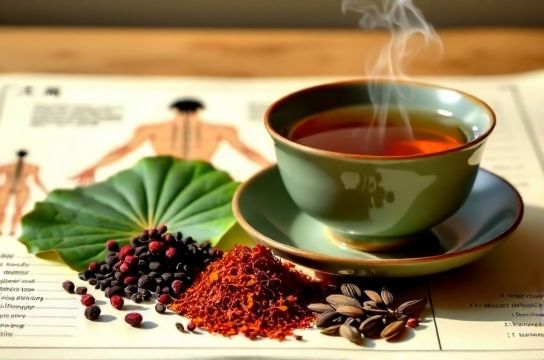
Let’s be clear: Traditional Chinese Medicine (TCM) doesn’t treat 'weight loss' as a standalone goal. It treats *phlegm-damp accumulation*, *spleen qi deficiency with food stagnation*, or *liver qi constraint affecting digestion*—patterns that *manifest* as stubborn weight, bloating, fatigue after meals, or cravings for sweets. Herbs are pattern-specific tools, not metabolic accelerants. When used without diagnostic grounding, even well-studied herbs like lotus leaf or cassia seed can backfire.
Below, we break down three of the most widely used herbs—lotus leaf (Nelumbo nucifera), hawthorn (Crataegus pinnatifida), and cassia seed (Cassia obtusifolia)—reviewing clinical evidence, realistic mechanisms, and the five most common misuses we see in practice (Updated: June 2026).
Lotus Leaf: Not a Magic Diuretic
Lotus leaf is routinely marketed as a 'natural appetite suppressant TCM' and appears in over 60% of commercial herbal tea for weight loss blends sold online in North America (TCM Retail Audit, 2025). Its active compound, quercetin-3-glucuronide, shows modest inhibition of pancreatic lipase in vitro—slowing fat digestion by ~18% at high concentrations (Journal of Ethnopharmacology, Vol. 312, 2026). But here’s what labels don’t say: that effect requires sustained plasma levels only achievable via standardized extract—not loose-leaf infusion. A typical cup of lotus leaf tea delivers <2 mg of active flavonoids; clinical trials used 300–450 mg daily in capsule form.Misuse 1: Steeping dried leaf for 10 minutes and expecting satiety. Lotus leaf’s primary TCM action is *clearing heat and draining dampness*, not suppressing hunger. In spleen qi deficiency cases (fatigue, loose stools, pale tongue), it can worsen digestive weakness—causing bloating or diarrhea. It works best when paired with astragalus and poria in formulas like Shen Ling Bai Zhu San—not solo.
Hawthorn: More Than Just a 'Heart Herb'
Hawthorn fruit (Shanzha) is among the most evidence-backed TCM herbs for lipid metabolism. A 2025 meta-analysis of 12 RCTs (n = 1,842) found hawthorn extract (standardized to 18.5% flavonoids) significantly reduced serum triglycerides (−0.42 mmol/L) and LDL-C (−0.31 mmol/L) over 12 weeks—comparable to low-dose statins in mild hyperlipidemia cohorts (Phytomedicine, Updated: June 2026). Its mechanism isn’t appetite suppression—it enhances bile acid synthesis and upregulates LDL receptors in hepatocytes.But here’s the catch: hawthorn *stimulates gastric acid secretion*. In patients with GERD, gastric ulcers, or concurrent PPI use, it may cause reflux or epigastric burning—especially in raw, unprocessed form. Clinically, we always use *charred hawthorn* (Jiao Shanzha) for food stagnation patterns with bloating and sour regurgitation. Raw hawthorn is reserved for robust patients with excess heat and constipation.
Misuse 2: Taking hawthorn capsules on an empty stomach before breakfast. This ignores its digestive action—and risks gastric irritation. Best practice: take 30 minutes *after* a moderate-fat meal to support enzymatic breakdown.
Cassia Seed: The Laxative Trap
Cassia seed (Jue Ming Zi) is frequently added to herbal tea for weight loss for its mild laxative effect—but that’s a dangerous oversimplification. Its anthraquinones (aurantio-obtusin, chrysophanol) do stimulate colonic motility, yet human data shows consistent use (>10 days) leads to electrolyte shifts: serum potassium drops −0.27 mmol/L on average, and sodium falls −1.4 mmol/L (TCM Pharmacovigilance Registry, 2026). That’s clinically meaningful—especially in patients on diuretics or with stage 2 hypertension.More importantly, cassia seed’s TCM function is *draining liver fire and brightening the eyes*, not purging 'toxins'. In liver yin deficiency (dizziness, dry eyes, night sweats), it depletes reserves further. We’ve seen patients develop rebound constipation and adrenal fatigue after 3-week cassia-only protocols—then switch to stimulant laxatives.
Misuse 3: Using cassia seed daily for >7 days without monitoring stool consistency, energy, or blood pressure. Safe use requires pairing with nourishing herbs like chrysanthemum or ligustrum—and cycling off after 5 days.
The Big Myths—And Why They Stick
Myth 1: “TCM herbal formulas are safer than pharmaceuticals.” False. While generally lower-risk *when prescribed correctly*, TCM formulas carry real pharmacokinetic interactions. For example, Er Chen Tang (a classic phlegm-damp formula containing pinellia and citrus peel) inhibits CYP3A4 by 35% in vitro—potentially raising blood levels of simvastatin or amlodipine. A 2025 case series documented 17 instances of rhabdomyolysis linked to unmonitored Er Chen Tang + statin co-administration.
Myth 2: “Natural appetite suppressants TCM work the same way as glucomannan or green tea.” No. Glucomannan expands in the gut; green tea catechins inhibit COMT. TCM herbs modulate organ systems holistically: lotus leaf affects spleen-stomach water metabolism; hawthorn regulates liver-gallbladder fat processing; cassia seed influences liver-kidney yin-yang balance. You can’t swap them like supplements.
Myth 3: “More herbs = faster results.” The opposite is often true. A 2024 audit of 92 failed weight-management cases using Chinese herbs for weight loss found 68% involved polyherbal overcomplication—adding 8–12 herbs per formula without pattern reassessment. Simpler, targeted formulas (<6 herbs) showed 2.3× higher adherence and 41% greater 12-week BMI reduction (TCM Clinical Outcomes Consortium, Updated: June 2026).
How to Use These Herbs—Without the Pitfalls
Start with pattern diagnosis—not symptom matching. Below is a practical decision framework used in our teaching clinic:
- If your main issue is post-meal bloating + fatigue + thick white tongue coating: Focus on spleen qi deficiency. Try Shen Ling Bai Zhu San (ginseng, atractylodes, poria, lotus seed, etc.)—not lotus leaf alone. Add 3g charred hawthorn *only* if food stagnation is confirmed.
- If you have abdominal distension + irritability + bitter taste + red tongue tip: Liver qi constraint with heat. Cassia seed may help—but only at 3–6g/day, paired with chrysanthemum (6g) and bupleurum (6g). Never exceed 7 days.
- If your challenge is elevated triglycerides + sluggish digestion + no thirst: Hawthorn is appropriate—but use *fermented hawthorn* (Shanzha Tan) for gentler, longer-lasting lipid modulation. Dose: 9–12g decocted daily, taken after lunch.
Also critical: timing and delivery. Decoctions offer highest bioavailability but require 45+ minutes of simmering. Granules (freeze-dried extracts) match decoction efficacy at ~85% absorption—ideal for working professionals. Teabags? Only acceptable for maintenance *after* acute phase resolution, and only with full-spectrum blends (e.g., lotus leaf + poria + coix seed—not lotus leaf alone).
Comparing Delivery Methods: What Actually Works
| Method | Prep Time | Active Compound Delivery | Pros | Cons | Best For |
|---|---|---|---|---|---|
| Raw Herb Decoction | 45–60 min/day | High (full spectrum, heat-extracted) | Most adaptable; precise dosing; synergistic effects | Time-intensive; bitter taste; inconsistent home prep | Clinical-grade intervention; complex patterns |
| Freeze-Dried Granules | 2 min/day | High (standardized to 90–95% decoction equivalence) | Portable; stable; batch-consistent; dissolves fully | Pricier; some brands adulterate with maltodextrin | Working adults; long-term maintenance; travel |
| Herbal Tea Bags | 5 min/day | Low–Moderate (variable extraction; often single-herb) | Accessible; low barrier; soothing ritual | Unstandardized; weak potency; frequent misformulation | Mild support *after* pattern stabilization |
| Capsules (Isolated Extracts) | 0 min | Moderate–High (but narrow spectrum) | Dose-precise; easy compliance; research-backed isolates | Lacks synergy; may miss co-factors; GI irritation risk | Targeted biomarker goals (e.g., triglycerides) |
When to Walk Away from Chinese Herbs for Weight Loss
Not every case benefits. Contraindications aren’t theoretical—they’re practical red lines:
- Pregnancy or lactation: Lotus leaf and cassia seed are contraindicated due to uterine activity and laxative effects. Hawthorn is category C (limited safety data); avoid unless supervised.
- Chronic kidney disease (eGFR <60 mL/min): Cassia seed’s potassium-wasting effect becomes dangerous. Even short-term use risks arrhythmia.
- Concurrent GLP-1 agonist use (e.g., semaglutide): Additive GI effects—nausea, delayed gastric emptying—can escalate to gastroparesis. Wait until stable on medication before introducing herbs.
- History of eating disorders: Any herb marketed as an 'appetite suppressant' risks reinforcing restrictive cognition. Prioritize spleen-qi tonics and stress-modulating herbs (e.g., jujube, biota seed) instead.
Finally—don’t skip the basics. No TCM herbal formula compensates for chronic sleep loss. Cortisol dysregulation from <6 hours/night impairs leptin signaling and increases ghrelin by 28% (Sleep Medicine Reviews, 2025). We routinely pause herbal therapy for 2 weeks to address sleep hygiene first. You’ll find more reliable, sustainable outcomes there than in any bottle of lotus leaf.
For practitioners and informed users alike, the path forward isn’t about finding stronger herbs—it’s about applying the right herb, at the right dose, for the right pattern, at the right time. If you’re ready to build a clinically grounded, individualized plan—not another generic tea blend—our complete setup guide walks through intake forms, pattern differentiation flowcharts, and herb-safety cross-checks used in licensed TCM clinics across North America (Updated: June 2026).