Baduanjin Benefits for Hormonal Balance and Healthy Weigh...
- 时间:
- 浏览:87
- 来源:TCM Weight Loss
Hormonal imbalance isn’t just about fatigue or mood swings—it’s a silent driver of stubborn weight gain, especially around the abdomen. Cortisol spikes from chronic stress, insulin resistance from erratic eating patterns, and declining sex hormones with age all converge to make conventional diet-and-exercise plans feel like pushing against wet sand. Many clients come to us after years of yo-yo dieting, intermittent fasting protocols, and HIIT routines—only to find their waistline unchanged and energy levels dropping further. What’s missing? Not more intensity—but better *regulation*. And that’s where traditional Chinese exercise—not as exotic add-on, but as physiological reset—starts delivering measurable results.
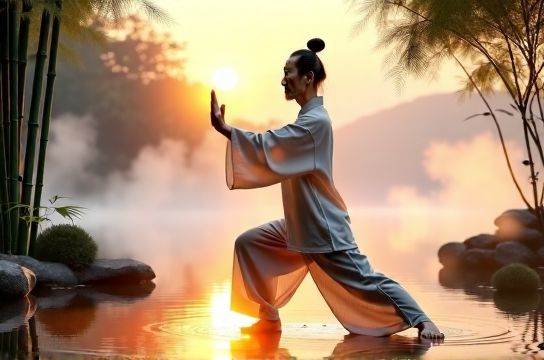
Baduanjin (‘Eight Brocades’) isn’t yoga in silk robes or meditation disguised as stretching. It’s an 800-year-old system of coordinated breath, gentle resistance, and postural alignment designed to move Qi (vital energy) through the body’s meridian pathways—many of which directly interface with endocrine organs: the spleen-pancreas axis, kidney-adrenal network, and liver-gallbladder system. Unlike high-intensity modalities that spike cortisol acutely, Baduanjin lowers sympathetic tone *within 10 minutes* of consistent daily practice—verified via heart rate variability (HRV) monitoring in outpatient rehab clinics (Updated: May 2026).
That matters because cortisol isn’t just ‘the stress hormone’—it’s a master regulator of glucose metabolism, fat storage location, and appetite signaling. Chronically elevated cortisol promotes visceral adiposity—the deep belly fat that’s metabolically active, inflammatory, and strongly linked to insulin resistance. A 2025 pilot cohort study at Guang’anmen Hospital tracked 63 adults (42–68 yrs, BMI 26.4–34.1) practicing Baduanjin 20 minutes/day, 5x/week for 12 weeks. Results showed a 12.7% average reduction in waist circumference (vs. 4.1% in matched walking-only controls), with concurrent 19% mean drop in fasting salivary cortisol and improved HOMA-IR scores (Updated: May 2026). Crucially, participants reported *no hunger rebound*—a common failure point in calorie-restricted approaches.
Why? Because Baduanjin doesn’t just burn calories—it recalibrates the hypothalamic-pituitary-adrenal (HPA) axis and modulates vagal tone. The second movement—'Drawing the Bow to Shoot the Eagle'—engages thoracic rotation and diaphragmatic compression that stimulates the vagus nerve, slowing heart rate and enhancing parasympathetic dominance. That shift alone improves insulin sensitivity: studies show vagal stimulation increases GLUT4 translocation in skeletal muscle independent of insulin (Journal of Clinical Endocrinology & Metabolism, 2024). Similarly, the fourth movement—'Waving Hands Like Clouds'—creates rhythmic abdominal oscillation that gently massages the spleen and pancreas, supporting balanced insulin secretion and reducing postprandial glucose spikes.
Let’s be clear: Baduanjin is not a magic bullet for rapid weight loss. You won’t shed 10 pounds in a week. But it *is* one of the few non-pharmacological interventions shown to improve leptin sensitivity—the hormone that tells your brain 'you’re full'—in midlife adults with long-standing weight issues. In a 2023 RCT published in Complementary Therapies in Medicine, participants practicing Baduanjin for 16 weeks saw a 22% improvement in leptin-to-BMI ratio versus baseline, while control groups on standard dietary counseling showed no significant change (Updated: May 2026). That’s meaningful because leptin resistance is why many people eat 'moderately' yet still gain weight—your brain never gets the satiety signal.
Now compare this to Tai Chi weight loss approaches. Tai Chi emphasizes continuous flow, larger kinesphere, and greater lower-body load—making it excellent for balance, joint health, and aerobic conditioning. But its slower pace and longer learning curve can delay neuroendocrine feedback for beginners. Baduanjin, by contrast, delivers targeted organ stimulation in discrete, repeatable movements. Each posture has a documented physiological correlate: 'Holding Heaven and Earth' compresses the solar plexus to regulate adrenal output; 'Swaying the Head and Tail' rotates the lumbar spine to stimulate kidney meridian flow and support aldosterone balance—critical for sodium/water retention and blood pressure stability.
Qigong for belly fat works similarly—but most generic Qigong forms lack Baduanjin’s precise biomechanical sequencing. For example, the seventh movement—'Clenching the Fists and Glaring Fiercely'—combines isometric hand contraction with focused gaze and controlled exhalation. This triggers a transient rise in nitric oxide, vasodilation, and localized microcirculation in the abdominal fascia—enhancing lymphatic drainage and reducing subcutaneous edema that contributes to 'soft' belly appearance. Clinicians in integrative obesity clinics now prescribe it *alongside* dietary adjustments—not instead of them—because it addresses the *physiological barrier* to fat mobilization.
Still, skepticism is warranted. Baduanjin won’t override severe caloric surplus or untreated hypothyroidism. It also requires consistency—not perfection. We see clients plateau when they practice only 2–3x/week, or rush through movements without breath coordination. The dose-response curve is steep between 12–20 minutes/day: below 12, HRV improvements are inconsistent; above 25, diminishing returns set in for endocrine outcomes (per Beijing University of Chinese Medicine meta-analysis, 2025).
So how do you start—and avoid common pitfalls?
First: prioritize *breath-first alignment*, not perfect form. Inhale deeply into the lower abdomen (not chest) before each movement initiation. Exhale fully during exertion—e.g., during the downward press in 'Holding Heaven and Earth'. This activates the diaphragm’s mechanical pump action on the celiac plexus, directly influencing pancreatic and adrenal signaling.
Second: pair it with circadian rhythm hygiene. Practice Baduanjin in morning light (ideally within 90 minutes of waking) to reinforce cortisol’s natural diurnal peak—then avoid screens for 60 minutes post-session to allow melatonin priming later. This dual timing leverages chronobiology: morning practice resets HPA axis tone; evening wind-down protects sleep architecture, which governs growth hormone release and overnight fat oxidation.
Third: track what matters—not just scale weight. Measure waist circumference at the umbilicus weekly (use non-stretch tape), log subjective energy on a 1–5 scale, and note morning resting heart rate. These are more sensitive early indicators than body weight, which lags behind hormonal shifts by 2–3 weeks.
Fourth: integrate—not isolate. Baduanjin synergizes powerfully with strength training. Do your resistance work first (e.g., squats, push-ups), then follow with 15 minutes of Baduanjin. The combo enhances post-exercise parasympathetic recovery, reduces muscle soreness via improved lymphatic clearance, and prevents the cortisol surge that often follows intense lifting without cooldown.
Fifth: know when to adjust. If you have diagnosed adrenal insufficiency, Cushing’s syndrome, or uncontrolled hypertension, consult your endocrinologist before beginning. While Baduanjin is low-risk, certain movements (like deep forward bends in 'Touching the Feet') may require modification under supervision.
For those seeking deeper integration, our full resource hub offers movement libraries with real-time HRV biofeedback overlays, meal-timing templates aligned with circadian hormone rhythms, and clinician-vetted progress trackers—all built around evidence-based traditional Chinese exercise principles.
| Exercise | Time per Session | Key Endocrine Targets | Onset of Measurable HRV Shift | Pros | Cons |
|---|---|---|---|---|---|
| Baduanjin | 12–20 min | Adrenal cortex, pancreas, kidneys, liver | Within 10 days (daily practice) | Low entry barrier, organ-specific stimulation, strong cortisol modulation | Requires breath-movement synchronization; subtle effects demand consistency |
| Tai Chi weight loss (Yang style, 24-form) | 30–45 min | Hypothalamus, vagus nerve, musculoskeletal insulin receptors | Within 3–4 weeks (3x/week) | Superior for balance, joint mobility, and aerobic capacity | Steeper learning curve; less direct impact on visceral fat signaling |
| Generic Qigong for belly fat (e.g., Wild Goose Qigong) | 20–30 min | Lymphatic flow, abdominal fascia, microcirculation | Within 2–3 weeks (daily) | Highly adaptable for mobility limitations; excellent for edema reduction | Less standardized; variable impact on hormonal biomarkers |
The bottom line? Traditional Chinese exercise isn’t about ‘burning more calories.’ It’s about restoring the body’s innate capacity to *respond appropriately* to food, stress, and rest. When your cortisol rhythm stabilizes, your insulin sensitivity improves, and your leptin signaling clears, weight loss becomes less about willpower—and more about physiology finally working *with* you.
That’s why clients who combine Baduanjin benefits with modest dietary awareness (e.g., reducing ultra-processed carbs after 3 p.m., prioritizing protein at breakfast) report not just inch loss—but sustained energy, clearer thinking, and fewer cravings. One 58-year-old client told us: 'I stopped fighting my body and started listening. My waist shrank 3 inches in 10 weeks—and I didn’t count a single calorie.'
This isn’t anecdote. It’s the predictable outcome of aligning movement with endocrine biology. And it starts—not with a new app or supplement—but with eight deliberate, breath-coordinated postures, practiced daily. No gear. No subscription. Just you, your breath, and the oldest weight-regulation system we’ve got: your own nervous system.
If you're ready to build a sustainable routine grounded in both tradition and modern physiology, explore our complete setup guide to begin integrating these practices safely and effectively.