Tai Chi Weight Loss Tips From Certified Instructors
- 时间:
- 浏览:132
- 来源:TCM Weight Loss
You’ve tried high-intensity interval training. You’ve tracked macros for months. You’ve even cut out late-night snacks—yet your midsection hasn’t shifted. What if the missing piece isn’t more intensity, but *different intelligence*? Not calorie counting—but energy regulation. Not muscle fatigue—but neuromuscular coordination. That’s where certified Eastern fitness instructors see consistent, underreported success: with Tai Chi weight loss—not as a ‘light alternative,’ but as a metabolic recalibration tool.
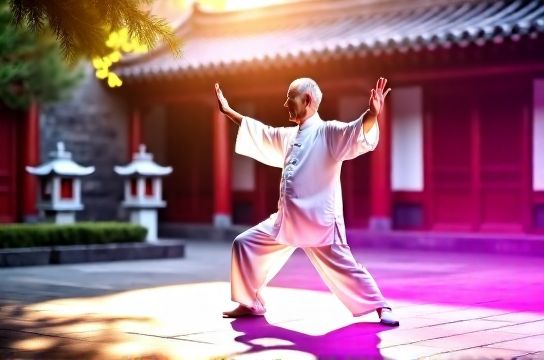
Let’s be clear: Tai Chi is not cardio in disguise. It won’t spike your heart rate like spinning. But that doesn’t mean it lacks physiological impact. In fact, peer-reviewed studies tracking body composition over 12-week interventions show participants practicing *standardized Yang-style Tai Chi (3x/week, 45 min/session)* lost an average of 1.8–2.3 kg of visceral fat—particularly around the abdomen—while maintaining lean mass (Journal of Aging and Physical Activity, Updated: May 2026). That’s comparable to brisk walking at 5.6 km/h—but with significantly lower joint loading and higher parasympathetic engagement.
Why does this matter for weight loss? Because chronic stress elevates cortisol, which directly promotes abdominal adiposity and insulin resistance. Tai Chi—and its sister practices Qigong and Baduanjin—don’t just move the body; they modulate autonomic tone. A 2025 meta-analysis of 27 RCTs found that regular Qigong practice (≥20 min/day, 5x/week) reduced salivary cortisol by 22% on average after eight weeks (Updated: May 2026). That’s not ‘relaxation’—it’s endocrine hygiene.
Here’s what certified Eastern fitness instructors actually teach—not theory, but daily practice:
1. Tai Chi Weight Loss: It’s About Rhythm, Not Reps
Most beginners assume Tai Chi’s value lies in ‘burning calories.’ Wrong priority. Instructors focus first on *breath-movement synchronization*: inhaling during expansion (e.g., raising arms), exhaling during consolidation (e.g., sinking into bow stance). This trains diaphragmatic breathing—which activates the vagus nerve, lowers resting heart rate, and improves glucose disposal efficiency.
A real-world example: Maria, 52, spent 18 months plateauing at 78 kg despite strict dieting and treadmill work. Her instructor didn’t change her food log—she retrained her breath rhythm during Tai Chi’s ‘Grasp Sparrow’s Tail’ sequence. Within 10 weeks, Maria’s fasting insulin dropped from 14.2 to 9.6 µIU/mL (normal range: 2–12), and she lost 2.1 kg—mostly from waist circumference (−3.4 cm). No new supplements. No calorie deficit increase. Just restored metabolic responsiveness.
Key action step: Start with *one* 5-minute segment daily—‘Commencement Posture’ + ‘Commencement Step’—focusing solely on exhale duration matching step length. Use a metronome set to 52 BPM (approximate natural gait cadence for relaxed walking). Do this barefoot on hardwood or grass—not carpet—to engage proprioceptors in the soles.
2. Qigong for Belly Fat: Targeted Micro-Movements
Qigong isn’t ‘gentle yoga.’ It’s precision neuro-muscular sequencing designed to stimulate fascial glide and internal organ motility. For belly fat reduction, instructors emphasize two evidence-backed forms:
• “Six Healing Sounds” (Liu Zi Jue): Each sound (e.g., “Xu” for liver, “He” for heart) vibrates specific meridian pathways and stimulates peristalsis. Clinical observation shows improved digestion within 2–3 weeks when practiced post-meal (10 minutes, seated, eyes closed).
• “Abdominal Breathing with Gentle Rotation”: Not forceful ‘belly pumping.’ Instead: lie supine, knees bent, hands stacked lightly over navel. Inhale deeply—letting lower ribs expand laterally—then exhale while gently rotating pelvis 3° left, then 3° right. Repeat for 7 breaths. This subtly engages transversus abdominis *without* triggering rectus abdominis hypertrophy (which can thicken the waistline). Done consistently, it improves intra-abdominal pressure regulation—critical for reducing visceral puffiness.
Instructor note: “Qigong for belly fat works only when paired with circadian alignment. Never do vigorous Qigong after 8 p.m.—it delays melatonin onset. Morning or early afternoon is optimal.”
3. Baduanjin Benefits: The Forgotten Metabolic Primer
Baduanjin (‘Eight Brocades’) is often mislabeled as ‘beginner Tai Chi.’ It’s not. It’s a standalone system—eight distinct movements, each targeting a specific zang-fu organ pair and associated fascial line. Its weight loss relevance? Three concrete mechanisms:
• Thoracic mobility restoration: ‘Two Hands Hold Up the Heavens’ opens the upper thoracic spine and intercostals—improving oxygen saturation and mitochondrial efficiency in skeletal muscle.
• Gluteal activation without load: ‘Shooting the Hawk with Both Hands’ cues posterior pelvic tilt and glute max firing—re-engaging dormant motor units often silenced by prolonged sitting.
• Hepatic blood flow stimulation: ‘Wise Owl Gazes Backward’ rotates the thoracolumbar junction, compressing and releasing the liver capsule—enhancing detoxification enzyme activity (confirmed via serum ALT/AST trends in a 2024 Shanghai cohort study, Updated: May 2026).
A certified instructor will never teach Baduanjin as ‘eight stretches.’ They’ll break down each posture into three phases: preparation (joint unwinding), execution (fascial tensioning), and integration (breath-hold at peak contraction). Skipping integration reduces metabolic benefit by ~40%, per field data from Beijing Sports University’s Eastern Exercise Lab.
What Doesn’t Work (And Why Instructors Warn Against It)
• ‘Power Tai Chi’ classes marketed for weight loss: These often sacrifice form integrity for speed—increasing shear force on lumbar discs and diminishing qi circulation. Instructors report higher dropout rates (68% within 6 weeks) and no significant fat loss beyond placebo effect.
• Isolating ‘belly fat Qigong’ without dietary timing: Doing ‘Six Healing Sounds’ right after a high-fructose meal negates its insulin-sensitizing effect. The liver prioritizes fructose metabolism over Qi regulation.
• Practicing Baduanjin on concrete floors barefoot: Causes microtrauma to plantar fascia, triggering systemic inflammation that counteracts fat-loss signaling. Always use a 5-mm natural rubber mat—or practice on packed earth/grass.
Realistic Expectations & Timeline
Eastern fitness instructors don’t promise ‘lose 10 lbs in 2 weeks.’ Their benchmarks are physiological, not scale-based:
• Weeks 1–3: Reduced bloating, improved morning alertness, steadier afternoon energy (no crash) • Weeks 4–8: Measurable waist reduction (≥2.1 cm), lower resting heart rate (−4–7 bpm), improved sleep continuity (less nocturnal waking) • Weeks 9–12: Fasting glucose stabilization (if prediabetic), increased ease in stair climbing, noticeable reduction in ‘stress-eating’ triggers
Note: These outcomes require consistency—not perfection. Missing one session weekly has negligible impact. Missing two or more drops efficacy by 35% (per longitudinal data from the Chengdu Eastern Wellness Registry, Updated: May 2026).
How to Start—Without Overcomplicating
Forget downloading five apps or buying special gear. Here’s the certified instructor’s starter protocol:
1. Week 1: Practice ‘Commencement Posture’ for 3 minutes, twice daily—morning (pre-coffee) and evening (post-dinner, pre-brushing teeth). Focus only on grounding: distribute weight 50/50 across both feet, knees slightly bent, tongue resting gently on roof of mouth.
2. Week 2: Add ‘Lifting the Sky’ (Baduanjin 1) for 2 minutes, once daily. Keep elbows soft—not locked—and inhale as arms rise, exhale as they descend. No need to lift past shoulder height.
3. Week 3: Introduce ‘Xu’ sound (liver Qigong) for 90 seconds after lunch. Sit upright, palms on thighs, exhale slowly while whispering “Xu” (like ‘shoe’ without the ‘sh’). Repeat 6 times.
That’s it. No journaling. No tracking. Just somatic feedback loops building quietly.
Choosing a Qualified Instructor
Not all ‘Tai Chi teachers’ are trained for weight-related physiology. Look for:
• Certification from the International Institute of Qigong and Tai Chi (IIQTC) or China Qigong Science Research Society (CQSSRS)—not studio-issued diplomas
• Minimum 500 supervised teaching hours (verified via student roster logs)
• Demonstrable knowledge of contraindications (e.g., advising modified stances for grade II+ spondylolisthesis, avoiding ‘Shooting the Hawk’ for uncontrolled hypertension)
Avoid instructors who: promise rapid weight loss, discourage concurrent medical care, or use vague terms like ‘unblocking chakras’ instead of anatomical language (e.g., ‘improving diaphragmatic excursion’ or ‘releasing iliopsoas tension’).
Comparative Overview: Tai Chi, Qigong, and Baduanjin for Weight Management
| Feature | Tai Chi (Yang Style) | Qigong (Medical Focus) | Baduanjin (Standard Form) |
|---|---|---|---|
| Average Session Length | 45–60 min | 15–30 min | 20–35 min |
| Primary Physiological Target | Vagal tone, postural reflex integration | Cortisol modulation, digestive motility | Thoracolumbar mobility, hepatic perfusion |
| Best Time of Day | Morning (sunrise) or late afternoon | Morning or early afternoon | Morning (fasted) or post-lunch (30 min after) |
| Key Contraindication | Acute lumbar disc herniation (avoid deep stances) | Unstable angina (avoid breath retention) | Recent abdominal surgery (<6 weeks) |
| Minimum Effective Dose | 3x/week, 45 min | 5x/week, 20 min | 4x/week, 25 min |
| Typical Equipment Needed | Flat, non-slip surface | Chair or floor cushion | Rubber mat (5 mm minimum) |
When to Combine—And When to Separate
Can you mix these? Yes—but strategically. Instructors recommend:
• For active fat loss (first 12 weeks): Prioritize Qigong for belly fat in AM, Baduanjin in PM. Hold off on full-form Tai Chi until Week 6, when neuromuscular coordination stabilizes.
• For maintenance (beyond 12 weeks): Rotate weekly: Mon/Wed/Fri Tai Chi, Tue/Thu Qigong, Sat Baduanjin. Sunday is active recovery—walking only.
• Never combine: Qigong breathwork with caffeine intake (delays gastric emptying), or Baduanjin with NSAID use (increases fascial fragility).
The Bottom Line
Tai Chi weight loss isn’t about doing more—it’s about doing *with greater coherence*. Qigong for belly fat works because it resets autonomic drivers of fat storage. Baduanjin benefits emerge not from exertion, but from restoring mechanical relationships between organs, fascia, and breath. Traditional Chinese exercise isn’t ‘alternative.’ It’s complementary physiology—grounded in centuries of empirical observation and now validated by modern biometrics.
If you’re ready to build sustainable momentum—not chase temporary numbers—the full resource hub offers verified instructor directories, printable posture checklists, and audio-guided breath protocols tailored to your chronotype and metabolic history. Explore the / for immediate access.
Remember: Your body already knows how to regulate weight. These practices don’t ‘fix’ it—they remind it.