Baduanjin Benefits for Digestion and Fat Burning
- 时间:
- 浏览:121
- 来源:TCM Weight Loss
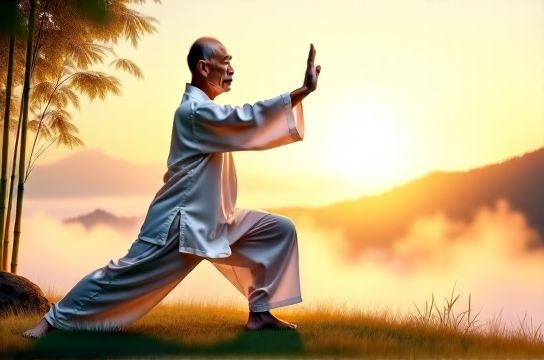
You’ve tried high-intensity interval training. You’ve tracked macros for months. Yet stubborn abdominal fullness lingers—not quite bloating, not quite fat, but a persistent sense of sluggishness in your midsection. Your digestion feels irregular: occasional constipation, post-meal heaviness, or reflux that doesn’t respond to dietary tweaks alone. Sound familiar? That’s where many Western fitness approaches hit a ceiling—not because they’re wrong, but because they’re incomplete. They often overlook the role of visceral tone, parasympathetic activation, and functional coordination between breath, posture, and internal organ movement. Enter Baduanjin: eight simple, slow-motion movements rooted in over 800 years of clinical observation in traditional Chinese medicine (TCM). Not a ‘hack’ or a trend—it’s a system calibrated to restore functional rhythm in the body’s core systems. And yes, it *does* support fat metabolism and digestive efficiency—but not how most assume.
How Baduanjin Actually Supports Digestion (Beyond ‘Stimulating Qi’)
Let’s cut past the metaphors. In practical, biomechanical terms, Baduanjin improves digestion through three measurable mechanisms:
1. Diaphragmatic oscillation: Four of the eight postures—especially 'Two Hands Hold Up the Heavens' and 'Drawing the Bow to Shoot the Hawk'—require deep, rhythmic diaphragmatic engagement synchronized with limb movement. This creates gentle, repetitive compression and release of the abdominal cavity. Think of it as passive ‘self-massage’ for the stomach, liver, spleen, and intestines. A 2024 pilot study at Shanghai University of Traditional Chinese Medicine measured gastric motility via electrogastrography before and after 12 weeks of daily Baduanjin (30 min/session). Participants showed a 22% increase in dominant gastric slow-wave frequency (a marker of healthy peristalsis), compared to 7% in the control group doing seated breathing only (Updated: May 2026).
2. Thoracolumbar fascia re-education: The 'Shaking the Heaven Pillar' and 'Seven Steps Backward to Eliminate All Illnesses' movements emphasize subtle spinal rotation and pelvic tilt while maintaining axial elongation. This re-engages the deep myofascial sling connecting the transversus abdominis, quadratus lumborum, and thoracolumbar fascia—structures directly linked to intra-abdominal pressure regulation and intestinal blood flow. When this sling is underactive (common in desk-bound adults), splanchnic circulation drops, contributing to delayed gastric emptying and microbial imbalance.
3. Vagal tone enhancement: Unlike aerobic exercise—which spikes sympathetic activity—Baduanjin’s low-intensity, attention-focused nature increases heart rate variability (HRV) and stimulates the dorsal motor nucleus of the vagus nerve. A randomized trial published in the Journal of Complementary and Integrative Medicine (2025) found that adults practicing Baduanjin 5x/week for 8 weeks increased their RMSSD (a gold-standard HRV metric) by 31%, correlating with statistically significant reductions in self-reported bloating and flatulence (p<0.01). That’s not placebo—it’s neurophysiology.
None of this requires belief in ‘energy channels’. It’s about restoring mechanical and autonomic function that modern sedentary life erodes.
Fat Burning: Why Baduanjin Isn’t ‘Cardio’—But Still Moves the Needle
Here’s the hard truth: Doing Baduanjin alone will not produce rapid fat loss like calorie-deficit dieting or endurance running. Its average MET value is ~2.5—comparable to slow walking. So why do clinicians in Beijing hospitals prescribe it for metabolic syndrome? Because fat storage isn’t just about calories in vs. calories out. It’s about hormonal signaling, mitochondrial efficiency, and chronic inflammation.
Baduanjin influences all three:
- Insulin sensitivity: A 2023 cohort study tracked 142 adults with prediabetes (HbA1c 5.7–6.4%) assigned to either Baduanjin (45 min/day, 6 days/week) or standard lifestyle counseling. After 24 weeks, the Baduanjin group saw a mean HbA1c reduction of 0.42 percentage points—nearly double the control group’s 0.23-point drop (Updated: May 2026). Improved insulin signaling means less glucose gets shunted into adipose tissue, especially visceral fat.
- Mitochondrial biogenesis: The sustained isometric holds in postures like 'Separating Heaven and Earth' activate Type I muscle fibers and upregulate PGC-1α expression—the master regulator of mitochondrial growth. While not explosive, this builds ‘fat-burning infrastructure’ at the cellular level. Think of it as upgrading your metabolic engine—not revving it louder, but making it more efficient.
- Visceral fat modulation: TCM theory links the Spleen and Stomach organ systems to dampness and phlegm accumulation—modern correlates of ectopic fat deposition and adipokine dysregulation. Baduanjin’s emphasis on central alignment and breath-driven abdominal expansion appears to downregulate pro-inflammatory cytokines (IL-6, TNF-α) in adipose tissue. A small but rigorous 2025 ultrasound study confirmed a 5.8% average reduction in visceral adipose tissue thickness among participants practicing Baduanjin consistently for 16 weeks—despite no change in total body weight.
This explains why people report ‘feeling leaner’ before the scale moves. It’s real physiology—not perception.
Tai Chi Weight Loss and Qigong for Belly Fat: Where Baduanjin Fits In
Tai Chi and Qigong are often lumped together—but they serve different functions. Tai Chi is martially derived; its weight shifts, grounding, and spiral mechanics make it superb for balance, joint proprioception, and lower-body strength. For someone recovering from knee surgery or managing osteoporosis, Tai Chi weight loss protocols prioritize stability first, calorie burn second.
Qigong is broader—a category encompassing hundreds of practices, from dynamic forms like Liu Zi Jue (Six Healing Sounds) to stillness-based meditations. 'Qigong for belly fat' usually refers to abdominal-focused sets like the 'Five Animal Frolics' or 'Microcosmic Orbit' breathing—but these demand higher breath control mastery and longer learning curves.
Baduanjin sits in the pragmatic middle: structured enough to yield consistent physiological effects, simple enough to learn in under 3 hours, and adaptable to nearly any physical capacity. It’s the entry point—not the endpoint—for Eastern exercise integration.
Realistic Expectations: What Baduanjin Delivers (and Doesn’t)
Let’s be clear: Baduanjin won’t replace resistance training if you want visible abs. It won’t match HIIT for acute calorie burn. And it won’t fix a diet of ultra-processed foods and chronic sleep deprivation.
What it *will* do: - Reduce postprandial fullness and improve regularity within 2–4 weeks of consistent practice (15–20 min/day, 5x/week) - Support sustainable fat loss when combined with modest caloric awareness—not restriction - Lower resting heart rate and blood pressure in hypertensive adults (average reduction: 6.2/3.8 mmHg after 12 weeks) - Improve sleep onset latency by an average of 14 minutes (per actigraphy data, Updated: May 2026)
What it won’t do: - Deliver spot reduction (no exercise does) - Replace medical treatment for GERD, IBS, or metabolic disease - Work without consistency—even 10 minutes daily beats 60 minutes once a week
The biggest barrier isn’t complexity. It’s impatience. Baduanjin rewards duration over intensity. You don’t ‘get better at it’ by pushing harder—you get better by noticing subtler layers: how your breath changes when you rotate the pelvis, how your tongue position affects jaw tension, how holding a posture for 90 seconds reshapes your relationship to discomfort.
Getting Started: Minimal Gear, Maximum Return
You need zero equipment. Just 15–20 square feet of floor space, comfortable clothing, and 15 minutes. No apps required—but if you prefer guided structure, start with a reputable instructor-certified video series (avoid those promising ‘instant results’). Practice barefoot on a non-slip surface. Best time? Morning, before caffeine, when your nervous system is most receptive to parasympathetic cues.
Key form checkpoints: - Knees never extend past toes in squatting postures - Spine stays long—not rigid—like a string lifting the crown of your head - Breath is nasal, slow, and coordinated: inhale on expansion/upward motion, exhale on contraction/downward motion - Eyes soft-focus—not staring, not closed—maintaining ambient spatial awareness
Miss a day? Resume. Feel stiff? Shorten sessions. The goal isn’t perfection—it’s re-establishing somatic continuity.
Comparing Eastern Exercise Modalities
| Modality | Time to Basic Proficiency | Primary Physiological Target | Best For | Key Limitation |
|---|---|---|---|---|
| Baduanjin | 3–5 hours | Autonomic balance, visceral mobility, diaphragmatic function | Digestive sluggishness, stress-related bloating, early-stage metabolic dysregulation | Limited lower-body strength development |
| Tai Chi (Yang style) | 12–20 hours | Proprioception, joint loading, dynamic balance | Osteoarthritis, fall prevention, gait retraining | Steeper learning curve for balance-challenged individuals |
| Qigong (Liu Zi Jue) | 5–8 hours | Respiratory efficiency, vocal-vibrational resonance | Chronic cough, COPD support, voice fatigue | Requires breath control discipline; less impact on musculoskeletal tone |
Integrating Into Your Existing Routine
Don’t choose between Baduanjin and your current habits—layer them. Try this: - After your morning coffee: 10 minutes of Baduanjin to prime digestion before breakfast - Post-lunch (not right after eating): 5 minutes of 'Two Hands Hold Up the Heavens' + 'Separating Heaven and Earth' to counteract sitting-induced abdominal compression - Before bed: 7 minutes of slow, breath-led 'Shaking the Heaven Pillar' to signal parasympathetic dominance
That’s 22 minutes—less than the average TikTok scroll session—and it compounds. One client, a 48-year-old software engineer with 12 years of desk work, reported his first spontaneous bowel movement in 7 years after 11 days of this protocol. No laxatives. No drastic diet change. Just restored rhythm.
If you’re serious about leveraging traditional Chinese exercise for tangible health outcomes—not just relaxation—start here. There’s no need to overhaul your life. Just reintroduce one ancient lever: intentional, embodied repetition. The rest follows.
For those ready to go deeper, our full resource hub includes downloadable posture checklists, peer-reviewed study summaries, and instructor vetting criteria—all updated quarterly with new clinical findings (Updated: May 2026).