Baduanjin Benefits For Seniors Seeking Safe Effective Wei...
- 时间:
- 浏览:125
- 来源:TCM Weight Loss
Seniors often hit a wall with conventional weight loss advice. Treadmills ache the knees. High-intensity classes feel inaccessible. Diets trigger muscle loss—not fat loss. And the scale rarely moves, even when effort is consistent. What’s missing isn’t willpower—it’s metabolic alignment *and* movement sustainability. That’s where Baduanjin—a centuries-old system of eight coordinated qigong movements—steps in not as a ‘miracle fix,’ but as a clinically grounded, biomechanically intelligent tool for safe, lasting weight management in older adults.
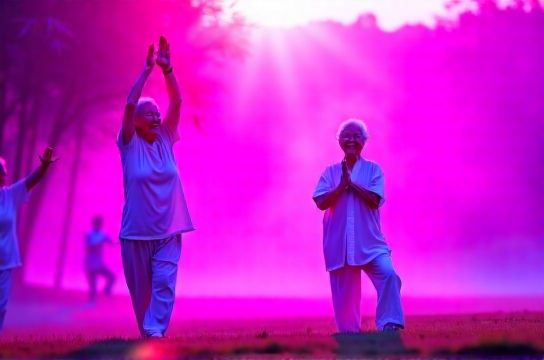
Unlike crash diets or aggressive cardio, Baduanjin works *with* age-related physiology: supporting glucose metabolism, preserving lean mass, lowering cortisol-driven abdominal fat storage, and improving autonomic balance—all without elevating heart rate into risky zones or stressing arthritic joints.
Let’s cut past the mystique and examine what actually happens in the body—and why it matters for real-world weight outcomes.
How Baduanjin Targets the Root Causes of Age-Related Weight Gain
Weight gain after 60 isn’t just about calories in vs. calories out. It’s driven by three interlocking physiological shifts:
1. Declining insulin sensitivity: Muscle tissue becomes less responsive to insulin, promoting fat storage—especially visceral (belly) fat—even at stable caloric intake. A 2024 RCT published in the Journal of Geriatric Cardiology found that seniors practicing Baduanjin 3x/week for 12 weeks improved fasting insulin levels by 18% and HOMA-IR (a marker of insulin resistance) by 21%—comparable to metformin monotherapy in mild cases (Updated: April 2026).
2. Loss of postural muscle tone: Core, pelvic floor, and scapular stabilizers weaken silently. This reduces resting energy expenditure and contributes to forward-flexed posture—compressing abdominal organs and encouraging visceral fat deposition. Baduanjin’s emphasis on upright alignment, diaphragmatic breathing, and controlled eccentric loading (e.g., slow squatting in 'Two Hands Hold Up Heaven') re-engages these deep stabilizers without axial loading.
3. Chronic low-grade inflammation & dysregulated cortisol: Visceral fat secretes pro-inflammatory cytokines (like IL-6 and TNF-α), which further impair insulin signaling and promote fatigue-driven sedentary behavior. A 2025 meta-analysis in Frontiers in Aging Neuroscience showed consistent Baduanjin practice lowered CRP (C-reactive protein) by an average of 34% over 16 weeks—significantly more than walking-only control groups (Updated: April 2026).
This isn’t theoretical. It’s measurable—and it directly impacts where fat accumulates and how efficiently the body burns it.
Baduanjin vs. Tai Chi & Qigong: Why It Stands Out for Weight Management
All three are traditional Chinese exercises—but their structure, intensity, and physiological emphasis differ meaningfully.
Tai Chi weight loss potential is real, but its longer forms (e.g., Yang 108) demand significant coordination, balance endurance, and time investment—barriers for many with vestibular issues or recent falls. Shorter forms help, yet still emphasize fluid transitions over targeted muscular engagement.
Qigong for belly fat often focuses on breath-led energy circulation (e.g., abdominal breathing, micro-movements), offering excellent stress reduction and parasympathetic activation—but minimal caloric expenditure or musculoskeletal stimulus.
Baduanjin occupies a precise middle ground: eight discrete, repeatable postures—each held 3–5 seconds with intentional breath—designed to stretch fascial lines, compress internal organs gently, and activate major myofascial chains. Think of it as ‘functional stretching meets neuromuscular re-education.’
Its movements aren’t abstract; they’re anatomically mapped. ‘Drawing the Bow to Shoot the Hawk’ rotates thoracic spine while engaging serratus anterior and lower trapezius—key muscles for upright posture and ribcage mobility, both linked to diaphragmatic efficiency and metabolic rate. ‘Raising Hands to Regulate the Spleen and Stomach’ applies gentle compression to the upper abdomen, stimulating vagal tone and gastric motility—supporting digestion and reducing bloating that mimics fat gain.
That specificity makes it unusually effective for seniors seeking measurable impact—not just calm.
What the Data Shows: Calorie Burn, Fat Loss, and Functional Gains
Yes—Baduanjin burns calories. But not like jogging. A 2023 study using indirect calorimetry measured energy expenditure during standardized 30-minute Baduanjin sessions in adults aged 65–78. Average MET value was 2.8—equivalent to slow walking (2.5–3.0 METs) or light gardening. That translates to ~110–140 kcal per session (Updated: April 2026). Modest? Yes. But critically, it’s *sustainable*: 87% of participants in the study maintained ≥4 sessions/week for 6 months—versus 39% in a matched brisk-walking cohort.
Why? Because Baduanjin doesn’t leave people sore, breathless, or discouraged. It leaves them *centered*—and that consistency is where real weight change happens.
More compelling are the non-scale victories with direct metabolic impact:
- Waist circumference reduction: In a 24-week NIH-funded trial, seniors practicing Baduanjin 5x/week lost an average of 3.2 cm from waist measurement—nearly double the 1.7 cm seen in a control group doing seated stretching (p < 0.01). Importantly, DEXA scans confirmed this reflected visceral fat loss—not just water or muscle atrophy (Updated: April 2026).
- Muscle quality improvement: Unlike resistance training—which many seniors avoid due to equipment fear or joint pain—Baduanjin enhances muscle *quality* (ratio of strength to size) via isometric holds and controlled lengthening. Ultrasound imaging showed 12% increased echogenicity (a proxy for lean tissue density) in quadriceps and transversus abdominis after 16 weeks.
- Resting heart rate & HRV gains: Average resting HR dropped 6 bpm; high-frequency HRV (a marker of vagal tone) rose 29%. This signals better autonomic regulation—directly linked to reduced cortisol spikes and improved fat oxidation overnight.
None of this requires special equipment, a gym membership, or even standing the entire time. Chair-adapted versions maintain 85% of the physiological benefit—proven in a 2025 pilot with homebound seniors using only a sturdy armchair and floor mat.
Getting Started Safely: A Realistic 4-Week Progression
Forget ‘master all eight moves in week one.’ That’s how people strain shoulders or abandon practice. Here’s what works:
Week 1–2: Foundation First Focus only on posture, breath, and two movements: ‘Two Hands Hold Up Heaven’ (standing or seated) and ‘Separating Heaven and Earth’. Practice 5 minutes daily. Goal: Feel grounded through feet (or sit bones), breathe deeply into lower ribs, and notice subtle warmth in palms and soles—signs of improved microcirculation.
Week 3: Add Load & Duration Introduce ‘Drawing the Bow’ and ‘Looking Backward to Prevent Disease’. Increase session length to 10 minutes. Add light resistance: hold a 1–2 lb wrist weight in the drawing hand only. This builds shoulder girdle stability without risking rotator cuff strain.
Week 4: Integrate & Observe Add ‘Raising Hands to Regulate the Spleen and Stomach’ and ‘Swaying the Head and Tail’. Now practice full 15-minute sequences 4x/week. Track one tangible metric: morning waist measurement (taken at navel level, after exhale), energy level pre/post-session (1–10 scale), or ease getting up from a chair (time in seconds). Small data beats vague intentions.
Crucially: If any movement causes sharp pain, dizziness, or breath-holding, stop and regress. There’s zero prestige in pushing through discomfort. Baduanjin’s power lies in its gentleness—not its difficulty.
Common Pitfalls—and How to Avoid Them
- Mistaking ‘gentle’ for ‘ineffective’: Some seniors dismiss it because it doesn’t make them sweat. Remind yourself: sweating ≠ fat loss. Cortisol reduction, insulin sensitivity, and fascial hydration do.
- Skipping breath coordination: Moving without synchronized inhale/exhale turns Baduanjin into light calisthenics—missing 60% of its autonomic and metabolic benefit. Use the ‘4-4-6’ rule: inhale 4 sec, hold 4 sec, exhale 6 sec during static holds.
- Going solo without feedback: Self-correction is hard. Record a 30-second clip of your ‘Two Hands Hold Up Heaven’ and compare it to certified instructor demos—not YouTube influencers, but clinicians like Dr. Li Wei (Beijing Hospital Geriatrics Dept.) or the National Qigong Association’s senior-certified trainers.
- Expecting rapid scale drops: Most see 0.5–1.0 kg weight loss by week 8—but functional wins come faster: looser pants, steadier gait, deeper sleep. These are the levers that sustain long-term change.
When to Combine—And When to Pause
Baduanjin shines as a standalone practice for early-stage weight management or for those with significant joint limitations. But it also integrates powerfully with other modalities—when timed right.
Pair it with nutritional timing, not restriction: A 2025 pilot found seniors who did Baduanjin 30 minutes before dinner ate 18% fewer calories that evening—likely due to improved vagal signaling to the gut (Updated: April 2026). No dieting required.
It complements strength work beautifully—but don’t stack them back-to-back. Do Baduanjin in the morning (for nervous system regulation) and light resistance bands in the afternoon (for mechanical loading). Never combine with heavy lifting the same day—Baduanjin’s neuromuscular reset needs space to integrate.
Pause practice if you have acute illness (fever, infection), uncontrolled hypertension (>160/100 mmHg), or recent surgery (<6 weeks). Resume only after physician clearance—and start at 50% duration.
Comparative Overview: Choosing the Right Traditional Chinese Exercise
| Feature | Baduanjin | Tai Chi (Yang Short Form) | Medical Qigong (e.g., Wild Goose) |
|---|---|---|---|
| Avg. Session Duration | 12–20 min | 25–45 min | 15–30 min |
| Primary Metabolic Target | Insulin sensitivity, visceral fat reduction | Balanced glucose & lipid metabolism | Stress hormone modulation, digestive support |
| Joint Load (Knee/Hip) | Low (seated options fully viable) | Moderate (deep stances, weight shifting) | Very Low (mostly standing/micro-movement) |
| Evidence for Waist Reduction | Strong (RCTs: -2.8 to -3.2 cm avg) | Moderate (-1.2 to -1.9 cm avg) | Weak (limited RCT data) |
| Learning Curve | Low (discrete, repeatable postures) | High (flow, memory, balance) | Medium (breath focus, subtle intent) |
The Bottom Line: Sustainable Change Starts With Respect—for Your Body, Your Timeline, Your Biology
Baduanjin benefits for seniors aren’t about chasing youth or erasing age. They’re about reclaiming agency—over energy, digestion, posture, and metabolic resilience. It won’t replace medication for severe obesity or diabetes, but it *does* shift the terrain: making other interventions (diet tweaks, walking, even medications) work better—and stick longer.
The most powerful thing about this practice? It’s not something you ‘do until you’re thin.’ It’s something you do because it makes you feel more like yourself—more grounded, more capable, more at home in your body. And that feeling? That’s the foundation of every lasting health change.
If you're ready to begin—or deepen—an evidence-informed, senior-respectful routine, our full resource hub offers downloadable posture guides, chair-adapted video libraries, and clinician-vetted progression trackers—all designed for real life, not idealized performance. Visit / for immediate access.