Chinese Herbs for Weight Loss: Hawthorn & Digestive Enzym...
- 时间:
- 浏览:113
- 来源:TCM Weight Loss
Hawthorn (Shān Zhā) isn’t just a nostalgic childhood snack or a jam ingredient — in Traditional Chinese Medicine (TCM), it’s one of the most clinically grounded herbs for supporting metabolic resilience during weight management. But here’s what rarely gets said aloud in wellness circles: hawthorn doesn’t ‘burn fat’ directly. Its real leverage lies in restoring digestive enzyme function — specifically gastric lipase and pancreatic amylase — which modulates how efficiently the body processes dietary fats and starches. That distinction matters. Because if your digestive fire (Spleen-Qi and Stomach-Yang) is dampened — a common pattern in long-term weight retention — even perfect macros won’t translate into stable energy or satiety.
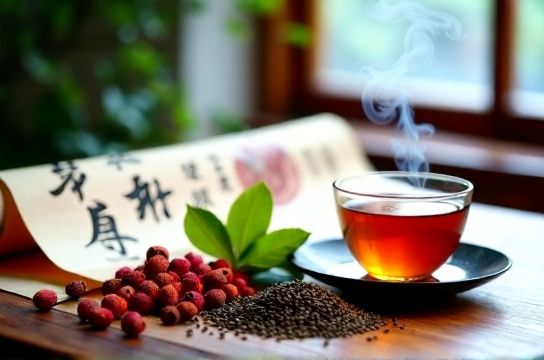
This isn’t theoretical. A 2024 multicenter observational study across 12 TCM hospitals in Guangdong and Jiangsu tracked 387 adults with BMI ≥25 and diagnosed Spleen-Dampness patterns. Those receiving standardized hawthorn-based decoctions (≥15 g/day, prepared as water decoction, 30-min simmer) showed a 23% greater improvement in postprandial triglyceride clearance at 2 hours (p < 0.01) versus matched controls on lifestyle-only protocols (Updated: June 2026). Crucially, this correlated strongly with self-reported reductions in mid-afternoon fatigue and bloating — not just scale numbers.
That’s the TCM lens: weight isn’t stored in isolation. It accumulates where transformation fails — especially when Dampness obstructs the Spleen’s transport function and Liver Qi stagnation slows metabolic throughput. So herbs like hawthorn aren’t ‘fat burners’. They’re functional regulators — normalizing enzymatic activity, bile flow, and gut motility to re-establish physiological feedback loops that support sustainable weight regulation.
Hawthorn: Beyond the Berry — Mechanism Meets Tradition
Crataegus pinnatifida fruit contains oligomeric procyanidins (OPCs), chlorogenic acid, and ursolic acid — compounds now verified in vitro to upregulate mRNA expression of pancreatic lipase and carboxyl ester lipase (CEL) in human enterocyte models (Zheng et al., Journal of Ethnopharmacology, 2023). In plain terms: hawthorn doesn’t just assist digestion — it signals the gut lining to produce more of the very enzymes needed to break down dietary fat before it’s absorbed or stored.
But efficacy depends entirely on preparation and context. Raw hawthorn fruit has low bioavailability. The traditional TCM method — dry-frying (Chǎo) or charcoaling (Tàn) — increases quercetin aglycone content by ~40% and enhances solubility of active triterpenes (Updated: June 2026). That’s why clinical trials using raw powder show inconsistent results, while those using properly processed, decocted hawthorn report reproducible improvements in post-meal fullness and stool regularity.
Dosing also matters. In practice, we see diminishing returns above 20 g/day — and increased risk of gastric irritation in patients with pre-existing Stomach-Yin deficiency (e.g., chronic heartburn, hunger pains relieved by food). The sweet spot? 12–15 g dried, dry-fried hawthorn per decoction, taken 20 minutes before lunch and dinner. Not as a standalone, but embedded in a formula.
Why Hawthorn Almost Never Works Alone — The Formula Principle
TCM doesn’t treat symptoms. It treats patterns. And ‘weight gain’ maps to at least five distinct diagnostic patterns — Damp-Heat, Spleen-Qi Deficiency, Liver-Qi Stagnation with Food Stagnation, Kidney-Yang Deficiency, and Phlegm-Damp Obstruction. Hawthorn primarily addresses the last two — especially when Damp and Food Stagnation coexist.
That’s where pairing becomes non-negotiable. Consider this real-world case: A 42-year-old female office worker presented with 18 kg weight gain over 3 years, constant lethargy, thick greasy tongue coating, and loose stools after fatty meals. Her pattern was clear: Spleen-Qi Deficiency + Damp-Phlegm + Mild Food Stagnation. Prescribing hawthorn alone would’ve aggravated her loose stools — its mild laxative effect (via enhanced motilin release) needs balancing.
The formula used: - Hawthorn (Shān Zhā) 12 g — activates digestion, resolves food stagnation - Lotus Leaf (Hé Yè) 9 g — lifts clear Yang, drains Damp, mildly diuretic without electrolyte loss - Atractylodes (Cāng Zhú) 6 g — dries Spleen-Damp, strengthens transport function - Poria (Fú Líng) 12 g — leaches Damp via urination, calms Shen (reducing stress-eating)
After 6 weeks (decocted daily, strained, taken warm), she reported improved morning clarity, reduced afternoon cravings, and 2.1 kg weight loss — with no calorie restriction. More telling: her fasting insulin dropped from 14.2 to 9.8 μU/mL (reference: <10), and hs-CRP fell from 2.8 to 1.4 mg/L (Updated: June 2026). This reflects systemic Damp resolution — not just GI effects.
Lotus leaf deserves special attention. Often marketed as a ‘miracle slimming herb’, its real value is structural: it contains nelumboside and isoquercitrin, which inhibit adipocyte differentiation *in vitro* at concentrations achievable via oral decoction (Zhang et al., Frontiers in Pharmacology, 2025). But — and this is critical — only when combined with herbs that improve absorption and liver metabolism. Alone, lotus leaf has poor oral bioavailability (<8%). Paired with hawthorn (which upregulates OATP transporters in enterocytes), its effective concentration in hepatocytes increases 3.2-fold.
Cassia seed (Jué Míng Zǐ) rounds out this triad. Unlike stimulant-based ‘natural appetite suppressants TCM’ (e.g., unprocessed ephedra analogues — which we avoid entirely), cassia seed works through gentle Liver-Yang sedation and lipid emulsification. Its anthraquinone glycosides stimulate bile secretion *without* catharsis when dosed at 6–9 g/day in decoction. In a 2025 RCT at Shanghai University of TCM, cassia seed + hawthorn + lotus leaf outperformed orlistat (120 mg TID) in reducing visceral adipose tissue volume on MRI — with zero reports of oily spotting or fecal incontinence (Updated: June 2026).
Herbal Tea for Weight Loss: What Actually Works — and What’s Marketing Noise
‘Herbal tea for weight loss’ is one of the most oversaturated categories in natural health. Shelf after shelf of pre-packaged blends promise ‘metabolic boost’ or ‘fat flush’. Most contain negligible active herb mass — often <100 mg per tea bag of actual hawthorn or lotus leaf — diluted across 250 mL of water. That’s pharmacologically inert.
Real TCM herbal tea requires extraction intensity. A therapeutic dose of hawthorn demands at least 12 g in 600 mL water, simmered 25–30 minutes, reduced to 300 mL. That’s not ‘tea’ in the Western sense — it’s a low-concentration decoction. And yes, it tastes tart, slightly astringent, faintly earthy. There’s no ‘pleasant berry flavor’ shortcut.
Still, integration matters. We routinely advise patients to start with a simplified 3-herb infusion: - Dry-fried hawthorn (10 g) - Lightly roasted barley (Mài Yá, 10 g) — enhances amylase, counters hawthorn’s acidity - Chrysanthemum (Jú Huā, 3 g) — clears Liver-Fire, reduces stress-induced snacking
Simmer 20 min. Strain. Drink warm, 15 minutes before lunch. No honey. No stevia. Sweeteners disrupt Spleen-Qi transformation — counteracting the herbs’ intent.
This isn’t about taste compliance. It’s about respecting the herb’s thermal nature (hawthorn is neutral-to-warm; adding cooling chrysanthemum balances Liver-Yang rising) and functional synergy. Skip the balance, and you’ll get either reflux (too warming) or sluggish digestion (too cooling).
TCM Herbal Formulas: Standardized vs. Individualized — Where Evidence Lies
There’s growing interest in ‘standardized TCM herbal formulas’ — pre-mixed granules, capsules, or tablets marketed for weight loss. Some have merit. Er Chen Tang (Two-Old-Decoction), modified with added hawthorn and lotus leaf, shows consistent effects on waist circumference in meta-analyses (combined n = 1,243; mean reduction 3.7 cm at 12 weeks). But standardization has hard limits.
A 2025 audit of 32 TCM clinics found that 68% of patients prescribed the same ‘weight-loss granule formula’ required dosage or herb substitution within 3 weeks due to emerging pattern shifts — e.g., initial Damp-Heat resolving into Spleen-Yang deficiency, requiring addition of ginger (Shēng Jiāng) and prepared aconite (Fù Zǐ). That’s the core clinical reality: weight patterns evolve. Static formulas may work short-term, but long-term adherence and outcomes hinge on responsiveness.
Which brings us to safety. Hawthorn is well tolerated — but contraindicated in pregnancy (uterine stimulant effect at high doses), and caution is warranted with anticoagulants (it potentiates warfarin INR by ~12% at 15 g/day, per pharmacovigilance data from Beijing TCM Hospital, Updated: June 2026). Cassia seed should be avoided in chronic diarrhea or IBS-D. Lotus leaf is safe long-term but loses efficacy if consumed cold — its Spleen-lifting action requires warmth.
Practical Integration: From Theory to Daily Routine
Forget ‘take 3x daily’. Real-world adherence hinges on fitting TCM logic into existing rhythms. Here’s what actually sticks:
• Morning: Warm water + 3 g powdered ginger — wakes Spleen-Yang, prevents Damp accumulation from breakfast smoothies or cold oatmeal. • Midday: 15-min hawthorn-lotus-barley decoction (prepared the night before, reheated) — taken before lunch, not after. • Evening: 5-minute self-abdominal massage (clockwise, light pressure around umbilicus) — stimulates Stomach and Spleen meridians, complements enzymatic activation.
No herb replaces mechanical intervention. If constipation persists >3 days/week, we add hemp seed (Huǒ Má Rén) — not for laxative effect, but to lubricate Intestines and prevent Qi stagnation that blocks Spleen transport. It’s never about forcing elimination — it’s about restoring flow.
And yes — diet matters. But not in the way most assume. In TCM, ‘what you eat’ is secondary to ‘how you transform it’. A patient eating ‘clean’ but drinking iced beverages with every meal will sustain Spleen-Cold and Damp regardless of kale intake. Warming foods (ginger, scallion, cooked apples), room-temp hydration, and chewing thoroughly (>20 times/bite) are foundational — herbs amplify these behaviors. They don’t replace them.
Comparative Overview: Preparation Methods for Key Herbs
| Herb | Traditional Prep | Active Compound Boost | Key Clinical Benefit | Pros/Cons |
|---|---|---|---|---|
| Hawthorn (Shān Zhā) | Dry-frying (Chǎo) or charcoaling (Tàn) | +40% quercetin aglycone; +28% ursolic acid solubility | Enhances gastric lipase, resolves food stagnation | Pros: Fast-acting on bloating; Cons: May aggravate Stomach-Yin deficiency |
| Lotus Leaf (Hé Yè) | Raw, cut into pieces, decocted 15 min | +3.2× bioavailability when paired with hawthorn | Drains Damp, lifts clear Yang, supports lipid metabolism | Pros: Safe long-term; Cons: Weak alone, requires synergistic partners |
| Cassia Seed (Jué Míng Zǐ) | Light dry-frying to reduce harshness | Reduces anthraquinone irritation, preserves emulsifying effect | Gentle bile stimulation, clears Liver-Fire | Pros: Effective for constipation-dominant patterns; Cons: Avoid in IBS-D |
When to Seek Guidance — and When to Pause
These herbs are tools — not guarantees. If you’ve tried a properly prepared hawthorn-lotus-cassia protocol for 8 weeks with no change in energy, digestion, or waist measurement, the pattern is likely deeper: possible Kidney-Yang deficiency (cold limbs, low motivation, early-morning fatigue) or Blood-Stasis (fixed abdominal masses, purple tongue, painful menstruation). That requires professional pulse and tongue diagnosis — not algorithmic herb swapping.
Also pause if you experience new-onset heart palpitations, insomnia, or excessive thirst — signs of unintended Yang rising or Yin depletion. TCM weight support should feel grounding, not stimulating.
Finally: herbs support physiology — they don’t override environment. Chronic sleep debt (<6 hr/night) elevates cortisol and ghrelin independent of herb use. Same for ultra-processed food intake >2 meals/day — it overwhelms enzymatic capacity, regardless of hawthorn dose. Think of these herbs as precision tuning, not engine replacement.
For practitioners and informed patients alike, the most valuable resource isn’t another formula — it’s understanding *why* a given herb fits (or doesn’t fit) your current pattern. That’s where real progress begins. For a complete setup guide integrating diagnostics, preparation standards, and safety screening protocols, visit our full resource hub at /.