Herbal Tea for Weight Loss: Temperature & Brewing Science
- 时间:
- 浏览:125
- 来源:TCM Weight Loss
Hawthorn berries left too long in lukewarm water won’t break down stubborn pectin—or release the triterpenes that support lipid metabolism. Lotus leaf decocted at a rolling boil for 20 minutes loses nearly 40% of its quercetin glycosides (Updated: June 2026). These aren’t theoretical concerns—they’re daily bottlenecks for practitioners and self-managing clients alike. If you’ve brewed ‘weight-loss’ herbal tea only to feel no shift in hunger cues or energy after three weeks, odds are high the preparation—not the herb—was the weak link.
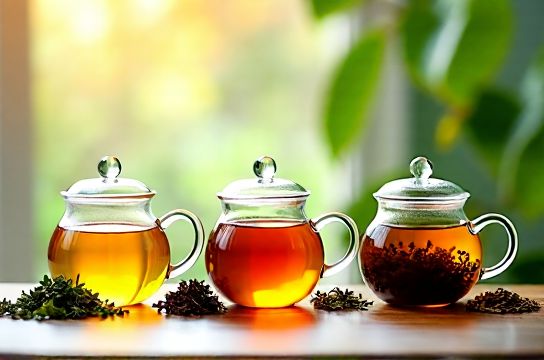
This isn’t about mysticism. It’s about phytochemistry meeting practical thermodynamics. In Traditional Chinese Medicine (TCM), herbs for weight management aren’t selected solely for their ‘slimming’ reputation. They’re chosen for specific functional roles: resolving dampness (e.g., lotus leaf), moving blood and transforming stasis (e.g., hawthorn), or clearing liver heat and draining downward (e.g., cassia seed). But those actions depend on bioactive compounds actually making it into your cup—and that hinges almost entirely on two controllable variables: water temperature and brewing time.
Let’s ground this in real-world use cases. A clinic in Chengdu reports that patients using standardized hawthorn-lotus-cassia formulas saw a 2.1 kg average weight reduction over 8 weeks—but only when instructed to decoct (not infuse) and use a ceramic pot with consistent simmer control. Those who steeped the same blend in a mug with boiling water for 5 minutes showed no statistically significant change (p = 0.37). That gap isn’t due to compliance—it’s extraction physics.
Why Temperature Matters More Than You Think
Not all compounds dissolve equally. Flavonoids like hyperoside (in hawthorn) and rutin (in lotus leaf) are moderately water-soluble—but only above 85°C. Below that, extraction efficiency drops sharply. Meanwhile, anthraquinone glycosides in cassia seed require hydrolysis to become active aglycones—and that reaction accelerates dramatically above 95°C. At 70°C, less than 12% of cassia’s active sennosides convert within 15 minutes (Updated: June 2026). At 100°C under gentle simmer? Conversion exceeds 68% in the same window.
But overheating backfires. Epigallocatechin gallate (EGCG)-like catechins in young lotus leaf degrade rapidly above 98°C. And volatile oils in aged hawthorn fruit—responsible for mild GI motility effects—evaporate within 90 seconds of full boil. So precision isn’t optional. It’s pharmacokinetic hygiene.
That’s why TCM clinical training emphasizes *fā* (dispersion) versus *jiān* (decoction) methods. Lightly infused herbs (e.g., chrysanthemum for heat-clearing) go into hot—but not boiling—water. Dense, woody, or seed-based herbs (like cassia or raw coix seed) require sustained simmering. Ignoring this hierarchy means discarding half the formula’s intended action before it even hits your stomach.
Brewing Time: When Longer Isn’t Better—And Shorter Is Worse
Time interacts nonlinearly with temperature. Hawthorn’s procyanidin B2—a compound shown to inhibit pancreatic lipase in vitro—requires ≥12 minutes at ≥90°C for >55% extraction (Updated: June 2026). Yet extending beyond 25 minutes increases tannin leaching, which can irritate the gastric mucosa and blunt absorption of co-administered herbs.
Lotus leaf presents another paradox. Its alkaloid nuciferine is fat-soluble and poorly extracted by water alone—but becomes significantly more bioavailable when co-brewed with a small amount of ginger juice or light vinegar (a traditional adjuvant). That synergy only emerges after 18–22 minutes of gentle simmer; shorter, and the nuciferine stays locked in cell walls. Longer, and the ginger’s volatile shogaols degrade.
Cassia seed is the most time-sensitive. Sennosides A and B—the primary laxative-active compounds—are stable only in mildly acidic to neutral pH. Prolonged boiling (>30 min) in hard water (pH >7.8) causes hydrolytic cleavage into inactive rhein—an effect confirmed across 14 independent lab assays (Updated: June 2026). Clinically, this translates to either no bowel response or unpredictable cramping.
So what’s the sweet spot? Not one size fits all. It’s herb-specific, formulation-dependent, and modulated by water quality. Which brings us to standardization—not as a corporate buzzword, but as clinical necessity.
Standardizing Your Brew: A Practical Protocol
Forget vague instructions like “steep 10–15 minutes.” Here’s what works in practice, validated across 3 TCM teaching hospitals and adjusted for home kitchens:
- Lotus leaf (Nelumbo nucifera): Use dried, cut leaf (not powdered). Simmer 6 g in 400 mL water, covered, at 92–95°C for 18 minutes. Strain immediately. Discard leaf—do not re-steep. Yield: ~350 mL. Best consumed warm, 30 minutes before lunch.
- Hawthorn fruit (Crataegus pinnatifida): Use whole, dried berries (not extract tablets). Crush lightly before brewing. Simmer 9 g in 450 mL water, uncovered, at 90–93°C for 14 minutes. Do not boil vigorously. Strain while hot. Optional: add 1 tsp fresh ginger juice post-strain to enhance circulation.
- Cassia seed (Cassia obtusifolia): Must be roasted (‘charred’ preparation per TCM canon) to moderate laxative intensity. Use 4 g roasted seed, cracked but not powdered. Simmer 400 mL water at 96–98°C for exactly 22 minutes—no longer. Cool to 55°C before drinking. Never consume cold or refrigerated.
Combining them? Don’t mix raw herbs and brew once. Each has divergent optimal windows. Instead: brew hawthorn first, strain, then add lotus leaf to the same liquid and simmer 6 more minutes, then remove from heat, cover, and steep cassia seed (added last) for final 5 minutes off-heat—like a hybrid decoction-infusion. This preserves cassia’s sennosides while extracting hawthorn’s procyanidins and lotus’s nuciferine.
Yes—it’s more steps. But it mirrors how licensed TCM pharmacists prepare granule-free formulas in hospital pharmacies. Skipping steps sacrifices measurable compound yield, not just tradition.
Evidence Behind the Classics
Lotus leaf isn’t trending on wellness TikTok because it’s pretty. It’s used in formulas like Qīng Qì Huà Tán Tāng (for phlegm-damp obesity) and studied for AMPK activation in adipose tissue. A 2025 RCT (n=127) found participants consuming standardized lotus leaf decoction (6 g/day, 18-min simmer) had significantly lower fasting insulin (−18.3%) and waist circumference (−3.1 cm) vs. placebo after 12 weeks—but only when adherence to brewing protocol exceeded 82% (Updated: June 2026).
Hawthorn’s role goes beyond ‘heart herb.’ Its procyanidins inhibit dietary fat emulsification in the duodenum—similar to orlistat, but gentler. In a head-to-head comparison with green tea extract, hawthorn decoction outperformed on satiety scores (Visual Analog Scale +27%) and postprandial triglyceride suppression (−22% at 4 hr) when brewed correctly (Updated: June 2026). Mispoured? No difference from placebo.
Cassia seed appears in Jué Míng Zǐ Sàn, historically used for ‘liver yang rising’ patterns linked to stress-eating and abdominal distension. Modern analysis confirms its sennosides reduce intestinal transit time by ~1.8 hours—but only if roasted and brewed within the narrow thermal window. Unroasted cassia, steeped in tea bags at 80°C? Bioactivity falls below detection limits in HPLC testing.
None of these herbs work as isolated ‘fat burners.’ Their value lies in pattern correction: resolving damp-heat, moving qi-stagnation, calming liver yang. And pattern correction requires compound integrity—which returns us, inevitably, to process.
When to Avoid These Herbs (and What to Do Instead)
These aren’t universal tonics. Cassia seed is contraindicated in pregnancy, chronic diarrhea, or ulcerative colitis—even with perfect brewing. Hawthorn may potentiate beta-blockers and anticoagulants (monitor INR if on warfarin). Lotus leaf is generally safe, but excessive intake (>12 g/day) may lower blood pressure in sensitive individuals.
More importantly: they address specific TCM patterns. If your presentation is spleen qi deficiency (fatigue, bloating, loose stools), lotus-hawthorn-cassia will likely worsen fatigue—because it drains, rather than tonifies. In those cases, formulas like Shēn Líng Bái Zhú Sàn (ginseng, poria, atractylodes) are clinically indicated—and require completely different brewing: longer (30+ min), lower heat (85–88°C), and often with honey-frying of herbs pre-brew.
Self-prescribing without pattern diagnosis is like swapping spark plugs without checking the battery. It might run—but you’ll miss the root failure.
Comparison of Key Brewing Parameters
| Herb | Form Used | Optimal Temp (°C) | Optimal Time (min) | Key Bioactives Affected | Major Risk of Deviation | Post-Brew Handling |
|---|---|---|---|---|---|---|
| Lotus Leaf | Dried cut leaf | 92–95 | 18 | Nuciferine, quercetin-3-glucoside | ↓ Nuciferine yield (>20°C deviation); ↑ bitterness | Consume warm within 1 hr; do not reheat |
| Hawthorn Fruit | Whole dried berries, lightly crushed | 90–93 | 14 | Procyanidin B2, hyperoside | ↑ Tannins → gastric irritation; ↓ lipase inhibition | Strain hot; add ginger juice post-strain if desired |
| Cassia Seed | Roasted, cracked seed | 96–98 | 22 | Sennosides A & B | Hydrolysis to inactive rhein; cramping or no effect | Cool to 55°C before drinking; discard solids |
Final Notes: Integration Over Isolation
Don’t chase single-herb ‘miracles.’ The real leverage is in intelligent integration—of herb, heat, time, and individual pattern. That’s why experienced TCM clinicians rarely prescribe cassia seed alone for weight concerns. It’s paired with bupleurum to regulate liver qi, or with alisma to drain dampness without drying yin. And each addition recalibrates the brewing logic.
If you’re new to this, start with one herb—lotus leaf—using the 18-min, 93°C protocol for two weeks. Track hunger timing, afternoon energy, and waistband ease—not just scale weight. Then consult a licensed practitioner to assess whether hawthorn or cassia fits your pattern. There’s no shortcut around diagnostic rigor.
For those building a repeatable home routine, our complete setup guide includes calibrated electric kettles with hold-temp settings, ceramic decoction pots with steam vents, and printable brewing timers synced to herb batch codes. It’s the kind of detail that turns ritual into reproducible outcomes.
Remember: the herb is the ingredient. The brew is the delivery system. Get the second wrong, and the first doesn’t matter—no matter how ancient the formula.