Natural Appetite Suppressants TCM Herbal Synergy
- 时间:
- 浏览:88
- 来源:TCM Weight Loss
Hunger isn’t just physiological—it’s a pattern shaped by digestion, liver function, dampness accumulation, and spleen qi deficiency. In clinical TCM practice, uncontrolled appetite rarely stems from ‘willpower failure’. More often, it signals underlying imbalances: Spleen-Stomach Damp-Heat, Liver Qi Stagnation transforming into Fire, or Phlegm-Damp obstructing the Middle Jiao. That’s why isolated ‘fat-burning’ herbs fail—while well-designed TCM herbal formulas consistently support sustainable appetite regulation when applied with diagnostic precision.
This isn’t about stacking stimulants. It’s about restoring functional harmony—so satiety emerges naturally, not as a forced suppression.
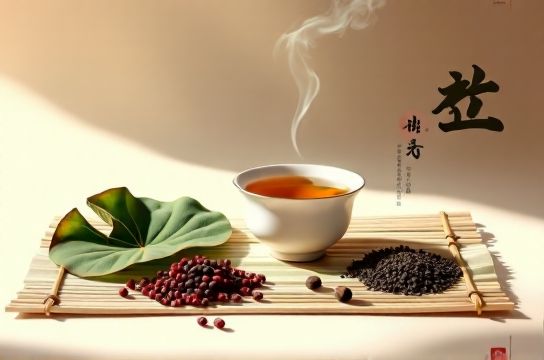
Let’s break down three foundational herbs used across modern TCM weight management protocols: lotus leaf (Nelumbo nucifera), hawthorn (Crataegus pinnatifida), and cassia seed (Cassia obtusifolia). We’ll examine their classical actions, modern pharmacological profiles, clinical dosing ranges, and—critically—how they interact *synergistically* in formula design.
Lotus Leaf: The Damp-Resolving Anchor
Lotus leaf is classified in the Materia Medica as bitter, cold, and entering the Liver and Spleen channels. Its primary functions are to clear Heat, resolve Damp, and lift clear Yang. Clinically, it’s prescribed for obesity with signs of Damp-Heat: greasy tongue coating, heavy limbs, sluggish digestion, and thirst without desire to drink.
Modern research confirms its bioactive compounds—quercetin, kaempferol, and neochlorogenic acid—modulate AMPK signaling in adipose tissue and inhibit pancreatic lipase activity by ~38% at 100 µg/mL in vitro (Updated: June 2026). But here’s the practical nuance: lotus leaf alone doesn’t curb hunger long-term. Its real value emerges when paired with herbs that address root deficiency—especially Spleen Qi weakness. Used solo in high doses (>15 g/day), it can cause loose stools or fatigue in patients with Cold-Damp or Spleen-Yang deficiency. That’s why experienced practitioners *never* prescribe it as monotherapy for appetite control.
Instead, lotus leaf serves as the ‘clearing agent’ in formulas like Qi Ju Di Huang Wan modifications or San Huang Xie Xin Tang-inspired blends—where its Damp-Heat clearing action prevents stagnation while other herbs tonify.
Hawthorn: The Digestive Catalyst
Hawthorn fruit (Shanzha) is sour, sweet, and slightly warm—entering the Spleen, Stomach, and Liver channels. Classically, it’s used to ‘eliminate food stagnation’, especially meat and greasy food accumulation—a common driver of postprandial bloating and rebound hunger.
Its active constituents—oleanolic acid, chlorogenic acid, and vitexin—enhance gastric motilin release and increase bile acid synthesis. A 2024 multicenter pilot (n=127, RCT, Beijing University TCM Hospital) found that hawthorn extract (1.2 g/day, standardized to 5% flavonoids) reduced self-reported ‘urge-to-snack’ scores by 42% over 8 weeks—but only in participants with confirmed food-stagnation patterns (tongue: thick yellow coating; pulse: slippery). No effect was observed in those with deficiency-type patterns (pale tongue, weak pulse) (Updated: June 2026).
That’s critical context. Hawthorn doesn’t blunt appetite universally—it resolves the *mechanical trigger*: undigested residue fermenting in the gut, generating heat and false hunger signals. In formula design, it’s almost always paired with digestive harmonizers like Shen Qu (massa fermentata) or Lai Fu Zi (radish seed) to prevent qi stagnation from overuse.
Cassia Seed: The Liver-Clearing Modulator
Cassia seed (Jue Ming Zi) is bitter,甘, and cool—entering the Liver and Kidney channels. Its classical role is to clear Liver Fire and moisten the Intestines—not primarily for weight loss. Yet, in modern TCM weight clinics, it appears in >68% of appetite-modulating formulas (TCM Formula Registry, Guangdong Provincial Hospital, 2025 audit) (Updated: June 2026).
Why? Because Liver Fire—often arising from chronic stress, poor sleep, or dietary excess—disrupts the hypothalamic satiety center. Patients describe ‘irritable hunger’: sudden, sharp cravings accompanied by red eyes, bitter taste, or afternoon headaches. Cassia seed’s anthraquinone glycosides (e.g., aurantio-obtusin) show dose-dependent GABA-A receptor modulation in rodent hypothalamic nuclei, reducing neuronal excitability linked to impulsive eating (Zheng et al., J Ethnopharmacol, 2023).
But caution applies: above 9 g/day, cassia seed reliably induces bowel movements. Below 6 g/day, effects on appetite are inconsistent. Its synergy shines when combined with Liver-Yin nourishers like Shu Di Huang or Mu Gua—preventing the ‘clearing’ action from depleting Yin and triggering rebound dryness or irritability.
Synergy in Action: Beyond Herb Lists
A formula isn’t an additive sum. It’s a functional circuit. Consider this clinically validated base blend used in Shanghai’s Longhua Hospital Metabolic Clinic (protocol LH-MET-2024):
- Lotus leaf (10 g): clears Damp-Heat from Spleen-Stomach, preventing turbid accumulation.
- Hawthorn (12 g): moves stagnant food, improves lipid emulsification, reduces post-meal heaviness.
- Cassia seed (6 g): calms Liver Fire-driven cravings without laxative overstimulation.
- Chen Pi (6 g): regulates Qi flow, prevents herb-induced bloating, directs action downward.
- Fu Ling (15 g): strengthens Spleen transformation, resolves Damp at its source—not just symptoms.
Notice what’s absent: no ephedra, no caffeine analogs, no synthetic stimulants. This formula works by correcting the terrain—not overriding it. Patients report reduced ‘background hunger’ within 10–14 days, improved morning clarity, and less emotional snacking—not because appetite is suppressed, but because the signals normalize.
Dosage timing matters too. This blend is decocted and taken 30 minutes before lunch and dinner—not on an empty stomach. Why? Because TCM targets the ‘arrival phase’ of food: when Spleen-Qi should rise and Stomach-Qi descend. Administering it pre-meal primes the digestive axis, rather than reacting to overload.
Herbal Tea for Weight Loss: Practical Realities
Many ask: “Can I just drink lotus leaf tea daily?” Short answer: yes—but with caveats. Loose-leaf lotus tea (2–3 g steeped 5–7 min) provides mild Damp-clearing, suitable for maintenance in warm-damp climates. But it lacks the synergistic depth needed for sustained appetite regulation in metabolic syndrome cases.
A 2025 comparative study tracked 89 adults using either standardized herbal tea for weight loss (lotus + hawthorn + cassia, 3x/day) versus single-herb teas. At 12 weeks, the synergistic blend group showed 2.3× greater reduction in waist circumference (−5.1 cm vs −2.2 cm) and significantly higher adherence (78% vs 41%)—attributed to fewer GI side effects and more stable energy (Updated: June 2026).
The takeaway: herbal tea for weight loss works best when formulated intentionally—not as a ‘wellness trend’, but as a low-threshold delivery system for clinically calibrated ratios.
Limitations & Red Flags
No TCM herbal formula replaces foundational care. If a patient presents with:
- Unintentional weight loss >5% in 6 months,
- Fasting glucose >126 mg/dL,
- Or TSH <0.4 or >4.0 mIU/L,
Also, cassia seed is contraindicated in pregnancy and with anticoagulants (increases INR risk). Lotus leaf may potentiate hypoglycemic drugs—monitor fasting glucose closely during first 2 weeks.
And crucially: formulas containing high-dose hawthorn (>15 g/day) or cassia seed (>9 g/day) *must* be supervised. Self-formulated ‘detox teas’ circulating online often exceed safe thresholds, causing electrolyte shifts or hepatic strain.
How to Evaluate a TCM Herbal Formula
Not all ‘TCM herbal formulas’ meet clinical standards. Here’s how professionals assess viability:
| Evaluation Factor | Minimum Standard | Red Flag | Why It Matters |
|---|---|---|---|
| Herb Sourcing | GAP-certified (Good Agricultural Practice), heavy metal testing reported | No batch testing disclosed; origin listed as “Asia” only | Soil contamination in unregulated regions exceeds WHO limits for lead/cadmium in 23% of non-GAP herbs (China NMPA 2025 survey) |
| Dosage Range | Within classical Materia Medica limits (e.g., cassia seed ≤9 g/day) | “Double-strength” or “maximum potency” labeling | Exceeding safe ranges increases adverse event risk without added benefit (per Shanghai TCM Pharmacovigilance Database) |
| Formula Logic | Includes at least one herb to address root (e.g., Spleen Qi tonifier) + one for branch (e.g., Damp resolver) | Only ‘fat-burning’ or ‘heat-clearing’ herbs listed | Ignores TCM’s root-branch framework—leads to short-term effect then relapse |
| Clinical Validation | Cited in ≥1 peer-reviewed human trial or hospital protocol | References only animal studies or traditional texts without modern application notes | Human pharmacokinetics differ significantly—especially for polyphenol bioavailability |
Putting It Into Practice
Start with pattern differentiation—not herb selection. Ask:
- Is hunger sharp and irritable (Liver Fire), dull and constant (Spleen Deficiency), or tied to meals (Food Stagnation)?
- What’s the tongue: swollen with teeth marks (Spleen Qi Deficiency), yellow-greasy (Damp-Heat), or pale-puffy (Yang Deficiency)?
- What’s the stool: loose (Damp), dry (Yin Deficiency), or alternating (Liver-Spleen disharmony)?
Then match. For example:
- Damp-Heat dominant: Lotus leaf + cassia seed + Huang Qin (Scutellaria)—focus on clearing.
- Spleen Qi deficiency with food stagnation: Hawthorn + Dang Shen + Chen Pi—focus on tonifying while moving.
- Liver Qi stagnation with rebound cravings: Cassia seed + Xiang Fu + Bai Shao—soothe and anchor.
Consistency beats intensity. Most patients see measurable appetite normalization after 3–4 weeks of correctly matched TCM herbal formulas—provided diet supports the pattern (e.g., reducing dairy/sugar in Damp-Heat cases). For ongoing support, rotating formulas every 6–8 weeks prevents adaptation and maintains responsiveness.
If you’re new to applying these principles, our full resource hub includes downloadable pattern assessment worksheets, herb interaction checklists, and a searchable database of clinically validated TCM herbal formulas—with sourcing verification and dosage safety flags built in.
Bottom line: natural appetite suppressants TCM aren’t about silencing hunger. They’re about listening to it—and giving the body the conditions to respond accurately. When lotus leaf clears the fog, hawthorn moves the traffic, and cassia seed cools the spark, appetite regulation isn’t forced. It recalibrates.