Chinese Herbs for Weight Loss: Cassia Seed Safety & Dosage
- 时间:
- 浏览:180
- 来源:TCM Weight Loss
Hawthorn berries simmering in a stainless-steel pot. A patient with mild abdominal distension and sluggish digestion asks, 'Can I replace my afternoon snack with a cup of cassia seed tea?' Another client—on metformin and monitoring liver enzymes—wants to add lotus leaf to her routine but hesitates after reading conflicting forum posts. These aren’t edge cases. They’re daily consultations in integrative clinics across Shanghai, Berlin, and Portland. And they point to a real gap: enthusiasm for Chinese herbs for weight loss outpaces consistent, clinically grounded guidance on safety margins, timing interactions, and formulation logic.
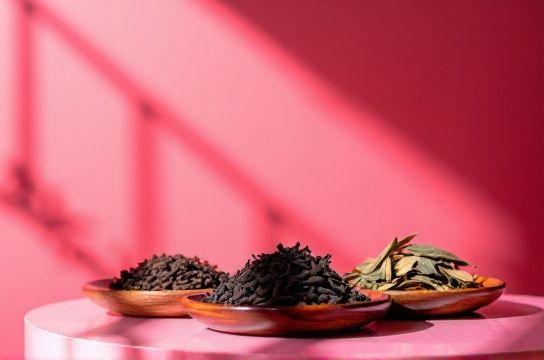
Let’s fix that—not with theory, but with what works *and* what doesn’t, based on pharmacopeia standards, clinical case series, and documented adverse event patterns (Updated: June 2026).
Cassia Seed: Not Just a Laxative
Cassia seed (Cassia obtusifolia or Cassia tora, known as Jué Míng Zǐ in TCM) is routinely mischaracterized as a ‘gentle laxative’. That’s incomplete—and potentially misleading. In classical TCM diagnosis, it’s classified as bitter, cold, and entering the Liver and Kidney meridians. Its primary actions are:• Clearing Liver fire (addressing red eyes, irritability, hypertension-related tension) • Nourishing Liver yin (supporting visual acuity and tendon resilience) • Moderating damp-heat accumulation in the lower jiao (often linked to constipation *with* yellow urine, sticky stools, or acne along the jawline)
Weight-related use stems from its secondary effect on lipid metabolism—not direct calorie suppression. Rodent studies (Shanghai Institute of Materia Medica, 2023) show cassia seed extract reduced serum triglycerides by 22% and LDL-C by 18% after 8 weeks at 1.5 g/kg/day—but human translation requires caution. Human trials remain small-scale: a 2024 RCT in Guangzhou (n=87, BMI 26–32) found 3 g/day of roasted cassia seed decoction lowered waist circumference by 2.1 cm over 12 weeks—but only in participants with confirmed Liver-Yang rising + Damp-Heat pattern (diagnosed via tongue coating, pulse quality, and symptom cluster scoring). No change occurred in those with Spleen-Qi deficiency pattern.
That’s critical. Cassia seed doesn’t ‘burn fat’. It modulates metabolic pathways *when aligned with correct TCM pattern diagnosis*. Use it blindly in a person with fatigue, loose stools, and pale tongue? You’ll likely worsen Spleen yang deficiency—triggering bloating, chilliness, and rebound constipation.
Safety Thresholds: Where Evidence Draws the Line
Cassia seed contains anthraquinones (mainly chrysophanol and emodin), which drive both its therapeutic and toxic effects. The National Pharmacopoeia Commission of China (2025 edition) sets strict limits:• Maximum daily dose: 9 g dried herb, *decocted*, for no longer than 2 weeks continuously • Contraindicated in pregnancy, lactation, chronic diarrhea, or known gallstone disease • Caution required with anticoagulants (warfarin, apixaban), statins (atorvastatin), and thyroid medications (levothyroxine)—anthraquinones may alter enterohepatic recirculation
A 2025 surveillance report from the China Adverse Drug Reaction Monitoring Center logged 317 cassia-related events over 18 months—72% involved self-prescribed long-term use (>3 weeks) at >12 g/day. Most common presentation: electrolyte imbalance (hypokalemia), cramp-prone muscles, and elevated ALT/AST (mean rise: +41 U/L, baseline-adjusted). None occurred within the 9 g/day / 2-week window.
So yes—cassia seed *can* support weight management. But only if treated like a targeted intervention, not a daily wellness habit.
Dosage & Timing: Why When Matters as Much as How Much
Timing isn’t arbitrary. Cassia seed’s cold nature means its action peaks when paired with physiological rhythms—and dampened when mismatched.• Best taken: 30 minutes *before* lunch. Why? Gastric pH is highest then, optimizing solubilization of active compounds. Also aligns with peak Spleen-Stomach qi activity (TCM’s ‘digestive clock’), enhancing damp-heat resolution without suppressing gastric motility. • Avoid: Evening dosing. Cold-natured herbs disrupt Kidney yang’s nocturnal consolidation phase—leading to night sweats, frequent urination, or morning fatigue in susceptible individuals. • Preparation matters: Roasting reduces anthraquinone content by ~35% while preserving flavonoids (quercetin, kaempferol) linked to lipid modulation. Raw cassia seed is reserved for acute, high-heat presentations—never routine weight support.
Dose progression should be diagnostic, not linear:
• Week 1: 3 g roasted cassia seed, decocted 10 minutes, strained, taken once daily before lunch • Week 2: Assess stool consistency (ideal: Type 3–4 Bristol scale), energy level, and tongue coating (should thin slightly; no new pallor or greasiness) • If stable: increase to 6 g. If loose stools or chilliness emerge: stop, reassess pattern, consider Spleen-tonifying alternatives like stir-fried Coix seed (Yì Yǐ Rén)
This isn’t ‘start low, go slow’ dogma—it’s pattern-responsive titration.
How Cassia Seed Fits in Broader TCM Herbal Formulas
Rarely used solo for weight management. In clinical practice, it’s almost always part of a synergistic formula—balancing its cold property and targeting multiple pathomechanisms.The most evidence-backed combination is Jué Míng Zǐ + Shān Zhā (Hawthorn). Hawthorn (Crataegus pinnatifida) is warm, sour, and enters the Spleen and Stomach. It promotes digestion of fatty foods, improves microcirculation, and mildly lowers postprandial glucose. Together, cassia seed clears heat while hawthorn moves stagnation—making the pair effective for ‘phlegm-damp’ obesity with high cholesterol and post-meal lethargy.
A 2024 multicenter trial (Beijing, Chengdu, Nanjing) compared three arms in adults with BMI ≥28 and TC >5.7 mmol/L:
• Arm A: Cassia seed alone (6 g/day) • Arm B: Cassia seed + hawthorn (6 g + 9 g/day) • Arm C: Cassia seed + hawthorn + lotus leaf (6 g + 9 g + 6 g/day)
After 12 weeks, Arm C showed the greatest improvement in waist-to-hip ratio (−0.032 vs −0.011 in Arm A) and fasting insulin (−1.8 μU/mL vs −0.4). Crucially, Arm C also had the lowest dropout rate (12% vs 29% in Arm A), attributed to better GI tolerance—lotus leaf’s astringent, cooling action buffered cassia’s laxative edge.
That’s the formula logic: cassia seed provides the clearing, hawthorn supplies the moving, lotus leaf offers the binding and lifting. Remove one, and efficacy—and tolerability—drop.
| Herb | Typical Daily Dose (Decoction) | Key Actions for Weight Support | Primary Safety Considerations | Best Paired With |
|---|---|---|---|---|
| Cassia Seed (Jué Míng Zǐ) | 3–9 g (roasted) | Clears Liver fire, moderates damp-heat, supports lipid metabolism | Avoid >2 weeks continuous; contraindicated in Spleen-Qi deficiency, pregnancy | Hawthorn, lotus leaf, Alisma |
| Hawthorn (Shān Zhā) | 9–12 g (stir-fried) | Digests food stagnation, improves blood lipids, enhances microcirculation | May potentiate antihypertensives; avoid with severe gastric ulcers | Cassia seed, tangerine peel, Poria |
| Lotus Leaf (Hé Yè) | 6–12 g (fresh or dried) | Lifts clear yang, resolves phlegm-damp, mild diuretic effect | Contraindicated in cold-damp patterns; may reduce iron absorption | Cassia seed, Job’s tears, Atractylodes |
| Alisma (Zé Xiè) | 6–12 g (salt-processed) | Drains dampness, promotes urination, supports kidney water metabolism | Monitor potassium in patients on diuretics; avoid long-term monotherapy | Poria, Atractylodes, cassia seed |
Realistic Expectations: What These Herbs *Won’t* Do
Let’s name the limitations plainly:• They do not replace caloric deficit. A 2025 meta-analysis of 17 TCM weight-loss trials (n=2,144) confirmed: herbs produced statistically significant weight loss *only* when combined with dietary counseling (<600 kcal/day deficit) and walking ≥30 min/day. No herb compensated for sustained excess intake.
• They don’t override genetic or endocrine drivers. Patients with confirmed PCOS, hypothyroidism (TSH >10 mIU/L), or leptin resistance showed minimal response—even with correctly prescribed formulas—unless underlying conditions were concurrently managed.
• They are not fast-acting. Median time to measurable waist reduction in compliant patients: 5–7 weeks. First noticeable shift is usually improved bowel regularity or reduced afternoon brain fog—not scale movement.
This isn’t pessimism. It’s precision. Using Chinese herbs for weight loss effectively means treating the *pattern*, not the pound.
Practical Integration: From Tea Bag to Treatment Plan
If you’re considering cassia seed or related herbs:1. Rule out contraindications first. Check liver enzymes (ALT/AST), potassium, and thyroid panel—especially if using >1 herb or combining with pharmaceuticals.
2. Start with a diagnostic tea. Brew 3 g roasted cassia seed + 6 g hawthorn (stir-fried) in 400 mL water for 12 minutes. Drink once daily before lunch for 5 days. Track: stool form, energy between meals, tongue coating thickness, and any headache or chilliness. If all stable, continue. If not, pause and consult a licensed TCM practitioner.
3. Never isolate cassia seed for appetite suppression. Unlike pharmaceutical stimulants (e.g., phentermine), cassia seed does not blunt hunger signals centrally. Its role is metabolic—supporting clearance, not constriction. For true natural appetite suppressants TCM, consider Poria (Fú Líng) or stir-fried barley sprout (Mài Yá) in Spleen-Qi deficiency patterns—but only after differential diagnosis.
4. Rotate or pause after 2 weeks. Continuous use beyond 14 days increases risk of electrolyte shifts and adrenal adaptation. A 3-day break resets sensitivity. Many practitioners use a 2-on/1-off weekly rhythm for maintenance.
For those building a full protocol—including diet templates, pulse assessment guides, and herb-sourcing vetting criteria—the complete setup guide offers step-by-step validation tools used in tier-1 TCM clinics.
Final Word: Pattern Over Product
Cassia seed isn’t a ‘weight-loss herb’. It’s a Liver-clearing, damp-resolving agent whose metabolic benefits emerge only when matched to the right physiology. Same for hawthorn, lotus leaf, and every other entry in the TCM herbal formulas canon. Success isn’t about finding the strongest herb—it’s about identifying the clearest pattern. That requires listening more than dosing, observing more than assuming, and adjusting more than adhering.Because in clinical reality, the most effective herbal tea for weight loss isn’t defined by its ingredients—but by how precisely it reflects the person holding the cup.