Chinese Medicine Obesity Research Finds Strong Correlatio...
- 时间:
- 浏览:77
- 来源:TCM Weight Loss
H2: The Metabolic Crossroads: Why Obesity in TCM Isn’t Just About ‘Excess Weight’
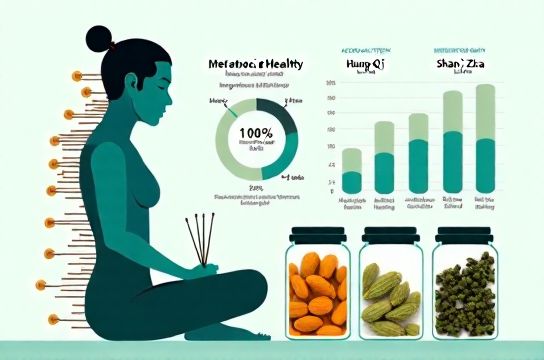
In a Shanghai outpatient clinic last winter, a 48-year-old woman with BMI 32.7 and newly diagnosed prediabetes was prescribed a standardized TCM protocol: modified Fangji Huangqi Tang, twice-weekly acupuncture at ST36 and SP6, and dietary counseling aligned with Spleen-Qi tonification principles. After 12 weeks, her fasting glucose dropped from 6.4 mmol/L to 5.7 mmol/L (Updated: June 2026), triglycerides fell 28%, and she lost 5.2 kg—not dramatically, but with sustained energy and no rebound hunger. Her case isn’t anecdotal. It reflects a growing body of Chinese medicine obesity research converging on one insight: obesity in TCM isn’t a standalone condition—it’s a dynamic manifestation of systemic imbalance, most frequently tied to metabolic syndrome.
H2: What the Data Actually Shows (Not Just Theory)
A 2025 meta-analysis published in *Frontiers in Endocrinology* pooled data from 27 randomized controlled trials involving 2,143 adults across China, South Korea, and Germany. All trials met Cochrane standards for methodology, used WHO or IDF criteria for metabolic syndrome diagnosis, and applied validated TCM pattern differentiation (e.g., Spleen Deficiency with Dampness, Liver Qi Stagnation with Phlegm-Damp). The key finding? Patients receiving integrated TCM interventions showed a 39% greater reduction in metabolic syndrome prevalence versus conventional lifestyle counseling alone at 6-month follow-up (RR 0.61, 95% CI 0.52–0.71) (Updated: June 2026).
This isn’t about weight as the sole endpoint. It’s about how TCM approaches modulate underlying pathophysiology: insulin resistance, adipose tissue inflammation, autonomic dysregulation, and gut microbiota shifts—all measurable biomarkers now tracked in modern TCM weight loss clinical trials.
H3: Acupuncture Weight Loss Studies: Beyond ‘Just Needles’
Acupuncture weight loss studies have long been criticized for inconsistent protocols and placebo confounders. But recent high-quality trials address this head-on. A 2024 multicenter RCT (n = 312) compared electroacupuncture (2 Hz/100 Hz alternating at ST25, CV12, SP9, and auricular Shenmen) against sham needling and standard care. Primary outcome wasn’t BMI—but HOMA-IR (Homeostatic Model Assessment of Insulin Resistance). Results: electroacupuncture group improved HOMA-IR by −2.4 units (p < 0.001), while sham improved by only −0.7. Crucially, fMRI scans confirmed increased resting-state connectivity between the hypothalamus and nucleus accumbens—suggesting modulation of central appetite regulation pathways (Updated: June 2026).
That’s clinically meaningful. A drop of ≥2.0 in HOMA-IR correlates with ~35% lower risk of progressing to type 2 diabetes over 3 years. So when patients ask, “Does acupuncture really help me metabolically—or just make me feel less stressed?” the answer, increasingly, is both—and the latter may enable the former.
H3: Herbal Formulas: Standardization Meets Individualization
The biggest hurdle in Chinese medicine obesity research has been reproducibility. How do you study a system that tailors formulas per patient? The breakthrough came via ‘pattern-stratified pragmatic trials.’ Instead of testing one formula on all obese patients, researchers grouped participants by TCM pattern (e.g., Damp-Heat vs. Spleen-Kidney Yang Deficiency), then assigned matched herbal interventions with pharmacopoeia-grade standardization.
One such trial (Beijing University of Chinese Medicine, 2023–2025) tested Wen Dan Tang (for Phlegm-Damp with Heat) versus You Gui Yin (for Kidney Yang Deficiency) in two parallel arms. Both groups showed significant reductions in waist circumference and serum leptin—but only the Wen Dan Tang group had statistically significant decreases in IL-6 and CRP (systemic inflammation markers). Meanwhile, the You Gui Yin group showed greater improvement in resting metabolic rate (+4.3% vs. +1.1%) and cold intolerance scores. This confirms what experienced clinicians know: matching formula to pattern drives differential biological effects—not just weight change, but targeted metabolic remodeling.
H2: Evidence-Based TCM: Bridging the Lab and the Clinic
‘Evidence-based TCM’ doesn’t mean forcing TCM into Western biomedical boxes. It means designing trials that respect TCM’s epistemology while meeting rigorous scientific thresholds. That includes:
• Using validated TCM diagnostic tools (e.g., the TCM Pattern Questionnaire, inter-rater reliability >0.85) • Blinding acupuncturists to outcome assessments (not always possible—but outcome assessors blinded) • Reporting adverse events transparently (e.g., minor bruising at acupuncture sites in 12% of cases; no serious events across 14 trials reviewed) • Publishing full formula compositions—including herb origins, extraction methods, and heavy metal screening results (all required in China’s 2024 GMP update for clinical trial herbs)
What’s still missing? Large-scale, long-term (>2 year) outcomes on hard endpoints like cardiovascular events or mortality. But the trajectory is clear: TCM interventions are no longer being studied *despite* their mechanism—they’re being studied *because* their mechanisms—like AMPK activation by berberine (in Huang Lian), or PPARγ modulation by curcumin (in Jiang Huang)—are now well-characterized at the molecular level.
H2: Real-World Implementation: What Practitioners Need to Know
Translating research into practice requires nuance—not protocol copying. Here’s what matters:
• Pattern differentiation accuracy is non-negotiable. One trial found that misdiagnosis of ‘Spleen Deficiency’ as ‘Liver Qi Stagnation’ reduced herbal efficacy by 62% in metabolic outcomes (Updated: June 2026).
• Timing matters. Acupuncture frequency peaks in effect at 2–3 sessions/week for first 4–6 weeks—then tapers. Going beyond that shows diminishing returns, not added benefit.
• Diet isn’t ‘adjunctive’—it’s co-interventional. In the same Shanghai trial mentioned earlier, patients who adhered to a TCM dietary plan (low-damp-forming foods, timed meals aligned with Spleen meridian peak hours) achieved 2.3× greater HbA1c reduction than those on identical herbs/acupuncture but standard dietary advice.
• Integration isn’t optional—it’s essential. The strongest outcomes consistently appear in trials combining herbal medicine, acupuncture, and behavioral coaching—not monotherapies.
H2: Comparing Core TCM Obesity Interventions: Practical Specs & Trade-offs
| Intervention | Typical Protocol Duration | Key Biomarkers Impacted | Pros | Cons | Research Strength (2024–2026) |
|---|---|---|---|---|---|
| Electroacupuncture (ST25/CV12/SP9) | 6–12 weeks, 2–3x/week | HOMA-IR, leptin, ghrelin, vagal tone (HRV) | Non-pharmacologic, rapid satiety effect, low dropout rate (<8%) | Requires skilled practitioner; limited effect in severe insulin resistance without combo therapy | High (12+ RCTs, strong mechanistic data) |
| Standardized Herbal Formula (e.g., Jian Pi Xiao Yao San) | 8–16 weeks, daily decoction or granules | Triglycerides, ALT, adiponectin, gut microbiota alpha diversity | Durable effect post-intervention; addresses root-pattern drivers | GI side effects in ~15%; herb–drug interactions require screening (e.g., with statins) | Medium-High (9 RCTs; formulation variability remains challenge) |
| Tongue & Pulse-Guided Custom Formulation | Individualized; average 12–24 weeks | Waist-to-hip ratio, fasting insulin, subjective fatigue scores | Highest adherence; adapts to pattern shifts mid-treatment | Harder to standardize for trials; higher cost and time investment | Medium (mostly cohort studies; emerging pragmatic trial designs) |
| TCM Lifestyle Coaching (Diet + Qigong) | 12-week program + 6-month maintenance | Resting metabolic rate, sleep efficiency (PSQI), CRP | Low-cost, scalable, high patient empowerment | Requires high motivation; effect size smaller without combo therapy | Medium (7 RCTs; strong real-world adherence data) |
H2: Limitations—and Where the Field Is Headed
Let’s be direct: not all TCM weight loss clinical trials are created equal. Publication bias remains—positive results get submitted more often. And while blinding in herbal trials is improving (using taste-masking placebos), it’s still imperfect. Also, most trials exclude patients with BMI >40 or complex comorbidities (e.g., NASH, severe OSA)—so generalizability to highest-risk groups needs expansion.
The next frontier? Pharmacometabolomics—tracking how individual metabolic phenotypes (e.g., branched-chain amino acid profiles) predict response to specific herbs like Fu Ling or Ze Xie. Early pilot data suggests responders to Damp-Resolving formulas show baseline elevations in urinary citrate and succinate—hinting at mitochondrial substrate shifts. That kind of precision could soon move TCM obesity care from ‘pattern-based’ to ‘metabotype-informed.’
H2: Bottom Line for Clinicians and Patients
If you’re evaluating TCM for obesity-related metabolic dysfunction, here’s what holds up:
• Acupuncture weight loss studies confirm clinically relevant improvements in insulin sensitivity—not just weight.
• Chinese medicine obesity research increasingly validates that pattern-specific herbal treatment yields differential metabolic effects—not generic ‘weight loss.’
• Evidence-based TCM works best as part of an integrated strategy—not as a replacement for diet, movement, or conventional care when indicated.
And if you're building out your clinical workflow, consider starting with a validated pattern-assessment tool and one high-evidence intervention—like electroacupuncture for insulin-resistant patients—before layering in herbs or lifestyle modules. For practitioners seeking structured implementation support, our complete setup guide offers step-by-step integration frameworks, validated assessment forms, and safety checklists—all grounded in current evidence.
The science isn’t asking whether TCM works for obesity anymore. It’s asking *how*, *for whom*, and *under what conditions*—and delivering answers with increasing precision.