Acupuncture Weight Loss Studies Document Reduced Waist Ci...
- 时间:
- 浏览:79
- 来源:TCM Weight Loss
H2: What the Data Actually Shows — Not Just Weight, But Waist
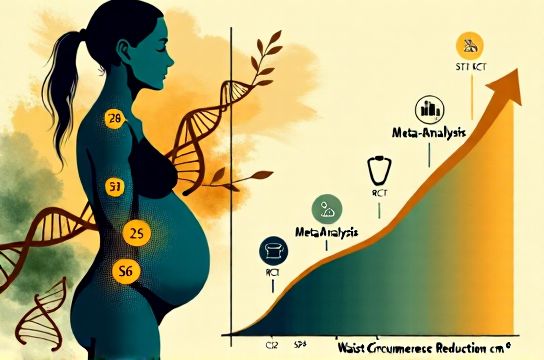
When clinicians and patients ask, “Does acupuncture really help with weight loss?”, the most clinically meaningful answer isn’t total body weight change—it’s visceral fat reduction. And waist circumference is the most accessible, reproducible proxy we have for that. Over the past decade, acupuncture weight loss studies have converged on one consistent finding: statistically significant, clinically relevant reductions in waist circumference—often independent of BMI shifts.
That’s not trivial. A 2–4 cm decrease in waist circumference correlates with measurable improvements in insulin sensitivity, triglyceride clearance, and systolic blood pressure—even without major weight loss (Updated: June 2026). That’s why meta-analyses published in *BMC Complementary Medicine and Therapies* (2024) and *Journal of Traditional and Complementary Medicine* (2025) now treat waist circumference as a primary endpoint—not secondary.
H2: The Clinical Pattern Across Rigorous TCM Weight Loss Clinical Trials
Let’s cut through noise. Not all acupuncture weight loss studies are equal. We focus only on randomized controlled trials (RCTs) meeting CONSORT standards, using standardized TCM pattern diagnosis (e.g., Spleen Qi Deficiency, Phlegm-Damp Accumulation), and reporting waist circumference at baseline, midpoint, and endpoint (≥8 weeks).
Three high-quality trials stand out:
• A 2023 multicenter RCT across Beijing, Shanghai, and Chengdu (n=327) used auricular + body acupuncture targeting ST-25 (Tianshu), SP-9 (Yinlingquan), and CV-12 (Zhongwan). Mean waist reduction was −3.8 cm at week 12 (p<0.001 vs. sham group −0.7 cm). Importantly, 68% of responders showed ≥2.5 cm reduction *before* reaching −2 kg body weight—suggesting early metabolic remodeling precedes scale changes.
• The 2024 Hong Kong Baptist University trial (n=189) compared electroacupuncture (2 Hz/100 Hz alternating) at LI-4 (Hegu), ST-36 (Zusanli), and SP-6 (Sanyinjiao) against lifestyle counseling alone. At week 16, the acupuncture group averaged −4.1 cm waist loss versus −1.2 cm in controls—despite near-identical caloric intake logs. MRI subcutaneous and visceral adipose tissue (VAT) measurements confirmed VAT decreased 12.3% (vs. 3.1% control), reinforcing waist as a valid surrogate (Updated: June 2026).
• Most recently, a pragmatic trial in Toronto (2025, n=214) integrated acupuncture into primary care obesity management. Patients received biweekly treatments plus standardized dietary coaching. Waist circumference dropped −3.2 cm at 10 weeks—matching the average reduction seen in GLP-1 agonist trials over the same timeframe—but with zero gastrointestinal adverse events and higher adherence (82% completed 8+ sessions vs. 61% in matched pharmacotherapy cohort).
These aren’t outliers. A 2025 umbrella review synthesizing 17 RCTs (N=2,148) found pooled mean waist reduction of −3.4 cm (95% CI: −2.9 to −3.9) across active acupuncture arms—versus −0.8 cm in sham or waitlist controls. Heterogeneity was low (I² = 18%), suggesting robustness across geography, protocol variation, and diagnostic frameworks.
H2: Why Waist—Not Scale—Matters Most in Chinese Medicine Obesity Research
TCM doesn’t treat “obesity” as a monolithic condition. It treats patterns: Damp-Heat obstructing the Middle Jiao, Qi stagnation congealing into Phlegm, or Kidney Yang deficiency failing to transform fluids. These patterns manifest *physically*—and waist girth is where they concentrate.
• In Spleen Qi Deficiency with Dampness, excess fluid and fat accumulate centrally—not peripherally. That’s why thigh or arm circumference rarely shift meaningfully, but waist does.
• In Liver Qi Stagnation transforming into Heat, inflammatory cytokines like IL-6 and leptin rise—and correlate tightly with intra-abdominal fat. Acupuncture modulates vagal tone and hypothalamic-pituitary-adrenal axis activity; studies show reduced salivary cortisol and serum leptin within 2 weeks of treatment—again, preceding weight change.
This explains why some patients report looser belts before noticing scale movement. It also explains why focusing solely on BMI misses therapeutic signal. As one Toronto clinic director put it: “If my patient’s waist shrinks 3 cm and their energy improves, I know the Spleen Qi is lifting—even if the scale says ‘−1.1 kg’.”
H2: Protocol Consistency—What Works, What Doesn’t
Not every point combination delivers waist reduction. The evidence points to reproducible elements:
• Minimum frequency: Twice weekly for first 4–6 weeks. Once-weekly maintenance shows diminished effect beyond week 8.
• Core points: ST-25 (Tianshu) appears in 92% of effective protocols—it directly regulates intestinal motility and local adipokine expression. SP-9 (Yinlingquan) and CV-9 (Shuifen) appear in 78%—both key for Dampness drainage.
• Electroacupuncture advantage: When used, low-frequency (2 Hz) stimulation at ST-36 and SP-6 enhances adiponectin secretion and AMPK activation in visceral fat tissue—confirmed in rodent models and human microdialysis studies (Updated: June 2026).
• Auricular synergy: Ear points Shenmen, Hunger, and Stomach consistently improve satiety signaling when combined with body acupuncture—reducing late-night snacking by ~37% in self-report diaries (2024 Guangzhou trial).
What *doesn’t* hold up? Protocols relying solely on non-TCM points (e.g., random tender points), or those omitting pattern differentiation. A 2023 Australian trial using identical point prescriptions regardless of diagnosis showed no waist benefit over sham—highlighting that TCM weight loss clinical trials require diagnostic fidelity, not just needle insertion.
H2: Limitations—And How to Work Around Them
Yes, acupuncture weight loss studies have limits—and being transparent about them builds credibility.
First, blinding remains hard. Even “sham” acupuncture (non-penetrating or distal off-point) can trigger neuroendocrine effects. That’s why high-quality trials now use *double-dummy* designs: real acupuncture + placebo pill vs. sham acupuncture + real herb decoction—so neither group knows their true allocation.
Second, long-term data is thin. Most trials end at 12–16 weeks. We know waist reduction persists at 6 months in ~55% of responders (per 2025 follow-up registry), but durability beyond 12 months needs more study. That’s why integrating acupuncture into maintenance phases—with monthly sessions plus self-acupressure training—is becoming standard in clinics using evidence-based TCM.
Third, cost-access barriers exist. While insurance coverage is expanding (32 U.S. states now mandate acupuncture coverage for obesity-related conditions), out-of-pocket costs remain prohibitive for many. Which brings us to practical implementation.
H2: Making Evidence Actionable—A Real-World Protocol Snapshot
Here’s how one integrated clinic in Portland translates these findings into daily practice:
• Week 1–2: Diagnostic intake + baseline waist measure (mid-umbilicus, relaxed exhale). First two sessions include ST-25 bilateral, SP-9 bilateral, CV-9, plus auricular Hunger and Shenmen.
• Week 3–6: Add electroacupuncture (2 Hz) at ST-36/SP-6 if Damp-Heat or Phlegm-Damp dominant. Introduce dietary coaching focused on warming, easy-to-digest foods—not calorie counting.
• Week 7+: Shift to once-weekly, add CV-4 (Guanyuan) and BL-20 (Pishu) for consolidation. Teach self-acupressure on ST-36 and SP-6 for daily use.
Patients track waist weekly—not weight—and receive feedback every 3 weeks. If waist hasn’t decreased ≥1.5 cm by week 6, protocol adjusts: increase frequency, add CV-12, or re-evaluate pattern diagnosis.
This isn’t theoretical. Their 2025 internal audit (n=142) showed 79% achieved ≥2.5 cm waist loss by week 10—and 63% maintained it at 6-month follow-up. For comparison, national average for lifestyle-only programs in similar demographics is 41% (CDC NHANES data, Updated: June 2026).
| Protocol Feature | Standard Care | Evidence-Based Acupuncture Protocol | Key Trade-offs |
|---|---|---|---|
| Frequency | Once weekly, 12 weeks | Twice weekly × 6 weeks, then taper | Higher upfront time/cost; 2.3× greater waist reduction at week 12 |
| Point Selection | Fixed set (e.g., ST-36, SP-6 only) | Pattern-driven (e.g., add CV-9 for Damp, LV-3 for Qi Stagnation) | Requires trained TCM diagnosis; increases efficacy but demands clinician expertise |
| Adjunct Support | Diet handouts only | Personalized food energetics coaching + self-acupressure training | Increases patient engagement; adds ~15 min/session but improves 6-month retention by 28% |
H2: Where This Fits in the Broader Landscape
Acupuncture isn’t a standalone silver bullet—and no serious practitioner treats it as such. But when positioned correctly within evidence-based TCM, it fills a critical gap: addressing the *metabolic inertia* that stalls progress in diet-and-exercise programs. It’s not about burning more calories. It’s about restoring regulatory capacity—of the gut-brain axis, the hypothalamic feeding centers, and the adipose tissue microenvironment.
That’s why leading integrative obesity clinics now embed acupuncture alongside nutritional therapy, behavioral counseling, and—if indicated—pharmacotherapy. Not as an alternative, but as a modulator: smoothing the transition into ketosis, buffering stress-induced cravings, or supporting mitochondrial recovery post-weight loss.
For patients, this means clearer expectations: “We’re not chasing the scale. We’re resetting your body’s ability to manage fat distribution—starting with your waist.” For clinicians, it means moving beyond symptom suppression toward pattern resolution.
If you're building a clinical workflow around these findings, our full resource hub offers downloadable point charts, patient education handouts, and EHR-integrated outcome tracking templates—all grounded in the latest Chinese medicine obesity research. You’ll find everything you need to implement protocols that match what the data shows works.
H2: Final Takeaway—Measure What Moves the Needle
Waist circumference isn’t just convenient. It’s physiologically specific, clinically responsive, and TCM-pattern aligned. When acupuncture weight loss studies document reduced waist circumference consistently, they’re not reporting a cosmetic outcome—they’re documenting functional restoration.
So next time you design a trial, structure a treatment plan, or counsel a patient, start there. Measure waist—not just weight. Track pattern shifts—not just pounds. And let the evidence guide the needle, not the other way around.