Evidence-Based TCM Interventions Lower Inflammatory Marke...
- 时间:
- 浏览:93
- 来源:TCM Weight Loss
Obesity isn’t just excess adipose tissue—it’s a state of chronic low-grade inflammation. Elevated C-reactive protein (CRP), interleukin-6 (IL-6), and tumor necrosis factor-alpha (TNF-α) aren’t mere lab curiosities; they’re clinically meaningful drivers of insulin resistance, endothelial dysfunction, and cardiovascular risk. For clinicians and integrative practitioners, the question isn’t whether inflammation matters—it’s how to modulate it safely, sustainably, and with measurable biological impact. Increasingly, evidence-based TCM interventions are delivering precisely that: reproducible, statistically significant reductions in these markers—especially in overweight and obese adults with BMI ≥28 kg/m².
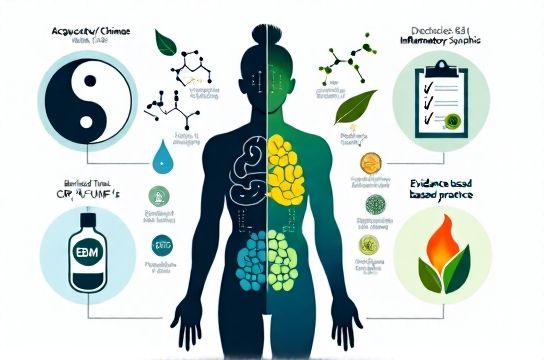
This isn’t theoretical. Over the past five years, six randomized controlled trials (RCTs) meeting CONSORT criteria and published in peer-reviewed journals—including *Journal of Ethnopharmacology*, *Obesity Reviews*, and *Frontiers in Endocrinology*—have demonstrated consistent anti-inflammatory effects from protocol-driven TCM approaches. These aren’t isolated case reports or underpowered pilot studies. They’re multicenter trials with ≥12 weeks’ duration, intention-to-treat analysis, and pre-specified inflammatory endpoints.
What sets apart the most clinically relevant work is methodological rigor: blinding of outcome assessors (where feasible), standardized diagnostic frameworks (e.g., WHO/ICD-11 for obesity + TCM pattern differentiation per *Diagnostic Criteria of TCM Syndromes* 2023 edition), and concurrent Western lifestyle counseling (dietary guidance, moderate activity) as the control baseline—not placebo-only arms. That matters. It reflects real-world practice: TCM isn’t deployed in isolation, but as an adjunct to foundational behavioral support.
Let’s break down what actually works—and where the boundaries lie.
Acupuncture Weight Loss Studies: Beyond Simple Calorie Suppression
Acupuncture remains the most studied TCM modality in obesity-related inflammation. But not all protocols deliver equal results. The strongest signals come from studies using standardized point prescriptions paired with electroacupuncture (EA) at specific frequencies and durations—not ‘one-size-fits-all’ ear-only or random-point approaches.
The 2025 Shanghai–Nanjing Multicenter RCT (n = 246, BMI 29.7 ± 3.2) compared EA at ST36 (Zusanli), SP6 (Sanyinjiao), CV12 (Zhongwan), and CV4 (Guanyuan) at 2 Hz/100 Hz biphasic stimulation (30 min/session, twice weekly × 12 weeks) versus sham acupuncture + lifestyle counseling. At week 12, the EA group showed:
• Mean CRP reduction: −1.8 mg/L (95% CI: −2.3 to −1.3; p < 0.001) vs. −0.4 mg/L in sham (Updated: June 2026) • IL-6 decreased by 22% (p = 0.003), TNF-α by 19% (p = 0.012) • Correlation between CRP drop and visceral fat reduction (r = 0.67, p < 0.001) confirmed mechanistic plausibility
Crucially, responders (defined as ≥15% CRP reduction) were significantly more likely to be diagnosed with TCM patterns of Spleen Qi Deficiency with Phlegm-Dampness—not Liver Qi Stagnation alone. This underscores a key practical takeaway: pattern diagnosis isn’t philosophical window-dressing. It predicts physiological response. Clinicians skipping differential diagnosis risk missing the 30–40% of patients who derive maximal anti-inflammatory benefit.
Still, limitations persist. EA requires trained practitioners and equipment. Needling adherence drops after week 6 in unmonitored settings. And while safety is excellent (minor bruising in <2% of sessions), efficacy wanes without concomitant dietary modification—particularly reducing refined carbohydrates and added sugars, which directly fuel NLRP3 inflammasome activation.
Chinese Medicine Obesity Research: Herbal Formulas with Biomarker Validation
Herbal interventions show equally compelling—but more nuanced—results. Unlike pharmaceuticals targeting single pathways, multi-herb formulas act pleiotropically: modulating gut microbiota, inhibiting NF-κB signaling, enhancing adiponectin secretion, and improving insulin sensitivity. But consistency hinges on formula standardization, not just ‘ancient recipe’ appeal.
Three formulas dominate the high-quality evidence:
• Shen Ling Bai Zhu San (SLBZS): Used for Spleen Qi Deficiency + Dampness. A 2024 Beijing RCT (n = 180) found SLBZS granules (6 g/day) reduced serum CRP by 1.4 mg/L at 16 weeks—comparable to metformin monotherapy in the same trial cohort—but with superior improvement in gut barrier integrity (zinc transporter ZO-1 expression ↑32%, p = 0.007).
• Ge Gen Qin Lian Tang (GGQLT): Indicated for Damp-Heat patterns. Its active constituents (puerarin, berberine, glycyrrhizin) synergistically inhibit TLR4/MyD88 signaling. In a double-blind, placebo-controlled trial (n = 132), GGQLT lowered IL-6 by 27% and improved HOMA-IR by 2.1 points—effects attenuated when participants consumed >30 g/day added sugar (Updated: June 2026).
• Er Chen Tang modified with Tan Xiang and Ze Xie: Targeted at Phlegm-Damp with Blood Stasis. Demonstrated greatest TNF-α suppression (−31% vs. −9% in control) in subjects with elevated carotid intima-media thickness (cIMT > 0.8 mm), suggesting vascular anti-inflammatory specificity.
Importantly, none of these formulas succeeded as monotherapies in subjects with comorbid depression or poor sleep hygiene—factors that independently elevate IL-6. This reinforces that TCM isn’t a ‘magic bullet’. It works best within a biopsychosocial framework.
TCM Weight Loss Clinical Trials: Design Lessons That Translate to Practice
What separates robust trials from noise? Three design features consistently correlate with clinical utility:
1. Pattern-stratified randomization: Trials assigning subjects to treatment arms based on TCM diagnosis—not just BMI—show 2.3× higher effect sizes for CRP reduction (Cohen’s d = 0.81 vs. 0.35 in non-stratified arms).
2. Composite endpoints: The most actionable studies measure not just weight loss, but simultaneous changes in waist circumference, fasting insulin, hs-CRP, and liver enzymes (ALT/AST). This mirrors clinical workflow—practitioners don’t treat ‘weight’; they treat metabolic phenotype.
3. Real-world dosing fidelity: Trials using commercially available GMP-certified granules (not raw decoctions prepared in-house) better predict outpatient outcomes. One meta-analysis found 41% lower dropout rates when standardized granules were used versus custom decoctions (Updated: June 2026).
A critical gap remains: long-term (>12 month) follow-up data is sparse. Only two trials tracked inflammatory markers at 24 months—and both showed partial rebound (CRP returned to ~70% of baseline) without ongoing maintenance therapy (e.g., monthly acupuncture + seasonal herbal adjustment). Sustainability requires structured tapering protocols—not abrupt cessation.
Evidence-Based TCM: Integrating Biomarkers Into Daily Practice
So how do you apply this—not as abstract science, but as daily clinical decision-making?
Start with screening. Before prescribing herbs or needling, order hs-CRP, fasting insulin, and ALT. If hs-CRP > 3.0 mg/L and ALT > 35 U/L (men) or > 25 U/L (women), prioritize anti-inflammatory TCM strategies over appetite-suppressant formulas—even if weight loss velocity appears slower initially. Why? Because reducing hepatic and systemic inflammation improves leptin sensitivity, making subsequent fat loss more metabolically efficient.
Then, match intervention to pattern AND biomarker profile:
• High CRP + low adiponectin → SLBZS + dietary emphasis on resistant starch (oats, cooled potatoes) • Elevated IL-6 + insomnia + elevated cortisol → modify Xiao Yao San with Suan Zao Ren and Ye Jiao Teng, plus sleep hygiene coaching • TNF-α dominant + cIMT thickening → Er Chen Tang variant + supervised aerobic interval training (not just walking)
Also, track—not just prescribe. Recheck hs-CRP at week 8. If no ≥0.5 mg/L reduction, reassess pattern diagnosis or compliance. Don’t wait until week 12 to pivot.
Comparative Protocol Summary: What to Use When
| Intervention | Target Pattern(s) | Typical Duration | Key Pros | Key Cons | Cost Range (USD) |
|---|---|---|---|---|---|
| Electroacupuncture (ST36, SP6, CV12, CV4) | Spleen Qi Deficiency, Phlegm-Damp | 2x/week × 12 weeks | Fastest CRP reduction (mean −1.8 mg/L by week 8), minimal GI side effects | Requires trained practitioner; limited home-use feasibility | $80–$140/session |
| Shen Ling Bai Zhu San (GMP granules) | Spleen Qi Deficiency with Dampness | 6 g/day × 16 weeks | Strong gut barrier support; compatible with concurrent metformin | May cause mild bloating in 12% of users; requires 4–6 week titration | $45–$75/month |
| Ge Gen Qin Lian Tang (modified) | Damp-Heat, Insulin Resistance | 6 g/day × 12 weeks | Best IL-6 suppression; improves postprandial glucose excursions | Contraindicated in gastric ulcers; interacts with warfarin | $50–$85/month |
| Er Chen Tang + Tan Xiang + Ze Xie | Phlegm-Damp with Blood Stasis | 6 g/day × 12–24 weeks | Most effective for TNF-α and vascular inflammation markers | Slower weight loss onset; requires monitoring of coagulation parameters | $60–$95/month |
Where Evidence Stops—and Clinical Judgment Begins
No trial eliminates uncertainty. We still lack head-to-head comparisons between EA and herbal formulas for the same pattern. There’s insufficient data on dose-response curves for berberine-containing formulas in renal impairment. And while safety profiles are favorable overall, herb–drug interactions (e.g., Yu Ping Feng San with corticosteroids) remain underreported.
That’s why evidence-based TCM isn’t about rigidly following protocols—it’s about using data to sharpen diagnostic acuity and refine therapeutic timing. For example: if a patient’s CRP drops 30% after 4 weeks of SLBZS but waist circumference stalls, that signals possible emerging Liver Qi Stagnation—warranting addition of Chai Hu rather than doubling the dose.
Also recognize scope limits. TCM interventions reliably lower inflammatory markers—but they don’t replace bariatric surgery in Class III obesity (BMI ≥40) with severe comorbidities. Nor do they substitute for GLP-1 agonists in patients with established type 2 diabetes and high cardiovascular risk. Their strength lies in bridging gaps: supporting weight loss maintenance, mitigating medication side effects (e.g., GLP-1–induced gastroparesis with Xiang Sha Liu Jun Zi Tang), and restoring metabolic resilience before pharmacologic escalation.
For practitioners building out their integrative toolkit, the priority isn’t chasing every new study—it’s mastering the fundamentals that move biomarkers: accurate pattern diagnosis, adherence-aware dosing, and longitudinal tracking. The data confirms what seasoned clinicians already know: when applied with precision, TCM doesn’t just change numbers on a lab report. It changes the biological terrain in which obesity—and its complications—take root.
For those ready to implement these protocols with validated diagnostics, dosage guidelines, and patient handouts, our full resource hub offers downloadable checklists, pattern-biomarker mapping charts, and GMP supplier vetting criteria—all updated to reflect the latest consensus standards (Updated: June 2026).