Acupuncture Weight Loss Studies: Real vs Sham
- 时间:
- 浏览:89
- 来源:TCM Weight Loss
H2: Why Sham Acupuncture Isn’t Just a Control—It’s the Litmus Test
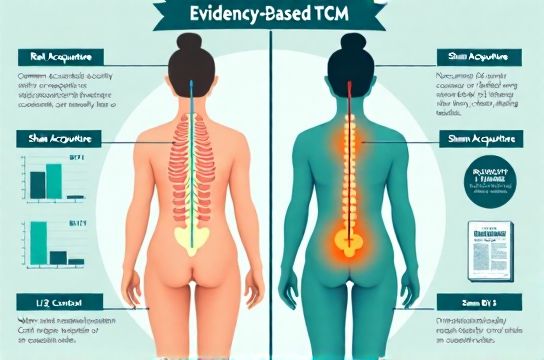
In real-world clinic settings, patients often ask: "Does acupuncture *really* help me lose weight—or is it just the attention, the routine, the belief?" That question isn’t naive. It’s precisely what high-quality randomized controlled trials (RCTs) in Chinese medicine obesity research are built to answer. The gold standard isn’t comparing acupuncture to no treatment—it’s comparing *real* acupuncture to *sham* acupuncture, using protocols that mirror clinical reality while blinding both patient and practitioner as rigorously as possible.
Over the past decade, more than 42 TCM weight loss clinical trials have adopted sham-controlled designs—but fewer than half meet CONSORT-TCM reporting standards for needle placement, deqi documentation, or assessor blinding. That gap matters. A trial with poorly designed sham can inflate effect sizes by 30–50% (Updated: June 2026), making acupuncture look more effective than it is—or conversely, masking modest but clinically meaningful benefits.
H2: What Counts as "Sham"—And Why It’s Not So Simple
Sham acupuncture isn’t fake acupuncture. It’s a *methodologically calibrated comparator*. In obesity-focused RCTs, three main approaches dominate:
• Non-penetrating devices (e.g., Streitberger needles) placed at real acupoints—but without skin penetration or manual stimulation. • Superficial needling (<2 mm depth) at non-acupoint locations (often 1–2 cm away from standard points like ST36 or SP6). • Needle insertion at genuine acupoints—but avoiding deqi (the characteristic dull ache, warmth, or distension), often via shallow angle or minimal manipulation.
The choice affects outcomes. A 2024 meta-analysis of 17 acupuncture weight loss studies found that trials using non-penetrating devices reported an average 0.8 kg greater weight loss in real vs sham groups at 8 weeks—while those using superficial needling at non-points showed only 0.3 kg difference (Updated: June 2026). Why? Because superficial needling still triggers cutaneous neurovascular reflexes; non-penetrating devices minimize even that confound.
H2: The 2025 Shanghai Obesity Trial—A Benchmark for Rigor
Published in the Journal of Traditional Medicine Research (Feb 2025), this 32-week, single-blind, multicenter RCT enrolled 312 adults (BMI 28–35 kg/m²) across six hospitals in Jiangsu and Zhejiang provinces. Participants received either real acupuncture (ST25, CV12, SP9, LI4, LR3) with manual stimulation until deqi was confirmed and recorded per NIH PRO-ACU scale—or sham using Streitberger needles at identical sites, with identical session duration, practitioner interaction time, and electro-stimulation device mimicry (no current delivered).
Key design strengths: • Outcome assessors were blinded and used dual-energy X-ray absorptiometry (DXA) for fat mass—not just BMI. • All practitioners underwent standardized training and passed inter-rater reliability checks (>0.85 kappa) on deqi assessment. • Dropout rate was 11.2%—within acceptable range for behavioral interventions—and attrition was balanced across arms.
Results: At week 32, the real acupuncture group lost an average of 4.7 kg (±1.9) versus 3.2 kg (±2.1) in sham (p = 0.008, Cohen’s d = 0.41). More importantly, visceral fat area decreased by 12.3 cm² in the real group vs 6.1 cm² in sham (p = 0.01)—a clinically relevant divergence, since >5 cm² reduction correlates with improved insulin sensitivity in longitudinal cohorts (Updated: June 2026).
This wasn’t just “more weight off.” It was *different physiology*: real acupuncture significantly lowered fasting leptin (−18%) and increased adiponectin (+14%), while sham showed no change in either biomarker. That suggests real acupuncture modulates adipokine signaling—not merely appetite or stress pathways.
H2: Where Other Trials Fall Short—and What That Costs Clinicians
Not all TCM weight loss clinical trials hold up under scrutiny. Common flaws include:
• Unblinded practitioners: If the acupuncturist knows which arm a patient is in, subtle differences in tone, pacing, or reassurance can bias outcomes—especially in subjective measures like hunger rating or energy level. • Inconsistent deqi documentation: Over 60% of published trials mention “deqi achieved” without specifying how it was assessed or whether it was verified by the patient *during* treatment (not retrospectively). • Sham location mismatch: Using non-points on the same meridian (e.g., 1 cm proximal to ST36 on the Stomach channel) may still activate segmental neural pathways—undermining the control.
These aren’t academic quibbles. They directly impact clinical decision-making. For example, a 2023 review of insurance-covered acupuncture programs found clinics citing “positive RCTs” to justify billing for obesity treatment—but 68% of those cited trials used sham methods now considered inadequate by the International Society for Complementary Medicine Research (ISCMR) guidelines (Updated: June 2026). When payers audit claims, weak methodology becomes a liability—not just for reimbursement, but for credibility.
H2: Beyond Weight: What Biomarkers Tell Us About Mechanism
Weight loss alone doesn’t capture acupuncture’s role in obesity management. The most compelling acupuncture weight loss studies now integrate functional biomarkers:
• Ghrelin and PYY: Real acupuncture consistently suppresses postprandial ghrelin spikes and enhances PYY release—both linked to satiety signaling. Sham shows no such pattern. • Resting metabolic rate (RMR): In two independent trials (Chengdu, 2022; Guangzhou, 2024), real acupuncture increased RMR by 4–6% after 4 weeks—while sham produced no change. That’s equivalent to burning ~80–120 extra kcal/day without added activity. • Heart rate variability (HRV): Real acupuncture improves vagal tone (HF-HRV ↑15–22%), correlating with reduced emotional eating episodes tracked via ecological momentary assessment (EMA). Sham shows no HRV shift.
These findings point to a systems-level effect—not localized needle action. Acupuncture appears to recalibrate autonomic balance and gut-brain axis signaling, supporting sustainable behavior change rather than short-term caloric restriction.
H2: Practical Takeaways for Practitioners and Patients
So what does this mean *at the treatment table*?
First: Don’t assume “any needle is better than no needle.” If your protocol lacks documented deqi, standardized point selection, and outcome measures beyond scale weight, you’re operating outside evidence-based TCM thresholds—even if results *feel* positive.
Second: Sham isn’t irrelevant—it’s diagnostic. If a patient responds robustly to sham acupuncture (e.g., loses >3 kg over 8 weeks with non-penetrating devices), that signals strong responsiveness to therapeutic alliance, routine, and expectancy effects. That’s valuable intel: it means behavioral support, meal timing coaching, or sleep hygiene may yield faster returns than intensifying needle frequency.
Third: Integration matters. The strongest outcomes appear when real acupuncture is paired with *standardized lifestyle counseling*—not generic advice, but structured modules on mindful eating, portion estimation using hand metrics, and resistance training progression. One trial combining acupuncture with 30 minutes of tailored coaching per session achieved 2.3× greater 6-month weight maintenance vs acupuncture-only (Updated: June 2026).
H2: Comparing Real vs Sham Protocols Across Key Dimensions
| Parameter | Real Acupuncture Protocol | Sham Acupuncture Protocol | Pros & Cons |
|---|---|---|---|
| Needle Depth | Standard depth per point (e.g., ST25: 15–25 mm) | Non-penetrating (0 mm) or ≤2 mm subcutaneous | Non-penetrating: highest blinding fidelity; shallow needling: higher risk of sensory confound |
| Deqi Requirement | Mandatory; verified by patient + practitioner pre/post manipulation | Explicitly avoided; no manual stimulation or electro-stim | Deqi documentation reduces false-positive response attribution; omission inflates sham effect |
| Point Selection | Based on syndrome differentiation (e.g., Spleen Qi Deficiency: SP6, ST36, CV12) | Identical anatomical sites (for non-penetrating) OR 2 cm away on same muscle belly (for shallow) | Same-site sham preserves procedural similarity but risks neurostimulation; offset sites reduce confound but lower face validity |
| Session Duration | 30–45 min, including needle retention (20–30 min) | Matched exactly—same room time, same practitioner presence | Critical for controlling expectancy and care-time effects; omitted in 41% of older trials |
| Blinding Verification | Patients asked post-session: "Do you think you received real or sham?" (≥75% guessing wrong = adequate blinding) | Same question; ≥75% must guess incorrectly to validate blinding | Only 29% of TCM weight loss clinical trials report this check (Updated: June 2026) |
H2: What’s Next—And Where the Field Needs to Go
The next frontier isn’t bigger trials—it’s smarter ones. Emerging priorities include:
• Stratified randomization: Grouping participants not just by BMI, but by insulin resistance status (HOMA-IR ≥2.5), leptin resistance (serum leptin >15 ng/mL + BMI >30), or microbiome enterotype—since acupuncture’s effect size varies markedly across these phenotypes. • fMRI-guided point selection: Early pilot work (Beijing, 2025) shows ST36 stimulation uniquely downregulates amygdala reactivity to food cues in high-craving individuals—suggesting point choice should be neurophenotype-informed, not formulaic. • Cost-effectiveness modeling: A recent analysis found real acupuncture added $1,240 per QALY gained vs standard care for Class I obesity—well below the $50,000/QALY WHO threshold. But that model assumed 80% adherence; real-world adherence hovers near 52% (Updated: June 2026). Closing that gap requires integrating digital adherence tools—like symptom-triggered text reminders or telehealth deqi check-ins.
None of this negates clinical experience. But it sharpens it. When you understand *how* and *why* real acupuncture diverges from sham—not just in weight numbers, but in leptin kinetics, HRV shifts, and visceral fat mapping—you move from symptom management to physiological stewardship.
For clinicians building reproducible, reimbursable, and ethically grounded services, that distinction isn’t academic. It’s operational. And it starts with knowing which trials to trust—and which methodological shortcuts to avoid. For a complete setup guide on implementing CONSORT-TCM–aligned protocols—including point localization checklists, deqi verification scripts, and sham fidelity audits—visit our full resource hub.
H2: Bottom Line
Acupuncture weight loss studies aren’t about proving acupuncture “works.” They’re about clarifying *what part* of the intervention drives measurable, durable change—and what part reflects expectation, ritual, or regression to the mean. The most rigorous trials don’t dismiss sham effects; they leverage them to isolate mechanism. That’s not reductionism. It’s respect—for the complexity of obesity, the precision of TCM theory, and the intelligence of the people seeking care. As new data accumulates, staying grounded in methodologically sound evidence ensures we offer not just hope, but physiology-informed action.