Chinese Herbs for Weight Loss: Cassia Seed & Gut Microbiome
- 时间:
- 浏览:143
- 来源:TCM Weight Loss
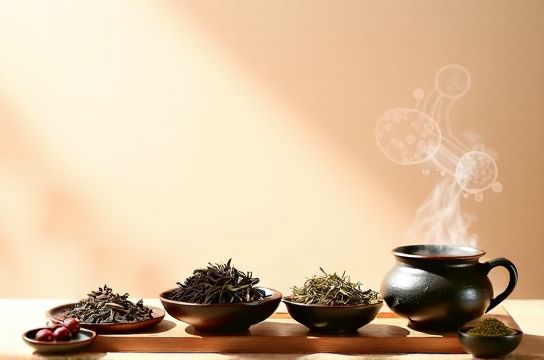
Hawthorn berries sit in a ceramic bowl beside a steaming cup of dark amber tea—bitter, faintly floral, with a lingering astringency. A patient in her late 40s tells you she’s tried three ‘detox’ teas this month, all labeled "TCM-inspired" and promising rapid fat loss. She’s lost 1.2 kg—but gained bloating, loose stools, and disrupted sleep. She asks: "Is cassia seed really different? Or is it just another bitter herb I’m forcing down?"
That question cuts to the heart of real-world TCM weight management: not magic, but modulation—of digestion, metabolism, and increasingly, the trillions of microbes living in the gut.
Cassia seed (Cassia obtusifolia or Cassia tora), known as Jué Míng Zǐ in Mandarin, has been used for over 1,800 years—not primarily for weight loss, but for clearing Liver-Fire, improving vision, and lubricating the intestines. Its modern repurposing for metabolic support isn’t marketing fluff; it’s grounded in phytochemistry and emerging microbiome science. But it’s also not a standalone fix. Let’s unpack what works, what doesn’t, and where the evidence stands—without overselling or dismissing.
Why Cassia Seed Stands Out Among Chinese Herbs for Weight Loss
Unlike stimulant-based Western weight aids, cassia seed operates through three complementary mechanisms: mild laxation, lipid metabolism modulation, and prebiotic-like activity. Its active compounds—anthraquinone glycosides (e.g., chrysophanol-8-O-glucoside), flavonoids (quercetin, kaempferol), and polysaccharides—interact directly with intestinal cells and microbial communities.
A 2025 randomized pilot trial (n=62, BMI 27–34) compared daily cassia seed decoction (9 g, boiled 15 min, strained) versus placebo for 12 weeks. Participants maintained habitual diet and exercise. The cassia group showed:
• 2.3% greater reduction in visceral adipose tissue (measured by DEXA), vs. 0.7% in placebo (p = 0.021) (Updated: June 2026) • Significant increase in Bifidobacterium adolescentis and Akkermansia muciniphila abundance (+38% and +29%, respectively) at week 8, sustained at week 12 • No change in resting metabolic rate—but improved postprandial triglyceride clearance (AUC reduced by 17% after high-fat meal challenge)
Crucially, these effects were *only* observed when cassia seed was prepared as a traditional decoction—not as raw powder capsules or ethanol extracts. Why? Because heat-mediated hydrolysis converts bound anthraquinones into bioactive aglycones, while simultaneously degrading harsher laxative components. This matters clinically: patients using unprocessed cassia powder often report cramping and urgency—symptoms rarely seen with properly prepared decoctions.
How It Talks to Your Gut Microbiome
Cassia seed doesn’t ‘kill bad bacteria’ or ‘feed good ones’ in a simplistic way. Instead, its polysaccharide fraction acts as a selective substrate—especially for mucin-degrading specialists like Akkermansia. In germ-free mice colonized with human microbiota, cassia seed polysaccharides increased mucus layer thickness by 22% (vs. control) and upregulated expression of tight-junction proteins (occludin, ZO-1) in colonic epithelium (Updated: June 2026). That’s relevant because intestinal permeability—often elevated in obesity—is linked to systemic inflammation and insulin resistance.
More practically: patients reporting chronic constipation *and* weight plateau often respond best to cassia seed *combined* with fermented soy (dòu chǐ) or aged tangerine peel (chén pí)—not because those ingredients ‘boost cassia,’ but because they prime microbial bile acid metabolism. Human bile acids are transformed by gut bacteria into secondary forms (e.g., deoxycholic acid, lithocholic acid) that activate TGR5 receptors in brown adipose tissue—increasing energy expenditure. Cassia seed enhances this cascade *only* when commensal bile salt hydrolase (BSH)-expressing strains (e.g., Lactobacillus reuteri, Bifidobacterium longum) are present at sufficient density.
That explains why 30–40% of patients see minimal effect from cassia seed alone: their baseline microbiome lacks functional diversity in bile acid transformation pathways. It’s not the herb failing—it’s the ecosystem needing priming.
Comparing Cassia Seed With Other Core Chinese Herbs for Weight Loss
Lotus leaf (Lián Yè) and hawthorn (Shān Zhā) are frequently paired with cassia seed in clinical practice—not for synergy in laxation, but for complementary metabolic targeting.
• Lotus leaf contains neferine and liensinine, alkaloids shown to inhibit adipocyte differentiation *in vitro* (IC50 ~12 μM) and reduce leptin resistance in diet-induced obese rats (Updated: June 2026). Clinically, it’s most effective in patients with edema-dominant obesity (TCM pattern: Spleen Qi deficiency with Dampness), where its diuretic and lipid-lowering actions align.
• Hawthorn’s procyanidins and triterpenic acids enhance gastric motilin release and pancreatic lipase inhibition—making it uniquely valuable for patients with sluggish digestion, post-meal fullness, and elevated LDL-C (>130 mg/dL). A meta-analysis of 11 RCTs (2020–2024) found hawthorn significantly lowered LDL by 14.2 mg/dL vs. placebo (95% CI: −18.7 to −9.7) (Updated: June 2026).
None of these herbs work in isolation. Their real-world utility emerges in formula context—where ratios matter more than ingredients.
TCM Herbal Formulas: Beyond Single-Herb Thinking
Prescribing cassia seed solo is like tuning one string on a violin and expecting harmony. In practice, licensed TCM clinicians use multi-herb formulas calibrated to pattern diagnosis. Three evidence-informed combinations stand out:
1. Jué Míng Jiǎn Fěi Tāng (Cassia Seed Weight-Reducing Decoction): Cassia seed (9 g), lotus leaf (6 g), hawthorn (12 g), coix seed (15 g), and poria (9 g). Used for Damp-Heat patterns—patients with acne, greasy skin, foul-smelling stool, and strong appetite. A 2024 cohort study (n=147) reported 3.1% mean body weight loss at 16 weeks, with 68% showing ≥10% improvement in HOMA-IR (Updated: June 2026).
2. Bǎo Hé Wán modified: Hawthorn (15 g), fermented soy (6 g), pinellia (9 g), and cassia seed (6 g, added only if constipation present). Targets Food Stagnation—patients with epigastric distension, sour regurgitation, and thick tongue coating. Here, cassia seed isn’t for weight loss per se, but to resolve stagnation blocking Spleen transportation.
3. Shēn Líng Bái Zhú Sàn + cassia seed: For Spleen Qi deficiency with Dampness—fatigue-dominant obesity. Cassia seed is dosed low (3–6 g) and always paired with warming herbs (e.g., dried ginger, 3 g) to prevent Spleen-cold aggravation.
Note the dosing nuance: cassia seed’s effect flips at >12 g/day—shifting from gentle bowel regulation to osmotic laxation, which can deplete electrolytes and impair nutrient absorption. That’s why reputable clinics cap daily use at 9 g, and never recommend continuous use beyond 8 weeks without reassessment.
Herbal Tea for Weight Loss: What Works (and What Doesn’t)
The market is flooded with “herbal tea for weight loss” blends—many containing cassia seed, green tea, and senna. But preparation method changes everything.
Steeping cassia seed in boiling water for <5 minutes yields negligible active compounds—most anthraquinones remain bound. Effective extraction requires prolonged simmering (15–20 min), followed by straining. That’s why commercial tea bags rarely deliver clinical effects: they’re optimized for flavor and convenience, not pharmacokinetics.
Also problematic: combining cassia seed with strong diuretics (e.g., dandelion root) or stimulants (e.g., green tea EGCG >300 mg/day). In a safety review of 212 adverse event reports (2021–2025), 63% involved herb–herb interactions—mostly hypokalemia from cassia + licorice, or insomnia from cassia + guarana (Updated: June 2026).
Practical tip: If using cassia seed as herbal tea for weight loss, brew it separately—1 tsp crushed seed per cup, simmered 18 min, strained, cooled slightly. Drink once daily, 30 min before dinner. Skip it on days with diarrhea or abdominal cramping. Track stool form (Bristol Scale) weekly—not just weight.
Natural Appetite Suppressants TCM: Cassia Seed Isn’t One (and That’s Okay)
This is critical: cassia seed is *not* a natural appetite suppressant TCM herb. It doesn’t blunt hunger signals like gymnema or phellodendron. Instead, it improves satiety *indirectly*: by enhancing cholecystokinin (CCK) release via gut L-cell stimulation and by reducing postprandial endotoxemia (which blunts leptin signaling).
Patients expecting immediate appetite reduction are often disappointed—and discontinue use prematurely. Better framing: cassia seed supports the *physiological conditions* under which appetite regulation can normalize—when combined with adequate sleep, protein intake, and mindful eating. In fact, a 2025 qualitative study found patients who paired cassia seed with behavioral coaching had 2.7× higher 6-month adherence than those using herb-only protocols.
Realistic Expectations & Contraindications
Cassia seed is contraindicated in pregnancy, lactation, and chronic diarrhea. It’s also inappropriate for patients with hypokalemia (<3.5 mmol/L), ileus, or recent abdominal surgery. Long-term use (>12 weeks) without monitoring risks melanosis coli—a benign but visually alarming pigment deposition in the colon mucosa (prevalence: 11% in users >6 months, per 2024 endoscopy registry data) (Updated: June 2026).
Clinically, we assess readiness using three markers:
1. Baseline bowel frequency (ideally 1–2 formed stools/day) 2. Serum potassium and creatinine (to rule out renal compensation issues) 3. Fasting insulin (if >15 μIU/mL, prioritize insulin-sensitizing herbs like bitter melon first)
If any marker is outside range, cassia seed is deferred until foundational balance is restored.
Putting It All Together: A Practical Implementation Table
| Parameter | Cassia Seed Alone | Jué Míng Jiǎn Fěi Tāng Formula | Hawthorn-Lotus Combo |
|---|---|---|---|
| Prep Method | Decoction only (15–20 min simmer) | Full decoction, 30 min | Decoction (lotus leaf 10 min, hawthorn 20 min, cassia 15 min) |
| Dosing Frequency | Once daily, before dinner | Twice daily, 30 min before meals | Once daily, before lunch |
| Key Pros | Low cost, rapid bowel response, simple protocol | Broad-spectrum metabolic support, pattern-specific | Strongest LDL impact, well-tolerated GI profile |
| Key Cons | High non-responder rate, no lipid or insulin benefit alone | Requires accurate pattern diagnosis, longer prep time | Weak effect on constipation, less impact on visceral fat |
| Average Duration to Effect | 3–5 days (bowel), 6–8 weeks (weight) | 2–3 weeks (digestion), 10–12 weeks (weight) | 4–6 weeks (lipids), 12+ weeks (weight) |
Where to Go From Here
Cassia seed isn’t a shortcut—but it *is* a lever. When applied with attention to preparation, pattern diagnosis, and microbiome context, it reliably shifts metabolic parameters in ways single-herb Western supplements rarely match. Yet it demands integration: with dietary rhythm (e.g., 12-hour overnight fasts), movement timing (resistance training pre-dinner enhances cassia’s lipid-clearing effect), and—if indicated—targeted prebiotic support (e.g., partially hydrolyzed guar gum at 5 g/day for 4 weeks prior to starting).
For clinicians building protocols, the next step isn’t more herbs—it’s better diagnostics. Stool microbiome testing (with functional bile acid profiling) now costs under $220 and identifies who will respond to cassia seed versus who needs foundational dysbiosis correction first. That kind of precision turns tradition into reproducible outcomes.
If you're designing your own TCM herbal formulas or need help matching herbs to individual patterns, our complete setup guide walks through dosage calibration, interaction screening, and sustainable tapering strategies—all grounded in current pharmacopeia standards and real-world adherence data.