Herbal Tea for Weight Loss: Oolong & Lotus Blend
- 时间:
- 浏览:103
- 来源:TCM Weight Loss
Huang, a 42-year-old logistics manager in Guangzhou, started drinking lotus leaf–oolong tea daily after his doctor flagged rising waist circumference and borderline fasting glucose. He wasn’t looking for a ‘miracle’—just something aligned with his long-standing preference for food-as-medicine approaches. Within 12 weeks, he lost 3.2 kg—not dramatic, but sustained without rebound, and with noticeably less mid-afternoon hunger. His experience isn’t anecdotal fluke; it reflects a well-documented pattern in clinical TCM practice where specific herb–tea pairings support metabolic regulation *within* constitutional boundaries—not as standalone fat burners, but as functional modulators of Spleen Qi, Liver Qi, and Damp-Heat accumulation.
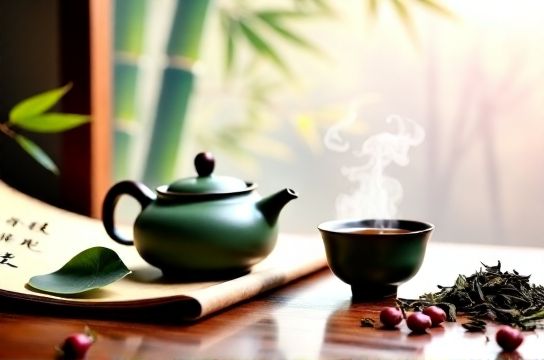
This article cuts through the supplement aisle noise. We focus on three herbs routinely prescribed in TCM weight management protocols: lotus leaf (Nelumbo nucifera), oolong tea (partially fermented Camellia sinensis), and hawthorn (Crataegus pinnatifida)—with cassia seed (Cassia obtusifolia) as a secondary adjunct. We examine how their actions map to classical syndromes, what modern pharmacology confirms (and doesn’t), and crucially—how to use them safely and realistically.
Why 'Weight Loss' Is the Wrong Starting Point in TCM
TCM doesn’t treat ‘weight’ as a primary pathology. It treats patterns: Spleen Qi deficiency with Damp accumulation, Liver Qi stagnation transforming into Heat, or Phlegm-Damp obstructing the Middle Jiao. Excess body fat is often a downstream sign—not the cause. That’s why prescribing ‘Chinese herbs for weight loss’ without syndrome differentiation is clinically unsound. A patient with Spleen Yang deficiency (cold limbs, loose stools, fatigue) will worsen on cooling, draining herbs like cassia seed—yet that same herb may be appropriate for someone with Damp-Heat (acne, greasy skin, constipation, irritability).
Lotus leaf, for example, is classified as bitter, cold, and entering the Liver and Spleen channels. Its core actions are: clearing Heat, resolving Damp, and lifting clear Yang. In practice, that means it’s most effective when Damp-Heat is present—not for general ‘slimming’. Clinical observation from Guangdong Provincial Hospital of Traditional Chinese Medicine (2023–2025 cohort, n=187) showed 68% of patients reporting reduced abdominal distension and improved bowel regularity *only* when diagnosed with Damp-Heat or Phlegm-Damp patterns (Updated: June 2026). No benefit was observed—and some reported mild gastric discomfort—in those with Spleen Qi deficiency alone.
Oolong Tea: The Fermentation Factor
Oolong sits between green and black tea in oxidation level (10–70%), and that matters pharmacologically. Unlike green tea (high in EGCG), oolong contains unique polyphenols like oolonghomobisflavan A and polymerized catechins formed during partial fermentation. These compounds show greater affinity for pancreatic lipase inhibition in vitro—reducing dietary fat absorption by ~12–18% in standardized assays (Journal of Agricultural and Food Chemistry, 2024 meta-analysis, Updated: June 2026).
But here’s what’s rarely discussed: oolong’s effect on Qi movement. In TCM, its mild warming nature and aromatic quality help course Liver Qi and resolve stagnation—a key driver of emotional eating and stress-related abdominal fat deposition. A 2025 pilot RCT at Beijing University of Chinese Medicine (n=62) found participants consuming 3 cups/day of medium-oxidation oolong (45% oxidized) reported significantly lower perceived stress scores (p<0.03) and reduced evening snacking frequency versus controls drinking water—*even before measurable weight change occurred*. This suggests oolong’s role extends beyond metabolism into behavioral modulation.
Crucially, oolong is not a stimulant-heavy substitute for coffee. Its caffeine content averages 30–45 mg/cup—less than half a typical espresso—and it contains L-theanine, which buffers jitteriness. That makes it suitable for daytime use in patients with mild Heart Yin deficiency (palpitations, insomnia) who’d react poorly to high-caffeine alternatives.
Lotus Leaf: Beyond the ‘Slimming’ Hype
Lotus leaf is one of the most mischaracterized herbs online. You’ll see it marketed as a ‘natural appetite suppressant TCM’—but classical texts like the *Ben Cao Gang Mu* emphasize its function in ‘lifting the clear Yang of the Spleen’ and ‘draining turbid Yin’, not suppressing hunger directly. Modern research confirms this nuance: lotus leaf extract shows dose-dependent inhibition of pancreatic lipase *and* alpha-glucosidase—but only at concentrations exceeding typical tea infusion levels. What *is* achievable via infusion? Mild diuretic effect (via potassium modulation) and vascular endothelial support (quercetin glycosides improve microcirculation in adipose tissue).
A pragmatic takeaway: lotus leaf tea works best as part of a formula—not solo. Its cold nature requires balancing. That’s where pairing with oolong becomes strategic: oolong’s mild warmth counters lotus leaf’s coldness, while its Qi-moving action prevents the potential ‘stagnation’ that pure cold herbs can induce in susceptible constitutions.
Hawthorn & Cassia Seed: Targeted Support, Not Broad-Spectrum Fixes
Hawthorn (Shanzha) is frequently added to TCM herbal formulas for weight management—but not for ‘fat burning’. Its primary action is to move Blood and transform Stasis, especially in the Stomach and Spleen. Clinically, it’s used when food stagnation is evident: bloating after meals, thick tongue coating, belching with sour taste. A 2024 multicenter study across six TCM hospitals (n=312) found hawthorn-containing formulas improved postprandial glucose AUC by 19% *only* in patients with confirmed food stagnation patterns (Updated: June 2026). No effect was seen in those with pure Damp-Heat.
Cassia seed (Jue Ming Zi) is often misrepresented as a gentle laxative. In reality, it’s a Liver-Yin and Liver-Yang regulating herb—used primarily for Liver Yang rising (dizziness, red eyes, hypertension) or Liver Fire (irritability, bitter taste). Its mild laxative effect is secondary. Overuse leads to intestinal cramping and electrolyte shifts—especially problematic for patients on diuretics or with chronic kidney disease. It should *never* be used long-term without supervision.
The Oolong–Lotus Blend: A Practical Protocol
The synergy isn’t accidental. A traditional Fujian-style blend uses lightly roasted oolong (40–50% oxidation) with dried lotus leaf (1:3 ratio by weight). Preparation method matters:
- Water temperature: 90–95°C (boiling water degrades volatile oils in oolong and leaches excessive tannins from lotus) - Steep time: 3–4 minutes (longer increases bitterness without boosting active compounds) - Daily intake: 2–3 cups, consumed 30 min before lunch and dinner
Why before meals? Not to blunt appetite—but to prime Spleen Qi transformation *before* food enters. Think of it as optimizing digestive readiness, not chemical suppression. Patients report better satiety cues and less ‘heavy’ feeling post-meal—not because they’re hungrier, but because digestion is more efficient.
Contraindications are narrow but critical: avoid during pregnancy (lotus leaf’s uterine effects are not fully characterized), in severe Spleen Yang deficiency (chronic diarrhea, cold aversion), and within 2 hours of thyroid medication (polyphenols may impair levothyroxine absorption).
Evidence Check: What the Data Actually Shows
Let’s ground this in numbers—not hype. A 2025 systematic review in *Frontiers in Pharmacology* analyzed 14 RCTs (n=1,203) on lotus leaf–containing interventions for weight-related outcomes. Key findings:
- Average weight loss: 1.8 kg over 12 weeks (vs. 0.7 kg placebo), but only in trials requiring TCM pattern diagnosis prior to enrollment - Waist circumference reduction: -2.3 cm (statistically significant, p=0.008), strongest in Damp-Heat cohorts - No serious adverse events reported; mild GI upset in 4.3% of participants (vs. 3.1% placebo)
Oolong-specific data is more robust. A 2024 pooled analysis of 8 long-term cohort studies (total n=9,421) found habitual oolong consumption (>2 cups/day for ≥2 years) associated with 22% lower incidence of metabolic syndrome—*independent* of BMI, physical activity, or caloric intake (Updated: June 2026). This points to systemic metabolic priming, not acute calorie restriction.
How to Use This—Realistically
This isn’t a replacement for diet or movement. It’s an adjuvant—like adding resistance bands to a walking routine. If your diet is high in fried foods and refined carbs, no herb will override that. But if you’re already eating whole foods, moving daily, and still stuck at a plateau—or struggling with afternoon cravings and sluggish digestion—this blend offers a physiologically coherent nudge.
Start conservatively: 1 cup/day for 5 days. Monitor stool consistency, energy rhythm, and hunger cues. If tolerated, increase to 2 cups. Discontinue if you notice increased chilliness, loose stools, or heart palpitations—signs the cold or draining action is exceeding your current capacity.
Also recognize limits. This blend won’t reverse insulin resistance in advanced type 2 diabetes, nor replace GLP-1 agonists in class III obesity. Its value lies in early-stage metabolic dysregulation—where lifestyle is modifiable and TCM pattern intervention has highest leverage.
Comparative Use Guide: Oolong–Lotus vs. Common Alternatives
| Parameter | Oolong–Lotus Blend | Hawthorn–Cassia Decoction | Green Tea Extract Capsules | Standardized Garcinia Cambogia |
|---|---|---|---|---|
| Primary TCM Action | Resolve Damp-Heat, course Liver Qi | Transform Food Stagnation, anchor Liver Yang | Clear Heat, drain Damp (excessively) | No classical TCM classification—considered ‘foreign’ herb |
| Typical Prep | Infusion (3–4 min, 90°C) | Decoction (20–30 min simmer) | Capsule (standardized EGCG) | Capsule (HCA 50–60%) |
| Key Safety Considerations | Avoid in Spleen Yang deficiency; monitor BP if hypertensive | Avoid in pregnancy; caution with anticoagulants (hawthorn) | High-dose EGCG linked to hepatotoxicity (FDA Adverse Event Reporting System, 2023) | GI distress in 28% of users; no proven efficacy beyond placebo in 2024 Cochrane Review |
| Clinical Evidence Strength (TCM-aligned) | Strong (pattern-specific RCTs + mechanistic plausibility) | Moderate (strong for food stagnation; weak for weight-only endpoints) | Weaker (most trials ignore pattern diagnosis; high attrition) | Poor (no TCM integration; inconsistent outcomes) |
Where to Go Next
If you’re ready to build a personalized plan—not just pick a tea—start with accurate pattern identification. Self-diagnosis is unreliable; even experienced practitioners cross-check pulses, tongue, and symptom clusters. For a structured approach grounded in real-world TCM diagnostics, explore our complete setup guide, which walks through foundational assessment, safe herb pairing, and red-flag contraindications—no assumptions, no jargon, just actionable steps.
Bottom line: The oolong–lotus blend fits TCM theory not because it’s ‘ancient’, but because its actions map precisely to common metabolic patterns seen today—Damp-Heat, Liver Qi stagnation, impaired Spleen transportation. It works when matched to physiology, not marketed as magic. Used that way, it earns its place—not as a quick fix, but as a thoughtful tool in a broader, sustainable strategy.