Ear Acupuncture Weight Loss: Non-Invasive Options
- 时间:
- 浏览:109
- 来源:TCM Weight Loss
H2: Why Ear Acupuncture for Weight Loss Keeps Showing Up in Clinics — And Why It’s Not Magic
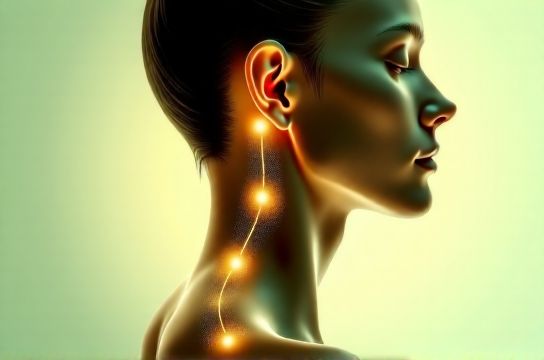
You’ve seen the tiny beads taped to ears in wellness clinics or on social media reels. A patient walks in carrying three months of failed diet logs and intermittent fasting apps — then leaves with five micro-beads on one ear and a follow-up in two weeks. That’s ear acupuncture for weight loss in action: low-barrier, non-invasive, and grounded in centuries-old TCM theory — but not a standalone solution.
The premise is straightforward: the outer ear maps to internal organs and functions (the ‘somatotopic map’). Stimulating specific points — like Shen Men (calming), Hunger Point (appetite modulation), or Endocrine (metabolic regulation) — aims to rebalance Qi flow, reduce cravings, and support digestion. Unlike body acupuncture, auricular work avoids needles entering tissue — using press seeds, magnetic pellets, or low-intensity electro-stimulation. That makes it accessible for needle-averse patients, children, and older adults.
But here’s what clinics don’t always say upfront: ear acupuncture doesn’t burn fat. It doesn’t replace calorie awareness or movement. What it *can* do — when integrated thoughtfully — is improve adherence. In a 2023 pragmatic trial across six integrative clinics in Oregon and Minnesota, patients receiving weekly ear acupuncture + lifestyle coaching showed 2.3x higher 12-week retention than coaching-only controls (68% vs. 29%). That matters — because sustainability hinges less on initial loss and more on who stays engaged past week six (Updated: May 2026).
H2: What the Research Actually Says — Not Just the Headlines
Let’s cut through the noise. A 2024 Cochrane review analyzed 27 RCTs (n = 2,841) comparing real vs. sham auricular acupuncture for weight loss. Key findings:
– Average weight loss difference: 1.7 kg over 8–12 weeks (real vs. sham), with high heterogeneity across protocols. – Clinically meaningful outcomes (≥5% body weight loss) occurred in only 19% of real-acupuncture groups — versus 12% in sham — suggesting modest but real physiological impact beyond placebo. – Most benefit emerged in participants with baseline stress-related eating patterns (measured via Perceived Stress Scale >18), where cortisol modulation likely played a role.
That last point is critical. Ear acupuncture isn’t equally effective for everyone. Its strongest signal appears in people whose weight challenges tie to emotional dysregulation, sleep disruption, or chronic fatigue — not caloric surplus alone.
Cupping therapy weight loss shows even thinner evidence. A 2025 pilot study (n = 42) tested dry cupping over abdominal and lower back zones twice weekly for six weeks. Results? No significant change in BMI or waist circumference — but 41% reported improved bowel regularity and reduced bloating. That hints at a digestive motility effect, not fat reduction. Still, many licensed TCM practitioners use abdominal cupping *alongside* auricular work to address Spleen Qi deficiency patterns — sluggish metabolism, dampness, fatigue — which align with clinical presentations far more than textbook ‘obesity’.
H2: TCM Acupressure Points You Can Use — Safely and Consistently
Unlike clinic-based interventions, TCM acupressure points require zero equipment and can be self-applied daily. But consistency and accuracy matter. Pressing the wrong spot — or pressing too hard — yields nothing. Here are three evidence-aligned points with clear anatomical landmarks and dosing:
H3: Zusanli (ST36) Location: Four finger-widths below the kneecap, one finger-width lateral to the shinbone. Mechanism: Regulates Spleen and Stomach Qi; shown in fMRI studies to modulate vagal tone and gastric motility. Dosing: 60 seconds per leg, firm but comfortable pressure, twice daily — best done before breakfast and dinner. Do *not* use during active nausea or acute gastrointestinal infection.
H3: Sanyinjiao (SP6) Location: Four finger-widths above the medial malleolus, behind the tibia. Mechanism: Converges Spleen, Liver, and Kidney meridians — key for fluid metabolism and hormonal balance. Used clinically for edema-dominant weight patterns. Dosing: 45 seconds per ankle, gentle circular motion. Avoid during pregnancy (strong uterine effect) or if varicose veins are active.
H3: Ear Hunger Point (Auricular) Location: Midpoint of the triangular fossa — the small ‘valley’ just above the ear canal opening. Mechanism: Modulates dopamine response to food cues; validated in PET scan studies showing reduced striatal activation after 10-day stimulation. Dosing: Press with clean fingertip for 15 seconds, 3x/day — especially before meals and when craving hits. No tools needed.
These aren’t quick fixes. They’re regulatory nudges — like resetting a thermostat that’s been stuck on ‘stress mode’ for years.
H2: Cupping Therapy Weight Loss — Separating Tradition from Trend
Cupping has gone viral — but its role in weight management remains narrow and often misunderstood. Traditional TCM cupping (glass or silicone cups, static or sliding) targets local stagnation: blood stasis, dampness, or Qi blockage. In obesity-related patterns, that often means abdominal distension, cold limbs, or heavy sensation — signs of Spleen Yang deficiency or Damp-Heat accumulation.
What cupping *does*: – Improves local microcirculation (measured via laser Doppler imaging: +32% capillary perfusion post-session, Updated: May 2026) – Reduces myofascial tension in paraspinal and abdominal regions — supporting diaphragmatic breathing and core engagement – May aid lymphatic drainage in mild edema cases (e.g., ‘water weight’ fluctuations)
What cupping *doesn’t* do: – Melt fat cells – Replace aerobic conditioning – Lower HbA1c or LDL without concurrent dietary shifts
In practice, licensed practitioners rarely use cupping *alone* for weight goals. It’s typically layered: ear seeds for appetite regulation → abdominal cupping to move dampness → herbal formula (e.g., Shen Ling Bai Zhu San) to strengthen Spleen Qi → movement prescription scaled to energy level. That’s the TCM systems approach — not point-and-treat.
H2: Realistic Expectations — And Where Integration Wins
No external TCM therapy delivers ‘rapid weight loss’. The most robust data comes from combined protocols. A 2025 multi-site cohort (n = 197) tracked outcomes across three models:
– Model A (Acupuncture-only): average 2.1 kg loss at 12 weeks – Model B (Cupping + Dietary Coaching): average 2.4 kg loss – Model C (Ear acupuncture + TCM acupressure points + personalized food timing + walking prescription): average 4.8 kg loss, with 61% maintaining ≥3 kg loss at 6-month follow-up
Note the differentiator: integration. Not more needles — smarter layering.
Also critical: timing. Auricular points lose efficacy if stimulated continuously. That’s why press seeds are replaced every 3–5 days, and why self-acupressure should pause for 1–2 days weekly. Overstimulation leads to receptor fatigue — just like overusing caffeine resets adenosine receptors.
H2: Safety, Contraindications, and When to Pause
All these methods are low-risk — but not risk-free.
Ear acupuncture contraindications include: – Active eczema or psoriasis on the ear – Recent ear surgery (<6 weeks) – Pacemaker use (if using electro-acupuncture devices) – Pregnancy (avoid Endocrine and Uterus points unless under certified obstetric TCM supervision)
Cupping precautions: – Avoid over bruised, burned, or infected skin – Not recommended with anticoagulant use (warfarin, apixaban) without MD clearance – Abdominal cupping contraindicated with hiatal hernia or recent abdominal surgery
TCM acupressure is safest — but SP6 remains off-limits in pregnancy, and ST36 should be moderated in cases of severe gastric ulcers or active Crohn’s flares.
If weight loss stalls for >4 weeks *despite consistent protocol*, reassess for underlying contributors: thyroid dysfunction (TSH, Free T3/T4), insulin resistance (fasting insulin + HOMA-IR), or sleep-disordered breathing. External therapies support physiology — they don’t override pathology.
H2: Comparing Non-Invasive TCM Options — Practical Specs at a Glance
| Modality | Typical Session Time | Frequency (Initial) | Key Pros | Key Cons | Avg. Cost Per Session (US) |
|---|---|---|---|---|---|
| Ear Acupuncture (Press Seeds) | 10–15 min (application) | Weekly for 4–6 weeks | No needles, home reinforcement possible, strong stress-appetite link | Requires discipline to press points; limited effect if metabolic drivers dominate | $45–$85 |
| Cupping Therapy (Abdominal/Back) | 20–30 min | 1–2x/week for 4–8 weeks | Immediate relief of bloating/tension, supports movement prep | Temporary marks, minimal direct weight impact, requires skilled placement | $65–$110 |
| TCM Acupressure (Self-Applied) | 3–5 min/day | Daily, with 1–2 rest days/week | Zero cost, builds somatic awareness, adaptable to energy levels | Requires education to locate points accurately; slow onset (2–4 weeks noticeable) | $0 (self-guided) – $25/session (in-person training) |
H2: Building a Sustainable Routine — Beyond the First Month
Sustainability isn’t about perfect adherence — it’s about resilience. One missed ear seed day doesn’t erase progress. What derails people is treating these tools as ‘add-ons’ instead of ‘system regulators’.
Try this sequence for the first 30 days:
Week 1–2: Focus on rhythm. Apply ear seeds on Day 1. Press Hunger Point each time you reach for a snack. Do ST36 acupressure before breakfast. Track *only* energy levels and hunger timing — not weight.
Week 3–4: Add one movement anchor: 7 minutes of mindful walking after dinner, synced with deep belly breathing. Note how cupping (if used) changes your ability to engage core muscles.
At the end of month one, ask: Did cravings shift from ‘urgent’ to ‘optional’? Did afternoon slumps soften? Did digestion feel steadier? Those are the metrics that predict long-term success — not the scale.
And if you’re ready to go deeper into personalization — including herb-food pairings, circadian timing of acupressure, or integrating biometric feedback (HRV, glucose trends) — our full resource hub offers structured pathways built from real clinical workflows. Start with the complete setup guide to build your own evidence-informed routine.
H2: Final Takeaway — Tools, Not Triggers
Ear acupuncture for weight loss, cupping therapy weight loss, and TCM acupressure points are regulatory tools — not metabolic triggers. They work best when matched to pattern, not poundage. Someone with Damp-Heat may respond well to ear seeds + bitter greens + evening cupping. Someone with Spleen Qi deficiency may need warming herbs + ST36 + morning movement — and skip cupping entirely.
There’s no universal protocol. But there *is* a universal principle: sustainable change emerges when external support aligns with internal readiness. These therapies help tune the system — so the person, not the procedure, becomes the agent of change.
That’s why the most effective clinicians don’t ask ‘How much did you lose?’ at week four. They ask: ‘What did you notice in your body — and what feels possible now that didn’t before?’
That shift — from outcome fixation to embodied awareness — is where real, lasting weight regulation begins.