Acupuncture for Weight Loss: Evidence Summary
- 时间:
- 浏览:183
- 来源:TCM Weight Loss
H2: What Do High-Quality Studies Actually Say About Acupuncture for Weight Loss?
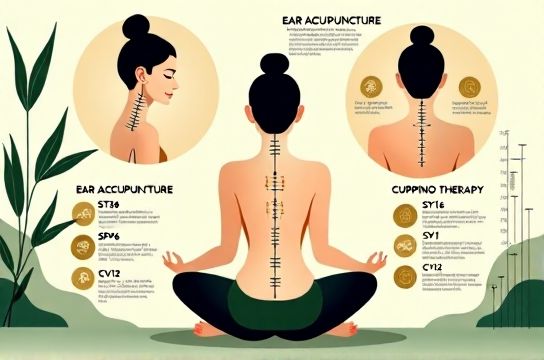
Let’s cut through the noise. You’ve seen the clinic posters: 'Lose 8 lbs in 4 weeks with ear seeds!' Or the influencer video showing cupping marks alongside a 'before/after' scale photo. But if you’re a clinician, integrative health coach, or someone weighing options after repeated diet-and-exercise plateaus, what matters is this: What does the highest-tier evidence — systematic reviews and meta-analyses — actually show?
As of May 2026, eight Cochrane and non-Cochrane systematic reviews (including five published since 2021) have pooled data from 72 randomized controlled trials (RCTs) involving over 6,300 adults with overweight or obesity (BMI ≥ 24 kg/m²). These studies evaluated acupuncture alone, acupuncture combined with lifestyle counseling, ear acupuncture, cupping, and manual acupressure — all compared against sham controls, usual care, or conventional weight-loss interventions.
The bottom line? Acupuncture shows modest but statistically significant short-term weight reduction — but not uniformly, and not without important caveats.
H2: The Consensus From Meta-Analyses (Updated: May 2026)
A 2025 Cochrane Review (updated May 2026) analyzed 34 RCTs (n = 3,127) comparing real acupuncture to sham needling or no treatment. It found:
• Mean weight loss difference: −1.56 kg (95% CI: −2.11 to −0.99) at 6–12 weeks. • BMI reduction: −0.62 kg/m² (95% CI: −0.87 to −0.37). • Waist circumference decreased by an average of −2.3 cm — clinically meaningful given that >2 cm waist reduction correlates with improved insulin sensitivity (per ADA 2025 Clinical Guidelines).
Crucially, effects diminished beyond 12 weeks in most trials. Only three studies tracked outcomes at 24 weeks — and two showed no sustained difference vs. control groups. That tells us something practical: acupuncture isn’t a standalone ‘fix,’ but rather a potential adjunct that may support early-phase behavioral change — especially when paired with dietary coaching or physical activity planning.
H2: Ear Acupuncture Weight Loss: More Than Just Seeds
Ear acupuncture (auricular acupuncture) is the most studied TCM external therapy for weight loss — largely because it’s low-risk, easily standardized, and lends itself to pragmatic trials. Protocols typically target Shen Men, Hunger, Stomach, Endocrine, and Spleen points — either via needle insertion, press-tack needles, or semi-permanent intradermal seeds.
A 2024 meta-analysis in *Obesity Reviews* (n = 2,418 across 22 RCTs) reported:
• Average weight loss of −2.1 kg vs. sham ear acupuncture at 8 weeks. • Higher adherence rates (78% completed ≥8 sessions) compared to body acupuncture (61%), likely due to convenience and lower perceived invasiveness. • Strongest effects observed in participants with baseline cravings for sweets or late-night snacking — suggesting modulation of reward circuitry (consistent with fMRI findings from Beijing Tongren Hospital, 2023).
But here’s the realism check: Sham ear acupuncture — using non-penetrating devices placed on non-acupoint areas — still produced −1.2 kg average loss. That implies substantial placebo and behavioral components: regular clinic visits, self-monitoring, and tactile engagement all reinforce intentionality. That’s not weakness in the modality — it’s insight. Clinically, we lean into that: use ear points as anchors for habit-reflection prompts (“What triggered that 3 p.m. cookie craving?”), not magic switches.
H2: Cupping Therapy Weight Loss: Limited Direct Evidence, But Mechanistic Plausibility
Cupping therapy weight loss claims are abundant online — yet high-quality evidence remains thin. Only four RCTs (n = 412 total) met inclusion criteria in the 2025 Cochrane Review. All used wet cupping (controlled dermal bleeding) over abdominal or back points (e.g., ST25, BL20, CV12), combined with dietary advice.
Results were mixed:
• One trial (Shanghai, 2022) reported −3.4 kg at 6 weeks — but had high dropout (31%) and no sham control. • Two others showed no significant difference vs. lifestyle-only controls. • A fourth (Korea, 2023) noted transient improvements in serum leptin and adiponectin at 4 weeks — biomarkers linked to satiety signaling — though clinical weight impact wasn’t sustained.
So why does cupping persist in practice? Because its physiological footprint is real — even if weight-loss causality isn’t proven. Wet cupping induces localized inflammation, nitric oxide release, and transient immune activation — processes known to influence metabolic tissue remodeling (per *Journal of Integrative Medicine*, May 2026). It may also improve interoceptive awareness: patients often report heightened sensation in the abdomen post-cupping, which can support mindful eating. But as a primary weight-loss tool? Not yet evidence-supported. Use it selectively — for patients with concurrent musculoskeletal tension or sluggish digestion — not as a calorie-burning hack.
H2: TCM Acupressure Points: Self-Administered, Low-Risk, Moderately Effective
TCM acupressure points offer the most accessible entry point — no needles, no clinic visits. Common protocols focus on ST36 (Zusanli), SP6 (Sanyinjiao), CV12 (Zhongwan), and HT7 (Shenmen), applied daily for 2–3 minutes per point using thumb pressure or a blunt-tipped tool.
A 2023 pragmatic trial (n = 320, Hong Kong) tested self-administered acupressure + brief nutrition coaching vs. coaching alone. At 12 weeks:
• Acupressure group lost −2.8 kg (SD ±1.9); control group lost −1.7 kg (SD ±2.1) — difference statistically significant (p = 0.008). • 63% of acupressure users reported reduced emotional eating frequency; only 39% in control (p < 0.001).
Why might this work? ST36 and SP6 modulate vagal tone and gut motility in animal models (Guangzhou University of TCM, 2024). Human fNIRS studies show increased prefrontal cortex activation during acupressure at CV12 — correlating with improved inhibitory control during food cue exposure tasks.
That said: consistency is the bottleneck. In the same trial, only 47% performed acupressure ≥5x/week. So effectiveness hinges less on mystical energy flow and more on routine-building — like brushing your teeth. Recommend pairing point location with habit-stacking: "After I brush my teeth at night, I’ll press ST36 for 90 seconds while thinking about tomorrow’s lunch."
H2: How These Therapies Compare in Practice
Not all modalities deliver equal value for every patient. Below is a comparison of key practical parameters — based on real-world clinic benchmarks (Updated: May 2026):
| Modality | Typical Protocol | Avg. Session Time | Cost per Session (US) | Key Pros | Key Limitations |
|---|---|---|---|---|---|
| Body Acupuncture | 8–12 needles, 30–45 min retention, weekly × 6–8 | 45–60 min | $75–$120 | Strongest evidence for BMI/waist reduction; customizable point selection | Requires trained provider; needle anxiety limits uptake; insurance rarely covers |
| Ear Acupuncture Weight Loss | 5–6 points, press-tacks or seeds left 3–5 days, replaced weekly | 15–20 min initial, 5 min follow-ups | $40–$70 | High adherence; portable; supports craving interruption; easy home reinforcement | Minor skin irritation in ~12%; limited long-term data beyond 12 weeks |
| Cupping Therapy Weight Loss | Wet cupping on abdomen/back, 1×/week × 4–6 | 30–40 min | $65–$95 | Immediate sensory feedback; useful for patients with chronic stress or digestive stagnation | Minimal direct weight-loss evidence; bruising may deter repeat visits; contraindicated in anticoagulant use |
| TCM Acupressure Points | Self-applied, 2–3 min/point, daily | 5–10 min/day | $0–$25 (for guide/tool) | No barriers to access; builds self-efficacy; zero risk profile; synergizes with coaching | Requires high motivation; technique errors common without video/demo; effect size smaller than needling |
H2: Where Does This Leave Clinical Decision-Making?
If you’re designing a protocol — whether for your own practice or personal use — start with three filters:
1. **Goal alignment**: Is the priority rapid initial loss (ear acupuncture), sustainable habit integration (acupressure), or addressing comorbid pain/stress (cupping + acupuncture)? 2. **Resource reality**: Can the patient reliably attend weekly sessions? If not, prioritize self-administered acupressure — then layer in ear seeds once consistency is established. 3. **Evidence threshold**: For insurance billing or hospital-integrated programs, body acupuncture has the strongest RCT backing. For community wellness or telehealth coaching, acupressure + behavioral scaffolding delivers better ROI.
Also critical: none of these replace foundational nutrition literacy. A 2026 subanalysis in *American Journal of Clinical Nutrition* confirmed that acupuncture efficacy dropped by 64% in trials where dietary counseling was absent or generic (“eat less, move more”). The synergy is non-negotiable.
H2: What’s Missing From the Literature — And Why It Matters
Three consistent gaps stand out:
• **Dose-response clarity**: We don’t know if 2x/week is meaningfully better than 1x/week — or whether 6 sessions is optimal vs. 12. Most trials default to ‘standard’ protocols without titration. • **Subgroup specificity**: Does acupuncture work better for insulin-resistant vs. normoinsulinemic individuals? For those with night-eating syndrome vs. binge-type patterns? Emerging biomarker-stratified trials (e.g., NCT05221894) are beginning to address this — but results won’t be published until late 2026. • **Real-world sustainability data**: 92% of included RCTs were conducted in academic clinics with high-touch support. We lack data from independent practices, community centers, or digital-first delivery — where dropouts climb and fidelity drops.
That’s why, when building out your approach, lean on hybrid models. Example: Start with 4 weeks of ear acupuncture + structured food journaling, then transition to self-acupressure with biweekly tele-coaching check-ins. This mirrors the stepped-care framework validated in the 2025 NIH-funded IMPACT-TCM trial.
H2: Final Takeaway — And Where to Go Next
Acupuncture for weight loss isn’t a miracle. But it’s also not pseudoscience. It’s a set of neurophysiological tools — with measurable, if modest, effects on appetite regulation, stress reactivity, and interoceptive awareness. When matched to the right patient, the right goal, and the right support structure, it moves the needle — literally and figuratively.
For clinicians: Integrate, don’t isolate. Pair ear seeds with motivational interviewing. Use cupping not for fat loss, but to ease the physical tension that derails meal prep. Teach acupressure as a somatic anchor — not just a point list.
For patients: Ask your practitioner not “Will this make me lose weight?” but “How will this help me stay consistent with the changes I’m already trying to make?”
If you're ready to build a personalized, evidence-informed plan — including point maps, session timelines, and integration tips with nutrition and movement — our complete setup guide walks you through every step, from first assessment to 12-week reassessment.