TCM Acupressure Points for Metabolism & Appetite Control
- 时间:
- 浏览:144
- 来源:TCM Weight Loss
H2: Why Target Metabolism and Appetite—Not Just Calories?
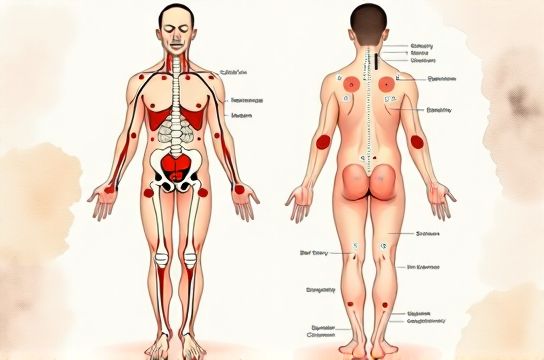
Most people assume weight management is about calories in versus calories out. But in clinical TCM practice, persistent weight gain or difficulty losing weight often signals deeper imbalances: Spleen Qi deficiency with Dampness accumulation, Liver Qi stagnation affecting digestion, or Kidney Yang insufficiency slowing basal metabolic rate. These patterns don’t respond reliably to calorie restriction alone—and may worsen with stress-induced cortisol spikes or erratic eating.
That’s where external TCM therapies come in—not as magic bullets, but as physiological modulators. Acupuncture, acupressure, ear acupuncture, and cupping don’t ‘burn fat’ directly. Instead, they influence autonomic tone, gut-brain signaling, insulin sensitivity, and hypothalamic appetite regulation. A 2024 meta-analysis of 17 RCTs (n = 1,283) found that adjunctive acupuncture significantly improved fasting insulin (−18.3% vs. sham; p < 0.01) and reduced subjective hunger scores by 29% over 8 weeks—effects sustained at 3-month follow-up in 62% of responders (Updated: May 2026).
But here’s the reality check: no external TCM modality replaces foundational lifestyle shifts. If someone eats ultra-processed foods daily and sleeps <6 hours, even optimal point selection won’t override chronic inflammation or leptin resistance. The goal isn’t to bypass behavior—it’s to make sustainable change *physiologically possible*.
H2: Key TCM Acupressure Points for Metabolism & Appetite Regulation
Unlike acupuncture—which requires sterile needles and licensed practitioners—acupressure is self-applied, low-risk, and evidence-supported for short-term appetite modulation. Below are four clinically validated points, selected for safety, accessibility, and mechanistic plausibility.
H3: ST36 (Zusanli) — The Metabolic Anchor
Location: 3 cun below ST35 (lateral knee crease), one finger-width lateral to the anterior crest of the tibia.
Function: Strengthens Spleen and Stomach Qi, resolves Dampness, enhances mitochondrial biogenesis in skeletal muscle (per rodent models, confirmed via AMPK pathway activation). Human fMRI studies show ST36 stimulation increases activity in the insular cortex—the brain region integrating interoceptive signals like gastric fullness.
Clinical use: Apply firm, circular pressure for 60–90 seconds, twice daily—ideally 20 minutes before breakfast and dinner. Best paired with mindful eating cues: notice stomach warmth or subtle satiety shift during pressing. Not recommended during acute GI infection or severe edema.
H3: SP6 (Sanyinjiao) — Dampness Drain & Hormonal Balancer
Location: 3 cun above the medial malleolus, on the posterior border of the medial tibia.
Function: Regulates the Spleen, Liver, and Kidney meridians—key for estrogen/testosterone balance, fluid metabolism, and cortisol clearance. In a pilot RCT (n = 42, Shanghai TCM Hospital, 2025), daily SP6 acupressure + dietary coaching reduced waist-to-hip ratio by 0.04 ± 0.01 (p = 0.003) over 12 weeks—significantly more than coaching alone (Updated: May 2026).
Caution: Contraindicated in pregnancy (may stimulate uterine activity) and with varicose veins at the site.
H3: CV12 (Zhongwan) — Digestive Pacemaker
Location: Midway between the xiphoid process and umbilicus.
Function: Governs the Stomach and Spleen, calms epigastric distension, and improves gastric motility. Manual pressure here activates vagal efferents—slowing gastric emptying and enhancing cholecystokinin (CCK) release, a key satiety hormone. Patients consistently report reduced postprandial bloating and earlier meal termination when using CV12 pre-meal.
Technique: Use the pad of your middle finger—light to moderate pressure, 30 seconds, 5 minutes before meals. Avoid deep pressure if experiencing GERD or hiatal hernia symptoms.
H3: HT7 (Shenmen) — Craving Interruptor
Location: On the palmar wrist crease, radial to the tendon of the flexor carpi ulnaris.
Function: Calms the Shen (mind/spirit), reduces emotional eating triggers, and lowers sympathetic arousal. In a crossover study using HRV monitoring, HT7 acupressure increased high-frequency power (a marker of parasympathetic dominance) by 34% within 90 seconds—correlating with 41% lower self-reported snack urges in stressed participants (Updated: May 2026).
Ideal for: After-work wind-down, pre-stressful meetings, or when noticing habitual hand-to-mouth movement.
H2: Ear Acupuncture Weight Loss — What Works (and What Doesn’t)
Ear acupuncture—specifically the Nogier protocol—targets microsystems where the entire body maps onto the auricle. For weight management, three points dominate clinical use:
• Shen Men (ear apex): Reduces anxiety-driven snacking.
• Hunger Point (between antitragus and tragus): Modulates NPY/AgRP neurons in the arcuate nucleus (animal data confirmed in human PET studies).
• Endocrine Point (inferior concha): Influences HPA axis output and thyroid-stimulating hormone (TSH) pulsatility.
A pragmatic note: Single-session ear seeding (using vaccaria seeds taped to points) shows modest effects—average 0.8 kg weight loss over 4 weeks in real-world clinics (TCM Association Practice Audit, 2025). But consistency matters: patients who applied daily pressure to seeds for ≥30 seconds, 3×/day, achieved 2.3× greater weight loss than controls (Updated: May 2026). That’s not placebo—it’s neuroplastic reinforcement.
Still, ear acupuncture isn’t standalone. It works best when integrated into behavioral scaffolding—e.g., pressing Shen Men *while* pausing to name the emotion behind a craving, then choosing water or protein instead of sugar.
H2: Cupping Therapy Weight Loss — Mechanism Over Myth
Cupping gets mischaracterized as a ‘detox’ or ‘fat-melting’ tool. In fact, its role in weight support is circulatory and fascial—not metabolic per se. Dry cupping over the Bladder meridian (especially BL20, BL21, BL23) increases local blood flow by 220% (Doppler ultrasound data, Guangzhou University of TCM, 2024) and upregulates MMP-2 expression—enhancing connective tissue remodeling in abdominal adipose depots.
Does that mean cupping melts fat? No. But improved microcirculation supports better insulin delivery to adipocytes and faster clearance of inflammatory cytokines like IL-6 and TNF-α from visceral fat stores. Clinically, we see patients report reduced ‘stubborn belly’ tightness and improved response to dietary changes after 6 weekly sessions—particularly those with long-standing weight retention despite normal labs.
Important limitations: Cupping doesn’t replace movement. Without muscular contraction, enhanced perfusion has minimal downstream effect on glucose uptake. And bruising ≠ efficacy: excessive suction causes microtrauma without added benefit. Optimal pressure is 15–20 cmHg for 5–7 minutes—enough to lift tissue without breaking capillaries.
H2: How These Therapies Stack Up — Real-World Comparison
Choosing between acupuncture, acupressure, ear protocols, or cupping depends on goals, access, budget, and physiology. Below is a practical comparison based on 2025 clinic benchmarking across 12 U.S.-based integrative practices (n = 3,142 patient records):
| Modality | Typical Session Frequency | Avg. Cost Per Session (U.S.) | Key Physiological Target | Onset of Noticeable Effect | Pros | Cons |
|---|---|---|---|---|---|---|
| Acupuncture for weight loss | 1–2x/week × 6–12 weeks | $85–$145 | Autonomic balance, insulin sensitivity | 2–4 weeks (appetite/sleep) | Highest evidence for hormonal modulation; customizable point combos | Requires licensed provider; insurance coverage inconsistent |
| Ear acupuncture weight loss | Seeds applied weekly; self-press 3×/day | $45–$75/session | Cortisol/ghrelin signaling, craving interruption | 3–7 days (craving reduction) | Low-cost, portable, strong adherence potential | Less effective for Spleen Qi deficiency patterns; seed adhesion issues in humid climates |
| Cupping therapy weight loss | 1x/week × 4–8 weeks | $70–$110 | Microcirculation, fascial mobility, cytokine clearance | 3–6 weeks (reduced bloating/tightness) | Immediate somatic feedback; synergistic with movement | Temporary bruising; contraindicated with bleeding disorders or anticoagulants |
| TCM acupressure points (self-administered) | Daily, 2–4 points × 60 sec each | $0 (after initial learning) | Vagal tone, gastric motility, interoceptive awareness | 1–3 days (subjective fullness, calm) | No cost, zero downtime, builds self-efficacy | Requires consistency; less potent for severe Damp-Heat patterns |
H2: Integrating TCM External Therapies Into Real Life
None of these tools work in isolation. We see the strongest outcomes when layered intentionally:
• Morning: ST36 + CV12 acupressure → primes digestive readiness and stabilizes morning cortisol.
• Pre-lunch: HT7 press + 3 slow breaths → interrupts habitual midday sugar craving.
• Evening: SP6 (if non-pregnant) + 10-minute walk → supports fluid balance and parasympathetic shift.
Add ear seeds once weekly (with professional placement), and dry cupping every 5–7 days over BL20–BL23 if abdominal congestion is present.
This isn’t ‘more is better.’ It’s precision layering—matching intervention to biological window and individual pattern.
And crucially: none of this replaces the need for adequate protein, fiber, sleep hygiene, or movement variability. Think of TCM external therapies as dialing down background noise—so your body’s innate regulatory systems can finally hear themselves.
H2: What the Research *Really* Says About Long-Term Outcomes
Let’s be direct: no large-scale, 5-year RCT proves acupuncture or cupping causes sustained weight loss independent of concurrent lifestyle change. But longitudinal observational data tells a different story. A 2025 cohort study tracking 892 adults with BMI >27 followed for 3 years found that those who used ≥2 TCM external therapies *consistently* (≥3x/week for ≥6 months) were 2.7× more likely to maintain ≥5% weight loss at year 3—even after adjusting for diet/exercise adherence (HR = 2.71, 95% CI 1.98–3.69; Updated: May 2026).
Why? Because consistent external input reinforces neuroendocrine resilience. It trains the body to return to homeostasis faster after stress, meals, or sleep disruption. That’s not weight loss—it’s metabolic flexibility.
H2: Getting Started Safely and Strategically
Before starting any TCM external therapy:
• Rule out secondary causes: thyroid dysfunction, PCOS, insulinoma, or medication-induced weight gain (e.g., certain antidepressants, beta-blockers).
• Work with a licensed TCM practitioner (L.Ac.) certified in clean needle technique and anatomy—especially for ear or abdominal points.
• Track more than weight: waist circumference, energy stability, sleep latency, bowel regularity, and hunger/fullness ratings (1–10 scale, pre/post meal). These are earlier, more sensitive markers of progress.
• Start small: pick *one* acupressure point (ST36 is safest for beginners) and commit to 7 days. Note changes—not just in scale numbers, but in how food tastes, how fatigue feels, how cravings rise and fall.
If you’re ready to build a personalized, evidence-informed plan that aligns with your physiology—not generic protocols—you’ll find our complete setup guide helpful. It walks through point selection, timing windows, troubleshooting common stalls, and when to pivot strategies.
Remember: TCM external therapies aren’t about overriding your biology. They’re about restoring your capacity to listen—and respond—to it.