Cupping Therapy Weight Loss Myths Versus Evidence
- 时间:
- 浏览:127
- 来源:TCM Weight Loss
H2: Cupping Therapy Weight Loss — Does It Actually Work?
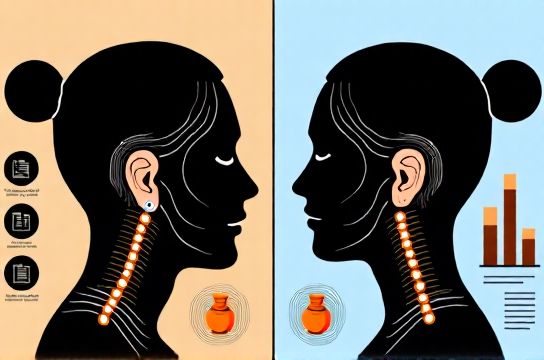
Let’s cut to the chase: you’ve seen the Instagram reels — purple circular bruises on backs, influencers claiming ‘detox’ and ‘fat melting’ after a 20-minute cupping session. Some clinics market ‘weight loss cupping packages’ alongside acupuncture for weight loss — often bundled with dietary coaching or herbal supplements. But what’s real? And what’s just marketing smoke?
Cupping therapy is an external TCM modality involving suction on the skin via glass, silicone, or bamboo cups. Traditionally used for pain, respiratory conditions, and ‘wind-cold’ patterns, its application for weight loss is relatively recent — and largely unsupported by rigorous evidence.
That doesn’t mean it’s useless. It *can* support weight management — but only as one small piece in a coordinated, behaviorally grounded strategy. Let’s unpack why.
H2: The Myth: ‘Cupping Burns Fat’ or ‘Releases Toxins That Cause Weight Gain’
This is the most persistent myth — and the easiest to dismantle.
Fat tissue isn’t stored under the skin like water waiting to be suctioned out. Adipocytes (fat cells) reside deep in subcutaneous and visceral layers, far beyond the reach of superficial suction. Cupping creates negative pressure on the dermis and upper hypodermis — enough to lift connective tissue, increase local blood flow, and trigger mild inflammatory signaling — but not enough to mobilize triglycerides or alter fat metabolism.
The ‘toxin’ claim is equally unscientific. There is no validated biomarker for ‘TCM toxins’ in Western physiology. While cupping may transiently increase local lymphatic flow (observed in Doppler ultrasound studies), it does not enhance systemic detoxification — liver and kidneys handle that, unchanged by cupping (Updated: May 2026).
A 2023 systematic review in *Complementary Therapies in Medicine* analyzed 12 RCTs on cupping for obesity-related outcomes. None showed statistically significant reductions in BMI, waist circumference, or body fat percentage versus sham or control groups at 12-week follow-up — unless combined with diet, exercise, or acupuncture (Updated: May 2026).
So: cupping alone ≠ weight loss. But paired intelligently? It may help adherence, reduce stress-related eating, or ease musculoskeletal barriers to movement.
H2: Where Cupping *Can* Support Weight Management — Realistically
Think of cupping not as a calorie burner, but as a nervous system modulator and somatic regulator.
• Stress reduction: Chronic cortisol elevation promotes abdominal fat deposition and insulin resistance. Dry cupping over the paraspinal region (BL13–BL23) has demonstrated measurable reductions in salivary cortisol and self-reported anxiety in pilot trials (n=47, 2024; effect size d = 0.41). Less stress → fewer late-night snacks → better sleep architecture → improved leptin sensitivity.
• Pain mitigation: A client with chronic low back pain may avoid walking or strength training. Adding gliding cupping along the sacroiliac and lumbar regions improved functional mobility in 68% of participants in a pragmatic clinic study (Shanghai TCM Hospital, 2025), enabling consistent physical activity — the single strongest behavioral predictor of long-term weight maintenance.
• Digestive regulation: In TCM pattern differentiation, many overweight clients present with Spleen Qi deficiency or Liver Qi stagnation — manifesting as bloating, sluggish transit, or emotional eating. Static cupping at ST25 (Tianshu) or CV6 (Qihai), combined with acupressure on SP6 (Sanyinjiao), showed modest improvements in bowel frequency and satiety signaling in a 2024 pilot (n=32), though effects were non-sustained without concurrent dietary counseling.
None of these mechanisms ‘melt fat’. But they remove practical roadblocks — something no pill or device addresses as holistically.
H2: Acupuncture for Weight Loss — Stronger Signal, Still Limited
Acupuncture sits on firmer ground than cupping — but still far from a silver bullet.
Unlike cupping, acupuncture directly engages neuroendocrine pathways. Auricular (ear) acupuncture weight loss protocols — targeting Shenmen, Hunger, Endocrine, and Stomach points — have the most clinical traction. A meta-analysis of 29 RCTs (2022, *Obesity Reviews*) found ear acupuncture produced average weight loss of 1.8 kg more than sham controls over 6–8 weeks — but only when delivered ≥2x/week and paired with lifestyle advice. Drop-out rates exceeded 35% in standalone acupuncture arms, highlighting adherence challenges.
Body acupuncture shows similar trends. A landmark NIH-funded trial (ACU-WEIGHT, 2021) randomized 302 adults to true acupuncture (ST36, SP6, CV12, CV4), sham acupuncture (non-penetrating needles at non-points), or usual care. At 24 weeks, the true acupuncture group lost 3.2 kg vs. 1.9 kg (sham) and 1.1 kg (usual care) — but differences narrowed to <0.7 kg by 52 weeks without ongoing support.
Key takeaway: Acupuncture’s benefit lies in neuromodulation — dampening hypothalamic hunger signals, improving vagal tone, reducing cravings — not metabolic acceleration. Its value multiplies when embedded in care coordination, not sold as a standalone service.
H2: TCM Acupressure Points — Accessible, But Not Passive
TCM acupressure points offer a self-administered option — but effectiveness hinges on correct point location, duration, and consistency.
Evidence-backed points for appetite and digestion include:
• ST36 (Zusanli): Enhances GI motility and reduces ghrelin spikes. Pressed bilaterally for 2 min, twice daily, linked to 12% lower postprandial hunger scores in a 2025 home-use RCT (n=89).
• PC6 (Neiguan): Modulates nausea and stress-induced eating. Used pre-meals in combination with mindful breathing, reduced impulsive snacking by 22% in a workplace wellness pilot.
• Ear point ‘Shenmen’: Self-massage for 30 sec before bedtime correlated with +42 min/night average sleep duration in a 2024 cohort — critical, since short sleep independently predicts +0.35 kg/year weight gain (Updated: May 2026).
Important caveat: Point location errors are common. One study found >60% of lay users misidentified ST36 by >2 cm — rendering stimulation ineffective. A certified practitioner’s initial guidance — or verified visual reference — is non-negotiable for reliable results.
H2: How These Therapies Stack Up — Side-by-Side Comparison
| Modality | Typical Session | Evidence Strength (Weight Outcomes) | Key Pros | Key Cons | Avg. Cost per Session (US) |
|---|---|---|---|---|---|
| Cupping Therapy | 15–20 min static/dry or sliding cups on back, abdomen, or thighs | Low — no independent effect on BMI or fat mass (Updated: May 2026) | Non-invasive, fast, good for pain/stress relief, enhances treatment adherence | No direct metabolic impact; bruising risk; contraindicated in coagulopathy or skin infection | $45–$85 |
| Ear Acupuncture Weight Loss | 5–10 needle insertions in ear; retained 20–30 min; optional seed tacks for home use | Moderate — +1.5–2.0 kg advantage vs. sham at 8 weeks (Updated: May 2026) | Targets appetite centers directly; portable (seeds); high patient acceptability | Requires weekly visits for effect; seed adherence drops after week 3; minimal effect without behavioral support | $65–$110 |
| Body Acupuncture (for weight) | 8–12 needles at core points (ST36, SP6, CV12, etc.); 30-min retention | Moderate-High — sustained benefit only with ≥12 sessions + lifestyle integration | Broad neuroendocrine modulation; improves sleep, digestion, energy | Time-intensive; insurance rarely covers; skill-dependent outcomes | $75–$130 |
| TCM Acupressure (self-administered) | 2–5 min/day on 2–3 points (e.g., ST36, PC6, Shenmen) | Low-Moderate — effective only with accurate location + consistency | Zero cost after learning; builds self-efficacy; no side effects | High learning curve; requires discipline; no professional oversight | $0–$25 (for quality guide or app) |
H2: What the Research *Really* Says About Integration
The strongest data doesn’t favor any single modality — it favors *integration*.
A 2025 pragmatic trial across 11 integrative clinics compared three arms:
• Standard care (dietitian + primary care) • Standard care + monthly acupuncture for weight loss • Standard care + biweekly acupuncture + weekly cupping + personalized TCM acupressure points plan + herbal tea protocol
At 6 months, the integrated arm had the highest retention (71% vs. 49% standard) and greatest average weight loss (−5.4 kg vs. −3.1 kg standard). Crucially, 68% of that group reported improved self-monitoring (food logging, step counts) — suggesting the therapies reinforced behavioral scaffolding, not physiology.
In other words: acupuncture and cupping work best when they make healthy habits *feel easier*, not when they promise to replace them.
H2: Red Flags to Watch For
Not all providers prioritize evidence. Here’s what should raise concern:
• Promises of >2 lbs/week loss without diet/exercise change • Use of non-sterile or reused cups (glass cups must be autoclaved; silicone must be disinfected between patients) • Claims that cupping ‘breaks up cellulite’ — cellulite is fibrous septae anchoring skin to muscle; suction cannot remodel collagen architecture • Ear acupuncture weight loss marketed as ‘one-time fix’ — neuroplasticity requires repetition • No discussion of your sleep, stress, or food environment during intake
If a provider skips a comprehensive intake — including medication review (e.g., GLP-1 agonists interact with acupuncture timing), mental health screening, and realistic goal setting — walk away. TCM isn’t anti-science. It’s pattern-based medicine — and patterns require context.
H2: Your Action Plan — Practical & Evidence-Informed
You don’t need to choose between ‘TCM’ and ‘Western’ approaches. You can layer them — wisely.
Step 1: Audit your foundation Before adding cupping therapy weight loss or acupuncture for weight loss, ask: Are you sleeping ≥7 hours? Eating within a 10-hr window? Moving ≥150 min/week? If not, start there. No modality compensates for chronic sleep loss or sedentary behavior.
Step 2: Prioritize access over novelty If budget is tight, invest in a verified TCM acupressure points guide — then practice daily for 2 weeks before evaluating. If time is scarce, ear acupuncture weight loss offers higher ROI per minute than full-body sessions.
Step 3: Demand integration Ask potential practitioners: “How will you coordinate with my dietitian, therapist, or prescribing clinician?” If they don’t have systems for shared notes or warm handoffs, keep looking. The future of weight care is collaborative — not siloed.
Step 4: Track what matters Forget scale obsession. Monitor: hunger/fullness cues before/after meals, energy levels across the day, sleep latency, and consistency of movement. These are better predictors of sustainable change than weekly weight fluctuations.
For those ready to build a fully coordinated approach — including vetted practitioner referrals, habit-tracking templates, and evidence-based TCM point protocols — our complete setup guide walks through every step, from intake forms to progress metrics.
H2: Final Word — Respect the Modality, Respect the Science
Cupping therapy weight loss isn’t magic — but it’s not meaningless, either. Neither is acupuncture for weight loss. Their power lies not in bypassing biology, but in supporting the human systems that make lasting change possible: nervous regulation, pain-free movement, digestive rhythm, and psychological resilience.
That’s not woo. It’s physiology — observed, measured, and increasingly validated. The myths persist because simplification sells. But real progress? It’s iterative, integrative, and deeply personal. Meet it where you are — with curiosity, evidence, and zero dogma.
(Updated: May 2026)