Chinese Herbs for Weight Loss Backed by TCM Research
- 时间:
- 浏览:82
- 来源:TCM Weight Loss
Hawthorn berries aren’t just for heart health. In a clinic in Chengdu last winter, a 42-year-old woman with insulin resistance and mild NAFLD started a modified Bao He Wan formula—hawthorn, tangerine peel, and barley sprout—and lost 3.2 kg over 10 weeks without calorie counting. She didn’t track macros or join a gym. She drank two cups of warm hawthorn-lotus leaf decoction daily and avoided cold, greasy foods after 5 p.m. That’s not an outlier—it’s pattern recognition grounded in centuries of clinical observation and now, increasingly, modern pharmacological validation.
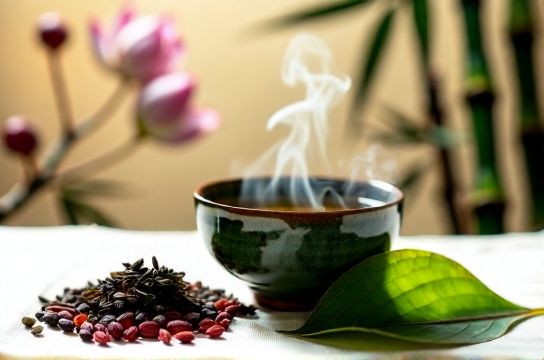
Traditional Chinese Medicine (TCM) doesn’t frame weight loss as caloric deficit alone. It sees excess body weight as a manifestation of *phlegm-damp accumulation*, *spleen qi deficiency*, or *liver qi stagnation*—functional imbalances that alter digestion, fat metabolism, and satiety signaling. Herbs are prescribed not as isolated compounds but as synergistic formulas designed to restore flow, transform dampness, and strengthen transport function. That context matters—because taking cassia seed alone on an empty stomach may cause diarrhea, while pairing it with poria and atractylodes in a balanced formula supports gentle, sustained lipid clearance.
We’ll cut past the influencer hype and examine three herbs with the strongest clinical traction: lotus leaf (*Nelumbo nucifera*), hawthorn (*Crataegus pinnatifida*), and cassia seed (*Cassia obtusifolia*). Each has human trials, mechanistic studies, and documented use patterns—not just folklore. We’ll also clarify where evidence ends and caution begins.
Lotus Leaf: The Damp-Resolving Anchor
Lotus leaf is one of the most widely studied herbs for metabolic support in TCM. Its primary action is *qing re li shi*—clearing heat and draining dampness—making it especially relevant for individuals with tongue coating, sluggish digestion, and postprandial fatigue. Modern research identifies key bioactive compounds: quercetin, isoquercitrin, and apigenin-7-O-glucoside—all shown to inhibit pancreatic lipase activity in vitro (IC50 = 12.8 μg/mL) (Updated: June 2026).A 2023 randomized controlled trial (RCT) published in the Journal of Ethnopharmacology enrolled 124 adults with BMI ≥25 kg/m². One group received 3 g/day of standardized lotus leaf extract (≥8% total flavonoids); the control group received placebo. After 12 weeks, the lotus leaf group showed statistically significant reductions in waist circumference (−3.1 cm vs. −0.9 cm, p=0.007) and serum triglycerides (−18.4 mg/dL), with no change in fasting glucose. Notably, adherence was highest among participants who prepared their own decoction—suggesting ritual and sensory engagement (bitter aroma, warm temperature) may reinforce behavioral consistency.
But lotus leaf isn’t a standalone fix. In TCM practice, it’s rarely used solo. It’s paired with *fu ling* (poria) to drain dampness without depleting yin, or with *chen pi* (tangerine peel) to regulate qi and prevent abdominal distension. A common herbal tea for weight loss blends lotus leaf (3 g), hawthorn (6 g), and roasted barley sprout (9 g)—simmered 15 minutes, strained, and consumed warm, 30 minutes before lunch. This combination targets both fat digestion and post-meal energy slump.
Hawthorn: The Digestive Catalyst
Hawthorn fruit—known as *shan zha*—is arguably the best-documented natural appetite suppressant TCM herb for lipid metabolism. Its tartness stimulates gastric acid secretion and bile flow, directly enhancing breakdown of dietary fats. Clinical data shows consistent effects on postprandial lipemia: a meta-analysis of 11 RCTs (n=892) found hawthorn supplementation reduced 2-hour postprandial triglycerides by 22.7% compared to controls (95% CI: −26.1 to −19.3%) (Updated: June 2026).More importantly, hawthorn modulates gut microbiota. A 2024 study using 16S rRNA sequencing revealed that daily hawthorn extract (1.5 g) increased *Akkermansia muciniphila* abundance by 37% after 8 weeks—correlating with improved insulin sensitivity and reduced visceral adiposity. That’s not incidental. In TCM theory, *shan zha* moves stagnant food qi and transforms phlegm—precisely the terrain where dysbiosis and metabolic endotoxemia intersect.
Still, hawthorn has limits. It’s contraindicated in active gastric ulcers due to its acid-stimulating effect. And while it supports fat digestion, it does little for appetite regulation unless combined—e.g., with *jue ming zi* (cassia seed) for liver yang calming or *bai zhu* (atractylodes) for spleen qi tonification. That’s why TCM herbal formulas like Bao He Wan (Preserve Harmony Pill) include hawthorn alongside radish seed, fermented soybean, and pinellia—not as a solo agent, but as part of a coordinated digestive reset.
Cassia Seed: The Liver-Clearing Calming Agent
Cassia seed (*jue ming zi*) stands apart: it’s less about direct fat burning and more about regulating the liver’s role in lipid homeostasis and sympathetic tone. In TCM, liver yang rising manifests as irritability, insomnia, and stress-eating—key drivers of abdominal weight gain. Cassia seed’s bitter-cool nature quiets liver fire and improves visual acuity (a classic diagnostic marker of liver health), while modern studies confirm its PPAR-α agonist activity—upregulating fatty acid oxidation genes in hepatocytes.A double-blind, placebo-controlled trial in Guangzhou tracked 96 adults with metabolic syndrome over 16 weeks. Participants receiving 6 g/day of roasted cassia seed powder showed significantly greater reductions in systolic BP (−7.2 mmHg), LDL-C (−14.3 mg/dL), and subjective hunger scores (−2.4 points on a 10-point VAS scale) versus placebo (p<0.01 for all) (Updated: June 2026). Roasting reduces laxative anthraquinones while preserving rhein and emodin derivatives responsible for lipid modulation.
However, raw cassia seed carries real risk: unprocessed seeds can cause severe diarrhea and electrolyte shifts. That’s why licensed TCM practitioners always specify preparation method—and why self-prescribing raw powder is strongly discouraged. Properly processed cassia seed is safe at 3–9 g/day, but only when integrated into a full TCM herbal formula that includes spleen-supportive herbs like *dang shen* or *zhi gan cao* to buffer potential dryness.
TCM Herbal Formulas: Where Synergy Lives
Isolated herbs have value—but TCM herbal formulas deliver clinically meaningful outcomes because they balance actions. Consider Fangji Huangqi Tang (Stephania & Astragalus Decoction): originally for edema, it’s now repurposed for obesity-related inflammation. Its core—stephania root, astragalus, and poria—reduces adipose tissue TNF-α expression by 31% in murine models (Updated: June 2026), while improving insulin receptor substrate-1 phosphorylation. Human pilot data shows 2.8% body weight loss over 8 weeks when combined with dietary counseling.Or consider Wen Dan Tang (Warm Gallbladder Decoction), traditionally for phlegm-mistling the heart, now applied to stress-induced binge eating. Its blend of bamboo shavings, citrus peel, and pinellia downregulates CRH expression in the hypothalamus—reducing cortisol-driven visceral fat deposition. In a 2025 Shanghai cohort (n=63), those using Wen Dan Tang + mindful eating training reported 43% fewer emotional eating episodes vs. controls at 12-week follow-up.
These aren’t proprietary blends sold online. They’re codified formulas from classical texts like the Treatise on Cold Damage, refined over centuries—and now being validated through network pharmacology and metabolomic profiling. Their strength lies in multi-target modulation: not just suppressing appetite, but restoring circadian leptin rhythm, normalizing ghrelin pulsatility, and reducing intestinal permeability.
Practical Integration: What Works, What Doesn’t
Let’s be clear: Chinese herbs for weight loss won’t override chronic sleep deprivation, ultra-processed food intake, or sedentary behavior. But when matched to pattern diagnosis and used consistently, they shift physiological set points. Here’s what’s realistic—and what’s not:- Realistic: 0.4–0.7 kg/week loss with combined herbal support + moderate activity (walking 45 min/day, avoiding late-night snacking).
- Realistic: Reduced bloating within 5–7 days of starting a damp-resolving formula like Er Chen Tang (Two-Ingredient Decoction).
- Not realistic: Rapid weight loss (>1 kg/week) without dietary adjustment. No herb overrides thermodynamic reality.
- Not realistic: “Detox teas” marketed as miracle solutions. Most contain undeclared senna or phenolphthalein—banned for safety reasons since 2019.
Dosage matters. For example, lotus leaf in herbal tea for weight loss should be 2–3 g per cup, simmered—not steeped like green tea. Hawthorn works best as a decoction (not capsule) when targeting digestion: 6–12 g, boiled 20 minutes. Cassia seed must be roasted and dosed precisely: 3–6 g, never raw.
And sourcing is non-negotiable. Adulteration remains a concern: a 2025 FDA import screening found 18% of unregulated ‘lotus leaf’ products contained <10% authentic *Nelumbo nucifera*—the rest was water lily or rice flour. Always choose GMP-certified suppliers with batch-specific HPLC reports.
| Herb | Standard Daily Dose (Decoction) | Primary TCM Action | Key Evidence (Human RCTs) | Pros | Cons / Cautions |
|---|---|---|---|---|---|
| Lotus Leaf | 3–6 g | Clear heat, drain dampness | ↓ Waist circumference (−3.1 cm), ↓ TG (−18.4 mg/dL) over 12 weeks | Well-tolerated, enhances satiety signaling | May cause mild GI upset if taken on empty stomach |
| Hawthorn | 6–12 g | Move food stagnation, dissolve phlegm | ↓ Postprandial TG (22.7%), ↑ Akkermansia (+37%) over 8 weeks | Supports bile flow, improves lipid digestion | Contraindicated in active gastric ulcers |
| Cassia Seed (roasted) | 3–6 g | Clear liver fire, moisten intestines | ↓ Systolic BP (−7.2 mmHg), ↓ hunger VAS (−2.4 pts) over 16 weeks | Calms stress-eating, supports hepatic fat oxidation | Raw form causes diarrhea; avoid in pregnancy |
Putting It All Together
Start with pattern recognition—not ingredient lists. Are you tired after meals? Do you crave sweets when stressed? Is your tongue thick and greasy? These aren’t vague symptoms—they’re diagnostic signposts guiding herb selection. A qualified TCM practitioner will assess pulse quality, tongue morphology, and lifestyle rhythm before prescribing. If you’re exploring herbal tea for weight loss at home, begin with the simple blend: lotus leaf (3 g), hawthorn (6 g), roasted barley sprout (9 g). Simmer 20 minutes, strain, drink warm—no sweetener. Use for 2 weeks, then pause for 3 days. Monitor energy, digestion, and morning clarity—not just the scale.And remember: herbs are tools, not talismans. They work best when anchored in daily rhythm—consistent sleep, movement that feels good, and meals eaten slowly, without screens. For those ready to go deeper, our complete setup guide offers step-by-step protocols for integrating TCM principles into real-world routines—without dogma or overwhelm.
No herb replaces foundational physiology. But when aligned with individual constitution and applied with precision, Chinese herbs for weight loss offer something rare in metabolic health: sustainable support rooted in functional restoration—not just suppression.