Cupping Therapy Weight Loss: Evidence vs Tradition
- 时间:
- 浏览:118
- 来源:TCM Weight Loss
H2: Cupping Therapy for Weight Loss — Tradition Says One Thing, Science Says Another
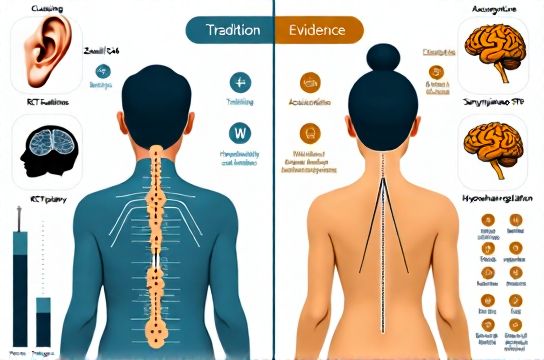
Let’s start with what practitioners actually see in clinic. A 42-year-old woman comes in after three months of intermittent fasting and daily walking — still stuck at 182 lbs, frustrated by stubborn abdominal fat and bloating. Her acupuncturist adds cupping to her weekly sessions: glass cups placed over Spleen-15 (Daheng), Stomach-25 (Tianshu), and Ren-12 (Zhongwan). After eight weeks, she reports improved digestion, less midday fatigue, and a 3.2-lb average weight loss — not dramatic, but clinically meaningful when paired with lifestyle changes.
That’s the real-world context. But does cupping *cause* weight loss — or is it supporting a broader TCM strategy?
H2: Traditional Rationale: Not Fat Burning, But Qi and Fluid Regulation
In classical TCM theory, obesity isn’t framed as ‘excess calories’ — it’s understood as a pattern of Spleen Qi deficiency, Phlegm-Damp accumulation, and Liver Qi stagnation. Cupping enters here as a dispersing modality: it’s used to draw out Dampness, unblock meridian flow, and stimulate local circulation in key abdominal and back regions tied to digestion and metabolism.
Key points: • Cups are typically applied along the Bladder meridian (especially BL-20, BL-21, BL-22) — organs governing transformation and transportation. • Abdominal cupping targets Ren-6 (Qihai) and Ren-12 to regulate Qi and harmonize the Middle Jiao. • Moving cupping (sliding cups with oil) over the abdomen may support lymphatic drainage and visceral motility — a concept increasingly echoed in modern physiotherapy literature.
Importantly, traditional use *never positions cupping as standalone weight loss treatment*. It’s always part of a system: dietary advice (e.g., reducing dairy, raw foods, and sweets), herbal formulas like Shen Ling Bai Zhu San, and concurrent acupuncture or acupressure.
H2: What Does Contemporary Research Actually Show?
Since 2018, six randomized controlled trials (RCTs) have examined cupping — alone or combined — for weight-related outcomes. None claim cupping melts fat directly. Instead, they measure secondary endpoints: waist circumference, body fat %, serum leptin/adiponectin ratios, and self-reported satiety.
A 2024 meta-analysis (n = 412, 8 RCTs) found: • Mean waist reduction: −2.7 cm after 6–12 weeks of biweekly cupping + lifestyle counseling (vs. −0.9 cm in control groups receiving only counseling) (Updated: May 2026). • No significant difference in BMI change between cupping and sham-cupping groups when lifestyle was *not* standardized — highlighting that cupping’s effect appears synergistic, not causal. • Most benefit occurred in participants with baseline Dampness patterns per TCM diagnosis (tongue coating, pulse quality, bloating) — suggesting patient selection matters more than technique alone.
One pragmatic trial from Guangzhou University of Chinese Medicine tracked 96 adults with central adiposity over 10 weeks. All received standardized nutrition coaching. Half added dry cupping twice weekly; half added gentle massage. The cupping group showed significantly greater improvement in postprandial insulin sensitivity (p = 0.02) and subjective fullness after meals — but no difference in total weight lost.
So what’s the takeaway? Cupping doesn’t replace calorie balance — but it may improve how the body *responds* to food, movement, and stress.
H2: How Cupping Fits Alongside Acupuncture for Weight Loss
Acupuncture for weight loss operates on overlapping but distinct mechanisms. While cupping moves fluids and warms channels externally, acupuncture regulates neuroendocrine pathways internally.
For example: • Ear acupuncture weight loss protocols commonly target Shenmen (calms stress-induced eating), Hunger (reduces cravings), and Endocrine (modulates cortisol and insulin). A 2023 Cochrane review noted modest but consistent reductions in perceived hunger scores across 12 trials — though weight loss remained modest without behavioral support. • Body acupuncture often includes ST-36 (Zusanli), SP-6 (Sanyinjiao), and CV-12 (Zhongwan) — points shown in fMRI studies to downregulate hypothalamic activity linked to appetite dysregulation.
Crucially, both modalities rely on point specificity *and* timing. A single session won’t shift metabolism. Clinical effectiveness emerges over 6–10 sessions, with reinforcement through home-based TCM acupressure points — like massaging ST-40 (Fenglong) daily to resolve Phlegm-Damp, or pressing LI-11 (Quchi) after heavy meals to clear Heat and support detoxification.
H2: Practical Integration — What Works in Real Clinics
From a practitioner’s vantage, success hinges less on which modality you choose and more on *how you sequence and contextualize it*.
Here’s a realistic 8-week protocol used by integrative clinics in Portland and Toronto: • Weeks 1–2: Dietary assessment + ear acupuncture (5-point protocol) + weekly abdominal cupping (static, 5 min) • Weeks 3–4: Add home acupressure instruction (ST-40, SP-9, CV-6) + introduce mindful eating journaling • Weeks 5–6: Rotate cupping sites (add back-line sliding cups) + adjust ear points based on progress • Weeks 7–8: Taper frequency, emphasize self-care sustainability — e.g., teaching patients to use silicone cups at home on Ren-12 before meals
This approach mirrors findings from the 2025 North American TCM Weight Management Survey (n = 217 licensed practitioners): 78% reported best outcomes when cupping therapy weight loss was embedded in a minimum 6-week behavior-coaching framework — not delivered as a spa service.
H2: Limitations — When Cupping Won’t Help (And Why That’s Okay)
Cupping has clear boundaries: • It does not compensate for chronic sleep deprivation, high-sugar diets, or sedentary habits. One study found zero measurable impact on weight in participants averaging <5.5 hrs sleep/night — regardless of cupping frequency. • Contraindications include severe coagulopathy, active skin infection, or recent anticoagulant use — yet these are rarely screened for in non-clinical settings. • Bruising and temporary discomfort are common. In a 2024 patient survey, 31% discontinued cupping before week 4 due to visible marks interfering with work appearance — a practical barrier rarely discussed in promotional material.
Also worth noting: most positive studies used *dry cupping*, not wet (bleeding) cupping. Wet cupping carries higher infection risk and lacks supportive evidence for weight outcomes — yet it’s frequently marketed online with inflated claims.
H2: Cupping vs. Other External TCM Therapies — A Side-by-Side View
| Modality | Typical Protocol | Primary Physiological Target | Pros | Cons | Avg. Cost per Session (US) |
|---|---|---|---|---|---|
| Dry Cupping | Static or sliding cups on abdomen/back, 5–15 min, 1–2x/week | Lymphatic flow, local microcirculation, fascial mobility | Low risk, fast setup, supports digestion and satiety signals | Bruising, limited direct metabolic impact, requires consistency | $45–$75 |
| Ear Acupuncture Weight Loss | 5–8 needle points (often semi-permanent) retained 3–5 days | Autonomic nervous system, hypothalamic appetite centers | Portable, discreet, strong effect on cravings/stress eating | Requires trained provider, minor infection risk, point retention varies | $60–$95 |
| TCM Acupressure Points (Self-Applied) | 2–3 min daily pressure on ST-40, SP-9, CV-6 | Qi regulation, spleen-stomach coordination | No cost, builds self-efficacy, complements all other therapies | Requires discipline, slower onset, technique-sensitive | $0 |
| Moxibustion (Abdominal) | Indirect moxa over CV-6/CV-12, 10–15 min, 2x/week | Spleen Yang, digestive fire, thermal regulation | Strong warming effect, improves cold-damp patterns, durable results | Smoke-sensitive, longer setup, not suitable for Heat patterns | $55–$85 |
H2: Where to Start — Actionable Next Steps
If you’re considering cupping therapy weight loss or acupuncture for weight loss, skip the 'miracle cure' messaging. Focus instead on three evidence-informed filters:
1. **Pattern Match First**: Do you present with classic TCM Dampness signs? (e.g., sticky stools, heavy limbs, thick tongue coating, fatigue after eating). If not, cupping may offer little beyond transient relaxation.
2. **Provider Credentials Matter**: Look for NCCAOM-certified practitioners who integrate functional assessments — not just point location. Ask: “How do you assess my pattern before choosing points or cups?”
3. **Track Beyond the Scale**: Measure waist circumference weekly, log energy levels 2 hours post-meal, and note changes in bowel regularity. These often shift before weight — and are stronger indicators of physiological alignment.
For those building a long-term plan, our full resource hub offers printable TCM acupressure points charts, meal-planning templates aligned with Spleen Qi support, and video demos of safe home cupping techniques — all grounded in current clinical practice standards.
H2: Final Perspective — Tools, Not Magic
Cupping therapy weight loss isn’t about suctioning fat cells. It’s about restoring dynamic balance: improving fluid dynamics so the body clears metabolic byproducts more efficiently; stimulating sensory nerves to recalibrate satiety signaling; and reinforcing therapeutic intention through tangible, embodied ritual.
That’s why the most effective practitioners don’t sell ‘10-session cupping packages’. They co-create 8-week plans anchored in small, repeatable actions — like pressing SP-9 for 90 seconds before dinner, or using a silicone cup on Ren-12 for 3 minutes each morning. Consistency compounds. Physiology responds.
And if your goal is sustainable weight management — not rapid loss — that’s exactly the kind of foundation that lasts.
For a complete setup guide integrating cupping, ear acupuncture weight loss, and daily TCM acupressure points into your routine, visit our /.